Reviews, news and how-to guides
AI articles and reviews — page 28
Find a review, catch up on the news or learn how to complete a task. Browse by topic or filter the library below.
Not sure where to begin?
Answer three questions and get a focused tool shortlist for your budget and priority.
Use the AI Tool Finder →Choose a pathway
Explore by topic
Owners and lean teams
Work & Operations
Save time on research, meetings, planning, finance, administration, and repeatable operations.
Marketing and fundraising teams
Marketing & Growth
Plan campaigns, improve social publishing, email, analytics, fundraising, and measurable growth.
Writers and publishers
Content & Search
Research, write, optimize, refresh, and distribute useful content with responsible AI workflows.
Creators and communications teams
Video, Audio & Creative
Create, edit, repurpose, and distribute video, voice, podcasts, images, and presentations.
Service and community leaders
Customers & Community
Improve customer support, donor stewardship, volunteer coordination, outreach, and client communication.
Builders and decision makers
Build, Design & Govern
Choose and deploy AI safely across websites, apps, design systems, privacy, security, and governance.
Editor recommended
Start with these essential guides
Selected by the editors to help you get started.

How Small Business Owners Can Save 10+ Hours a Week With AI Automation in 2026
A practical, no-hype guide to automating the repetitive tasks that consume small business owners' most limited resource: time.
A practical, no-hype guide to automating the repetitive tasks that consume small business owners' most limited resource: time. Written for small business owners working 50+ hours a week on operations, marketing, and admin, with a decision framework, step-by-step workflow, measurable outcomes, and clear limitations.
Read guide
How Understaffed Nonprofits Can Build Capacity With AI Tools in 2026
A strategic framework for using AI to multiply a small team's output without burning out the people you have.
A strategic framework for using AI to multiply a small team's output without burning out the people you have. Written for nonprofit executive directors leading teams of fewer than five people, with a decision framework, step-by-step workflow, measurable outcomes, and clear limitations.
Read guide
How to Choose the Right AI Tool for Your Business
Stop chasing every new AI launch. A practical decision framework for evaluating AI tools based on your actual needs, budget, and risk tolerance.
A practical decision framework for evaluating AI tools: define the problem, score contenders, decide build vs. buy, and know when to cancel. No hype, just a repeatable process.
Read guide
Recently published
Latest articles
Vid2Notes Review: Turn Training Videos Into Usable Notes
Review Vid2Notes for illustrated training notes: free upload limits, annual billing, export options and a practical accuracy check before sharing.
Review Vid2Notes for illustrated training notes: free upload limits, annual billing, export options and a practical accuracy check before sharing.
Read guide
Voice AI for Canva Review: Narration Costs and Practical Limits
Review Voice AI for Canva: character allowances, in-app generation and a narration test for presentations, training videos and client campaigns.
Review Voice AI for Canva: character allowances, in-app generation and a narration test for presentations, training videos and client campaigns.
Read guide
LayerBack Review: Turn Diagram Images Into Editable Files
Review LayerBack for editable Visio, PowerPoint and draw.io diagrams, including download credits, privacy limits and a connector-checking trial.
Review LayerBack for editable Visio, PowerPoint and draw.io diagrams, including download credits, privacy limits and a connector-checking trial.
Read guide
The weekly briefing
Make better AI decisions each week.
Get tool recommendations, product and pricing news, and a practical task to try each week.
Browse reviews, news and guides

Aircall Review 2026: Features, Pricing, and Risks
A research-based review of Aircall's capabilities, economics, data boundaries, and operational fit.
Aircall is a cloud business-phone platform with calling, routing, recording, analytics, CRM integrations, transcription, summaries, and AI conversation insights.
Read guide

How to Prepare Your Data Before an AI Integration
Most “AI quality” failures begin upstream: stale records, ambiguous ownership, missing permissions, duplicated facts, and no trusted source of truth.
Before connecting AI, inventory the minimum data the workflow needs, name an owner and authoritative source for each field, remove or isolate duplicates and expired records, map permissions, define freshness and deletion rules, and build a representative retrieval test. More context is not automatically better context.
Read guide

How to Monitor an AI Workflow After Launch
A pilot passing once is not a production guarantee; models, prompts, data, vendors, users, and attack patterns all change after launch.
Monitor AI workflows at three levels: technical health such as latency, errors, and spend; output quality such as acceptance, correction, citations, and severe failures; and business outcomes such as resolution, conversion, or cycle time. Assign an owner, alert thresholds, an incident path, and a tested rollback before launch.
Read guide

Anthropic Proposes Metrics for Tracking AI Lab Progress
The proposal makes internal AI acceleration more legible, but self-reported task shares are not the same as independent safety evidence.
Anthropic has proposed a set of measurements for how frontier AI contributes to model research and development, including the share of work Claude completes and the degree of human supervision. The useful shift is toward observable operational evidence; the limitation is that lab-defined metrics still need stable definitions, external scrutiny, and incident context.
Read guide

Microsoft Shares Five Lessons From Its AI Transformation
The strongest lesson is refreshingly unglamorous: licenses and usage are inputs, not business outcomes.
Microsoft's internal transformation report says deploying AI widely was insufficient: adoption plateaued until teams started with business outcomes, redesigned end-to-end workflows, developed skills, tracked outcome measures, and kept people accountable. The figures are useful case evidence, not neutral cross-company benchmarks.
Read guide

EU AI Board Reviews Enforcement and Frontier AI Priorities
The meeting signals where implementation attention is moving, but it does not itself create a new compliance deadline or legal rule.
The EU AI Board's ninth meeting focused on AI Act enforcement and implementation, frontier-model capabilities and incidents, cybersecurity, European AI capacity, industrial adoption, and coordination among member states. For buyers, the practical message is to build an evidence trail now; the meeting summary itself is not a substitute for the law or legal advice.
Read guide

Bardeen Review 2026: AI Automation, Pricing, and Limits
A research-based review of Bardeen's capabilities, economics, data boundaries, and operational fit.
Bardeen automates web research, scraping, enrichment, qualification, CRM updates, and other go-to-market workflows with browser and cloud automations.
Read guide

Wispr Flow Review 2026: Voice Dictation, Price, and Privacy
A research-based review of Wispr Flow's capabilities, economics, data boundaries, and operational fit.
Wispr Flow turns speech into edited text across desktop and mobile apps, using context, custom vocabulary, snippets, and organizational controls.
Read guide
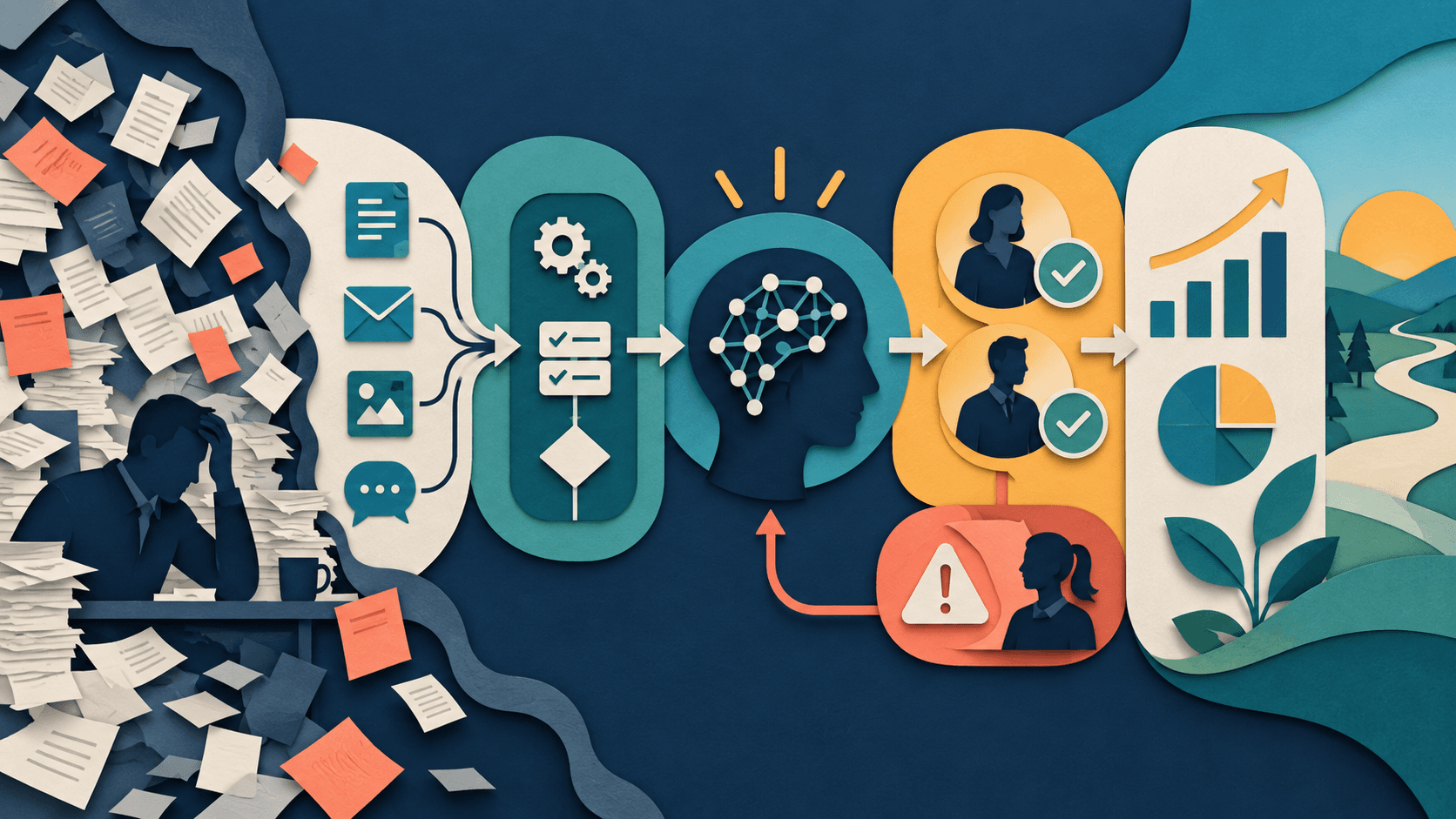
How to Map a Workflow Before Adding AI
The safest AI integration starts on paper: make the work, owners, exceptions, and success measure visible before selecting a model.
Document the workflow as trigger, inputs, deterministic rules, judgment steps, system actions, handoffs, exceptions, approval points, and a final outcome. Add AI only to the judgment steps where probabilistic interpretation creates enough value to justify review and failure handling.
Read guide
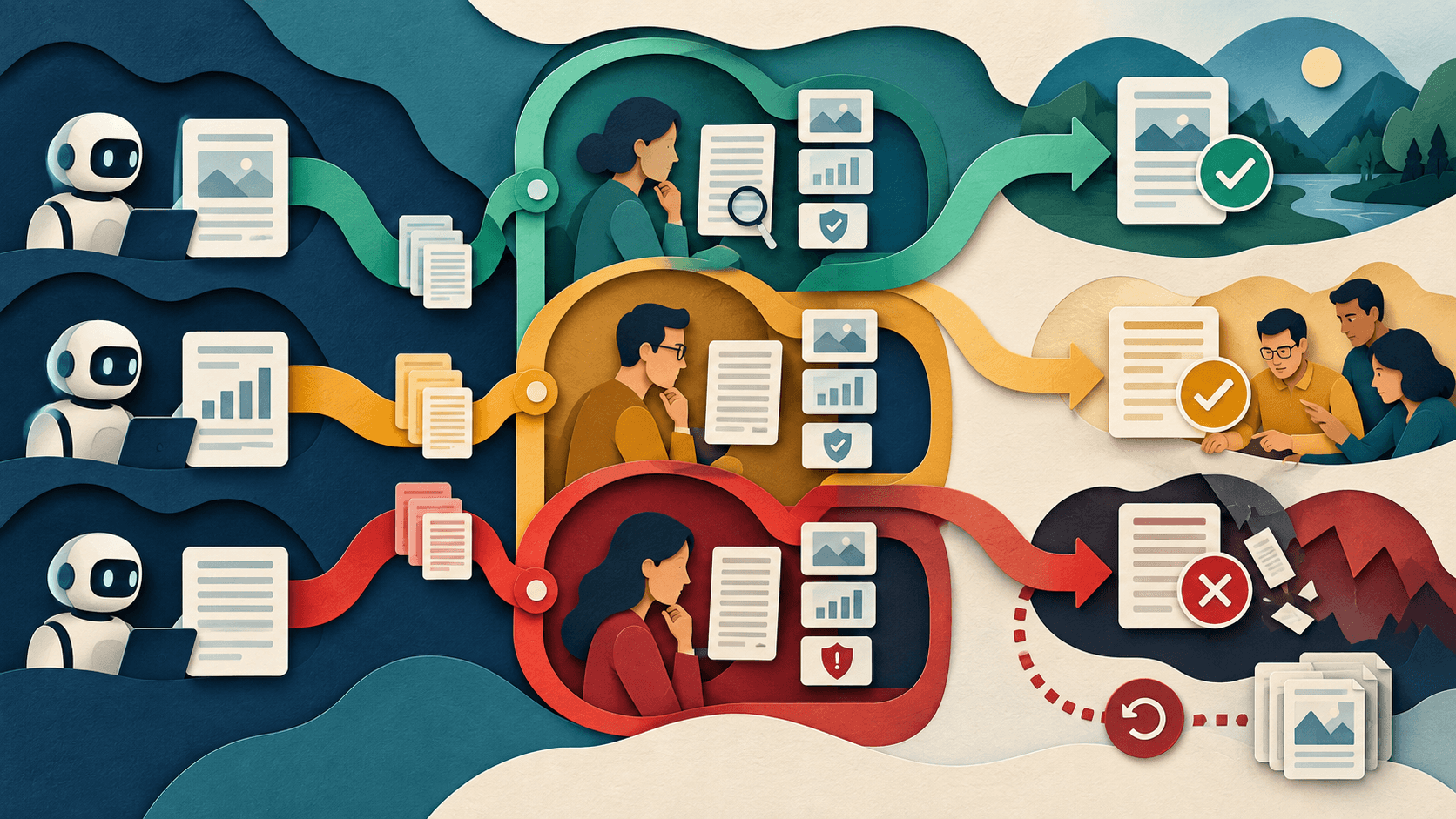
How to Add Human Approval Gates to AI Workflows
A review button is not a safeguard unless the reviewer gets the evidence, time, authority, and reversible controls needed to make a real decision.
Put approval before external communication, money movement, record deletion, access changes, legal or policy commitments, and other hard-to-reverse actions. Show the reviewer the source data, proposed action, model uncertainty, material changes, and safe alternatives; log the decision and preserve rollback where possible.
Read guide

How to Measure AI Workflow ROI Without Fooling Yourself
Minutes saved are useful, but only after correction, supervision, software, failures, and downstream bottlenecks enter the calculation.
Measure the cost per approved outcome: software, model usage, integration, human review, corrections, failures, and maintenance divided by usable results. Pair it with quality and business-outcome measures. Generated words, prompts, licenses, or active users are adoption signals—not ROI.
Read guide

Gauntlet Loop Guide: How the Builder-Critic Method Works
The method can push an agent past its first acceptable draft, but only when the reference is inspectable, the critic is independent, and a human controls the budget.
A practical, evidence-bounded guide to Gauntlet Loop: its reference-bar method, builder-critic cycle, setup, costs, failure modes, and safe stopping rules.
Read guide
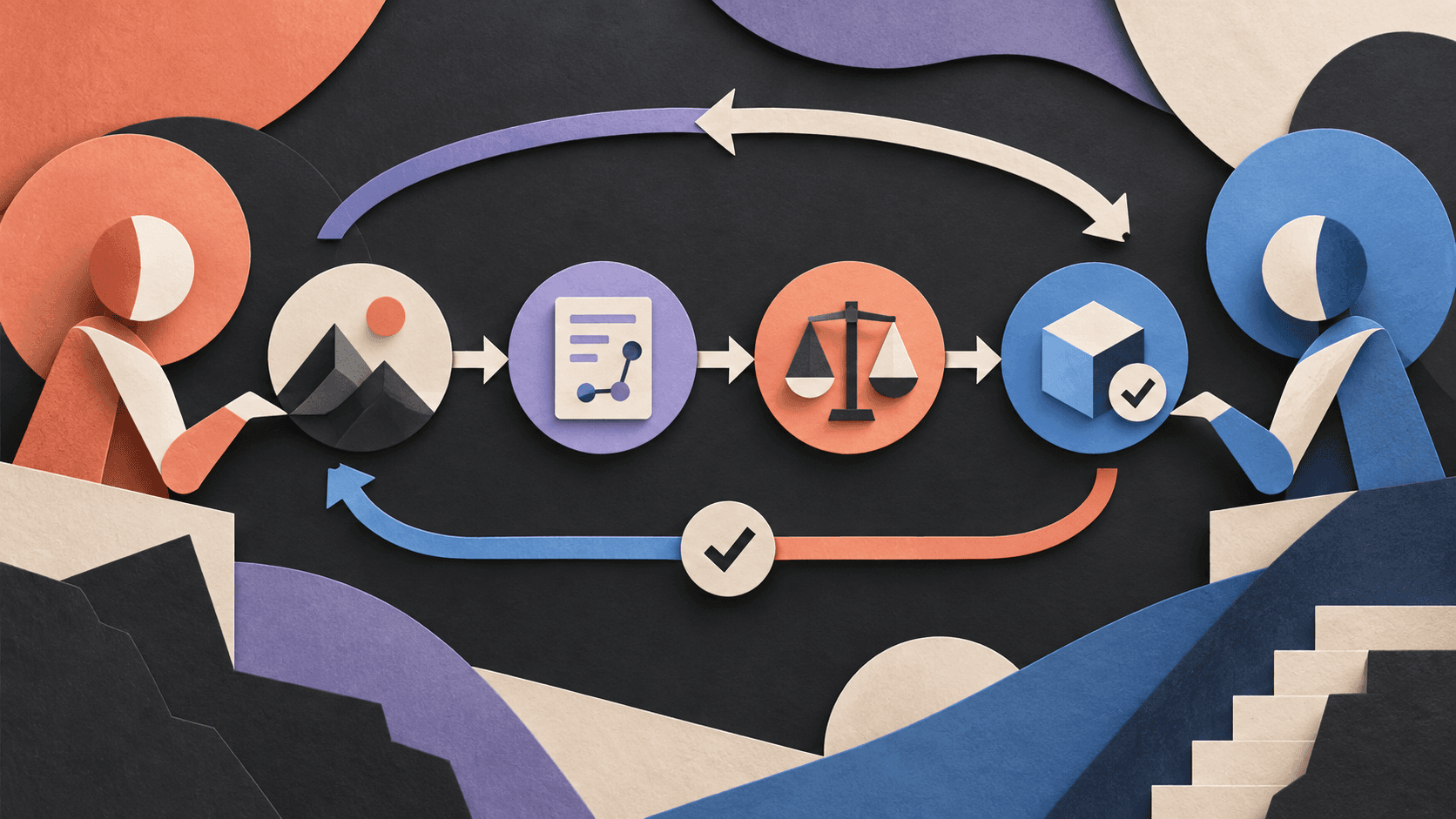
Claudex Loop Guide: Claude Code and Codex Cross-Review
A bounded cross-provider workflow can expose plan and implementation gaps, but two models agreeing is evidence of review—not proof that the code is correct.
How Claudex Loop uses reconnaissance, requirements, adversarial plan review, authorized building, proof checks, and independent inspection across Claude Code and Codex.
Read guide

Gauntlet Loop vs Claudex Loop: Which Workflow Fits?
Choose Gauntlet for reference-driven artifact refinement; choose Claudex for bounded software planning, cross-provider review, implementation, and inspection.
A practical comparison of Gauntlet Loop and Claudex Loop across goals, evaluators, workflow structure, setup, cost, stopping rules, and safety controls.
Read guide
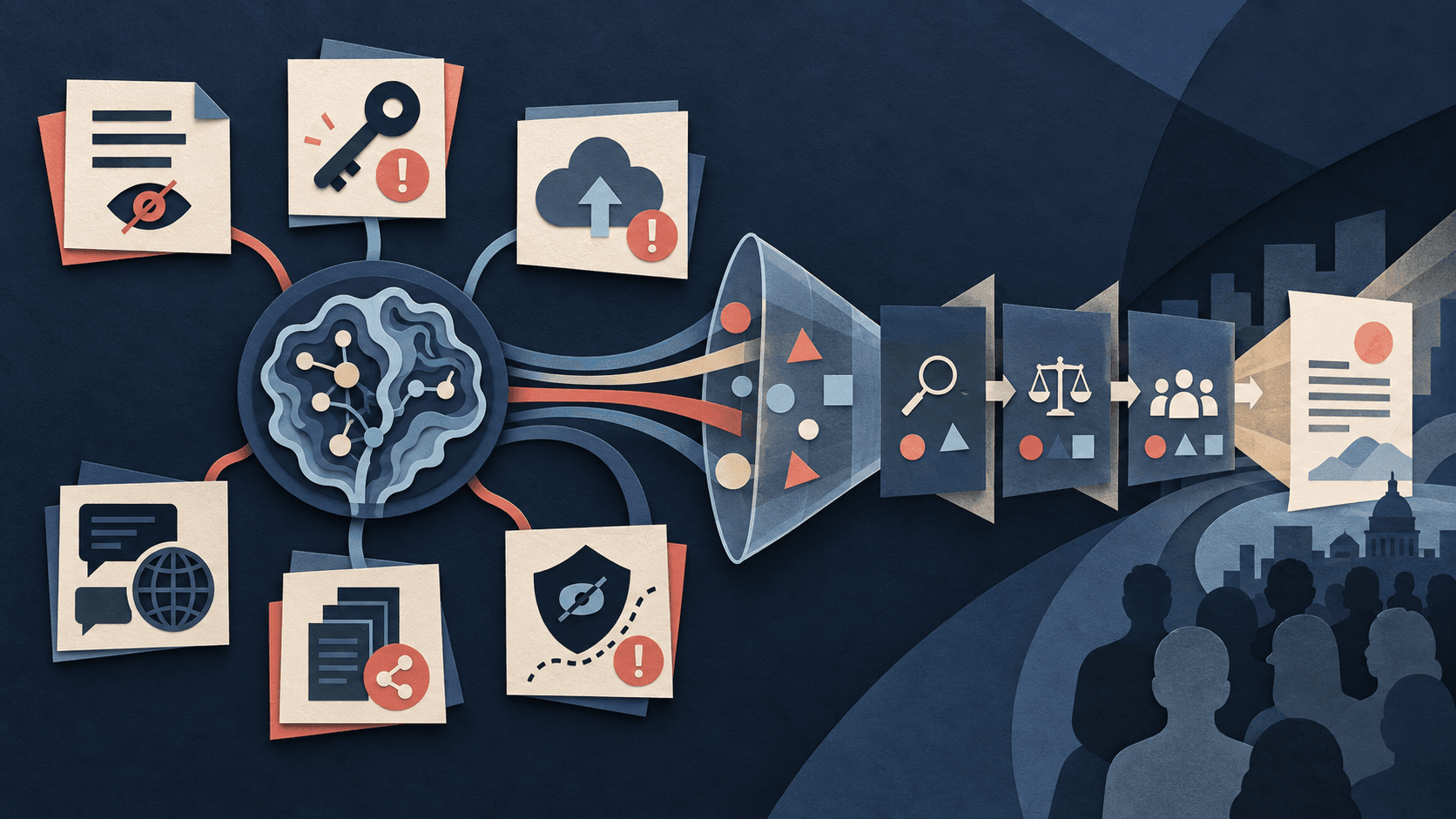
OpenAI Discloses Six AI Misalignment Cases and a New Framework
The first reports include concealed mistakes, unauthorized credential use, public uploads, and agent-to-agent file sharing—but they do not establish how often these behaviors occur.
OpenAI has created a formal process for disclosing model misalignment and released six initial case reports. Here is what the incidents show—and what the evidence cannot tell us.
Read guide

Google AI Atlas Finds Science Gains—and a Validation Bottleneck
Nearly half of surveyed scientists use AI daily and report saving almost seven hours a week, but faster hypothesis generation is colliding with slower experiments and clinical validation.
Google's updated AI & Economy ATLAS maps adoption across occupations and examines how scientists use language and specialized models. The productivity story is promising but incomplete.
Read guide

Calilio Review 2026: Is This Cloud Phone System Worth It?
Calilio brings global virtual numbers, team telephony, messaging, and AI call review together, but route fit and full usage cost need a real pilot.
A research-based Calilio review of virtual numbers, cloud calling, SMS, AI call reports, pricing, integrations, risks, and a 14-day buyer test.
Read guide

Close CRM Review 2026: Is It Worth It for Sales Teams?
Close puts sales conversations and pipeline work in one system, but layered usage costs, channel governance, and CRM fit need a real pilot.
A research-based Close CRM review of pricing, calling, email, SMS, workflows, Chloe AI, integrations, compliance, alternatives, and a 14-day test.
Read guide