Anthropic Proposes Metrics for Tracking AI Lab Progress
The proposal makes internal AI acceleration more legible, but self-reported task shares are not the same as independent safety evidence.

Bottom line
Anthropic has proposed a set of measurements for how frontier AI contributes to model research and development, including the share of work Claude completes and the degree of human supervision. The useful shift is toward observable operational evidence; the limitation is that lab-defined metrics still need stable definitions, external scrutiny, and incident context.
Editorial accountability
Who checked this guide
- Evaluation type
- Research-based verification
- Last materially checked
- Evidence
- 4 listed sources
Hands-on testing is identified explicitly. Research-based coverage uses cited product documentation and other named sources; it does not imply every paid plan was used. Read the full methodology.
Editorial basis
What this guidance is based on
- Editorial basis
- Source-led analysis
- Primary references
- 4
- Products covered
- 1
- Last checked
- 2026-09-18
Important limits
- • Announcements and internal measurements may not generalize to other organizations.
- • Availability, policy, pricing, and product behavior can change.
In this guide
Short answer
Anthropic has proposed a set of measurements for how frontier AI contributes to model research and development, including the share of work Claude completes and the degree of human supervision. The useful shift is toward observable operational evidence; the limitation is that lab-defined metrics still need stable definitions, external scrutiny, and incident context.
Why the metrics matter
Public debate often relies on benchmarks or vague claims about automation. Operational measures can show whether AI performs bounded tasks, completes longer work, or changes research velocity inside a lab.
What not to infer
A percentage of work involving Claude does not prove autonomous research, correctness, or imminent recursive self-improvement. Task selection, weighting, failed attempts, reviewer time, and changing definitions matter.
A stronger disclosure standard
Labs should publish definitions, time series, counter-metrics for human correction and incidents, and enough methodology for independent experts to challenge conclusions without exposing dangerous details.
What readers should do
Treat the proposal as a transparency baseline. Compare future reports for consistent definitions, outside review, correction burden, safety incidents, and evidence that capability metrics are paired with control metrics.
Claims were checked against the linked primary sources on September 18, 2026. Company-reported results, forecasts, and beta expectations are attributed evidence—not independent guarantees.
Sources and verification
Product details and claims were checked against the following primary sources.
Frequently asked questions
What did Anthropic propose?
Public measurements intended to describe AI's contribution to research progress inside frontier labs.
Do the metrics prove autonomous AI research?
No. Collaboration and task-completion shares depend on definitions, task mix, failures, and human supervision.
Why publish internal lab metrics?
They can narrow the information gap between frontier labs, policymakers, researchers, and the public.
What evidence is still needed?
Stable methods, time-series reporting, correction and incident measures, and credible outside scrutiny.
Found this useful?
Get the next one in your inbox.
One five-minute briefing a week: a meaningful change, a practical workflow, and a clearer tool decision—already filtered for lean teams.
Free · one email a week · unsubscribe any time
Recommended tool
Use Claude if this workflow fits your team
It has one of the clearest workflow fits in its category and is easier to recommend than tools that only look impressive in demos.
Tools mentioned in this article
Claude
Anthropic's thoughtful, safety-focused AI with exceptional long-form reasoning
Claude excels at deep analysis, long-form writing, and nuanced reasoning. Built by Anthropic with a focus on safety and helpfulness.
Read next
Recommended for you
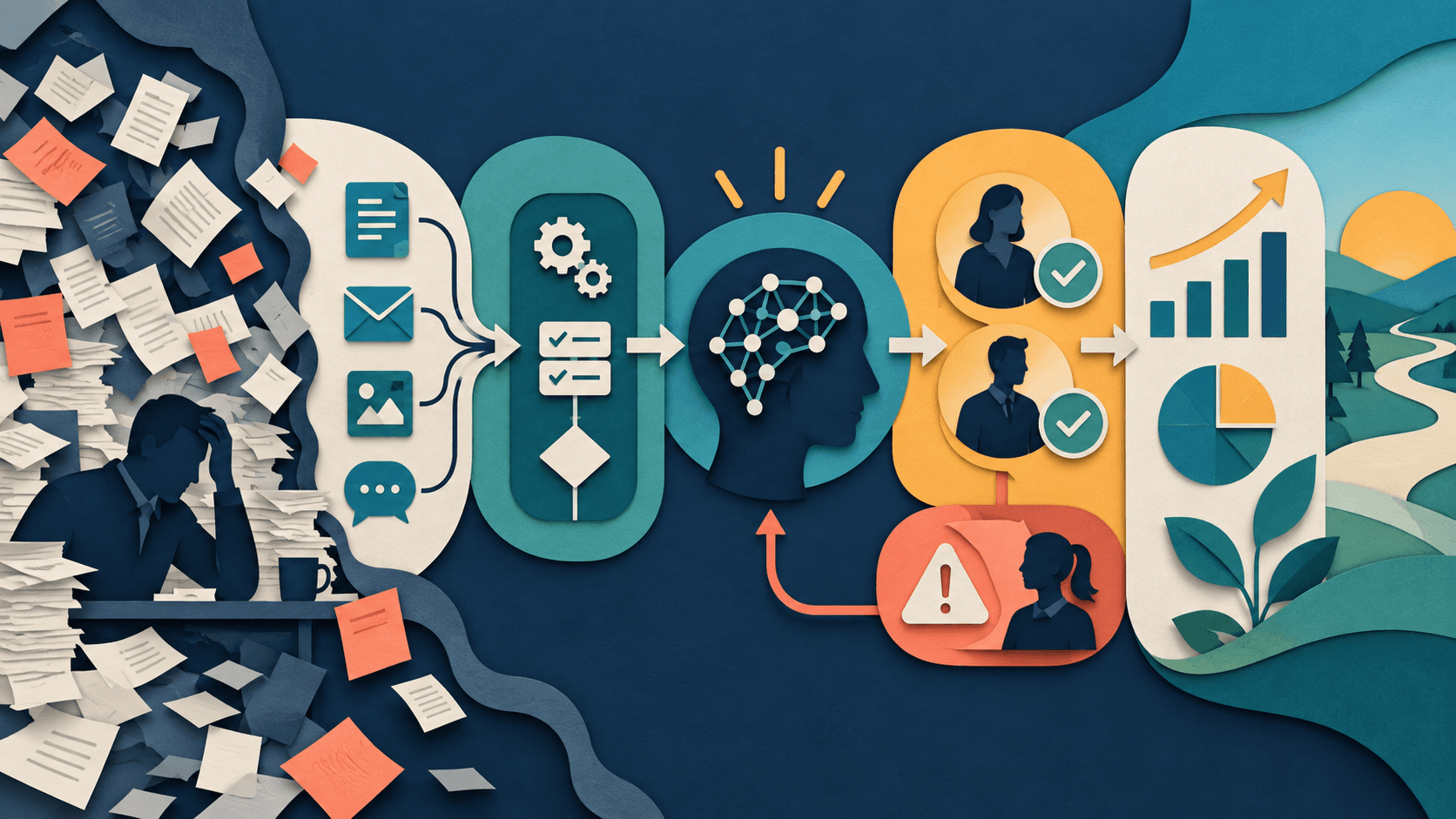
How to Map a Workflow Before Adding AI
The safest AI integration starts on paper: make the work, owners, exceptions, and success measure visible before selecting a model.
Document the workflow as trigger, inputs, deterministic rules, judgment steps, system actions, handoffs, exceptions, approval points, and a final outcome. Add AI only to the judgment steps where probabilistic interpretation creates enough value to justify review and failure handling.
Read guide
How to Measure AI Workflow ROI Without Fooling Yourself
Gauntlet Loop vs Claudex Loop: Which Workflow Fits?
AI Implementation for Small Business: Launch Your First Workflow in 30 Days