Audit AI Citations Before the Answer Leaves Your Team
A clickable citation is a route to evidence—not proof that the evidence is current, authorized, complete, or correctly interpreted.
Bottom line
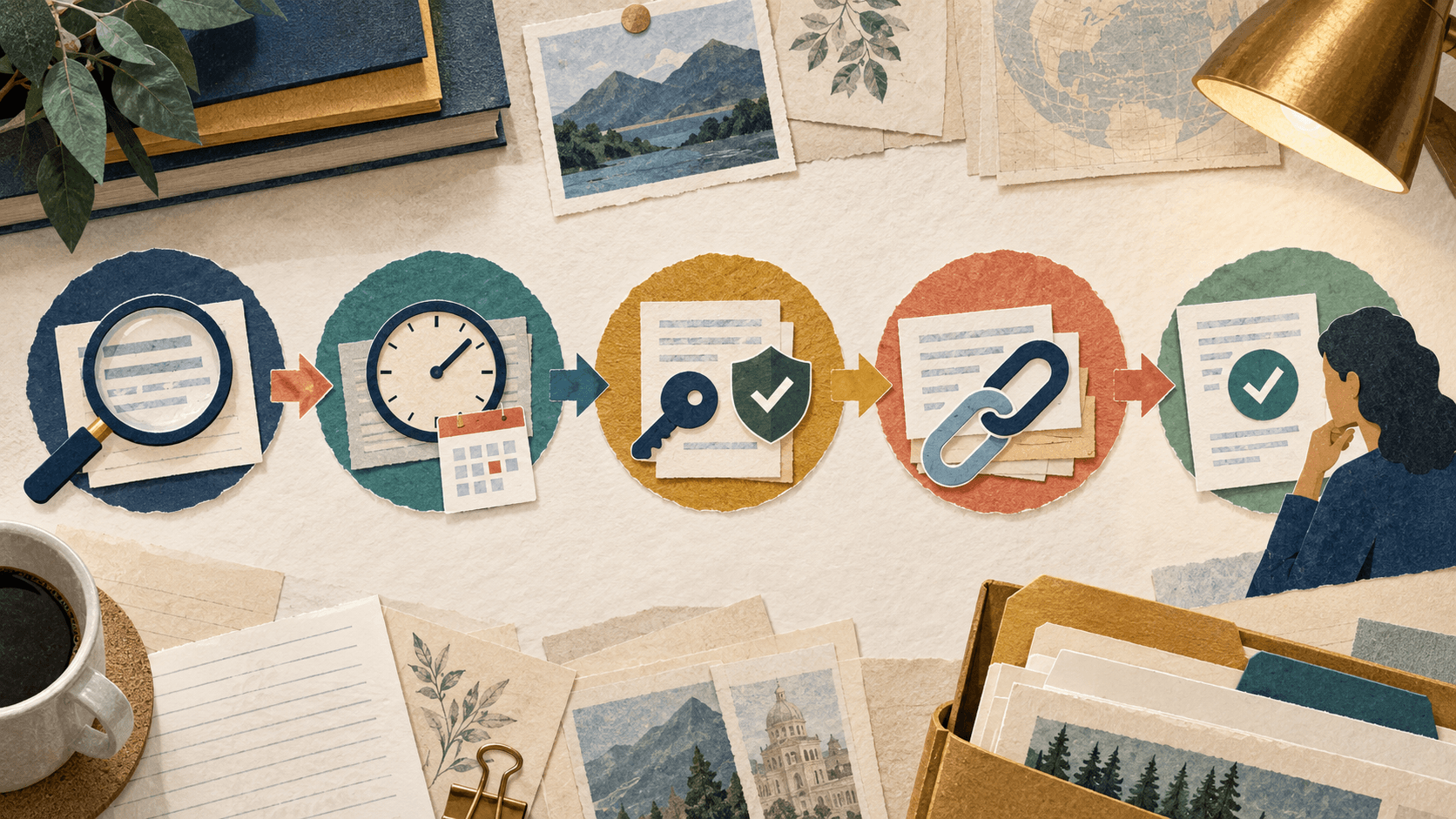
Use a repeatable source audit for AI research, financial analysis, legal work, and client materials. Check identity, time, rights, support, and transformation.
Editorial accountability
Who checked this guide
- Evaluation type
- Research-based verification
- Last materially checked
- Evidence
- 4 listed sources
Hands-on testing is identified explicitly. Research-based coverage uses cited product documentation and other named sources; it does not imply every paid plan was used. Read the full methodology.
Editorial basis
What this guidance is based on
- Editorial basis
- Source-led analysis
- Primary references
- 4
- Products covered
- 4
- Last checked
- 2026-10-02
Important limits
- • This checklist does not replace professional standards, legal review, data-provider terms, or domain-specific validation.
- • Teams should make review depth proportional to consequence and add controls required by their industry, jurisdiction, and source licenses.
In this guide
Start with the claim
Copy every material factual claim, number, quotation, recommendation, and calculation into a review table. Give each one an owner and consequence level. Material claims affect a decision, customer, contract, publication, model, or regulated obligation; they deserve direct verification even when the rest of the draft is sampled.
1. Confirm source identity
Open the citation. Verify author or issuing organization, document title, canonical URL, edition, jurisdiction, and whether the source is primary. Search snippets and AI summaries are discovery aids, not substitutes for the underlying filing, standard, paper, policy, dataset, or official documentation.
2. Check time and scope
Record publication date, effective date, reporting period, last update, geography, population, product tier, and version. A true number from the wrong quarter or a valid feature on the wrong plan is still wrong for the claim. Note corrections, restatements, superseded policies, and data delays.
3. Verify access and usage rights
Confirm that the reviewer and intended audience are entitled to use the source. Check license, provider terms, confidentiality, redistribution, quotation, client-use, and model-training restrictions. Citation does not convert restricted data into reusable public content.
4. Match evidence to the exact claim
Read enough surrounding context to test whether the source entails the claim. Separate reported fact, vendor assertion, estimate, opinion, inference, and your own conclusion. Check units, denominator, sample, exclusions, uncertainty, and comparison baseline. If two sources conflict, preserve the conflict rather than silently choosing the convenient one.
5. Recompute every transformation
Trace numbers from source cells through unit conversions, formulas, joins, adjustments, charts, and prose. Recalculate with an independent method. Confirm that citations attached to a paragraph support each material number—not merely the topic. Save the source snapshot, formula, reviewer, and review date.
Release rule
A material claim passes only when the source is identifiable, current enough, authorized for the intended use, directly supportive, and correctly transformed. Otherwise revise, qualify, replace, or remove it. The final approver should be accountable for the artifact, not for trusting that the AI probably checked itself.
Sources and verification
Product details and claims were checked against the following primary sources.
Frequently asked questions
Is a clickable AI citation enough?
No. Open it and verify source identity, date, scope, entitlement, exact claim support, and any transformations applied to the evidence.
Which claims need full verification?
Fully verify claims that affect decisions, customers, contracts, publications, models, regulated work, or reputation. Use sampling only for low-consequence material.
What if two credible sources disagree?
Check dates, definitions, populations, methods, and revisions. Preserve and explain unresolved disagreement rather than hiding it.
Who owns the final answer?
A named human approver or accountable professional should own release. The AI can assist with discovery and drafting but cannot accept organizational responsibility.
Tools mentioned in this article
ChatGPT
The general-purpose AI assistant that started it all
OpenAI's flagship conversational AI model, powering everything from casual chat to complex reasoning, coding, and creative work.
Claude
Anthropic's thoughtful, safety-focused AI with exceptional long-form reasoning
Claude excels at deep analysis, long-form writing, and nuanced reasoning. Built by Anthropic with a focus on safety and helpfulness.
Perplexity AI
AI-powered search engine with real-time citations and research capabilities
Perplexity combines AI chat with real-time web search, delivering cited, verifiable answers. Think Google Search meets ChatGPT.
Google Gemini
Google's deeply integrated AI assistant with unmatched access to Google's ecosystem
Gemini combines powerful AI with Google's vast data ecosystem — Search, Gmail, Docs, YouTube, and more — for a uniquely integrated experience.
Read next
Recommended for you
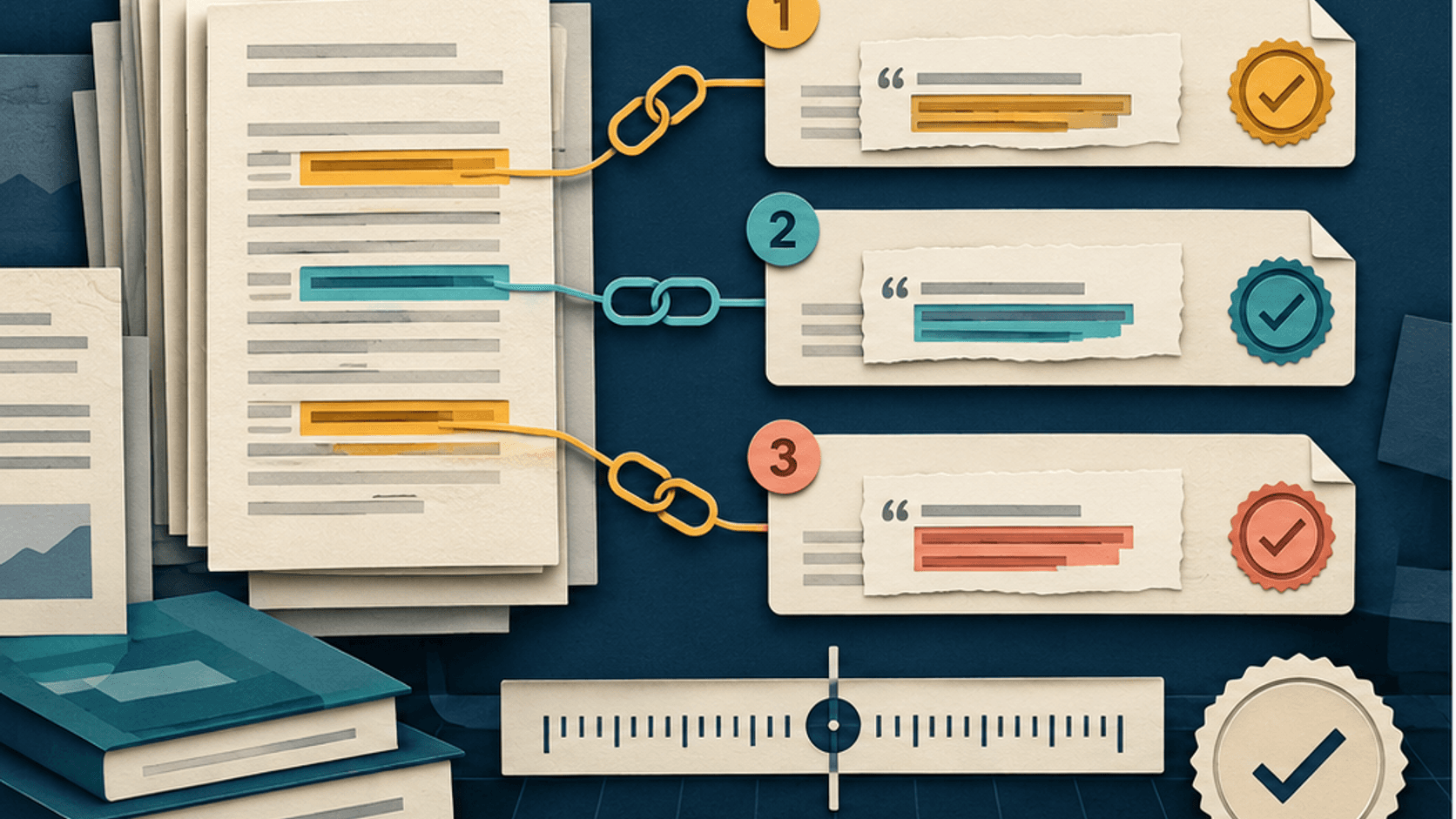
DiscoverAI Citation Accuracy Benchmark: Methodology
A frozen protocol for testing whether AI research answers are correct, fully supported, precisely cited, and willing to abstain.
This benchmark uses 12 synthetic source documents, 18 answer-keyed questions, conflicting and outdated evidence, and six deliberately unanswerable prompts. Products receive no score until preserved outputs pass blinded item-level adjudication.
Read guide
AI Tools for Nonprofits in 2026: Build a Practical Mission-First Stack
Best AI Writing Tools in 2026: 9 Picks by Use Case, Budget, and Workflow
NotebookLM Review 2026: Is Google's Research Assistant Worth Using?