Reviews, news and how-to guides
AI articles and reviews — page 53
Find a review, catch up on the news or learn how to complete a task. Browse by topic or filter the library below.
Not sure where to begin?
Answer three questions and get a focused tool shortlist for your budget and priority.
Use the AI Tool Finder →Choose a pathway
Explore by topic
Owners and lean teams
Work & Operations
Save time on research, meetings, planning, finance, administration, and repeatable operations.
Marketing and fundraising teams
Marketing & Growth
Plan campaigns, improve social publishing, email, analytics, fundraising, and measurable growth.
Writers and publishers
Content & Search
Research, write, optimize, refresh, and distribute useful content with responsible AI workflows.
Creators and communications teams
Video, Audio & Creative
Create, edit, repurpose, and distribute video, voice, podcasts, images, and presentations.
Service and community leaders
Customers & Community
Improve customer support, donor stewardship, volunteer coordination, outreach, and client communication.
Builders and decision makers
Build, Design & Govern
Choose and deploy AI safely across websites, apps, design systems, privacy, security, and governance.
Editor recommended
Start with these essential guides
Selected by the editors to help you get started.

How Small Business Owners Can Save 10+ Hours a Week With AI Automation in 2026
A practical, no-hype guide to automating the repetitive tasks that consume small business owners' most limited resource: time.
A practical, no-hype guide to automating the repetitive tasks that consume small business owners' most limited resource: time. Written for small business owners working 50+ hours a week on operations, marketing, and admin, with a decision framework, step-by-step workflow, measurable outcomes, and clear limitations.
Read guide
How Understaffed Nonprofits Can Build Capacity With AI Tools in 2026
A strategic framework for using AI to multiply a small team's output without burning out the people you have.
A strategic framework for using AI to multiply a small team's output without burning out the people you have. Written for nonprofit executive directors leading teams of fewer than five people, with a decision framework, step-by-step workflow, measurable outcomes, and clear limitations.
Read guide
How to Choose the Right AI Tool for Your Business
Stop chasing every new AI launch. A practical decision framework for evaluating AI tools based on your actual needs, budget, and risk tolerance.
A practical decision framework for evaluating AI tools: define the problem, score contenders, decide build vs. buy, and know when to cancel. No hype, just a repeatable process.
Read guide
Recently published
Latest articles
Vid2Notes Review: Turn Training Videos Into Usable Notes
Review Vid2Notes for illustrated training notes: free upload limits, annual billing, export options and a practical accuracy check before sharing.
Review Vid2Notes for illustrated training notes: free upload limits, annual billing, export options and a practical accuracy check before sharing.
Read guide
Voice AI for Canva Review: Narration Costs and Practical Limits
Review Voice AI for Canva: character allowances, in-app generation and a narration test for presentations, training videos and client campaigns.
Review Voice AI for Canva: character allowances, in-app generation and a narration test for presentations, training videos and client campaigns.
Read guide
LayerBack Review: Turn Diagram Images Into Editable Files
Review LayerBack for editable Visio, PowerPoint and draw.io diagrams, including download credits, privacy limits and a connector-checking trial.
Review LayerBack for editable Visio, PowerPoint and draw.io diagrams, including download credits, privacy limits and a connector-checking trial.
Read guide
The weekly briefing
Make better AI decisions each week.
Get tool recommendations, product and pricing news, and a practical task to try each week.
Browse reviews, news and guides

How to Calculate AI Tool ROI in 2026: Formula, Examples, and Checklist
A practical, evidence-led guide for people searching for AI tool ROI calculator.
Calculate monthly value as hours saved multiplied by the fully loaded hourly cost, plus attributable revenue or avoided expense, minus subscription, setup, review, and correction costs. Require a positive result across a representative 30-day pilot. Includes a repeatable framework, measurement plan, limitations, and primary sources.
Read guide

AI Subscription Audit: How to Cut Tool Costs Without Losing Productivity
A practical, evidence-led guide for people searching for AI subscription audit.
List every paid tool by job, owner, monthly cost, weekly use, and approved output. Cancel tools with no accountable owner, duplicated capabilities, or less value than their switching cost. Includes a repeatable framework, measurement plan, limitations, and primary sources.
Read guide

Free vs Paid AI Tools in 2026: When Is an Upgrade Actually Worth It?
A practical, evidence-led guide for people searching for free vs paid AI tools.
Upgrade when a paid plan removes a measured bottleneck—usage limits, privacy controls, output quality, collaboration, or commercial rights—and the recovered value exceeds the full monthly cost. Includes a repeatable framework, measurement plan, limitations, and primary sources.
Read guide

How Much Should a Small Business Spend on AI Software in 2026?
A practical, evidence-led guide for people searching for AI software budget small business.
Start with one revenue or labor bottleneck and cap the pilot budget at a small fraction of its monthly value. A useful starter stack is usually narrower than expected: one general assistant plus one specialist tied to a measurable workflow. Includes a repeatable framework, measurement plan, limitations, and primary sources.
Read guide

AI Stack Consolidation in 2026: Replace Overlap With a Leaner Workflow
A practical, evidence-led guide for people searching for AI stack consolidation.
Map tools to workflow stages, identify duplicated jobs, and test one removal at a time. Keep specialists only where they materially outperform the general platform after correction and handoff time. Includes a repeatable framework, measurement plan, limitations, and primary sources.
Read guide

ChatGPT vs Claude for Long Documents in 2026: A Practical Test
A practical, evidence-led guide for people searching for ChatGPT vs Claude long documents.
Claude is often a strong starting point for sustained document analysis, while ChatGPT offers a broader surrounding toolset. The reliable choice is the one that preserves citations, constraints, and nuance on your own representative document. Includes a repeatable framework, measurement plan, limitations, and primary sources.
Read guide
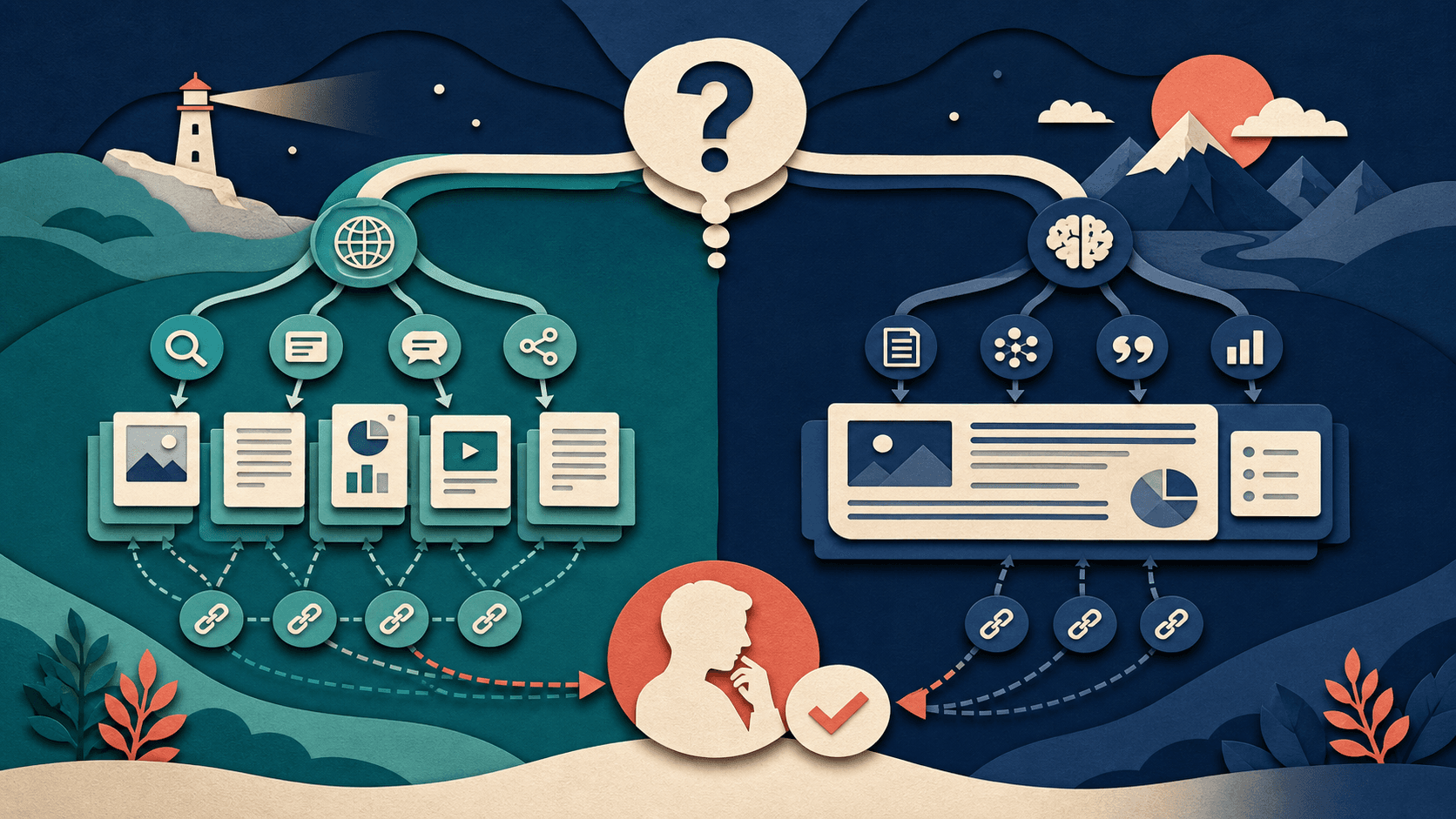
ChatGPT vs Perplexity for Research in 2026: Which Should You Use?
A practical, evidence-led guide for people searching for ChatGPT vs Perplexity research.
Perplexity is purpose-built for source-led web discovery; ChatGPT is stronger as a broad workspace for analysis and production. Use either to find leads, then open and verify the primary sources yourself. Includes a repeatable framework, measurement plan, limitations, and primary sources.
Read guide

Claude vs Gemini for Google Workspace Teams in 2026
A practical, evidence-led guide for people searching for Claude vs Gemini Google Workspace.
Gemini has the natural integration advantage inside Google Workspace; Claude can be preferable for focused analysis and long-form drafting. Compare permissions, source handling, output quality, and the friction of moving work between systems. Includes a repeatable framework, measurement plan, limitations, and primary sources.
Read guide
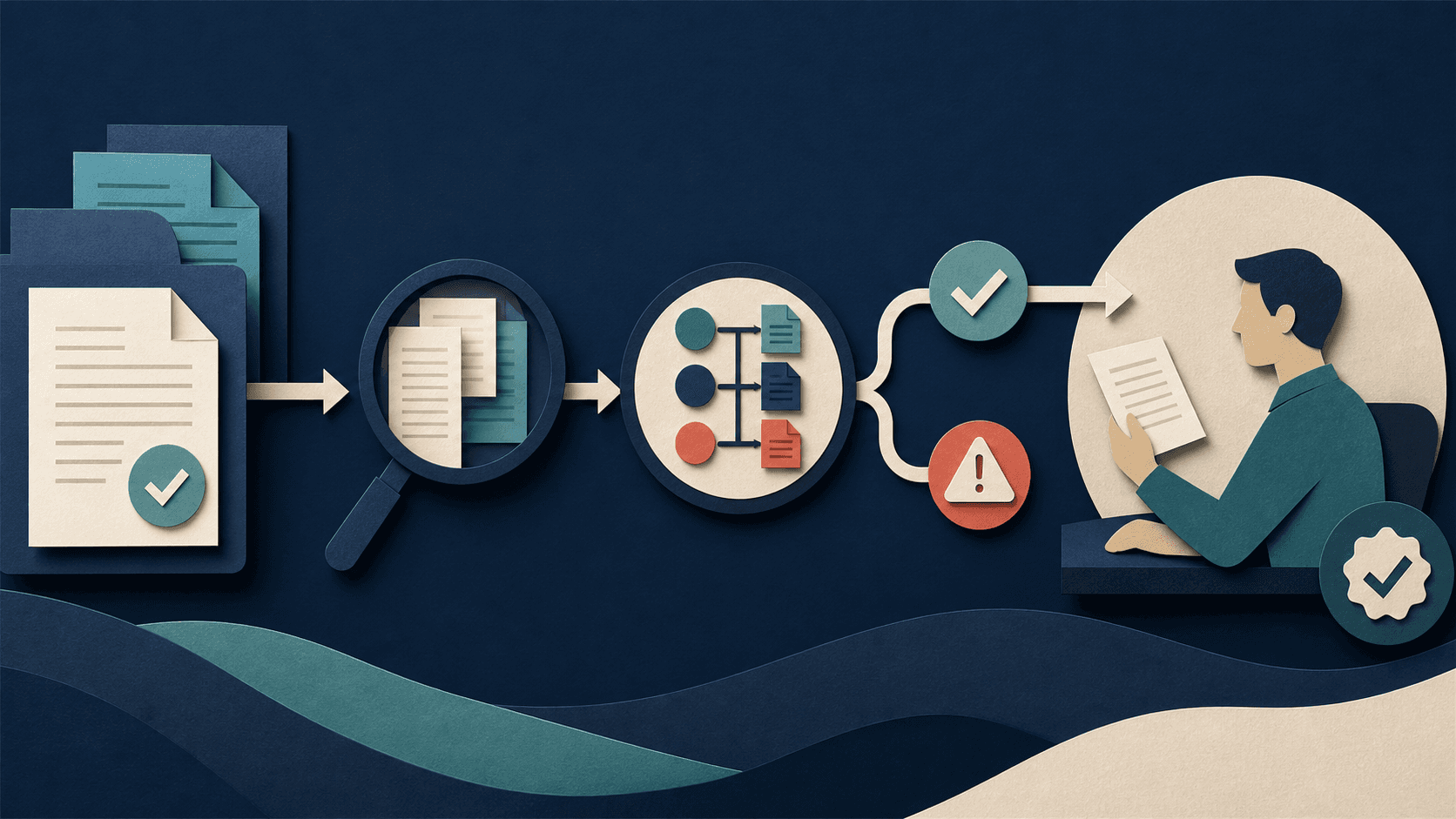
AI Fact-Checking Workflow: How to Verify Answers Before You Publish
A practical, evidence-led guide for people searching for AI fact checking workflow.
Treat every AI claim as unverified until it is supported by a relevant primary source. Extract atomic claims, classify their risk and freshness, open the original evidence, and record the source beside the final sentence. Includes a repeatable framework, measurement plan, limitations, and primary sources.
Read guide

Prompt Testing for Business: A Repeatable Evaluation Framework
A practical, evidence-led guide for people searching for prompt testing framework.
Create a fixed test set, define pass/fail criteria before reviewing outputs, run multiple trials, and version the prompt with its model and settings. A prompt is ready only when it performs reliably on ordinary and edge cases. Includes a repeatable framework, measurement plan, limitations, and primary sources.
Read guide

AI Social Media Audit: 2026 Template, Metrics, and Workflow
A practical, evidence-led guide for people searching for AI social media audit.
Export at least 90 days of channel data, group posts by format and audience job, and use AI to summarize patterns—not to declare causation. Keep recommendations tied to reach quality, engagement quality, clicks, and business outcomes. Includes a repeatable framework, measurement plan, limitations, and primary sources.
Read guide

Social Media Report Template for Clients: What to Include in 2026
A practical, evidence-led guide for people searching for social media report template.
A client report should show the goal, a small set of decision-relevant metrics, what changed, why the evidence matters, and the next actions. Put channel detail in an appendix rather than burying the decision in charts. Includes a repeatable framework, measurement plan, limitations, and primary sources.
Read guide

How to Find Your Best Time to Post Using Your Own Data
A practical, evidence-led guide for people searching for best time to post social media.
Use platform-specific audience activity and post performance over several weeks, then test comparable content in repeated time windows. Universal best-time charts are hypotheses; your audience and content format determine the answer. Includes a repeatable framework, measurement plan, limitations, and primary sources.
Read guide

Instagram Content Experiments: A 30-Day Testing Framework for 2026
A practical, evidence-led guide for people searching for Instagram content experiment.
Test one variable at a time across repeated posts: hook, format, topic, length, or CTA. Define the success metric first and retain losing tests, because failed hypotheses prevent repeated guesswork. Includes a repeatable framework, measurement plan, limitations, and primary sources.
Read guide

Social Media Analytics Dashboard for Small Business: What to Track
A practical, evidence-led guide for people searching for social media analytics dashboard small business.
Track one business outcome, two leading indicators, publishing consistency, and cost. A compact dashboard reviewed monthly is more useful than dozens of metrics nobody acts on. Includes a repeatable framework, measurement plan, limitations, and primary sources.
Read guide
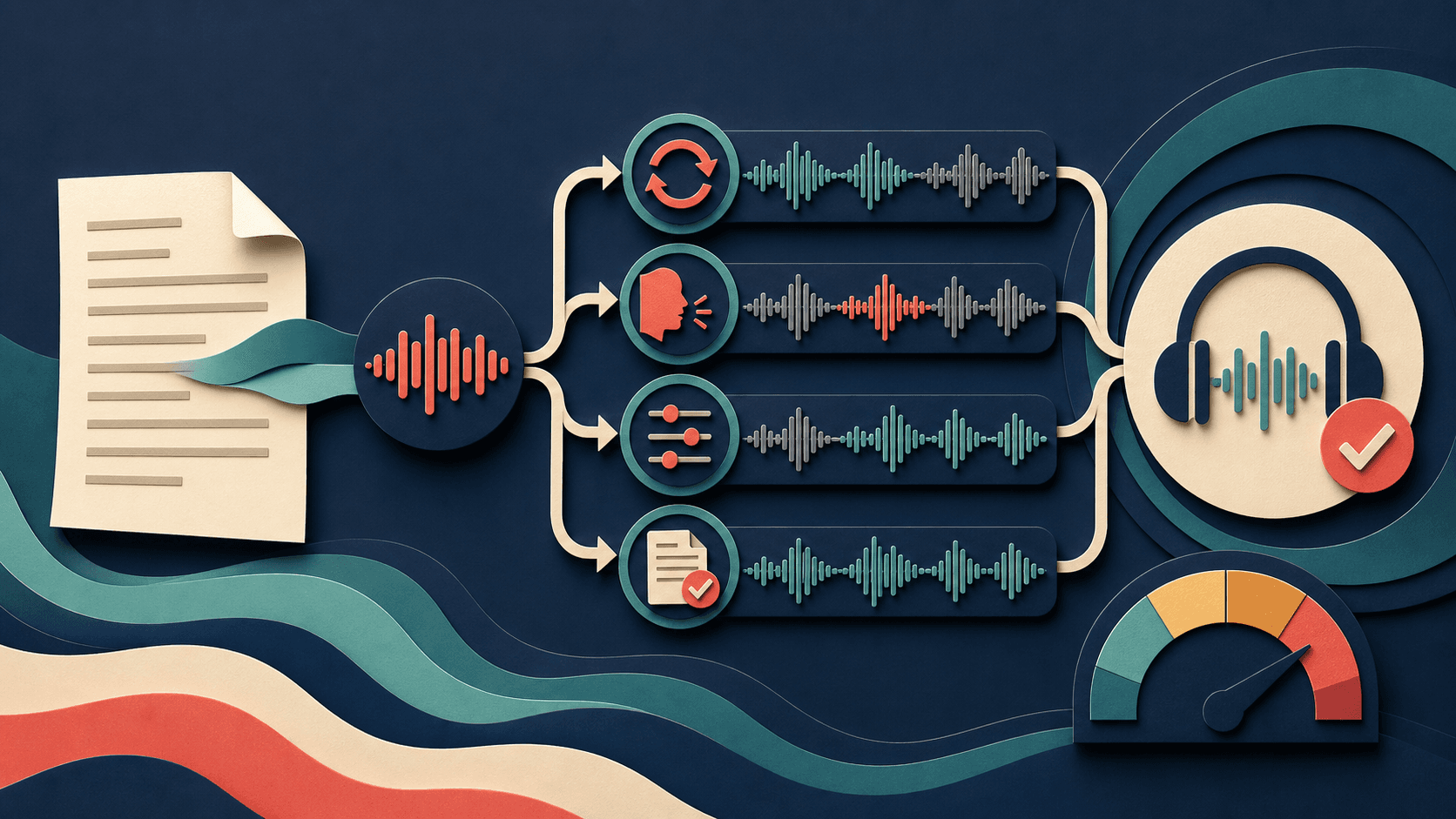
AI Voiceover Cost Calculator: Estimate Credits, Editing, and Total Cost
A practical, evidence-led guide for people searching for AI voiceover cost calculator.
Estimate script characters or minutes, generation retries, pronunciation fixes, editor time, music and mastering, then divide the total by approved finished minutes. Subscription price alone understates production cost. Includes a repeatable framework, measurement plan, limitations, and primary sources.
Read guide
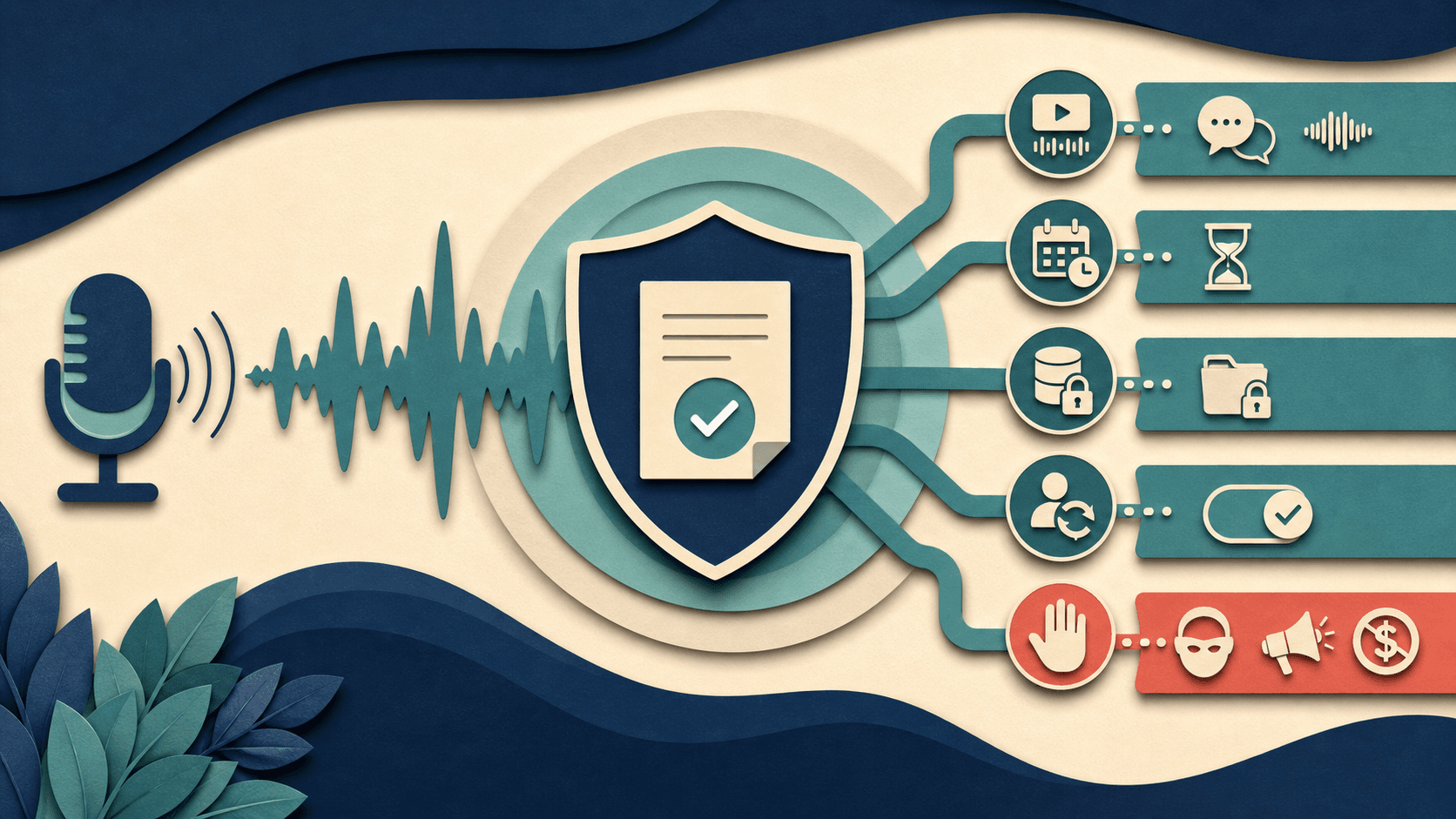
AI Voice Cloning Consent Checklist for Teams and Creators
A practical, evidence-led guide for people searching for AI voice cloning consent.
Obtain explicit written consent that defines the voice, permitted uses, channels, duration, revocation process, compensation, storage, and prohibited uses. Keep approval evidence with the production record. Includes a repeatable framework, measurement plan, limitations, and primary sources.
Read guide

AI Dubbing Quality Checklist: 25 Checks Before Publishing
A practical, evidence-led guide for people searching for AI dubbing quality checklist.
Review meaning, names, numbers, tone, timing, lip alignment, pronunciation, background mix, captions, disclosure, and cultural fit with a fluent reviewer. Passing technical sync is not the same as preserving the message. Includes a repeatable framework, measurement plan, limitations, and primary sources.
Read guide