Reviews, news and how-to guides
AI articles and reviews — page 18
Find a review, catch up on the news or learn how to complete a task. Browse by topic or filter the library below.
Not sure where to begin?
Answer three questions and get a focused tool shortlist for your budget and priority.
Use the AI Tool Finder →Choose a pathway
Explore by topic
Owners and lean teams
Work & Operations
Save time on research, meetings, planning, finance, administration, and repeatable operations.
Marketing and fundraising teams
Marketing & Growth
Plan campaigns, improve social publishing, email, analytics, fundraising, and measurable growth.
Writers and publishers
Content & Search
Research, write, optimize, refresh, and distribute useful content with responsible AI workflows.
Creators and communications teams
Video, Audio & Creative
Create, edit, repurpose, and distribute video, voice, podcasts, images, and presentations.
Service and community leaders
Customers & Community
Improve customer support, donor stewardship, volunteer coordination, outreach, and client communication.
Builders and decision makers
Build, Design & Govern
Choose and deploy AI safely across websites, apps, design systems, privacy, security, and governance.
Editor recommended
Start with these essential guides
Selected by the editors to help you get started.

How Small Business Owners Can Save 10+ Hours a Week With AI Automation in 2026
A practical, no-hype guide to automating the repetitive tasks that consume small business owners' most limited resource: time.
A practical, no-hype guide to automating the repetitive tasks that consume small business owners' most limited resource: time. Written for small business owners working 50+ hours a week on operations, marketing, and admin, with a decision framework, step-by-step workflow, measurable outcomes, and clear limitations.
Read guide
How Understaffed Nonprofits Can Build Capacity With AI Tools in 2026
A strategic framework for using AI to multiply a small team's output without burning out the people you have.
A strategic framework for using AI to multiply a small team's output without burning out the people you have. Written for nonprofit executive directors leading teams of fewer than five people, with a decision framework, step-by-step workflow, measurable outcomes, and clear limitations.
Read guide
How to Choose the Right AI Tool for Your Business
Stop chasing every new AI launch. A practical decision framework for evaluating AI tools based on your actual needs, budget, and risk tolerance.
A practical decision framework for evaluating AI tools: define the problem, score contenders, decide build vs. buy, and know when to cancel. No hype, just a repeatable process.
Read guide
Recently published
Latest articles
Vid2Notes Review: Turn Training Videos Into Usable Notes
Review Vid2Notes for illustrated training notes: free upload limits, annual billing, export options and a practical accuracy check before sharing.
Review Vid2Notes for illustrated training notes: free upload limits, annual billing, export options and a practical accuracy check before sharing.
Read guide
Voice AI for Canva Review: Narration Costs and Practical Limits
Review Voice AI for Canva: character allowances, in-app generation and a narration test for presentations, training videos and client campaigns.
Review Voice AI for Canva: character allowances, in-app generation and a narration test for presentations, training videos and client campaigns.
Read guide
LayerBack Review: Turn Diagram Images Into Editable Files
Review LayerBack for editable Visio, PowerPoint and draw.io diagrams, including download credits, privacy limits and a connector-checking trial.
Review LayerBack for editable Visio, PowerPoint and draw.io diagrams, including download credits, privacy limits and a connector-checking trial.
Read guide
The weekly briefing
Make better AI decisions each week.
Get tool recommendations, product and pricing news, and a practical task to try each week.
Browse reviews, news and guides
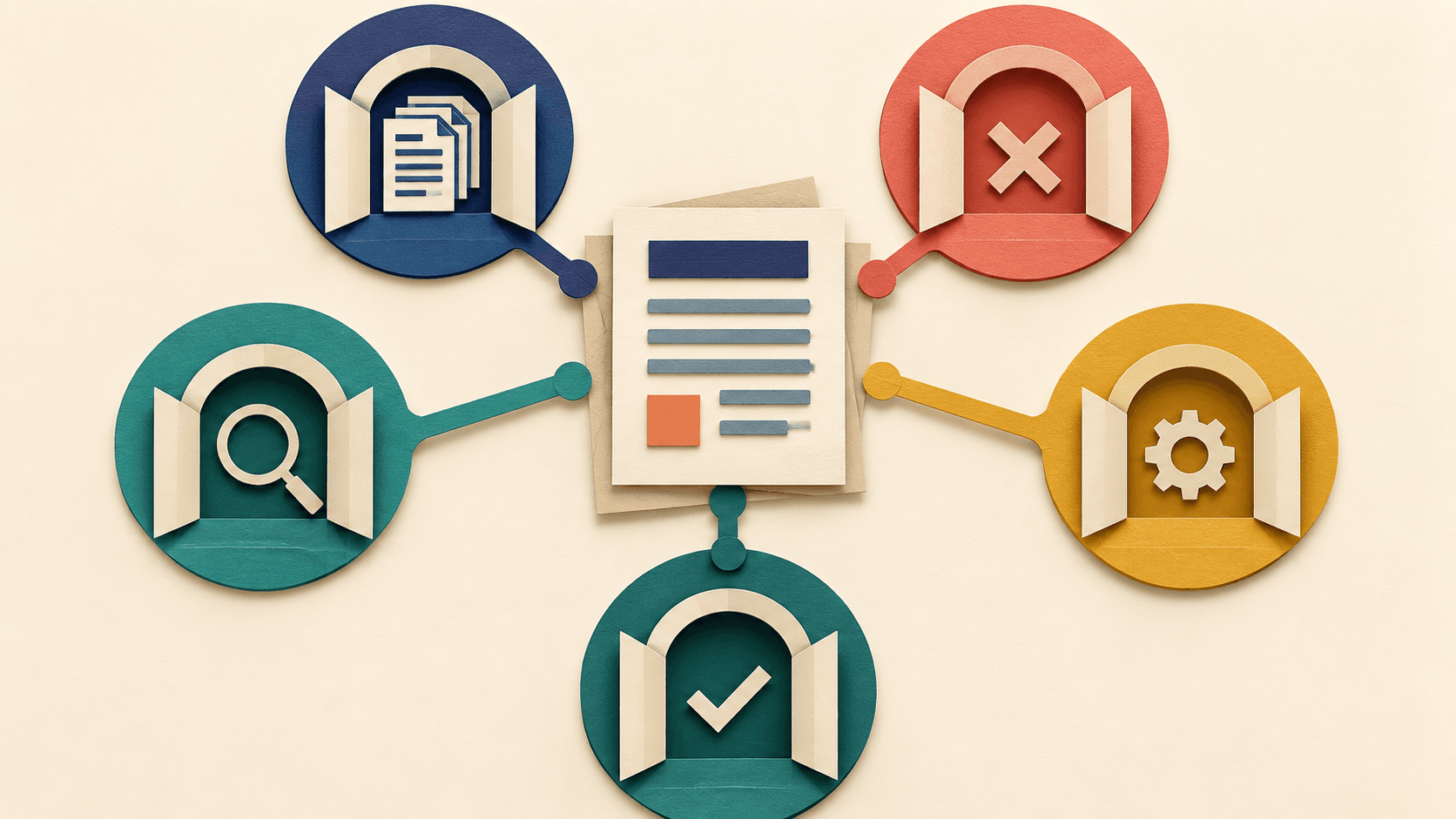
Is This AI Summary Decision-Ready? Run This Test
Fluent compression can hide unsupported claims, missing exceptions, stale evidence, and decisions nobody actually owns.
A seven-question acceptance test for summaries that will influence a purchase, policy, plan, or customer decision.
Read guide
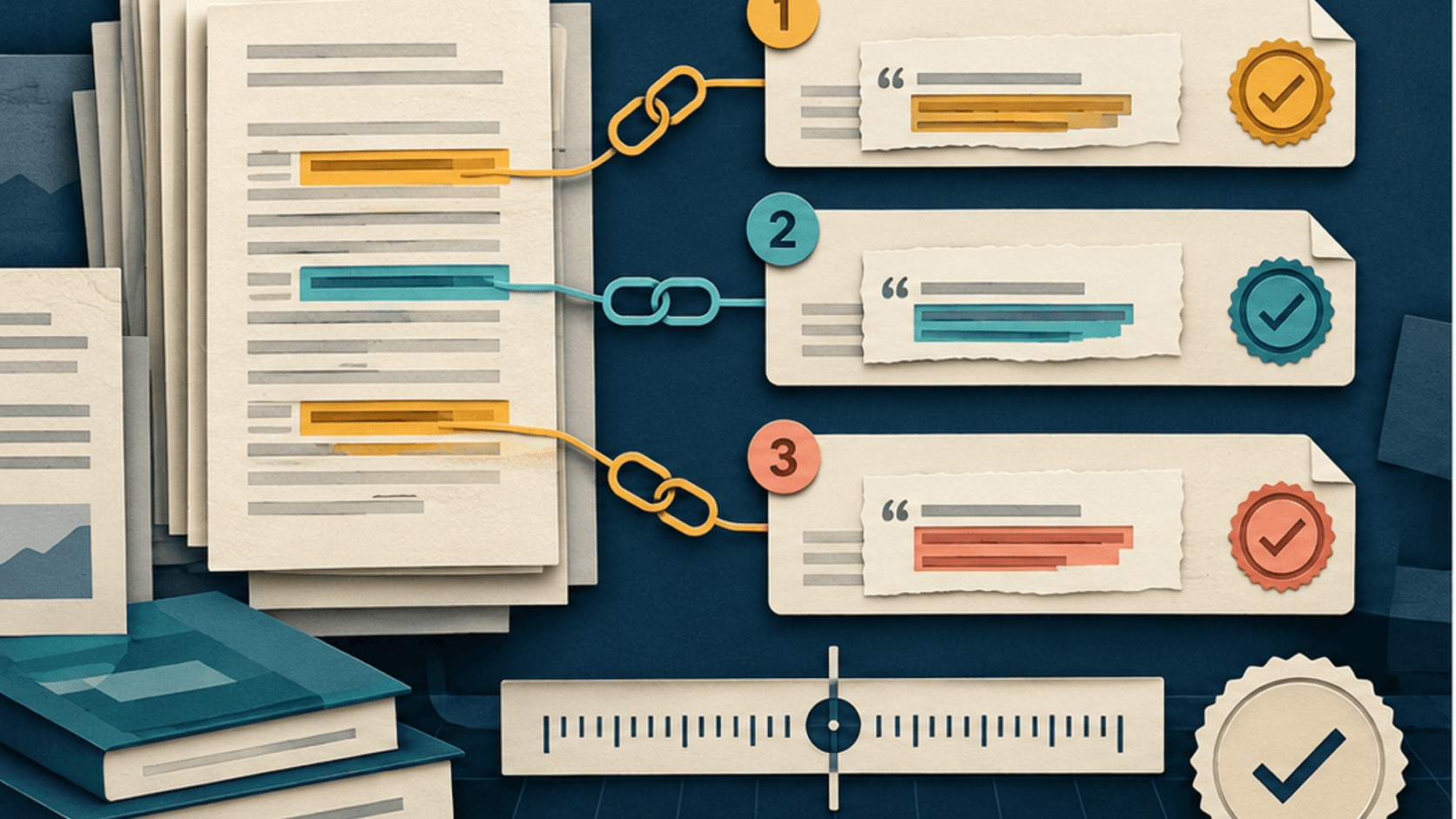
DiscoverAI Citation Accuracy Benchmark: Methodology
A frozen protocol for testing whether AI research answers are correct, fully supported, precisely cited, and willing to abstain.
This benchmark uses 12 synthetic source documents, 18 answer-keyed questions, conflicting and outdated evidence, and six deliberately unanswerable prompts. Products receive no score until preserved outputs pass blinded item-level adjudication.
Read guide
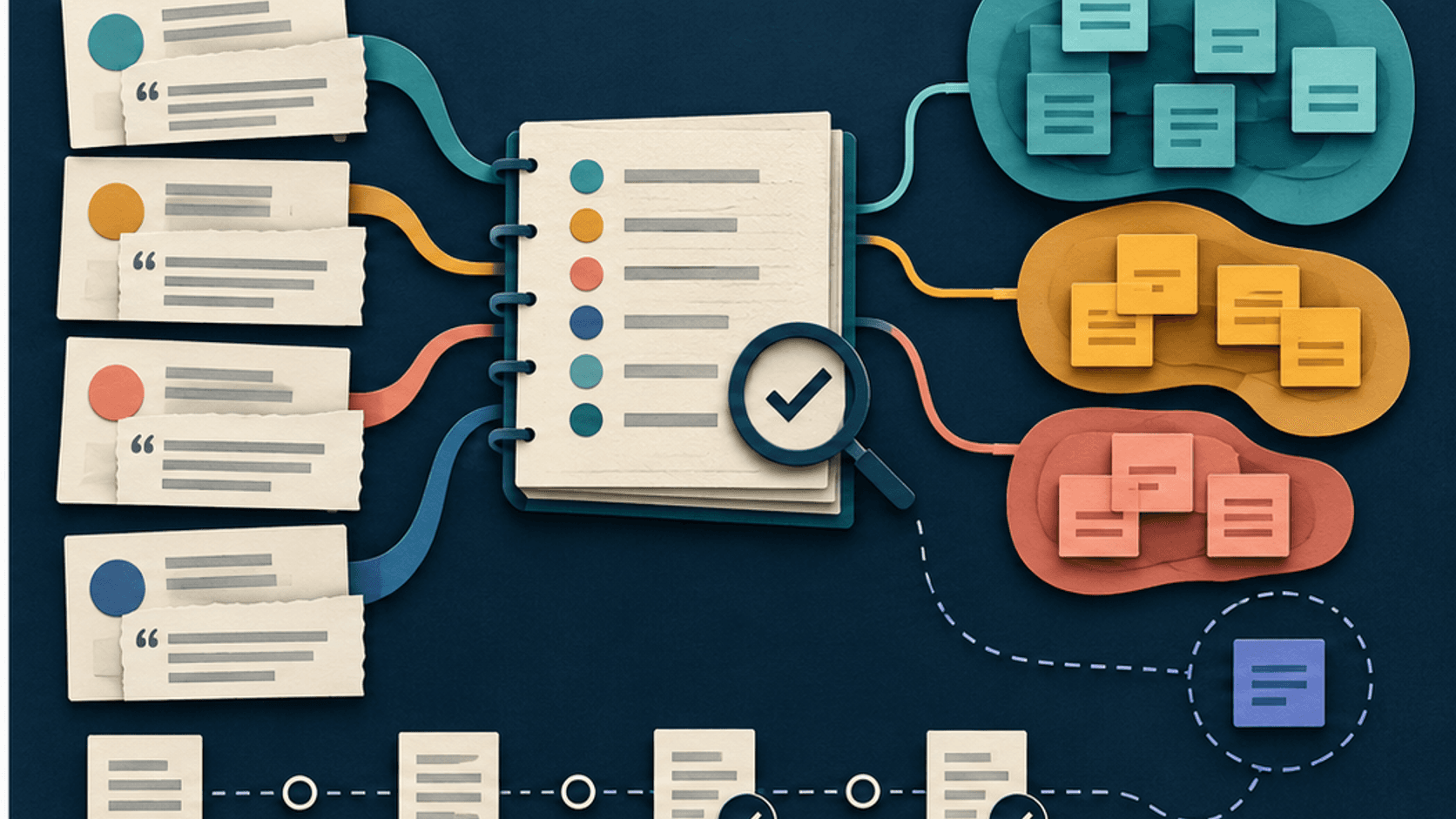
DiscoverAI Thematic Analysis Benchmark: Methodology
A human-reviewed protocol for testing whether AI can organize qualitative evidence without flattening disagreement or inventing themes.
This benchmark uses 16 synthetic interview transcripts, a frozen reference codebook, contradictory cases, negation, and minority concerns. It measures evidence-backed themes and attribution—not how polished a summary sounds.
Read guide
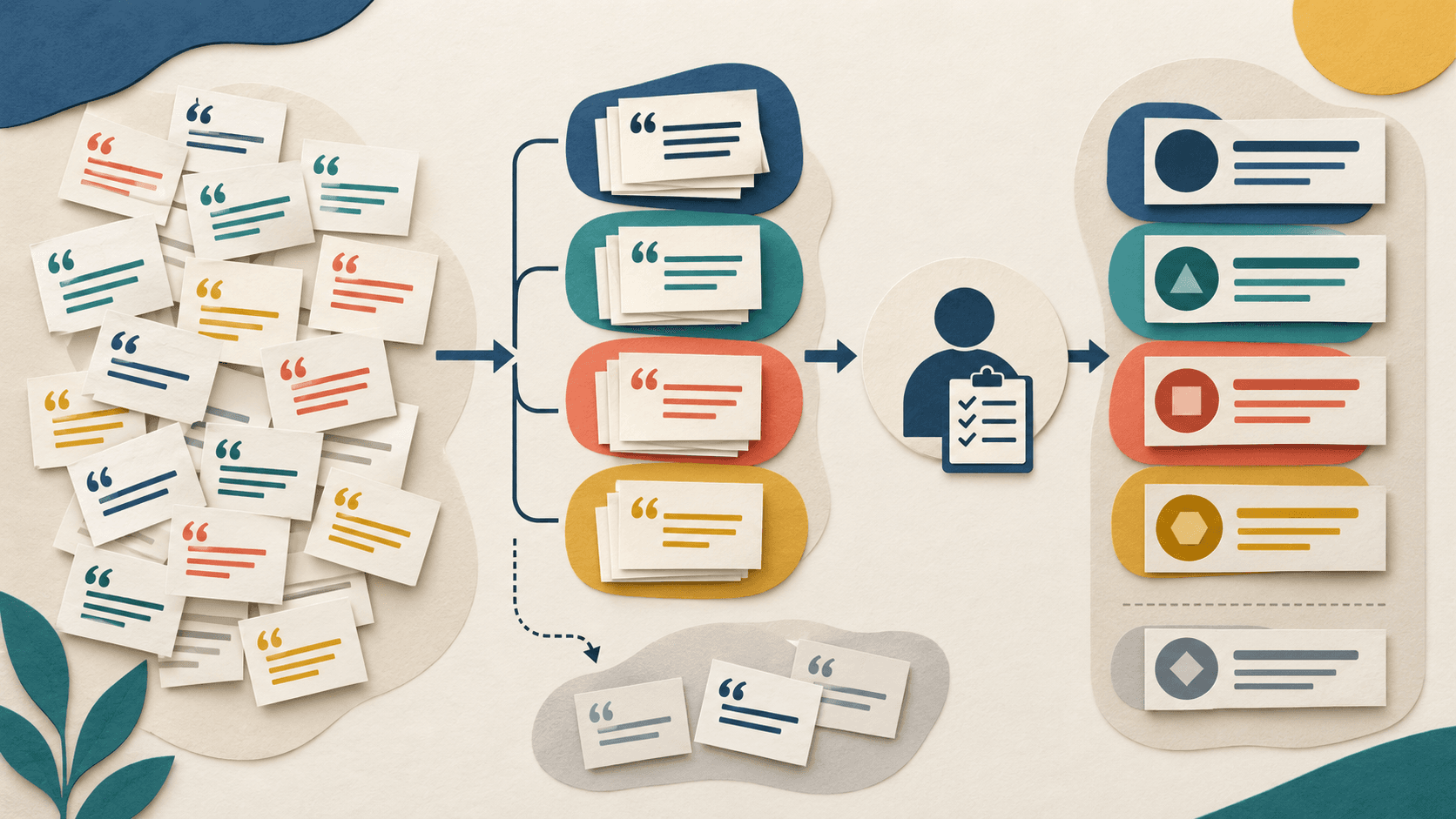
Best AI Tools for Qualitative Research in 2026
Choose by evidence traceability, analysis workflow, governance, and export—not by how quickly a tool can generate a polished summary.
A research-based guide to choosing AI software for interviews, open-ended surveys, thematic analysis, and reusable research repositories.
Read guide
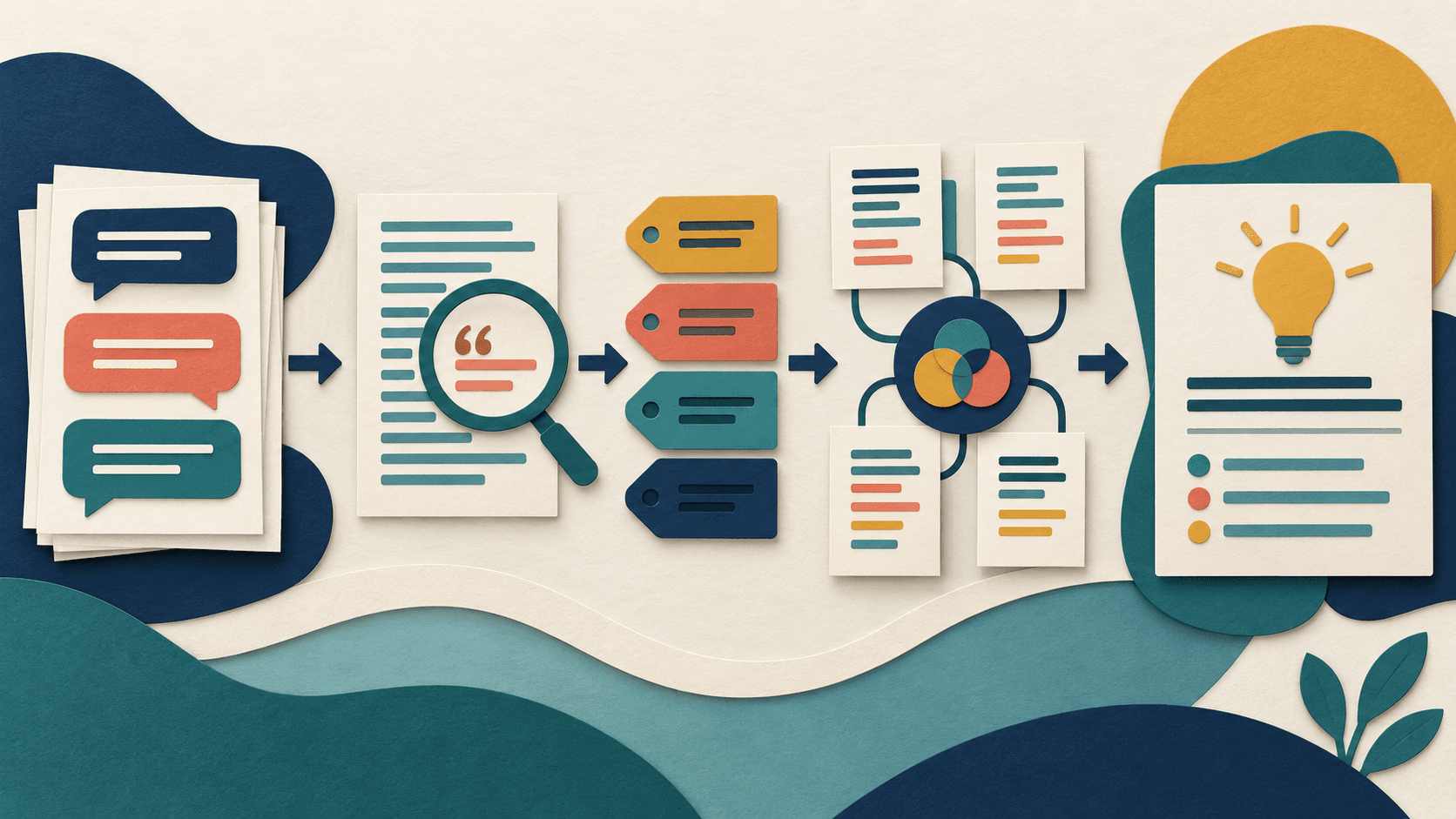
How to Analyze Customer Interviews With AI Without Losing the Evidence
Use AI to accelerate transcription and comparison while keeping participant consent, exact quotations, contradictory cases, and researcher judgment visible.
A practical seven-step workflow for turning customer interviews into source-linked findings without letting a generated summary become the evidence.
Read guide

AI Thematic Analysis: A Human-Reviewed Codebook Workflow
A fast first pass is useful only when researchers can inspect code definitions, revise decisions, preserve negative cases, and explain how themes were formed.
A rigorous workflow for AI-assisted qualitative coding that keeps the codebook, evidence, disagreements, and theme decisions reviewable.
Read guide
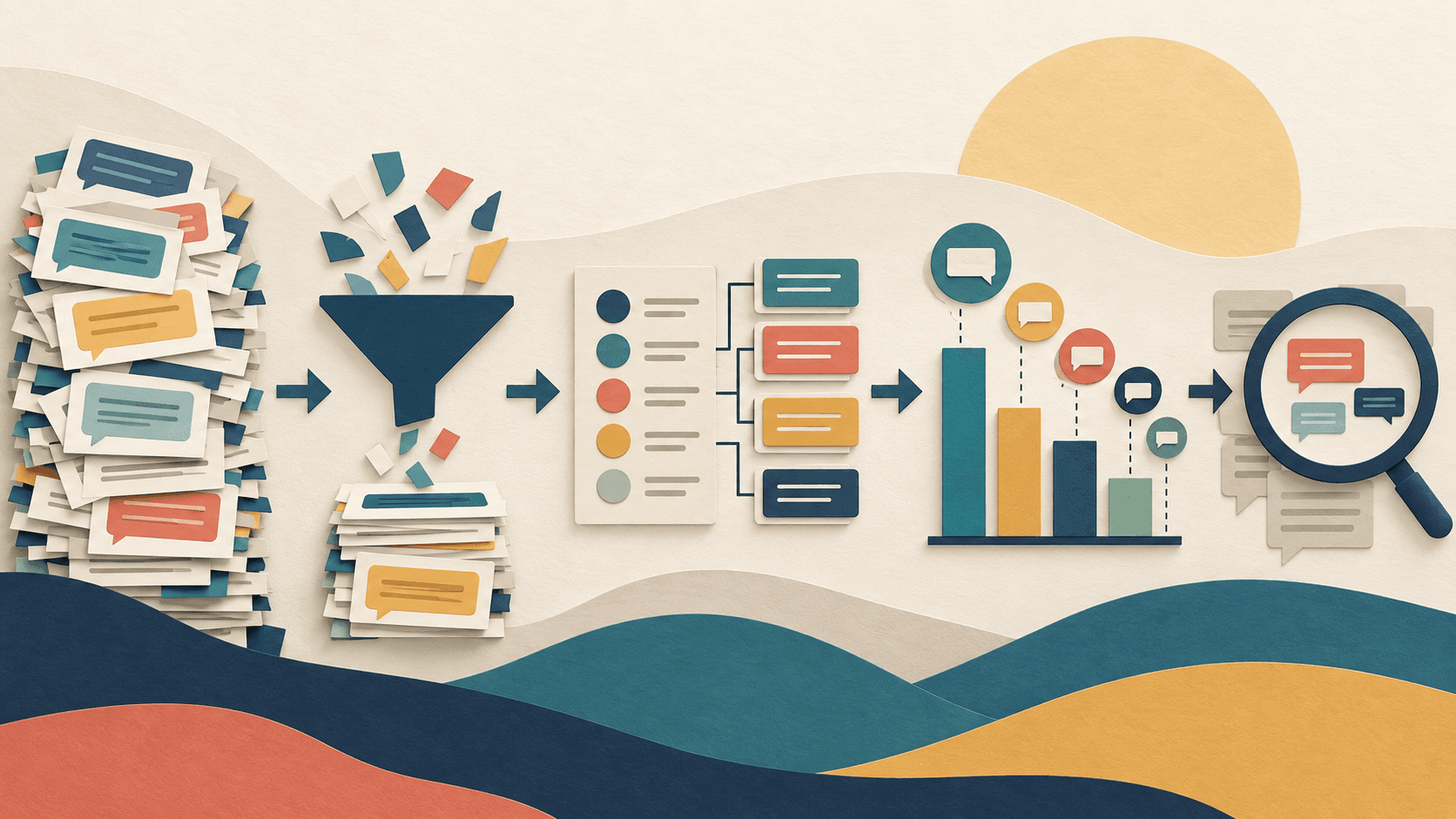
How to Analyze Open-Ended Survey Responses With AI
Scale beyond manual reading without confusing generated categories, noisy text, or raw mention counts with representative customer evidence.
A practical AI workflow for open-text survey analysis, from data cleaning and codebook calibration to minority views and source-linked reporting.
Read guide

AI Research Repository Buyer’s Checklist: 25 Questions Before You Buy
A repository should preserve organizational memory without turning participant data into an ungoverned chatbot or trapping years of evidence behind a vendor boundary.
Twenty-five procurement questions for evaluating AI research repositories across evidence quality, governance, reuse, interoperability, and exit readiness.
Read guide

ChatGPT Dots vs. Meta Muse: Which Always-On Agent Fits?
Dots starts with professional ongoing work inside ChatGPT; Muse starts with personal errands and a lower-cost consumer path.
Choose ChatGPT Dots for ongoing professional work inside the ChatGPT ecosystem. Choose Meta Muse for consumer-oriented personal errands and a lower entry price.
Read guide
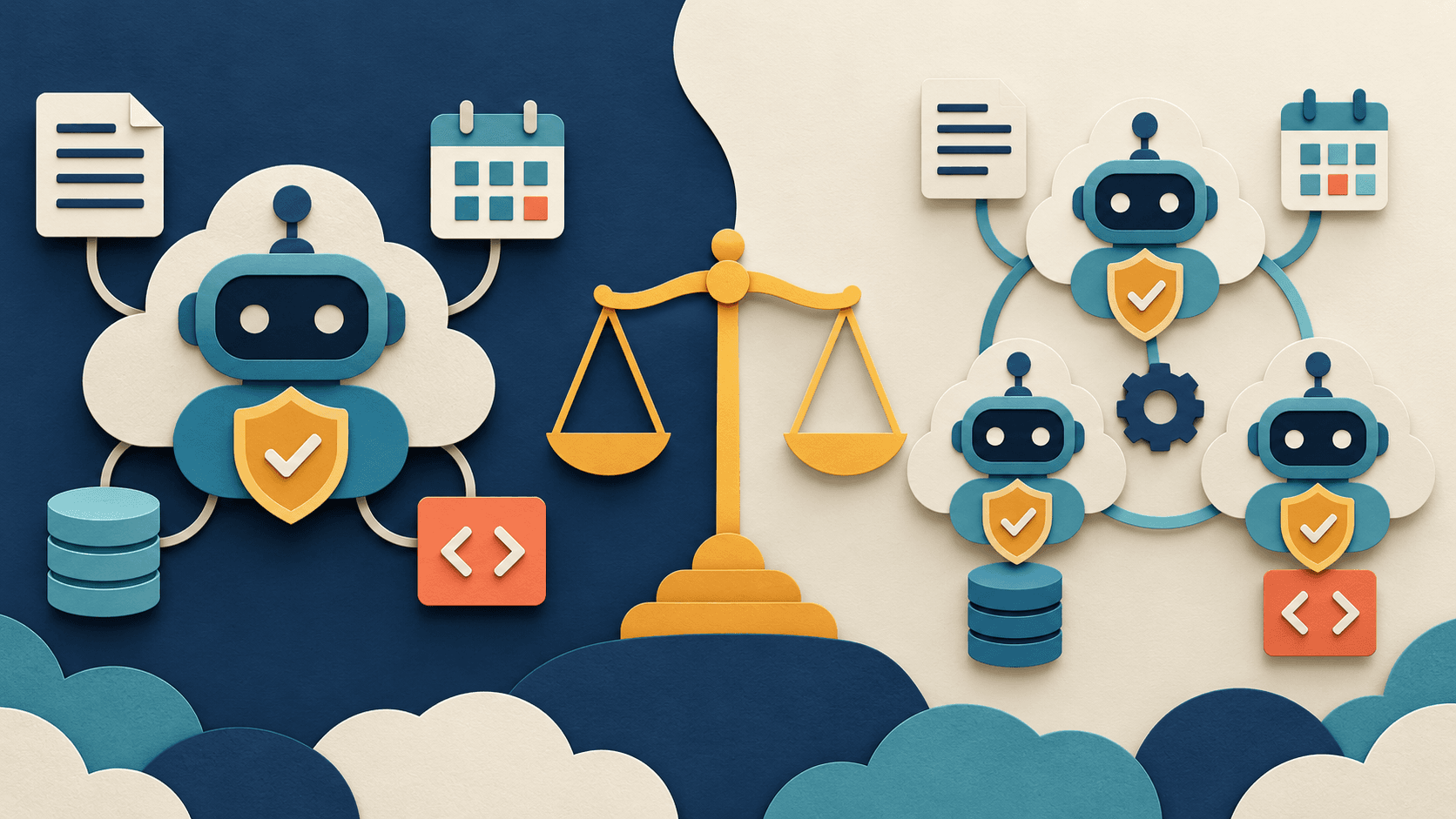
ChatGPT Dots vs. Grok Bot: One Agent or an AI Team?
Dots begins with one persistent agent; Grok Bot begins with a roster of specialists that can coordinate work.
Choose Dots for one ongoing owner inside ChatGPT. Choose Grok Bot when several role-based agents and agent-to-agent coordination justify more governance.
Read guide

ChatGPT Dots vs. Claude Dispatch: Cloud Agent or Desktop Delegate?
Dots owns ongoing work in a cloud computer; Dispatch lets you steer Claude Cowork tasks running from your computer while away.
Choose Dots for a cloud-first persistent responsibility. Choose Claude Dispatch for phone-to-desktop delegation when local files and apps are central.
Read guide

ChatGPT Dots vs. OpenClaw: Managed Cloud or Self-Hosted Agent?
Dots sells a managed persistent agent; OpenClaw gives technical operators a configurable gateway they must secure and maintain.
Choose Dots for managed convenience inside ChatGPT. Choose OpenClaw for hosting and model control only when you can own security and operations.
Read guide
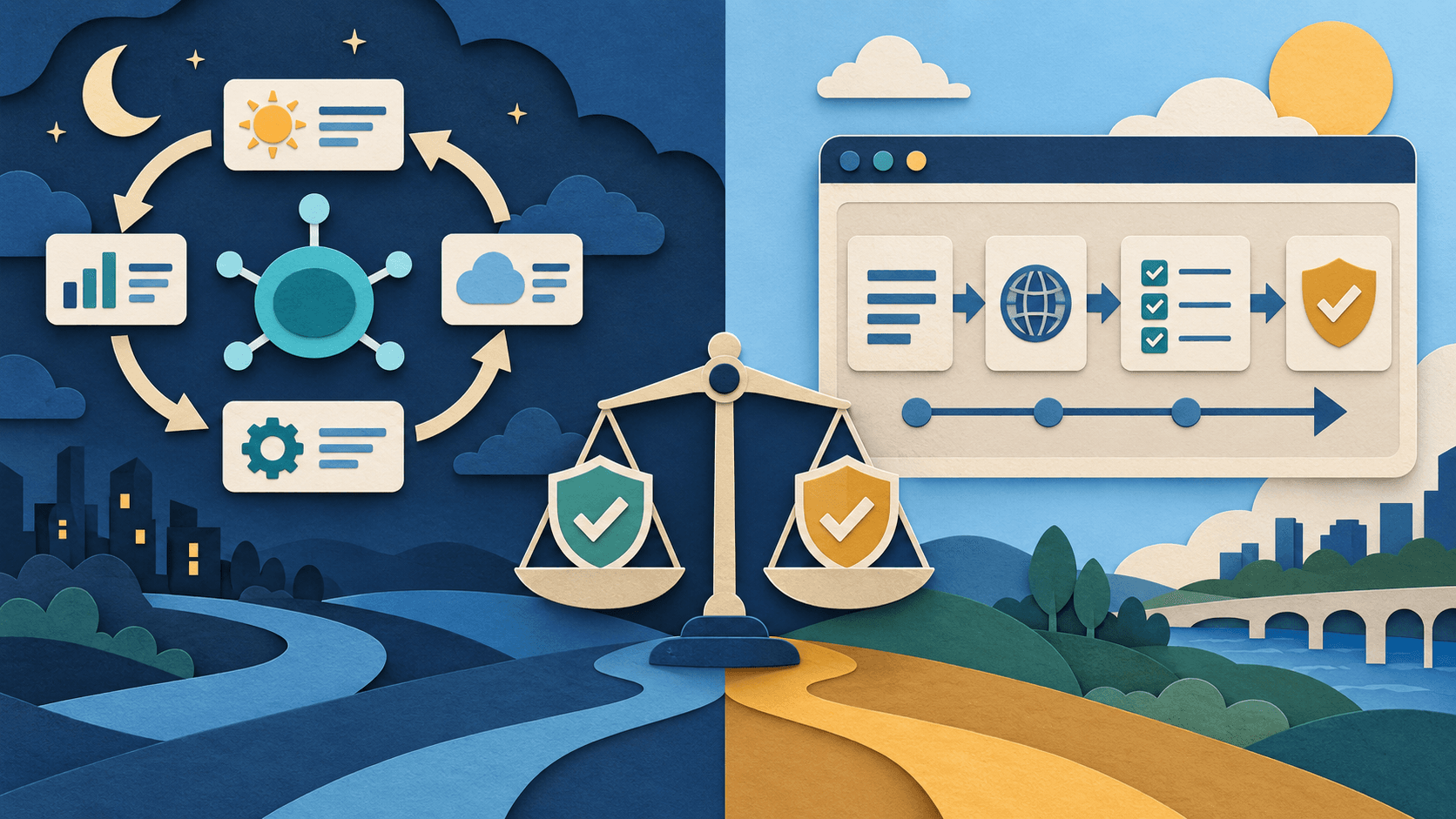
ChatGPT Dots vs. ChatGPT Agent: Ongoing Owner or One-Time Task?
A dot owns an ongoing responsibility; ChatGPT Agent is the cleaner choice for a bounded task you start, review, and finish.
Use a dot for durable goals, monitoring, and recurring work. Use ChatGPT Agent for one defined browser or research task that should stop when complete.
Read guide

Anthropic Opens More Capable Biology Access—Verification Is the Product
The program separates ordinary research access from project-specific high-risk work, but verification, insider controls, monitoring, and safe revocation now carry more weight.
Anthropic's beta Life Sciences Verification Program gives vetted teams more permissive biology access. The important story is how identity, project scope, and safeguards travel with that access.
Read guide

ChatGPT for Financial Services Bundles the Data—Now Buyers Must Audit the Entitlements
Bundled market data can remove connector work, but coverage, delay, redistribution, workspace permissions, and independent review remain part of every answer.
ChatGPT for Financial Services combines GPT-6 Astra with included finance datasets. The buyer decision turns on data scope, traceability, entitlement, and accepted analyst work.
Read guide

ChatGPT for Financial Services Review 2026: Data, Controls, and Fit
Its advantage is the combination of models, licensed data, templates, and controls; its value depends on source coverage and fewer hours to an approved artifact.
ChatGPT for Financial Services is worth a controlled pilot for banks and investment teams that can audit data entitlements, formulas, citations, permissions, and final analyst work.
Read guide

Gemini for Windows Review 2026: Desktop Access, Privacy, and Fit
A global desktop app makes Gemini easier to reach; it does not make every active window, connected account, or generated answer appropriate to share or trust.
Gemini for Windows is convenient for people already using Google's ecosystem. Test whether shortcut access saves time after corrections, context selection, and privacy review.
Read guide
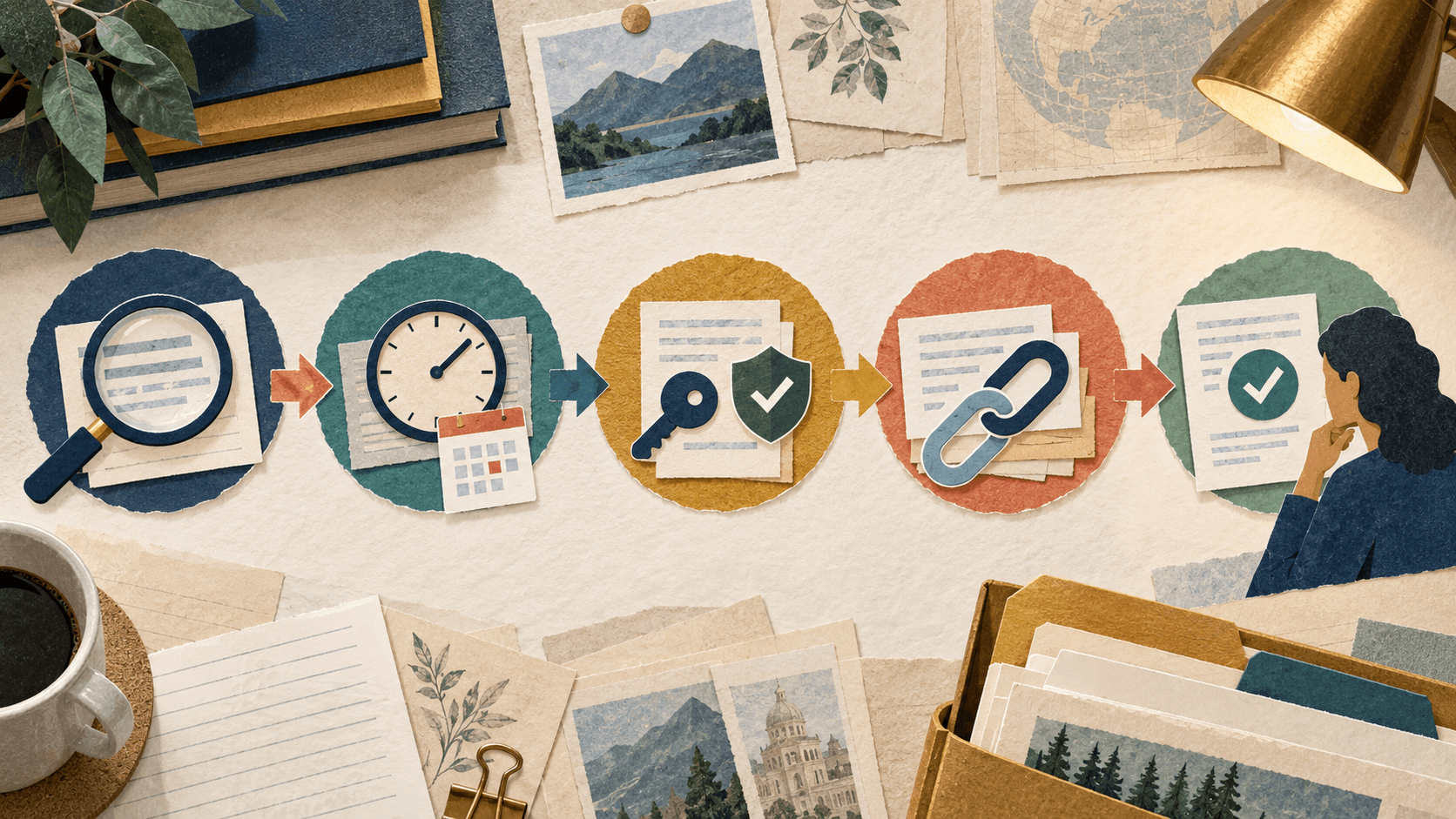
Audit AI Citations Before the Answer Leaves Your Team
A clickable citation is a route to evidence—not proof that the evidence is current, authorized, complete, or correctly interpreted.
Use a repeatable source audit for AI research, financial analysis, legal work, and client materials. Check identity, time, rights, support, and transformation.
Read guide