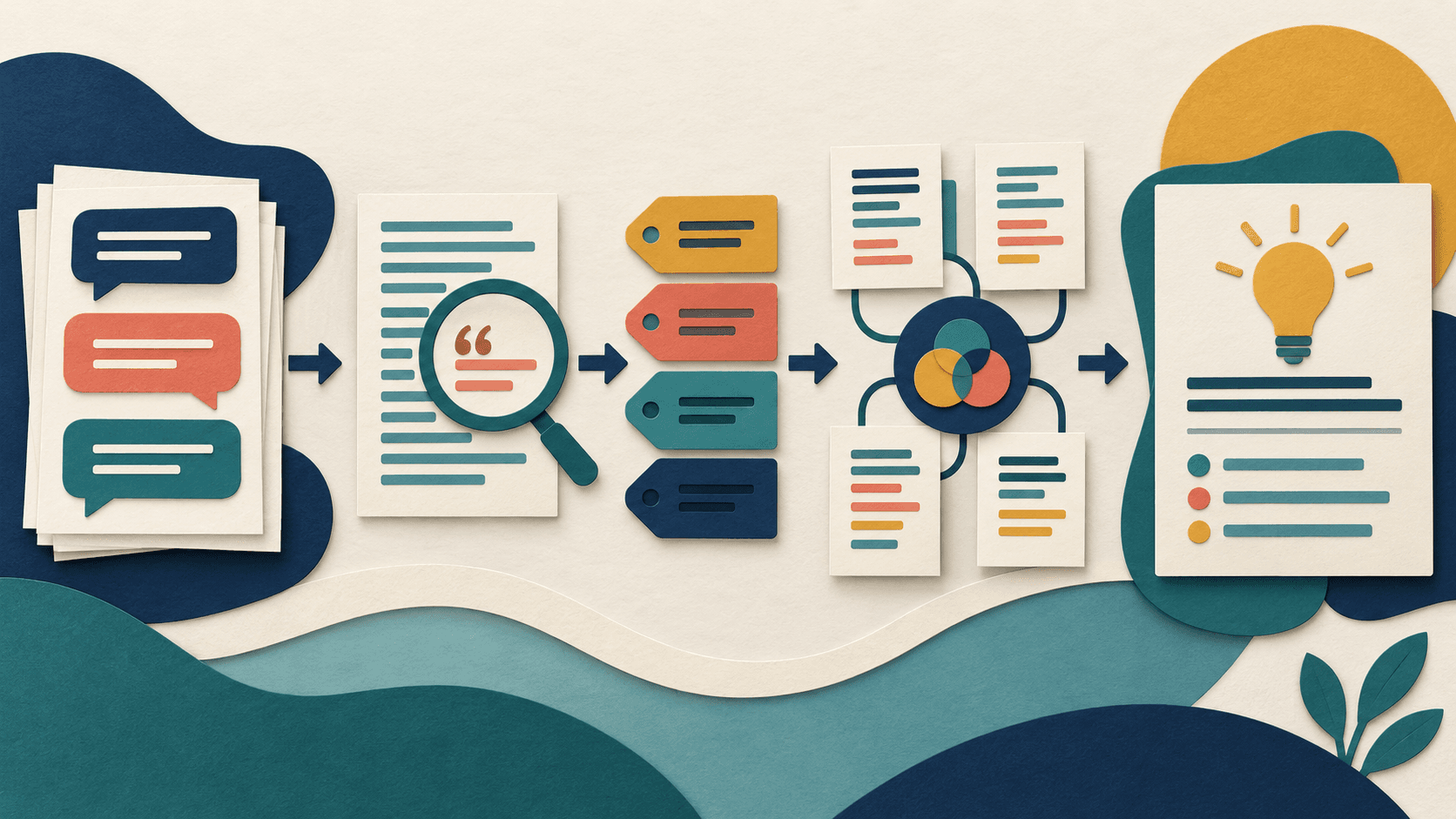
Is This AI Summary Decision-Ready? Run This Test
Fluent compression can hide unsupported claims, missing exceptions, stale evidence, and decisions nobody actually owns.
Bottom line
A seven-question acceptance test for summaries that will influence a purchase, policy, plan, or customer decision.
Editorial accountability
Who checked this guide
- Evaluation type
- Research-based verification
- Last materially checked
- Evidence
- 4 listed sources
Hands-on testing is identified explicitly. Research-based coverage uses cited product documentation and other named sources; it does not imply every paid plan was used. Read the full methodology.
Editorial basis
What this guidance is based on
- Editorial basis
- Source-led analysis
- Primary references
- 4
- Products covered
- 3
- Last checked
- 2026-10-03
Important limits
- • The required review depth should increase with decision consequence.
- • A source-supported summary can still reflect biased, incomplete, or inappropriate source material.
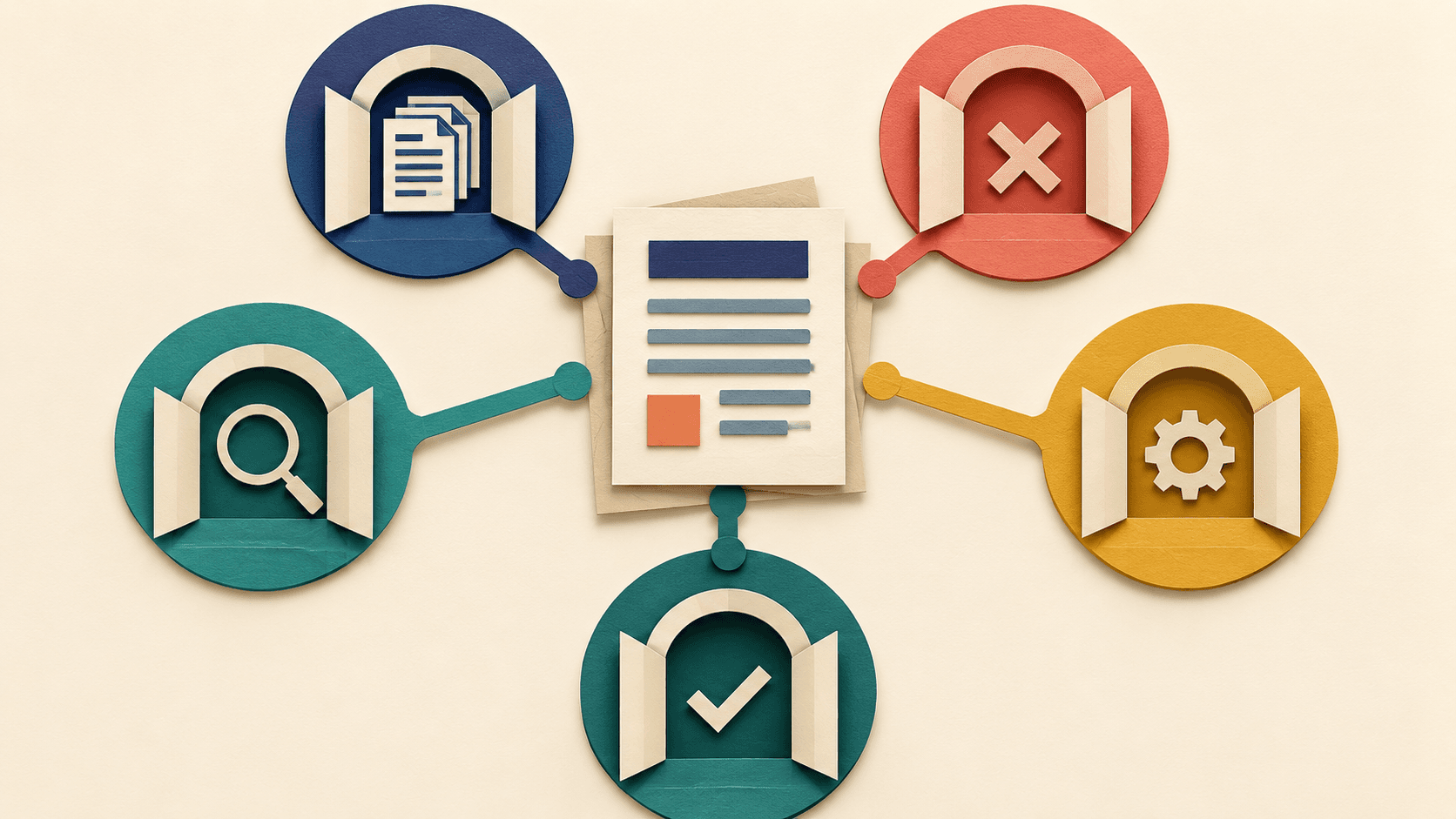
Run seven checks
- Can every material claim open to an exact source?
- Are quotations, numbers, dates, and entities correct in context?
- Does the summary include conflicting and missing evidence?
- Is uncertainty explicit rather than smoothed away?
- Does the conclusion stay inside the source set and sample?
- Are the decision, owner, deadline, and rollback clear?
- Can another reviewer reproduce the result from the saved inputs?
Reject the summary if a high-impact claim lacks support, a restricted source is exposed, prevalence is invented, or the proposed action has no accountable owner. Track reviewer minutes and corrections: a short summary that needs a long forensic repair is not efficient. Save the accepted version with the source manifest, model and prompt, review notes, and approval date.
Sources and verification
Product details and claims were checked against the following primary sources.
Frequently asked questions
Can AI replace human judgment in AI summary review?
No. AI can accelerate retrieval, organization, and first-pass analysis, but an accountable person must verify evidence, context, permissions, and the final decision.
What should a team measure?
Measure source accuracy, correction time, missed counterevidence, permission behavior, export quality, and cost per accepted deliverable—not output volume.
What data is safe to use?
Only data covered by the participant notice, contract, organizational policy, and vendor terms. Remove unnecessary identifiers and keep the original evidence outside the model workflow.
What is the minimum audit trail?
Keep the source manifest, prompt and model record, output, reviewer corrections, approval decision, and deletion or retention record.
Tools mentioned in this article
ChatGPT
The general-purpose AI assistant that started it all
OpenAI's flagship conversational AI model, powering everything from casual chat to complex reasoning, coding, and creative work.
Claude
Anthropic's thoughtful, safety-focused AI with exceptional long-form reasoning
Claude excels at deep analysis, long-form writing, and nuanced reasoning. Built by Anthropic with a focus on safety and helpfulness.
NotebookLM
A source-grounded Google research workspace for asking questions and generating overviews from a controlled source set
NotebookLM is a strong research companion when you already have a defined source library, but citations, source completeness, privacy, and plan limits still require human review.
Read next