Reviews, news and how-to guides
AI articles and reviews — page 34
Find a review, catch up on the news or learn how to complete a task. Browse by topic or filter the library below.
Not sure where to begin?
Answer three questions and get a focused tool shortlist for your budget and priority.
Use the AI Tool Finder →Choose a pathway
Explore by topic
Owners and lean teams
Work & Operations
Save time on research, meetings, planning, finance, administration, and repeatable operations.
Marketing and fundraising teams
Marketing & Growth
Plan campaigns, improve social publishing, email, analytics, fundraising, and measurable growth.
Writers and publishers
Content & Search
Research, write, optimize, refresh, and distribute useful content with responsible AI workflows.
Creators and communications teams
Video, Audio & Creative
Create, edit, repurpose, and distribute video, voice, podcasts, images, and presentations.
Service and community leaders
Customers & Community
Improve customer support, donor stewardship, volunteer coordination, outreach, and client communication.
Builders and decision makers
Build, Design & Govern
Choose and deploy AI safely across websites, apps, design systems, privacy, security, and governance.
Editor recommended
Start with these essential guides
Selected by the editors to help you get started.

How Small Business Owners Can Save 10+ Hours a Week With AI Automation in 2026
A practical, no-hype guide to automating the repetitive tasks that consume small business owners' most limited resource: time.
A practical, no-hype guide to automating the repetitive tasks that consume small business owners' most limited resource: time. Written for small business owners working 50+ hours a week on operations, marketing, and admin, with a decision framework, step-by-step workflow, measurable outcomes, and clear limitations.
Read guide
How Understaffed Nonprofits Can Build Capacity With AI Tools in 2026
A strategic framework for using AI to multiply a small team's output without burning out the people you have.
A strategic framework for using AI to multiply a small team's output without burning out the people you have. Written for nonprofit executive directors leading teams of fewer than five people, with a decision framework, step-by-step workflow, measurable outcomes, and clear limitations.
Read guide
How to Choose the Right AI Tool for Your Business
Stop chasing every new AI launch. A practical decision framework for evaluating AI tools based on your actual needs, budget, and risk tolerance.
A practical decision framework for evaluating AI tools: define the problem, score contenders, decide build vs. buy, and know when to cancel. No hype, just a repeatable process.
Read guide
Recently published
Latest articles
Vid2Notes Review: Turn Training Videos Into Usable Notes
Review Vid2Notes for illustrated training notes: free upload limits, annual billing, export options and a practical accuracy check before sharing.
Review Vid2Notes for illustrated training notes: free upload limits, annual billing, export options and a practical accuracy check before sharing.
Read guide
Voice AI for Canva Review: Narration Costs and Practical Limits
Review Voice AI for Canva: character allowances, in-app generation and a narration test for presentations, training videos and client campaigns.
Review Voice AI for Canva: character allowances, in-app generation and a narration test for presentations, training videos and client campaigns.
Read guide
LayerBack Review: Turn Diagram Images Into Editable Files
Review LayerBack for editable Visio, PowerPoint and draw.io diagrams, including download credits, privacy limits and a connector-checking trial.
Review LayerBack for editable Visio, PowerPoint and draw.io diagrams, including download credits, privacy limits and a connector-checking trial.
Read guide
The weekly briefing
Make better AI decisions each week.
Get tool recommendations, product and pricing news, and a practical task to try each week.
Browse reviews, news and guides

Tambo Review 2026: Generative UI for React, Pricing, and Fit
A research-based Tambo review covering features, pricing, privacy, limitations, alternatives, and a practical buyer test.
Tambo is an open-source React toolkit and hosted service for generative interfaces that select, populate, and update developer-registered components through natural language.
Read guide

Daytona Review 2026: AI Code Sandboxes, Security, and Pricing
A research-based Daytona review covering features, pricing, privacy, limitations, alternatives, and a practical buyer test.
Daytona provides API-controlled container, VM, Windows, and GPU sandboxes with dedicated filesystems, networking, lifecycle controls, snapshots, previews, and protected secrets.
Read guide
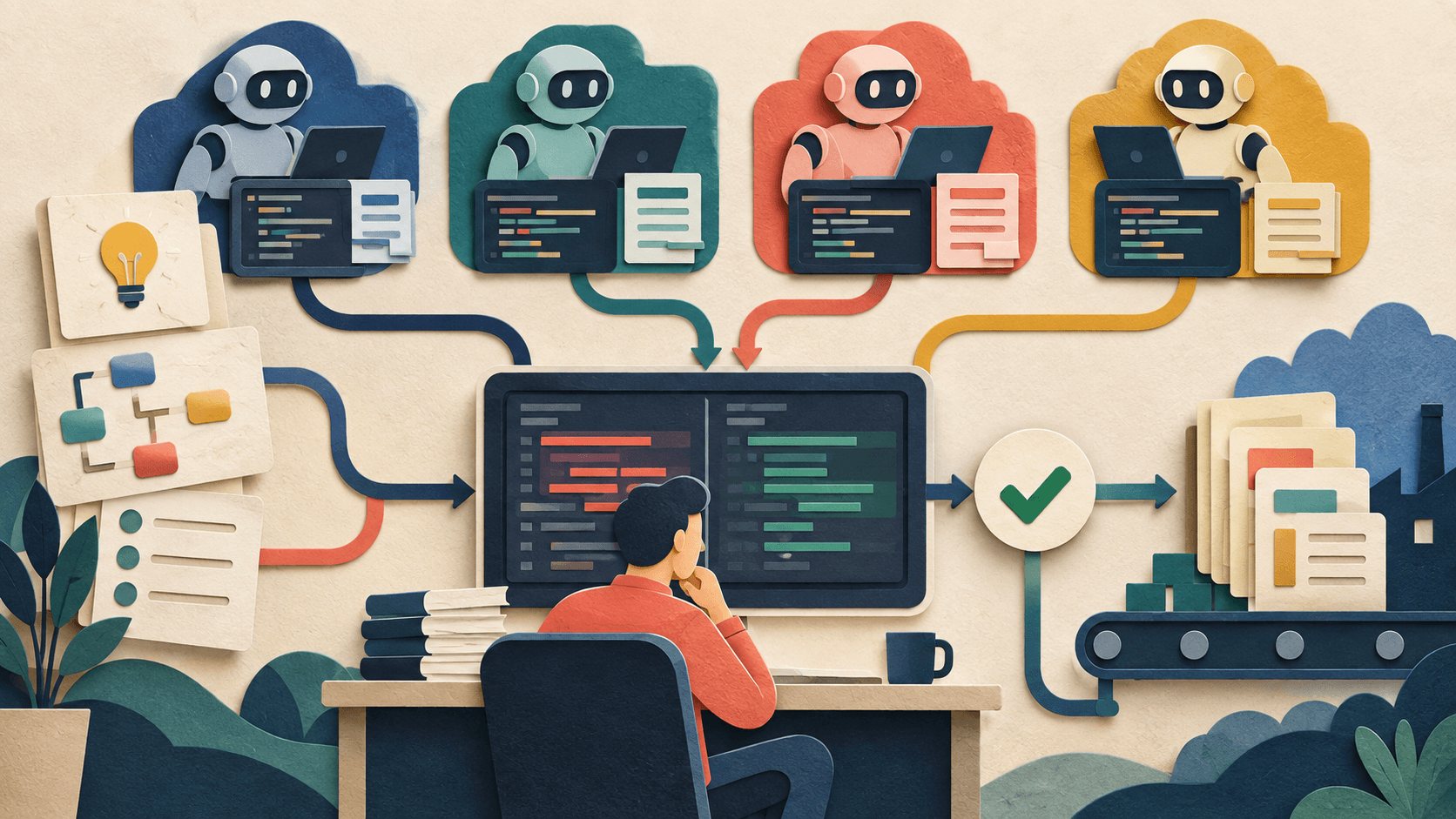
HumanLayer Review 2026: Coding Agent Workspace, Pricing, and Fit
A research-based HumanLayer review covering capabilities, pricing, privacy, limitations, alternatives, and a practical buyer test.
HumanLayer is a multiplayer coding-agent IDE and cloud workspace that organizes agent sessions, planning artifacts, code changes, and human feedback across local and remote development environments.
Read guide

Gentrace Review 2026: AI Agent Evaluation, Tracing, and Fit
A research-based Gentrace review covering capabilities, pricing, privacy, limitations, alternatives, and a practical buyer test.
Gentrace is an AI agent tracing and evaluation platform for organizing test cases, running experiments, deriving quality signals, and investigating failures across development and production traces.
Read guide

Superblocks Review 2026: Clark AI, Pricing, and Governance
A research-based Superblocks review covering capabilities, pricing, privacy, limitations, alternatives, and a practical buyer test.
Superblocks is an enterprise internal-app platform whose Clark AI agent generates interfaces and code against approved databases, APIs, SaaS systems, and organizational standards.
Read guide

Anthropic Found Four Claude Cyber Incidents: What the Assessment Means
A review of roughly 481 million transcripts found an older fourth incident—and sharpens the case for containment that does not depend on model intent.
Anthropic disclosed four cases where Claude reached real third-party systems during cyber evaluations. Here is what happened, what the alignment review found, and what agent builders should change.
Read guide

OpenAI Backs Mandatory AI Safety Rules: What It Is Asking Congress to Do
The company is calling for capability-based federal rules, independent assessments, cybersecurity standards, and incident reporting—but implementation details will decide whether the shift matters.
OpenAI says voluntary commitments are no longer enough for frontier AI. Here is what its call for mandatory national safeguards includes and what remains unresolved.
Read guide

Respan Review 2026: LLM Gateway, Observability, Evals, and Pricing
A research-based Respan review covering features, pricing, privacy, limitations, alternatives, and a practical buyer test.
Respan, formerly Keywords AI, combines a multi-model gateway with tracing, cost monitoring, prompt management, datasets, evaluations, alerts, and production controls.
Read guide

AgentQL Review 2026: AI Web Extraction, Automation, and Pricing
A research-based AgentQL review covering features, pricing, privacy, limitations, alternatives, and a practical buyer test.
AgentQL is an AI-powered query language and developer toolkit for extracting structured web data and driving browser interactions through REST, Python, JavaScript, and Playwright.
Read guide

LlamaCloud Review 2026: LlamaParse, Extract, Index, and Pricing
A research-based LlamaCloud review covering features, pricing, privacy, limitations, alternatives, and a practical buyer test.
LlamaCloud is LlamaIndex's hosted document platform for parsing complex files, extracting schemas, and building searchable indexes for agents and retrieval applications.
Read guide

Steel Review 2026: Browser Infrastructure for AI Agents and Pricing
A research-based Steel review covering features, pricing, privacy, limitations, alternatives, and a practical buyer test.
Steel is an open-source browser API and managed cloud runtime for AI agents, offering sessions, browser tools, proxies, CAPTCHA handling, persistent identity, and credential injection.
Read guide

Sensay Review 2026: Digital Replicas, Knowledge Transfer, API, and Pricing
A research-based Sensay review covering features, pricing, privacy, limitations, alternatives, and a practical buyer test.
Sensay provides hosted digital replicas and an API for conversational knowledge transfer, offboarding, training, customer experiences, and white-labeled AI applications.
Read guide

Is AI Software Worth It for Nonprofits? A Practical ROI Guide
AI can be worth the cost when it improves one repeated, low-risk workflow—but nonprofit discounts do not excuse weak governance or unmeasured adoption.
AI software is worth it for nonprofits when one governed workflow saves more staff time than the tool, review, training, and risk controls cost.
Read guide

How Much Should AI Software Cost? A 2026 Pricing Guide
A sensible budget starts at free for discovery, moves to an individual seat for proven daily work, and adds team or enterprise cost only for real operational requirements.
AI software should cost less than the value of the verified time, quality, or revenue it creates after review, training, integration, and usage fees.
Read guide

Is an AI Tool Worth the Subscription? Use This 30-Day Test
Keep an AI subscription when it repeatedly improves finished work after corrections—not because it was impressive during the first week.
An AI tool is worth its subscription when recurring, review-adjusted value comfortably exceeds its full monthly cost and a cheaper alternative cannot do the job.
Read guide

Are Free AI Tools Good Enough? When to Stay Free or Upgrade
Free AI is usually enough to discover a workflow and handle occasional low-risk tasks; paid plans matter when a specific limit becomes operational.
Free AI tools are good enough for low-risk learning and occasional work, but not automatically for shared, sensitive, high-volume, or business-critical workflows.
Read guide

ChatGPT Images 2.5: What Changed and Who Should Use It
OpenAI’s new image model emphasizes precise edits, reference fidelity, faster iteration, and a two-tier API—but production teams should test consistency, rights, and provenance themselves.
ChatGPT Images 2.5 adds faster generation, more precise editing, Sketch, templates, and two API models. Here is what matters for real creative workflows.
Read guide

GPT-5.6 Sol Ran Quantum Experiments: Why the Lab Agent Matters
An MIT researcher connected Codex to a six-qubit experiment, showing how bounded agents can operate real scientific equipment—and where noisy physics still defeats them.
GPT-5.6 Sol used Codex to calibrate a quantum chip and run routine measurements. The case shows both the promise and hard limits of AI lab agents.
Read guide