The decision
Should you choose LlamaCloud?
LlamaCloud earns a pilot when document preparation and retrieval quality—not the chat interface—is the binding constraint. Test the ugliest real files, validate every business-critical field against page evidence, isolate sensitive corpora, and compare cost per accepted document with a simpler parser before committing the index layer.
Best for
RAG teams processing complex documents; Schema extraction from varied business files.
Choose something else if
Sensitive files without an approved hosted-data path; Simple text PDFs handled well by cheaper parsers
Evidence
Editorial research pending · 8.2/10
Pricing checked
See current vendor pricing · Sep 9, 2026
Free access is available, with limits.
Yes. LlamaCloud offers a limited recurring free credit allowance suitable for representative document tests; sustained workloads consume paid credits.
In this guide
Short answer
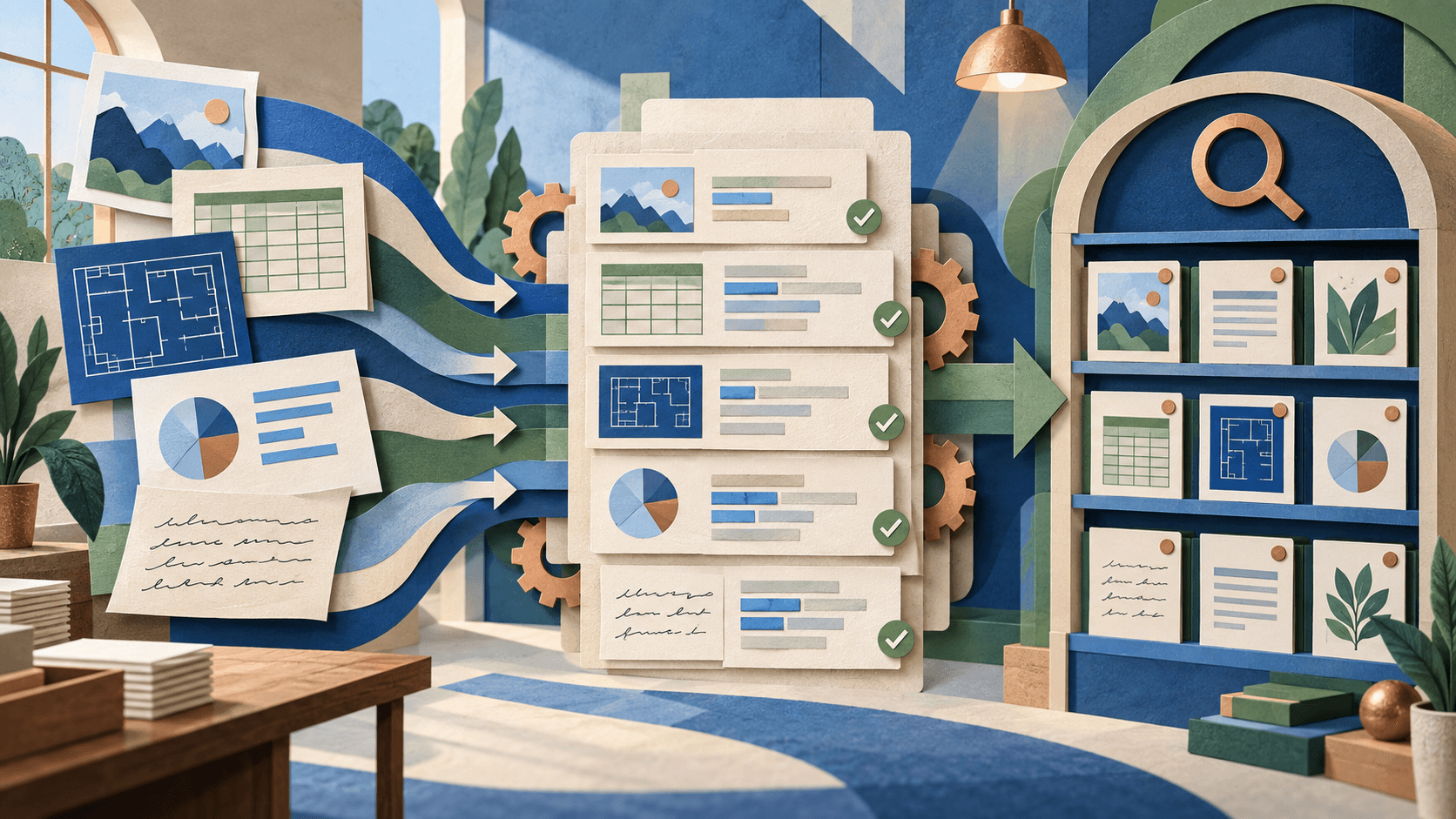
LlamaCloud belongs on the shortlist for teams whose RAG or document workflow fails at ingestion rather than generation. LlamaParse targets difficult PDFs and office files, Extract maps documents into structured schemas, and Index manages retrieval-ready collections. The platform can remove substantial pipeline work, but accuracy varies by layout and document class, and its credit system should be measured as cost per accepted document rather than cost per page alone.
Free buyer comparison checklist
Compare this tool before committing.
Use the buyer checklist to compare two tools on the same tasks, including quality, review time and total cost. Get the weekly top 5 AI tools, one practical workflow and one way to reduce AI spending.
Best for
- RAG teams processing complex documents
- Schema extraction from varied business files
- Developers wanting managed ingestion and retrieval
Look elsewhere if
- Sensitive files without an approved hosted-data path
- Simple text PDFs handled well by cheaper parsers
- Workflows unable to validate extracted fields
What LlamaCloud verifiably does
First-party pages describe parsing for PDFs, images, presentations, spreadsheets, and other files; layout, table, image, and multimodal handling; schema-driven structured extraction; managed ingestion and indexing; text and vector retrieval; data-source synchronization; citations; and APIs and SDKs for production applications. LlamaCloud is the hosted service, distinct from the open-source LlamaIndex framework.
Important limitations
Parsing can reorder reading flow, flatten tables, miss handwriting, hallucinate labels, or lose visual relationships. Extracted fields need type, range, cross-field, and source-page validation. Uploaded documents may contain personal, confidential, or regulated data and can pass through configured models or connectors. Credit consumption depends on modes and downstream operations, making naive page-price comparisons misleading; vendor-hosted indexes also create portability work.
LlamaCloud pricing
LlamaCloud uses credits across Parse, Extract, Index, and related processing, with a free allowance and paid credit bundles shown on its live pricing page. Charges vary by parsing mode, page volume, extraction configuration, indexing, storage, retrieval, and model work, so a single per-page headline is not a reliable total. Enterprise deployment, support, security, and volume terms are quote-based. Record the live credit schedule and end-to-end job estimate before a production trial. Reviewed September 9, 2026.
A fair buyer test
Build a frozen set of 300 permitted files spanning clean text, scans, tables, handwriting, diagrams, multi-column layouts, and malformed pages. Define field-level and citation-level gold labels. Compare LlamaCloud modes with the current pipeline on extraction F1, table fidelity, reading order, retrieval recall, citation accuracy, processing failures, p95 time, human correction minutes, exportability, and total credit cost per accepted document.
Final verdict
LlamaCloud earns a pilot when document preparation and retrieval quality—not the chat interface—is the binding constraint. Test the ugliest real files, validate every business-critical field against page evidence, isolate sensitive corpora, and compare cost per accepted document with a simpler parser before committing the index layer.
This is a research-based product assessment, not a claim of hands-on long-term testing. Product, pricing, privacy, security, ownership, and usage claims were checked against the first-party sources below on September 9, 2026. Verify current terms and run the proposed test with approved data before adoption.
Transparency
How this guide was checked
Editorial accountability
Who checked this guide
- Evaluation type
- Hands-on evaluation
- Last materially checked
- Evidence
- 4 listed sources
Hands-on testing is identified explicitly. Research-based coverage uses cited product documentation and other named sources; it does not imply every paid plan was used. Read the full methodology.
Editorial freshness
Pricing and material product claims were checked September 9, 2026.
Review evidence
What this guidance is based on
- Editorial basis
- Current first-party product, pricing, documentation, privacy, security, and terms material
- Review type
- Research-based product assessment
- Material review date
- September 9, 2026
- Buyer test
- Controlled workflow test covering quality, cost, privacy, permissions, reliability, and adoption risk
Important limits
- • DiscoverAI did not complete the proposed long-term paid deployment for this research-based review.
- • Features, prices, limits, rights, security controls, privacy terms, and provider data paths can change; verify the linked first-party pages before purchase.
Standardized benchmark coverage
How this review maps to the research benchmark
Citation accuracy
Eligible · not yet runThis review describes source-grounded research, retrieval, or document work. A controlled product run is required before scoring.
Read protocol v2026.10-v1 →Thematic analysis
Not applicableThe reviewed workflow is not qualitative evidence analysis, so a thematic-analysis score would be misleading.
Read protocol v2026.10-v1 →Eligibility is not a product score. DiscoverAI publishes results only after output collection, blinded adjudication, reproducibility checks, and severe-error review.
Open the optional evaluation worksheet
Reusable trial worksheet
Test LlamaCloud before you commit
Turn this review’s buyer test into evidence. Your entries autosave only in this browser and are never added to shared shortlist links.
Confirm the tool meets every must-have workflow and stakeholder requirement.
Review starting point: RAG teams processing complex documents; Schema extraction from varied business files; Developers wanting managed ingestion and retrieval
Run the same representative work you would use in production; do not score a polished demo.
Review starting point: Build a frozen set of 300 permitted files spanning clean text, scans, tables, handwriting, diagrams, multi-column layouts, and malformed pages. Define field-level and citation-level gold labels. Compare LlamaCloud modes with the current pipeline on extraction F1, table fidelity, reading order, retrieval recall, citation accuracy, processing failures, p95 time, human correction minutes, exportability, and total credit cost per accepted document.
Calculate the effective cost per accepted result, including usage, review, corrections, and required add-ons.
Review starting point: LlamaCloud uses credits across Parse, Extract, Index, and related processing, with a free allowance and paid credit bundles shown on its live pricing page. Charges vary by parsing mode, page volume, extraction configuration, indexing, storage, retrieval, and model work, so a single per-page headline is not a reliable total. Enterprise deployment, support,…
Define an acceptance threshold, test known answers and edge cases, and record every correction.
Review starting point: Editorial quality signals: features 4.3/5; AI quality 4.1/5. Validate these signals in your own work.
Verify what data enters the product, who can access it, how long it is retained, and whether it trains models.
Review starting point: Use approved low-risk data first. Check roles, consent, deletion, subprocessors, model-training settings, and the contract—not only the marketing page.
Test the real handoffs, permissions, failure states, and export path your team depends on.
Review starting point: Python, TypeScript, LlamaIndex, Google Drive, Microsoft SharePoint, Amazon S3
Record training, governance, reliability, accessibility, ownership, and change-management risks before rollout.
Review starting point: Credit pricing requires workload-level measurement; Document accuracy still varies by class; Managed indexes increase data and portability dependencies
Loading saved worksheet… · private to this device or your optional account
Community evidence
How verified users put LlamaCloud to work
Structured, editor-moderated experience—not star ratings. This complements our independent review and never changes its score.
No approved community evidence yet. Be the first verified user to contribute.
Community choice
Recommend LlamaCloud
Loading weekly votes…
One vote per verified account per tool, counted for seven days. Return after your vote expires to support again. Community votes influence homepage trends, never editorial ratings. Voting does not subscribe you to emails.
Sources and references
References cited by this article. Check the original source for scope, dates and current terms.
Frequently asked questions
What is LlamaCloud?
LlamaCloud is LlamaIndex's hosted platform for parsing documents, extracting structured data, and building managed indexes for retrieval and AI agents.
Is LlamaCloud the same as LlamaIndex?
No. LlamaIndex is an open-source framework, while LlamaCloud is a managed service that includes LlamaParse, Extract, Index, and hosted APIs.
How much does LlamaCloud cost?
LlamaCloud uses free and paid credits whose consumption varies by product, mode, pages, storage, retrieval, and model work; Enterprise terms are custom.
Does LlamaParse guarantee accurate extraction?
No. Teams should validate reading order, tables, fields, and citations against a labeled set of their hardest real documents.
Recommended tool
Use LlamaCloud if this workflow fits your team
Parse, structured extraction, and indexing in one service
Tools mentioned in this article
LlamaCloud
Parse difficult files, extract structured fields, and build managed document indexes for AI workflows
LlamaCloud is LlamaIndex's hosted document platform for parsing complex files, extracting schemas, and building searchable indexes for agents and retrieval applications.
Unstructured
Document partitioning, enrichment, chunking, and connectors for AI data pipelines
Unstructured converts varied documents into RAG-ready elements and chunks, but extraction quality, page billing, source permissions, and regional availability need representative testing.
Airweave
Continuously sync app and database content into a shared search layer for AI agents
Airweave offers an open-source context retrieval layer that syncs many source systems into reusable collections, but freshness, permissions, deletion, retrieval quality, and entity-based limits need proof.
Read next