Reviews, news and how-to guides
AI articles and reviews — page 27
Find a review, catch up on the news or learn how to complete a task. Browse by topic or filter the library below.
Not sure where to begin?
Answer three questions and get a focused tool shortlist for your budget and priority.
Use the AI Tool Finder →Choose a pathway
Explore by topic
Owners and lean teams
Work & Operations
Save time on research, meetings, planning, finance, administration, and repeatable operations.
Marketing and fundraising teams
Marketing & Growth
Plan campaigns, improve social publishing, email, analytics, fundraising, and measurable growth.
Writers and publishers
Content & Search
Research, write, optimize, refresh, and distribute useful content with responsible AI workflows.
Creators and communications teams
Video, Audio & Creative
Create, edit, repurpose, and distribute video, voice, podcasts, images, and presentations.
Service and community leaders
Customers & Community
Improve customer support, donor stewardship, volunteer coordination, outreach, and client communication.
Builders and decision makers
Build, Design & Govern
Choose and deploy AI safely across websites, apps, design systems, privacy, security, and governance.
Editor recommended
Start with these essential guides
Selected by the editors to help you get started.

How Small Business Owners Can Save 10+ Hours a Week With AI Automation in 2026
A practical, no-hype guide to automating the repetitive tasks that consume small business owners' most limited resource: time.
A practical, no-hype guide to automating the repetitive tasks that consume small business owners' most limited resource: time. Written for small business owners working 50+ hours a week on operations, marketing, and admin, with a decision framework, step-by-step workflow, measurable outcomes, and clear limitations.
Read guide
How Understaffed Nonprofits Can Build Capacity With AI Tools in 2026
A strategic framework for using AI to multiply a small team's output without burning out the people you have.
A strategic framework for using AI to multiply a small team's output without burning out the people you have. Written for nonprofit executive directors leading teams of fewer than five people, with a decision framework, step-by-step workflow, measurable outcomes, and clear limitations.
Read guide
How to Choose the Right AI Tool for Your Business
Stop chasing every new AI launch. A practical decision framework for evaluating AI tools based on your actual needs, budget, and risk tolerance.
A practical decision framework for evaluating AI tools: define the problem, score contenders, decide build vs. buy, and know when to cancel. No hype, just a repeatable process.
Read guide
Recently published
Latest articles
Vid2Notes Review: Turn Training Videos Into Usable Notes
Review Vid2Notes for illustrated training notes: free upload limits, annual billing, export options and a practical accuracy check before sharing.
Review Vid2Notes for illustrated training notes: free upload limits, annual billing, export options and a practical accuracy check before sharing.
Read guide
Voice AI for Canva Review: Narration Costs and Practical Limits
Review Voice AI for Canva: character allowances, in-app generation and a narration test for presentations, training videos and client campaigns.
Review Voice AI for Canva: character allowances, in-app generation and a narration test for presentations, training videos and client campaigns.
Read guide
LayerBack Review: Turn Diagram Images Into Editable Files
Review LayerBack for editable Visio, PowerPoint and draw.io diagrams, including download credits, privacy limits and a connector-checking trial.
Review LayerBack for editable Visio, PowerPoint and draw.io diagrams, including download credits, privacy limits and a connector-checking trial.
Read guide
The weekly briefing
Make better AI decisions each week.
Get tool recommendations, product and pricing news, and a practical task to try each week.
Browse reviews, news and guides

ChatGPT Astra vs Claude Fable: Which AI Assistant Is Better?
ChatGPT Astra is the stronger all-purpose workspace for mixed media and computer-driven tasks; Claude Fable is especially compelling for long-form knowledge work and sustained coding.
A task-by-task comparison of ChatGPT's GPT-6 Astra and Claude Fable 5.1 across research, writing, coding, tools, safeguards, and real workflow cost.
Read guide

Meta Muse Review 2026: Features, Privacy, and Risks
Muse can do work across connected services, but the buying decision turns on permissions, reliability, auditability, and recovery—not the demo task list.
Meta Muse is a promising action-taking personal agent, provided users grant authority gradually and test mistakes, approvals, revocation, and recovery before trusting consequential work.
Read guide

Meta Muse Climbs App Charts as Phone-Call Tests Expand Its Reach
Fast downloads validate interest in action-taking agents; they do not yet establish retention, reliability, savings, or safe real-world delegation.
Muse's early app-chart momentum and reported phone-call testing show demand for agents that act, while raising the stakes for identity, consent, scripts, escalation, and auditability.
Read guide

Meta Says It Delayed Muse for Safety Work: What That Signals
A delayed launch signals that agent safety required material engineering, but it is not independent evidence that every remaining risk is controlled.
Mark Zuckerberg cited Muse's delayed release as evidence that labs can slow their own products for safety work, sharpening the debate over voluntary controls and shared standards.
Read guide

How to Connect Muse to Email and Calendar Safely
The safest useful setup gives Muse the smallest access required for one job, then expands only after observed success and clean recovery.
Connect Muse to a secondary account first, separate reading from sending or editing, and test ambiguity, prompt injection, revocation, logs, and deletion before adding primary data.
Read guide
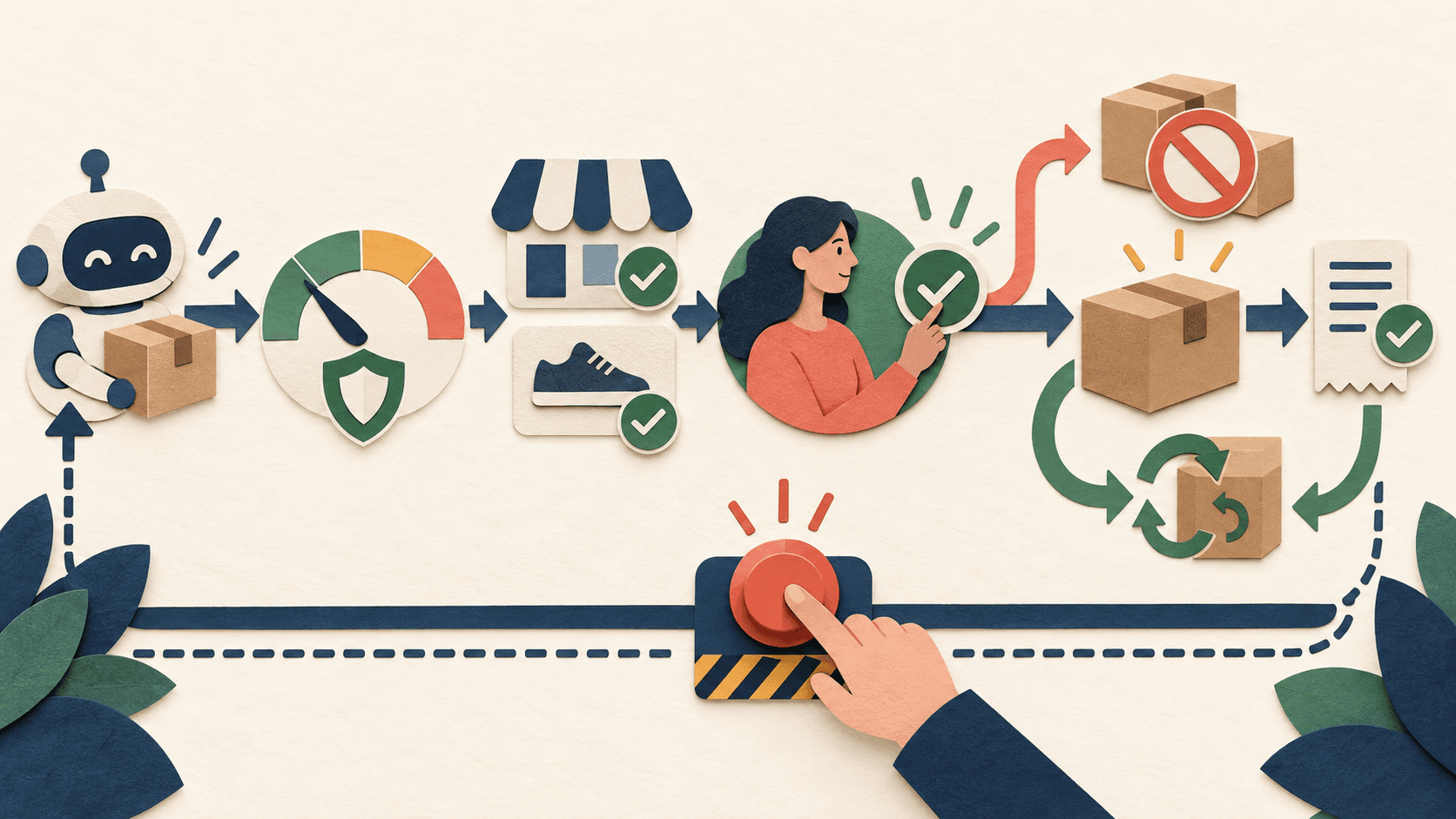
How to Test Muse Purchases and Cancellations Safely
An agent should not receive open-ended buying authority; each transaction needs bounded intent, approval, evidence, and a workable reversal path.
Use a low-value reversible transaction, strict spending and merchant limits, a final approval summary, duplicate protection, receipt capture, and tested cancellation and dispute procedures.
Read guide

Anthropic Plans Customer-Controlled Frontier Safeguards
Customer-controlled storage could reduce a real enterprise privacy conflict, but a phased announcement is not yet proof of coverage, deletion, or control parity.
Anthropic says Enterprise Frontier Safeguards will combine zero-data-retention access with misuse detection while storing monitored data in cloud infrastructure controlled by the customer. The design targets a genuine tradeoff between privacy and safety monitoring, but it is rolling out in phases and buyers still need endpoint, region, key, log, deletion, incident-access, and contract details.
Read guide

Google Expands AI Plans With Voice, Pics, and Sheets Canvas
The update pushes Gemini deeper into everyday work, but feature names, plan gates, U.S.-only access, and connected-data permissions matter more than the bundle headline.
Google announced AI-plan additions including voice interaction in Gmail, Docs, and Keep; Google Pics for visual work; prompt-built interactive mini-apps in Sheets canvas; and Gemini Spark connections to Chrome and Google Photos. Availability differs by plan, product, and region, so the practical story is workflow consolidation—not universal access.
Read guide

Sintra AI Review 2026: Features, Pricing, and Risks
A research-based review of Sintra AI's capabilities, economics, data boundaries, and operational fit.
Sintra AI combines role-based AI Helpers, a shared Brain AI knowledge base, integrations, recurring tasks, and automations for small-business work.
Read guide

Taskade Review 2026: Features, Pricing, and Risks
A research-based review of Taskade's capabilities, economics, data boundaries, and operational fit.
Taskade combines prompt-built apps, persistent project data, custom AI agents, automation workflows, and team workspaces in one no-code platform.
Read guide
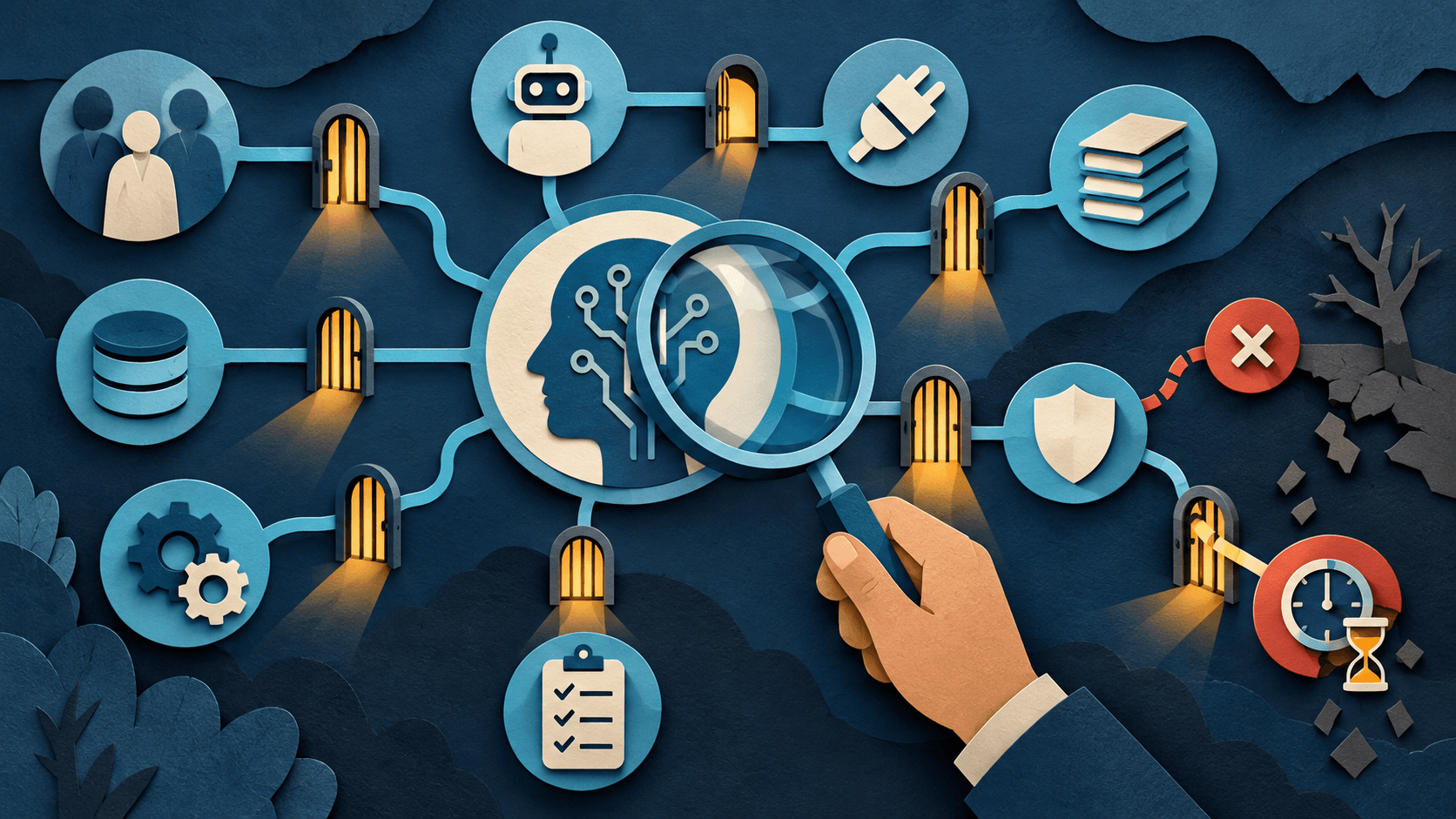
How to Run a Quarterly AI Permissions Audit
AI access tends to expand quietly; a repeatable quarterly review catches orphaned accounts, excessive connector scopes, stale knowledge, and missing kill switches.
A quarterly AI permissions audit should map every approved AI account, owner, user, service identity, connector, OAuth scope, shared knowledge source, external action, retained artifact, and offboarding path. Remove unused access, narrow broad scopes, rotate exposed credentials, test revocation, and record exceptions with an owner and expiry date.
Read guide
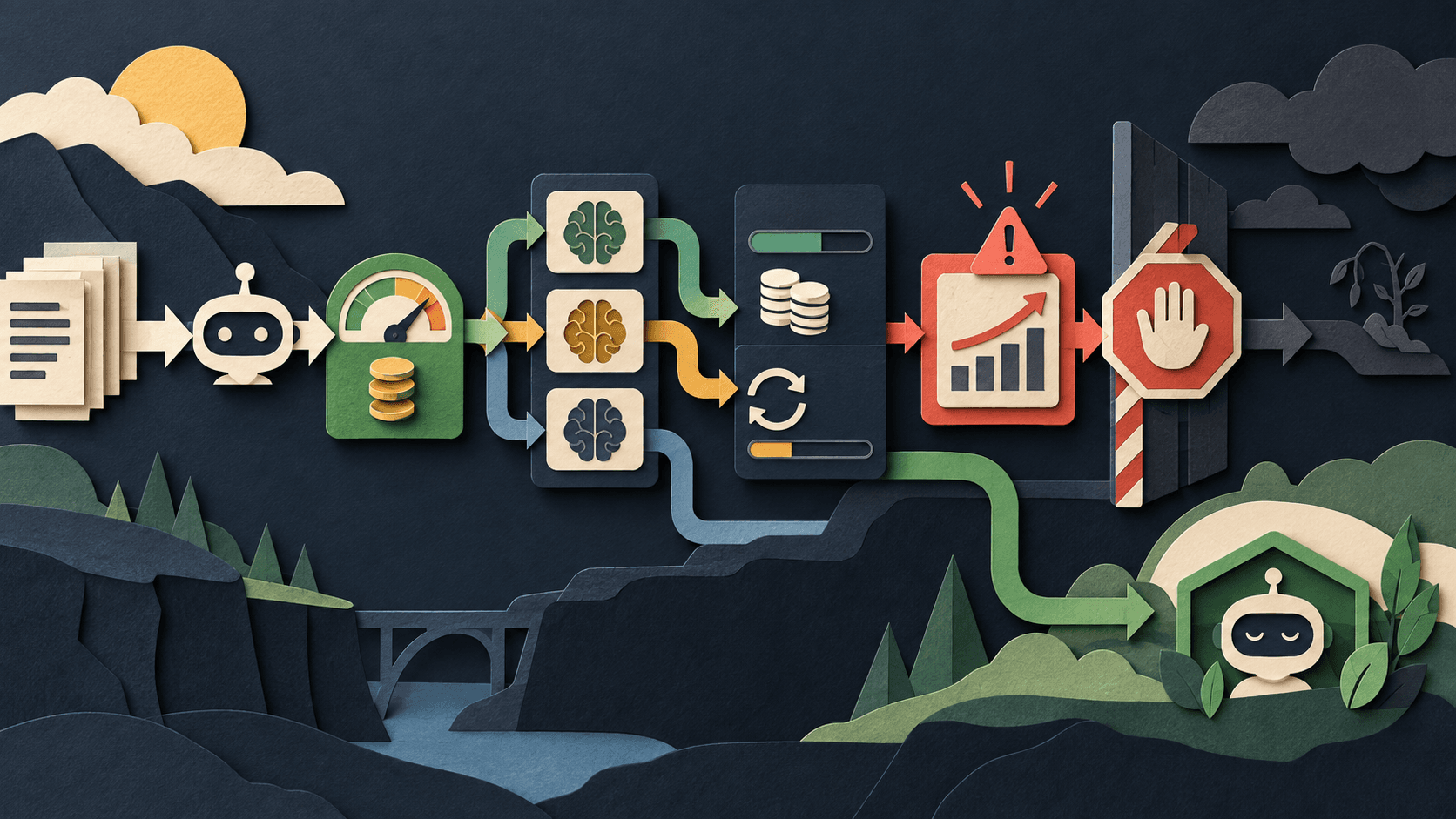
How to Set AI Spend Caps Before Costs Drift
A monthly invoice limit is too blunt; useful controls connect spend to an accepted business outcome and stop runaway agents before the bill arrives.
Set AI budgets at the workflow level, not only the company level. Define a maximum cost per accepted outcome, daily and monthly ceilings, alerts below the hard limit, per-user or service quotas, model-routing rules, retry and loop limits, concurrency controls, and human approval before expensive or high-volume jobs.
Read guide

Anthropic and Accenture Plan Embedded AI Evaluation
Deeper evaluator access could improve scrutiny, but lab funding and unsettled reporting rules make independence a design problem, not a label.
Anthropic and Accenture, through Faculty, plan an embedded-evaluation program for frontier models covering red teaming, alignment, and safeguards. Each expects to invest at least $1 billion over five years. The unusual feature is employee-like evaluator access; the unresolved questions are funding independence, publication rights, conflicts, standards, and what happens when findings are disputed.
Read guide

Google Says Its AI Now Supports More Than 300 Languages
Language count is a meaningful access milestone, but buyers still need task-level evidence for dialects, code-switching, tone, literacy, and offline use.
Google says its technologies and products now support more than 300 languages spoken by seven billion people, or 86% of the global population. The milestone broadens potential access, but “support” can mean different capabilities across speech, text, translation, search, and products; it does not establish equal accuracy or cultural fit.
Read guide

Google Teen AI Study Finds Demand for Better Literacy
The findings challenge a shortcut-only narrative, but a sponsored U.S. survey cannot establish how every teen uses AI or whether safeguards work.
Google and RXN Group report that U.S. teens often describe AI as a study and creativity aid, say they cross-check information, and want stronger digital-literacy education while relying on families for safety guidance. These are useful self-reported attitudes—not behavioral proof, a global sample, or an independent audit of Google's products.
Read guide

Read AI Review 2026: Features, Pricing, and Risks
A research-based review of Read AI's capabilities, economics, data boundaries, and operational fit.
Read AI creates meeting transcripts, summaries, action items, playback, coaching signals, and searchable answers across connected workplace knowledge.
Read guide

Superhuman Review 2026: Features, Pricing, and Risks
A research-based review of Superhuman's capabilities, economics, data boundaries, and operational fit.
Superhuman Mail is a fast email client with AI drafting, summarization, inbox organization, follow-up, scheduling, and CRM context inside a broader productivity suite.
Read guide

Retool Agents Review 2026: Features, Pricing, and Risks
A research-based review of Retool Agents's capabilities, economics, data boundaries, and operational fit.
Retool Agents lets teams build agents that use governed tools, queries, workflows, models, and internal data, with monitoring, evaluations, and audit trails.
Read guide