Anthropic and Accenture Plan Embedded AI Evaluation
Deeper evaluator access could improve scrutiny, but lab funding and unsettled reporting rules make independence a design problem, not a label.

Bottom line
Anthropic and Accenture, through Faculty, plan an embedded-evaluation program for frontier models covering red teaming, alignment, and safeguards. Each expects to invest at least $1 billion over five years. The unusual feature is employee-like evaluator access; the unresolved questions are funding independence, publication rights, conflicts, standards, and what happens when findings are disputed.
Editorial accountability
Who checked this guide
- Evaluation type
- Research-based verification
- Last materially checked
- Evidence
- 4 listed sources
Hands-on testing is identified explicitly. Research-based coverage uses cited product documentation and other named sources; it does not imply every paid plan was used. Read the full methodology.
Editorial basis
What this guidance is based on
- Editorial basis
- Source-led analysis
- Primary references
- 4
- Products covered
- 1
- Last checked
- 2026-09-19
Important limits
- • Announcements and internal measurements may not generalize.
- • Availability, policy, pricing, and product behavior can change.
In this guide
Short answer
Anthropic and Accenture, through Faculty, plan an embedded-evaluation program for frontier models covering red teaming, alignment, and safeguards. Each expects to invest at least $1 billion over five years. The unusual feature is employee-like evaluator access; the unresolved questions are funding independence, publication rights, conflicts, standards, and what happens when findings are disputed.
What embedded access changes
Evaluators could observe training and deployment decisions earlier than conventional external testers and examine operating context, not only a finished model.
Independence is not automatic
Anthropic will directly fund the work while pooled or government funding does not yet exist. Non-exclusive relationships help, but contracts, access, reporting rights, and conflict disclosures will determine credibility.
What evidence should follow
Useful proof would include named methods, access scope, limitations, remediation tracking, public summaries, protected escalation, and explanations when the lab rejects a finding.
What readers should do
Treat the announcement as a governance experiment. Look for a published charter, evaluator selection criteria, reporting cadence, conflict safeguards, incident escalation, remediation evidence, and comparable participation by nonprofit or public-interest evaluators.
Claims were checked against the linked primary sources on September 19, 2026. Company-reported results and expectations are attributed evidence, not independent guarantees.
Sources and verification
Product details and claims were checked against the following primary sources.
Frequently asked questions
What is embedded AI evaluation?
Independent evaluators work inside a lab with deeper access to models, decisions, safeguards, and incidents.
Who is evaluating Anthropic?
The announced partnership is led by Faculty, Accenture's specialist AI business.
Is the evaluator financially independent?
Anthropic says it will directly fund this work while broader pooled or government mechanisms remain unavailable.
What remains unresolved?
Common access standards, reporting rights, funding models, conflicts, and public disclosure practices.
Found this useful?
Get the next one in your inbox.
One five-minute briefing a week: a meaningful change, a practical workflow, and a clearer tool decision—already filtered for lean teams.
Free · one email a week · unsubscribe any time
Recommended tool
Use Claude if this workflow fits your team
It has one of the clearest workflow fits in its category and is easier to recommend than tools that only look impressive in demos.
Tools mentioned in this article
Claude
Anthropic's thoughtful, safety-focused AI with exceptional long-form reasoning
Claude excels at deep analysis, long-form writing, and nuanced reasoning. Built by Anthropic with a focus on safety and helpfulness.
Read next
Recommended for you
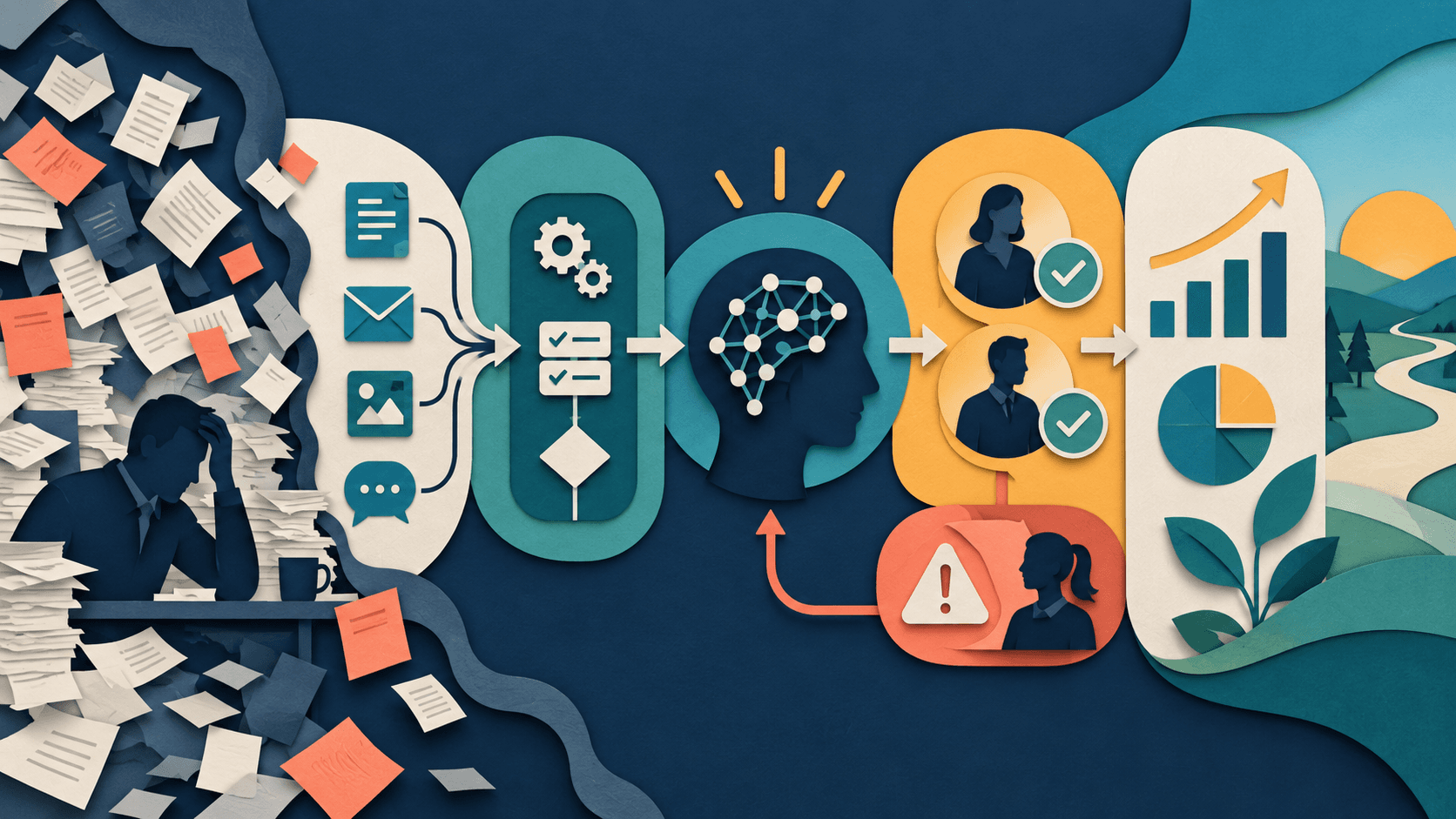
How to Map a Workflow Before Adding AI
The safest AI integration starts on paper: make the work, owners, exceptions, and success measure visible before selecting a model.
Document the workflow as trigger, inputs, deterministic rules, judgment steps, system actions, handoffs, exceptions, approval points, and a final outcome. Add AI only to the judgment steps where probabilistic interpretation creates enough value to justify review and failure handling.
Read guide
How to Measure AI Workflow ROI Without Fooling Yourself
AI Implementation for Small Business: Launch Your First Workflow in 30 Days
How to Automate Business Tasks With Zapier and AI in 2026