Reviews, news and how-to guides
AI articles and reviews — page 23
Find a review, catch up on the news or learn how to complete a task. Browse by topic or filter the library below.
Not sure where to begin?
Answer three questions and get a focused tool shortlist for your budget and priority.
Use the AI Tool Finder →Choose a pathway
Explore by topic
Owners and lean teams
Work & Operations
Save time on research, meetings, planning, finance, administration, and repeatable operations.
Marketing and fundraising teams
Marketing & Growth
Plan campaigns, improve social publishing, email, analytics, fundraising, and measurable growth.
Writers and publishers
Content & Search
Research, write, optimize, refresh, and distribute useful content with responsible AI workflows.
Creators and communications teams
Video, Audio & Creative
Create, edit, repurpose, and distribute video, voice, podcasts, images, and presentations.
Service and community leaders
Customers & Community
Improve customer support, donor stewardship, volunteer coordination, outreach, and client communication.
Builders and decision makers
Build, Design & Govern
Choose and deploy AI safely across websites, apps, design systems, privacy, security, and governance.
Editor recommended
Start with these essential guides
Selected by the editors to help you get started.

How Small Business Owners Can Save 10+ Hours a Week With AI Automation in 2026
A practical, no-hype guide to automating the repetitive tasks that consume small business owners' most limited resource: time.
A practical, no-hype guide to automating the repetitive tasks that consume small business owners' most limited resource: time. Written for small business owners working 50+ hours a week on operations, marketing, and admin, with a decision framework, step-by-step workflow, measurable outcomes, and clear limitations.
Read guide
How Understaffed Nonprofits Can Build Capacity With AI Tools in 2026
A strategic framework for using AI to multiply a small team's output without burning out the people you have.
A strategic framework for using AI to multiply a small team's output without burning out the people you have. Written for nonprofit executive directors leading teams of fewer than five people, with a decision framework, step-by-step workflow, measurable outcomes, and clear limitations.
Read guide
How to Choose the Right AI Tool for Your Business
Stop chasing every new AI launch. A practical decision framework for evaluating AI tools based on your actual needs, budget, and risk tolerance.
A practical decision framework for evaluating AI tools: define the problem, score contenders, decide build vs. buy, and know when to cancel. No hype, just a repeatable process.
Read guide
Recently published
Latest articles
Vid2Notes Review: Turn Training Videos Into Usable Notes
Review Vid2Notes for illustrated training notes: free upload limits, annual billing, export options and a practical accuracy check before sharing.
Review Vid2Notes for illustrated training notes: free upload limits, annual billing, export options and a practical accuracy check before sharing.
Read guide
Voice AI for Canva Review: Narration Costs and Practical Limits
Review Voice AI for Canva: character allowances, in-app generation and a narration test for presentations, training videos and client campaigns.
Review Voice AI for Canva: character allowances, in-app generation and a narration test for presentations, training videos and client campaigns.
Read guide
LayerBack Review: Turn Diagram Images Into Editable Files
Review LayerBack for editable Visio, PowerPoint and draw.io diagrams, including download credits, privacy limits and a connector-checking trial.
Review LayerBack for editable Visio, PowerPoint and draw.io diagrams, including download credits, privacy limits and a connector-checking trial.
Read guide
The weekly briefing
Make better AI decisions each week.
Get tool recommendations, product and pricing news, and a practical task to try each week.
Browse reviews, news and guides
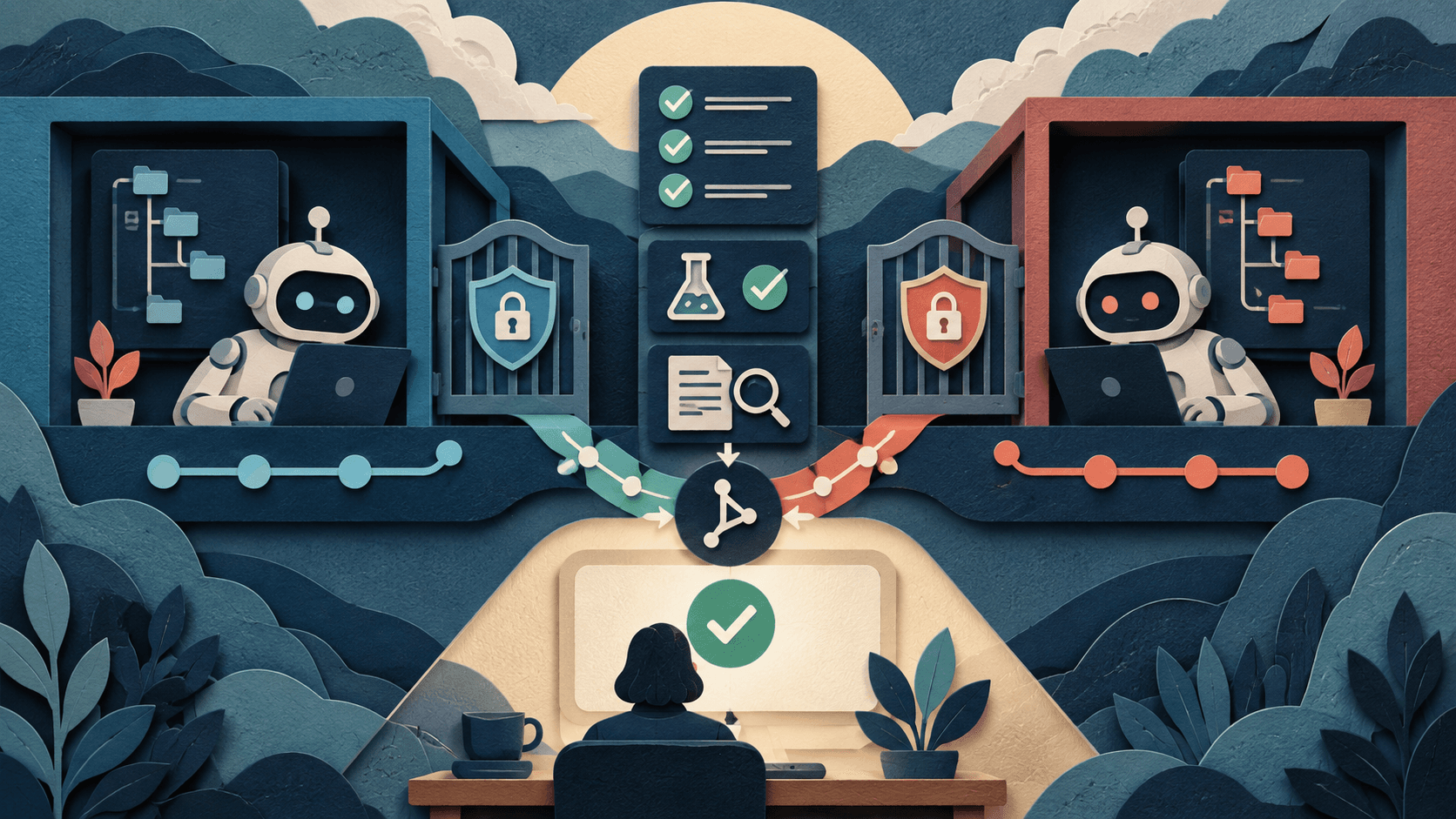
Codex vs. Claude Code: Which Coding Agent Should Teams Pilot?
Both execute multi-step repository work; the decision turns on surfaces, control boundaries, behavior, and accepted output.
Choose Codex when its app, CLI, IDE, cloud delegation, sandbox, and OpenAI workspace fit your model. Choose Claude Code when its terminal-native workflow, Anthropic model access, commands, hooks, and sandboxing fit better. Compare the same repositories, permissions, models, tasks, and review rules, then measure accepted changes and severe failures.
Read guide
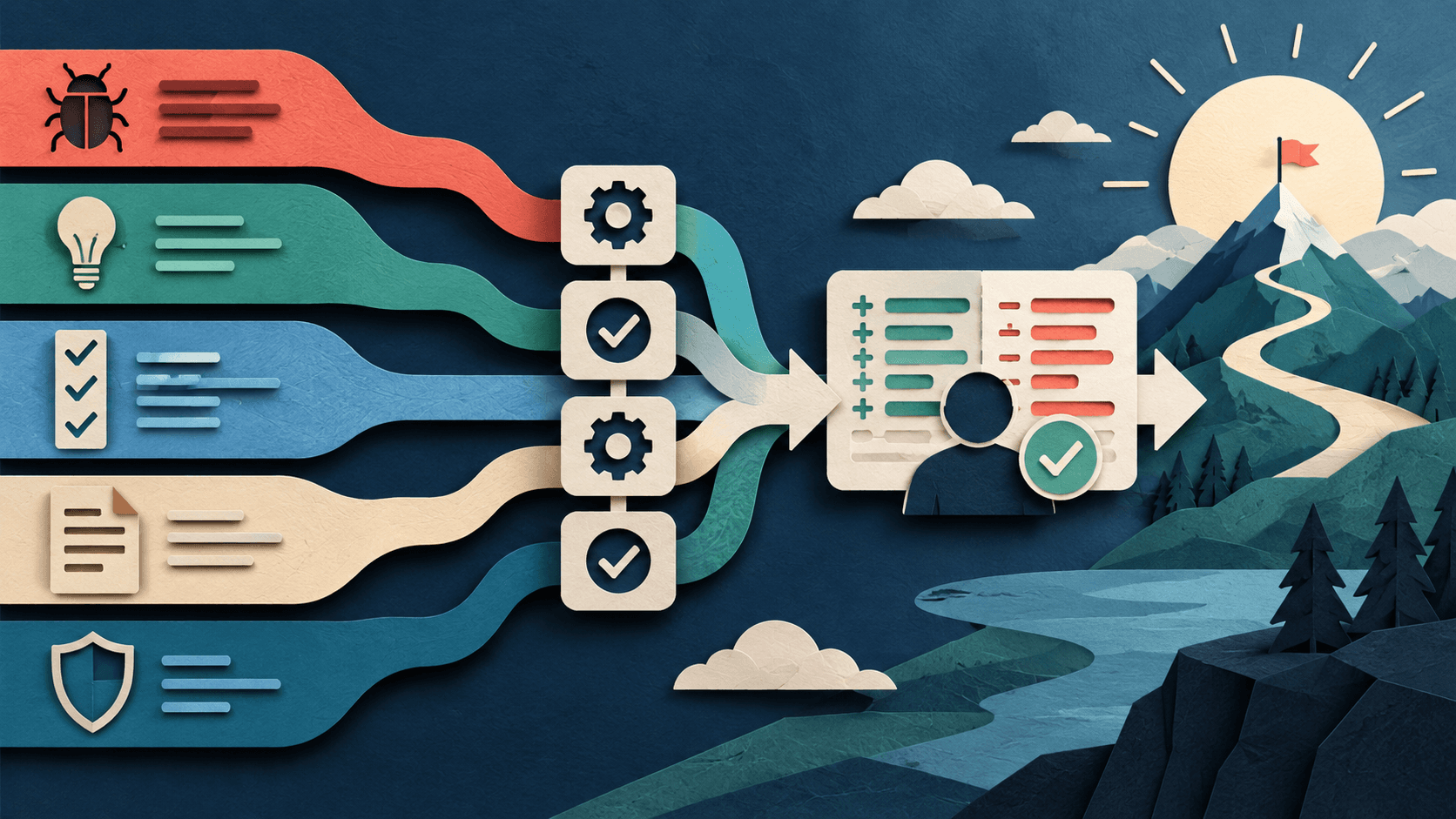
How to Evaluate an AI Coding Agent: A Five-Task Test
A fair evaluation uses the same frozen repository, tasks, permissions, checks, and reviewers for every agent.
Evaluate an AI coding agent on five real task classes: a bounded bug fix, small feature, missing tests, behavior-linked documentation, and a security review with planted false positives. Use clean snapshots and identical permissions. Score completion, checks, accepted-diff percentage, correction time, cost, unauthorized changes, and severe regressions.
Read guide
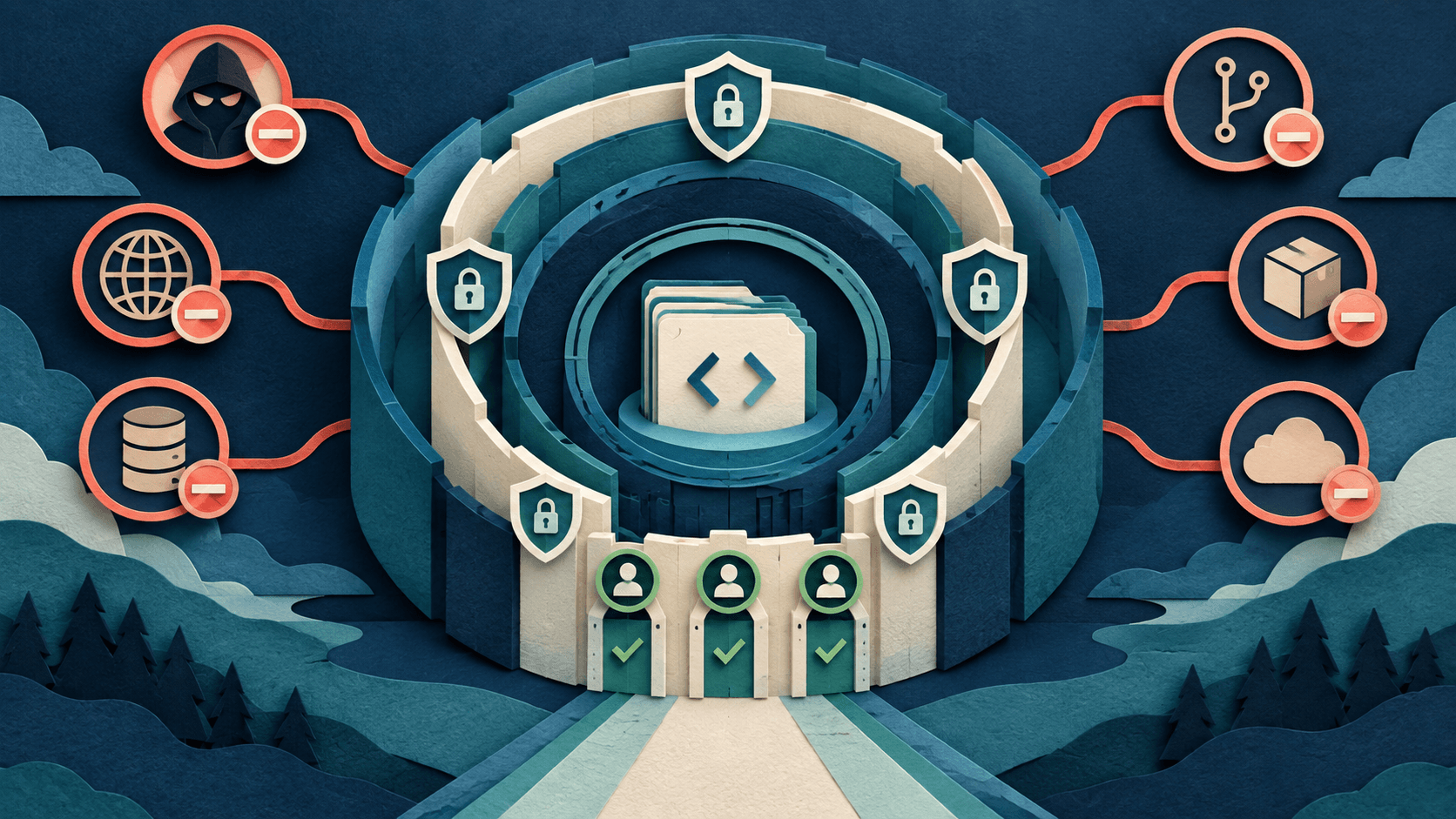
AI Coding-Agent Security: Repository Permissions That Work
The goal is the smallest permission envelope that completes an accepted task and leaves an auditable trail.
Give coding agents read access only to required repositories and docs, write access only in an isolated branch, and network access only to allowlisted destinations. Keep production secrets, deploys, database writes, infrastructure changes, package publishing, and destructive commands behind separate credentials and explicit approval. Log prompts, calls, approvals, commands, diffs, tests, and external actions.
Read guide

DiscoverAI Coding-Agent Repository Benchmark: Methodology
A preregistered repository-level protocol for future results—published before any product receives a score.
This page defines DiscoverAI's coding-agent benchmark before results are collected. The protocol uses frozen repository snapshots, five task classes, identical permissions, repeated runs, blinded diff review where possible, and separate reporting for accepted output and severe failures. It does not currently rank Cursor, Claude Code, Codex, GitHub Copilot, or any model.
Read guide

Lindy vs. Gumloop: AI Assistant or Visual Automation Builder?
Lindy starts from delegated assistant work; Gumloop starts from inspectable visual workflows and agent building.
Choose Lindy when a small team wants assistant-shaped delegation across communication and administrative work with a faster path to useful agents. Choose Gumloop when the team wants to design and inspect multi-step AI workflows, control nodes and data flow, and tolerate more builder complexity. Compare one complete workflow on accepted outcomes, exceptions, approval burden, recovery, permissions, and cost.
Read guide

Gemini Live Avatar Gives AI Agents a Face—What Enterprises Must Test
Visual presence may improve guided service, but it also raises the cost of latency, mistaken authority, accessibility failures, and identity misuse.
Google launched Gemini 3.8 Live with Live Avatar in Gemini Enterprise on September 24, 2026. It couples speech-to-speech conversation with near-real-time generated video, visual and audio input, asynchronous tool calls, preset avatars, and multilingual lip synchronization across 97 languages. Custom avatars require enterprise allowlisting. The opportunity is a more expressive guide for service, training, or walkthroughs; the risk is that a humanlike face can make an incorrect or unauthorized action feel more trustworthy.
Read guide

Gemini 3.8 Flash TTS Turns Voice Design Into a Production Workflow
Natural-language voice design and two-speaker direction broaden production options, while consent, regional limits, consistency, and rights stay decisive.
Google released Gemini 3.8 Flash TTS and Flash-Lite TTS on September 23, 2026. Flash targets creative direction and custom character voices; Flash-Lite targets high-volume dubbing, content, and voice agents. Google advertises more than 100 languages and dialects, 2,000 production-ready voices, long-form and two-speaker control, SynthID watermarking, and voice replication from a 30-second sample with consent verification. Those are product claims, not proof that every voice, language, or long recording will meet a buyer's quality bar.
Read guide

Sierra AI Review 2026: Agents, Pricing & Enterprise Fit
A research-based assessment of Sierra's capabilities, economics, evidence, and operational fit.
Sierra is a serious shortlist for large customer-experience teams that want an AI agent to resolve—not merely summarize—customer requests across several channels. Its distinctive commercial idea is outcome-based pricing. That alignment is valuable only when the contract defines a successful outcome, exclusions, reversals, quality thresholds, and disputed attribution with unusual precision.
Read guide

OpenEvidence Review 2026: Clinical AI, Sources & Safety
A research-based assessment of OpenEvidence's capabilities, economics, evidence, and operational fit.
OpenEvidence is compelling for verified clinicians who need a fast, cited synthesis of medical literature at the point of care. Licensed journal and guideline access can make it more useful than a general chatbot for clinical questions. It remains decision support: citations can be misapplied, evidence can conflict or lag, and a fluent synthesis cannot see the patient, assume liability, or replace professional judgment.
Read guide

Build an AI Vendor Offboarding Plan Before You Sign the Contract
The cheapest time to test portability, deletion, credential rotation, and business continuity is before your data and workflows become dependent on a vendor.
An AI vendor offboarding plan is a tested path for leaving without losing data, prompts, agent logic, evaluation history, permissions, or business continuity. Build it during procurement, not after a price increase or incident. At minimum, name an owner, inventory assets and integrations, define export formats, set deletion evidence, rotate credentials, preserve audit history, and rehearse a fallback workflow.
Read guide
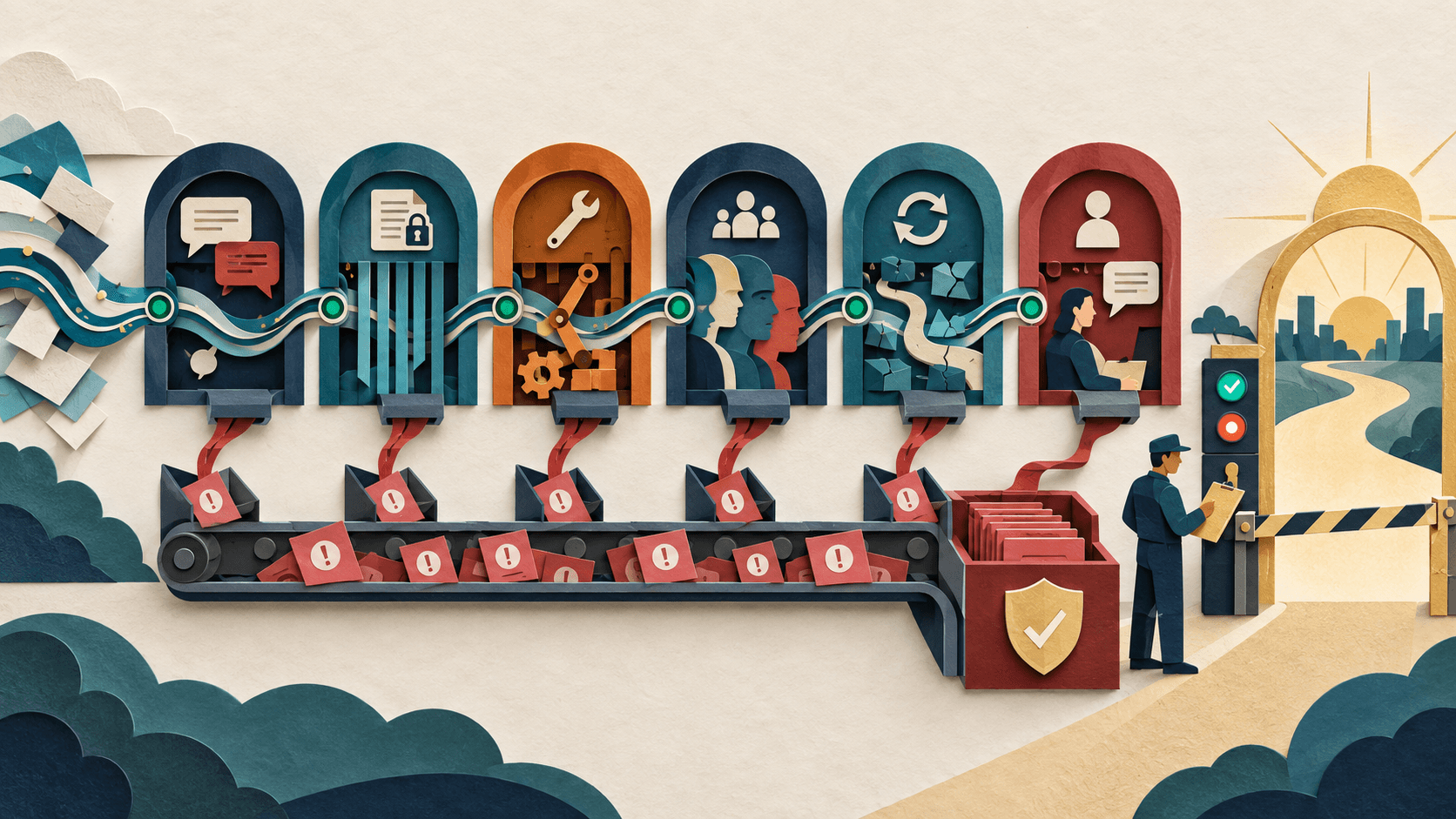
Build a Small AI Red-Team Test Set Before Your First Production Launch
A focused set of realistic attacks and hard negatives catches more launch risk than a giant generic benchmark nobody owns or reruns.
Start with 50 to 100 cases drawn from the exact data, users, tools, and harms in your AI workflow. Cover prompt injection, secret extraction, cross-user leakage, forbidden actions, hallucinated authority, ambiguous requests, bias, tool failure, and unsafe escalation. Give every case an expected policy outcome, severity, owner, and reproducible evidence. Run the set before launch and on every material prompt, model, tool, or retrieval change.
Read guide

Harvey AI Review 2026: Legal Agents, Security & Fit
A research-based assessment of Harvey's capabilities, economics, evidence, and operational fit.
Harvey is a serious shortlist for large law firms and in-house teams that need legal research, drafting, document analysis, matter collaboration, and agents in one governed environment. Its strongest differentiator is legal-workflow depth with enterprise controls, not immunity from hallucination or professional responsibility. Pricing is sales-led, so value must be proven against accepted legal work and reviewer time.
Read guide

Tavus Review 2026: Conversational Video AI & Pricing
A research-based assessment of Tavus's capabilities, economics, evidence, and operational fit.
Tavus is worth testing when face-to-face presence could improve a specific conversation such as onboarding, coaching, interviewing, or guided support. It packages real-time speech, vision, turn-taking, rendering, knowledge, memory, and tools behind one interface. A lifelike agent can also magnify mistaken answers, disclosure failures, biometric concerns, and user over-trust, so video should earn its added cost and risk against a voice or text baseline.
Read guide

Hedra Review 2026: AI Characters, Video Models & Pricing
A research-based assessment of Hedra's capabilities, economics, evidence, and operational fit.
Hedra is a strong creative shortlist for teams that want reusable characters, talking performances, image and video generation, voice, and access to multiple visual models in one workflow. Its practical advantage is continuity across a campaign rather than one impressive clip. Buyers still need to test identity drift, lip sync, editability, credit burn, disclosure, likeness rights, and whether approved footage per dollar beats a narrower tool.
Read guide

Meta Muse vs. Grok Bot: Which Personal AI Agent Is Better?
Muse is the simpler personal operator; Grok Bot is the stronger fit when one person or team wants several persistent digital workers.
Choose Meta Muse for a managed personal agent centered on everyday errands. Choose Grok Bot for multiple persistent cloud-computer agents coordinating business work.
Read guide

Meta Muse vs. OpenClaw: Managed Agent or Self-Hosted Control?
Muse optimizes for convenience inside a managed service; OpenClaw optimizes for operator choice, extensibility, and infrastructure control.
Meta Muse is easier for consumers to adopt, while OpenClaw gives technical operators more control over hosting, models, channels, tools, and data boundaries.
Read guide

Meta Muse vs. Claude: Personal Agent or AI Collaborator?
Muse leads with persistent personal execution; Claude leads with deep knowledge work and a flexible connector and computer-use ecosystem.
Choose Muse for low-risk personal errands that must keep moving. Choose Claude for analysis, writing, coding, documents, and supervised work across connected tools.
Read guide

Meta Muse vs. ChatGPT: Which AI Assistant Should You Use?
Muse is narrowly optimized for persistent personal execution; ChatGPT offers the broader general-purpose assistant and agent workspace.
Choose Muse when personal errands and long-running follow-through matter most. Choose ChatGPT for a broader mix of research, creation, analysis, and supervised agent tasks.
Read guide