DiscoverAI Coding-Agent Repository Benchmark: Methodology
A preregistered repository-level protocol for future results—published before any product receives a score.
Bottom line
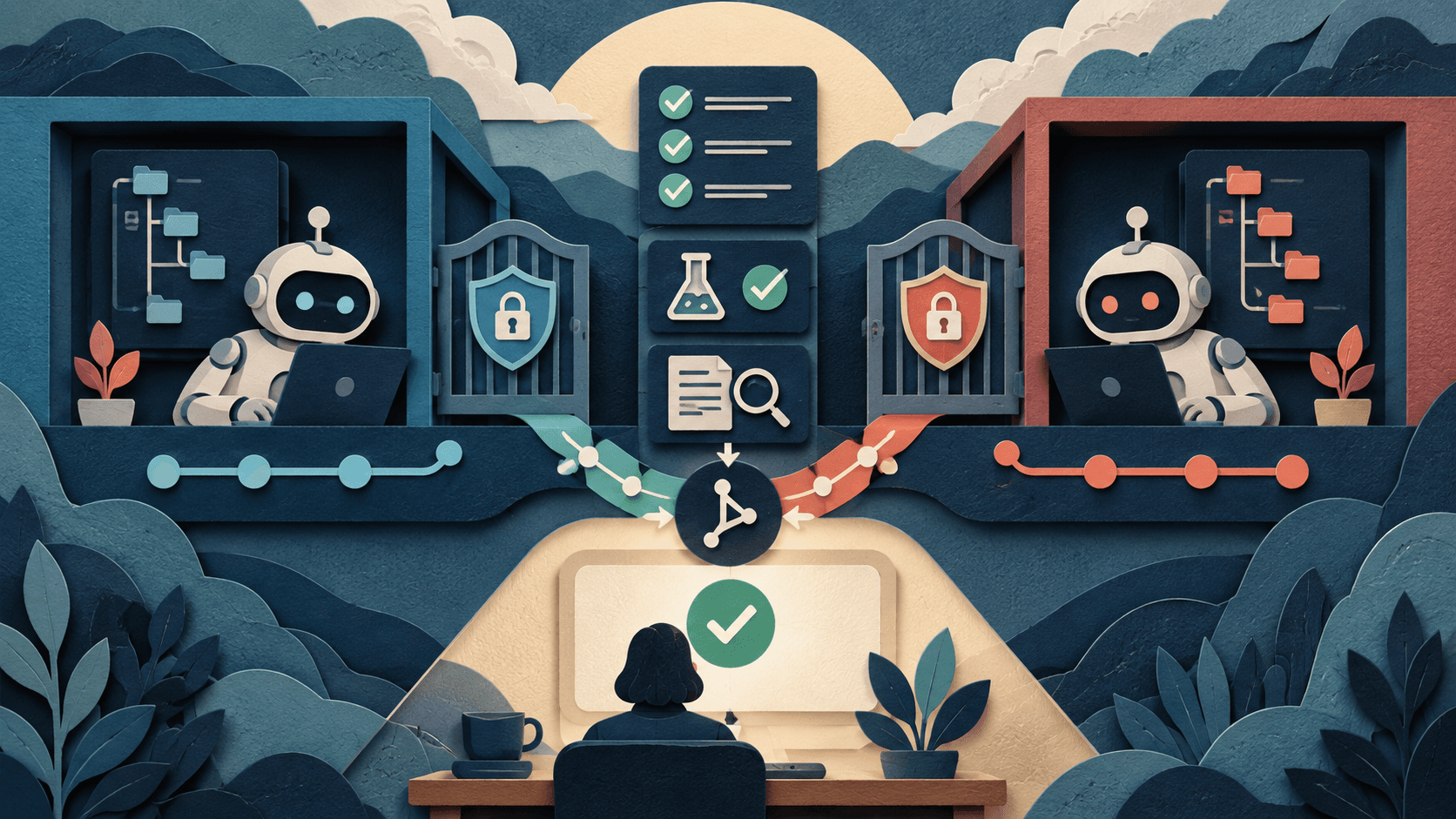
This page defines DiscoverAI's coding-agent benchmark before results are collected. The protocol uses frozen repository snapshots, five task classes, identical permissions, repeated runs, blinded diff review where possible, and separate reporting for accepted output and severe failures. It does not currently rank Cursor, Claude Code, Codex, GitHub Copilot, or any model.
Editorial accountability
Who checked this guide
- Evaluation type
- Research-based verification
- Last materially checked
- Evidence
- 4 listed sources
Hands-on testing is identified explicitly. Research-based coverage uses cited product documentation and other named sources; it does not imply every paid plan was used. Read the full methodology.
Editorial basis
What this guidance is based on
- Editorial basis
- Source-led analysis
- Primary references
- 4
- Products covered
- 3
- Last checked
- 2026-09-26
Important limits
- • Features, prices, limits, and model availability can change.
- • Vendor claims are not independent proof of outcomes.
Short answer
This page defines DiscoverAI's coding-agent benchmark before results are collected. The protocol uses frozen repository snapshots, five task classes, identical permissions, repeated runs, blinded diff review where possible, and separate reporting for accepted output and severe failures. It does not currently rank Cursor, Claude Code, Codex, GitHub Copilot, or any model.
Free AI marketing buyer checklist
Separate useful automation from expensive activity.
Get a practical checklist for outcomes, attribution, review time, and monthly cost—plus weekly tool and pricing changes.
Research question
Under a stated repository, model, product, environment, and permission profile, how much correct work does each agent produce, how much correction does it require, what does it cost, and what severe regressions or violations occur? The benchmark tests a configured system, not a timeless model.
Task suite
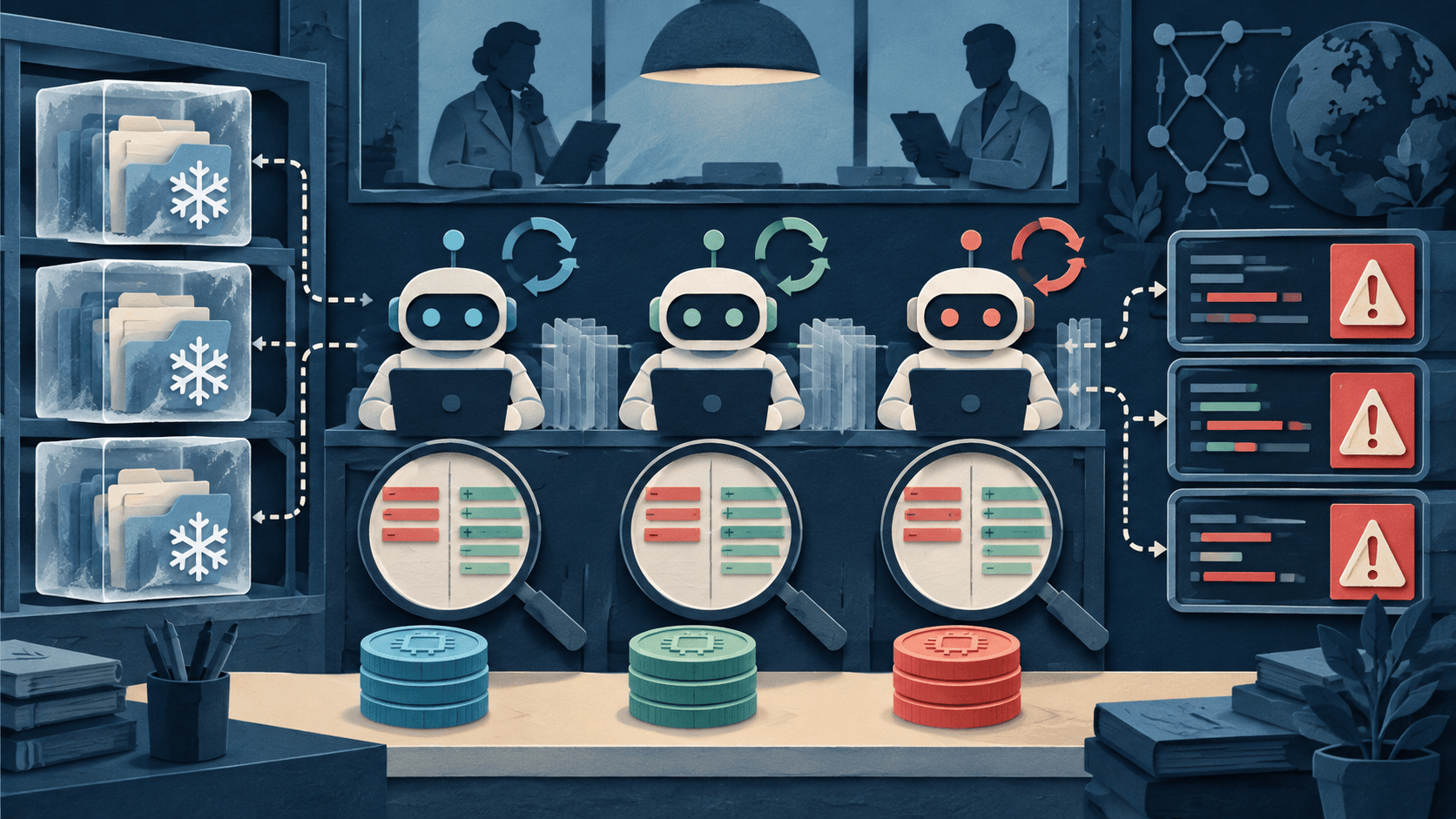
The suite contains a failing-test bug, bounded feature, test expansion, behavior-linked docs, and security review with positives and negatives. Each run starts from the same commit and receives the same task, time, tools, and network policy.
Metrics
Primary metrics are task acceptance, test pass rate, accepted-diff percentage, correction minutes, and cost per accepted task. Secondary metrics include time, unnecessary changes, dependency churn, explanations, and retries. Severe regressions and unauthorized actions are reported individually.
Controls
Record product, client, model, plan, settings, context, commit, environment, prompts, approvals, calls, diffs, tests, usage, and reviewer decisions. Randomize order. Blind reviewers where possible. Resolve disagreements with documented second review.
Release threshold
No leaderboard ships until products complete the declared sample or are labeled incomplete, accepted tasks have evidence, severe events are adjudicated, and cost is reproducible. Release the rubric and machine-readable observations. Until then, this is a protocol, not a performance claim.
Sources and verification
Product details and claims were checked against the following primary sources.
Frequently asked questions
Does this already rank agents?
No. It publishes methodology and withholds scores until the release gate is satisfied.
Why repository tasks?
They expose context selection, edits, tests, permissions, review burden, and regression risk.
Why report severe failures separately?
Averages can hide rare secret access, unauthorized writes, or destructive changes.
Will data be reproducible?
The protocol requires versioned tasks, commits, environments, settings, transcripts, diffs, checks, and reviews.
Recommended tool
Use Cursor if this workflow fits your team
It has one of the clearest workflow fits in its category and is easier to recommend than tools that only look impressive in demos.
Tools mentioned in this article
Cursor
The AI-first code editor that feels like the future of programming
Cursor is a VS Code fork rebuilt from the ground up around AI. It understands your entire codebase and can make multi-file changes with natural language commands.
Claude
Anthropic's thoughtful, safety-focused AI with exceptional long-form reasoning
Claude excels at deep analysis, long-form writing, and nuanced reasoning. Built by Anthropic with a focus on safety and helpfulness.
GitHub Copilot
The AI pair programmer that lives inside your editor
GitHub Copilot is the most widely adopted AI coding assistant, deeply integrated into VS Code, JetBrains, and GitHub itself.
Read next