Reviews, news and how-to guides
AI articles and reviews — page 22
Find a review, catch up on the news or learn how to complete a task. Browse by topic or filter the library below.
Not sure where to begin?
Answer three questions and get a focused tool shortlist for your budget and priority.
Use the AI Tool Finder →Choose a pathway
Explore by topic
Owners and lean teams
Work & Operations
Save time on research, meetings, planning, finance, administration, and repeatable operations.
Marketing and fundraising teams
Marketing & Growth
Plan campaigns, improve social publishing, email, analytics, fundraising, and measurable growth.
Writers and publishers
Content & Search
Research, write, optimize, refresh, and distribute useful content with responsible AI workflows.
Creators and communications teams
Video, Audio & Creative
Create, edit, repurpose, and distribute video, voice, podcasts, images, and presentations.
Service and community leaders
Customers & Community
Improve customer support, donor stewardship, volunteer coordination, outreach, and client communication.
Builders and decision makers
Build, Design & Govern
Choose and deploy AI safely across websites, apps, design systems, privacy, security, and governance.
Editor recommended
Start with these essential guides
Selected by the editors to help you get started.

How Small Business Owners Can Save 10+ Hours a Week With AI Automation in 2026
A practical, no-hype guide to automating the repetitive tasks that consume small business owners' most limited resource: time.
A practical, no-hype guide to automating the repetitive tasks that consume small business owners' most limited resource: time. Written for small business owners working 50+ hours a week on operations, marketing, and admin, with a decision framework, step-by-step workflow, measurable outcomes, and clear limitations.
Read guide
How Understaffed Nonprofits Can Build Capacity With AI Tools in 2026
A strategic framework for using AI to multiply a small team's output without burning out the people you have.
A strategic framework for using AI to multiply a small team's output without burning out the people you have. Written for nonprofit executive directors leading teams of fewer than five people, with a decision framework, step-by-step workflow, measurable outcomes, and clear limitations.
Read guide
How to Choose the Right AI Tool for Your Business
Stop chasing every new AI launch. A practical decision framework for evaluating AI tools based on your actual needs, budget, and risk tolerance.
A practical decision framework for evaluating AI tools: define the problem, score contenders, decide build vs. buy, and know when to cancel. No hype, just a repeatable process.
Read guide
Recently published
Latest articles
Vid2Notes Review: Turn Training Videos Into Usable Notes
Review Vid2Notes for illustrated training notes: free upload limits, annual billing, export options and a practical accuracy check before sharing.
Review Vid2Notes for illustrated training notes: free upload limits, annual billing, export options and a practical accuracy check before sharing.
Read guide
Voice AI for Canva Review: Narration Costs and Practical Limits
Review Voice AI for Canva: character allowances, in-app generation and a narration test for presentations, training videos and client campaigns.
Review Voice AI for Canva: character allowances, in-app generation and a narration test for presentations, training videos and client campaigns.
Read guide
LayerBack Review: Turn Diagram Images Into Editable Files
Review LayerBack for editable Visio, PowerPoint and draw.io diagrams, including download credits, privacy limits and a connector-checking trial.
Review LayerBack for editable Visio, PowerPoint and draw.io diagrams, including download credits, privacy limits and a connector-checking trial.
Read guide
The weekly briefing
Make better AI decisions each week.
Get tool recommendations, product and pricing news, and a practical task to try each week.
Browse reviews, news and guides

AI Agents vs. Traditional Automation: Which Work Needs Which?
Use deterministic automation for stable rules and agents only where interpretation creates measurable value.
Use traditional automation when inputs, rules, and outputs are stable. Use an AI agent when the work genuinely requires interpretation, planning, or language under bounded permissions. Most reliable systems are hybrid: deterministic orchestration surrounds a narrow model step, validates its output, and routes uncertainty to a person.
Read guide

Best AI Agents for Lead Qualification: A Buyer Guide
The best agent creates accepted sales opportunities without inventing facts, contacting the wrong person, or corrupting CRM data.
Shortlist Lindy for assistant-like follow-up, Gumloop for inspectable multi-step qualification workflows, and Relevance AI for teams designing coordinated agents. The winner is not the tool that scores the most leads; it is the one that produces more sales-accepted opportunities with fewer false facts, unwanted contacts, duplicate records, and reviewer minutes.
Read guide

Best AI Agents for Customer Onboarding: A Buyer Guide
Optimize for verified activation and customer confidence, not messages sent or steps auto-completed.
Use Lindy when onboarding is communication and coordination heavy, Gumloop when it is an inspectable multi-system workflow, and Relevance AI when specialized agents need to collaborate. Compare them on verified activation, time to value, exception handling, customer effort, escalations, incorrect changes, and total operating cost.
Read guide

AI Agent Cost per Completed Workflow: A Practical Model
The useful denominator is an accepted business outcome—not a message, token, credit, task, or run.
Calculate AI-agent cost per accepted workflow as total period cost divided by workflows that meet the business acceptance standard. Include subscriptions, usage, models, tools, infrastructure, implementation amortization, monitoring, review, correction, failures, support, and incident cost. Report volume and severe failures beside the average.
Read guide

A 30-Day AI Agent Pilot Plan for Small Businesses
One bounded workflow, one owner, one acceptance rule, and one reversible path beat a broad automation rollout.
In 30 days, select one reversible workflow, define acceptance and stop rules, establish a manual baseline, configure least privilege, replay historical cases in shadow mode, test failures, run a small approval-gated live sample, and decide from accepted outcomes, severe errors, reviewer time, recovery, and cost.
Read guide

Sierra vs. Cresta: Which Customer-Service AI Fits?
Sierra leads with branded autonomous agents; Cresta spans automation, human-agent assistance, and contact-center intelligence.
Choose Sierra when the program centers a customer-facing autonomous agent and contract-defined outcomes. Choose Cresta when a contact center needs a broader mix of virtual agents, real-time human-agent assistance, and conversation intelligence. Compare both on durable resolution, policy compliance, escalation, customer effort, integration, and cost per accepted resolution.
Read guide

Pylon vs. Intercom: B2B Support or Broad Customer Service?
Pylon is shaped around B2B support across shared channels; Intercom offers a broader customer-service suite around Fin and its messenger.
Choose Pylon when B2B customers primarily seek help in shared Slack or Microsoft Teams channels and post-sales context is central. Choose Intercom when the organization needs a broader support suite spanning messenger, help center, inbox, workflows, and Fin. Test channel capture, account context, durable resolution, escalation, reporting, administration, and full cost.
Read guide

Best Sierra AI Alternatives for Customer Service
The right alternative depends on whether you need autonomous service, human-agent augmentation, a broad support suite, or B2B shared-channel operations.
Consider Cresta when human-agent assistance and contact-center intelligence matter alongside automation; Intercom when you want an integrated messenger, inbox, help center, and Fin; and Pylon when B2B support happens in Slack or Teams. Keep Sierra on the shortlist when a branded autonomous agent and outcome-oriented commercial model are central.
Read guide

Outcome Pricing vs. Conversation Pricing for AI Support
Neither pricing model is automatically aligned; the contract must define what earns a charge and who carries failure risk.
Outcome pricing can align spend with completed customer work, but only when the contract defines the outcome, verification, exclusions, reopen window, transferred cases, partial completion, disputes, and credits. Conversation pricing is easier to count but can reward activity. Compare both as cost per accepted durable resolution.
Read guide

How to Measure AI Support Resolution Quality
Containment is not resolution; a case is successful only when the customer's need is correctly and durably handled.
Measure AI support with durable resolution rate as the primary outcome, then report reopen rate, correctness, policy compliance, evidence quality, escalation quality, customer effort, latency, correction time, cost per accepted resolution, and severe failures. Containment alone can hide abandoned or incorrectly closed cases.
Read guide

AI Support Agent RFP Template: Requirements That Matter
Require vendors to answer with product evidence, contract language, and a matched pilot—not adjectives.
An AI support RFP should define customer intents, channels, knowledge, allowed actions, identity, permissions, escalation, quality thresholds, integrations, security, data use, implementation, support, pricing units, audit rights, exports, and exit. Require a matched pilot using your cases and acceptance rubric before a long contract.
Read guide
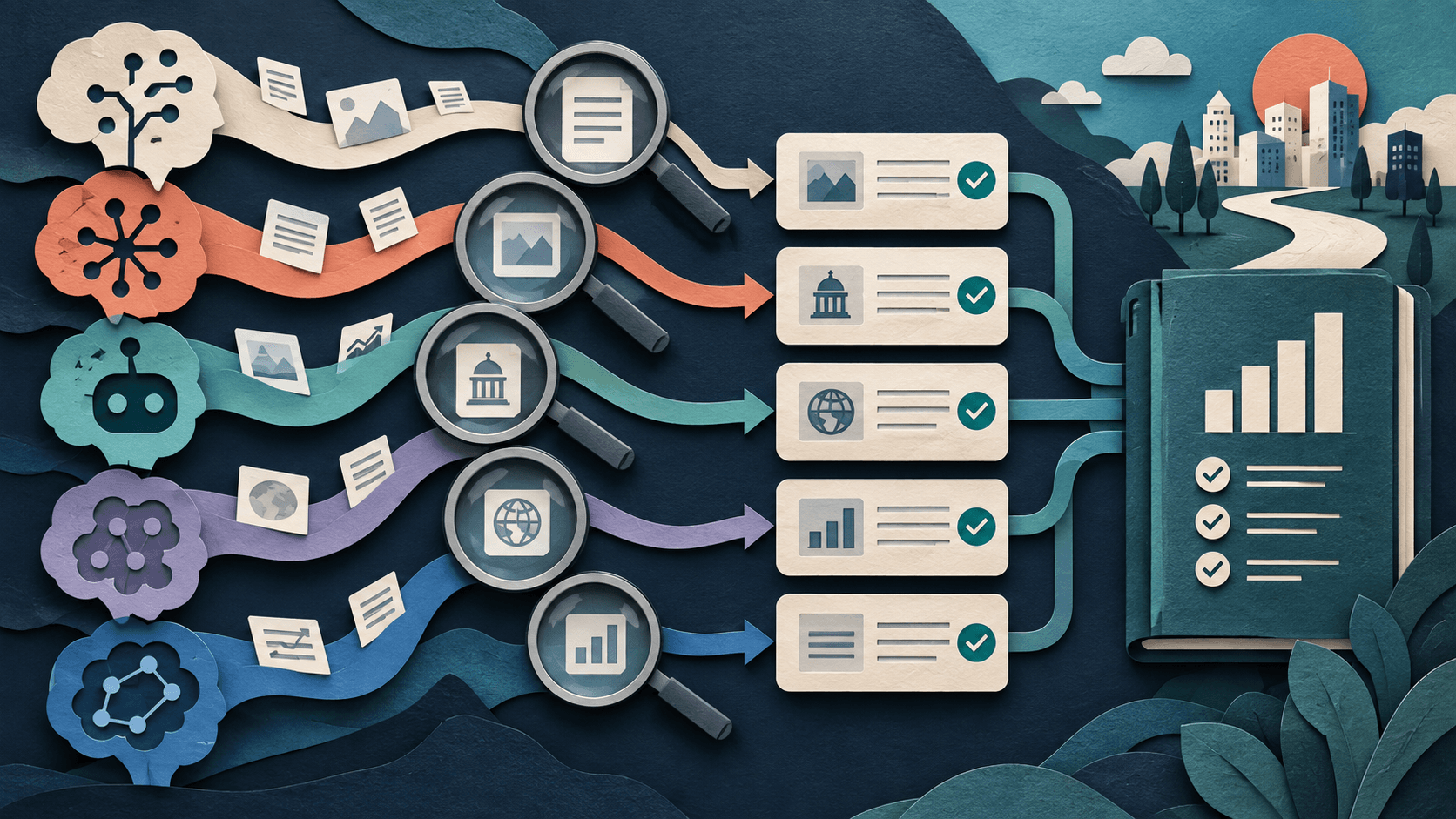
Best AI Visibility Tools: A Buyer-First Shortlist for 2026
A shortlist based on measurement quality, prompt coverage, actionability, governance, and cost—not a vendor leaderboard.
Start with Profound when an established brand needs broad enterprise monitoring and workflows; shortlist OmniSEO when services and search strategy belong in the same decision; consider Gushwork when managed execution matters more than software alone. Do not choose from a visibility score. Require prompt-level evidence, source URLs, segmentation, exports, and a defensible connection to qualified traffic or conversions.
Read guide

Profound vs. Scrunch AI: Which Visibility Platform Fits?
Profound emphasizes broad intelligence and workflows; Scrunch emphasizes how AI agents understand and represent a brand.
Choose Profound when the primary need is broad prompt, citation, competitor, crawler, and AI-traffic intelligence with enterprise workflows. Choose Scrunch AI when the central problem is diagnosing how AI agents understand and represent your brand. Both need a controlled pilot because coverage, definitions, packaging, and outputs differ.
Read guide

Profound vs. Peec AI: Enterprise Depth or Focused Monitoring?
The practical choice is the smallest system that can reproduce the observations your team will act on.
Choose Profound for an enterprise AEO operating layer spanning visibility, citations, crawler activity, traffic, and workflows. Choose Peec AI when focused monitoring can cover your prompts, markets, engines, and collaborators with less operational weight. Verify live pricing and coverage: simplicity is valuable only if it preserves evidence behind each metric.
Read guide

How to Measure AI Visibility Across ChatGPT, Gemini, Claude, and Google
A useful system preserves the prompt, answer, source, context, and outcome instead of collapsing everything into one score.
Measure AI visibility with a fixed prompt set, controlled collection conditions, and six separate metrics: brand mention rate, cited-domain rate, recommendation position, factual accuracy, qualified referral traffic, and answer volatility. Record raw answers and sources. Never combine personalized ChatGPT, Gemini, Claude, and Google results into one unexplained score.
Read guide
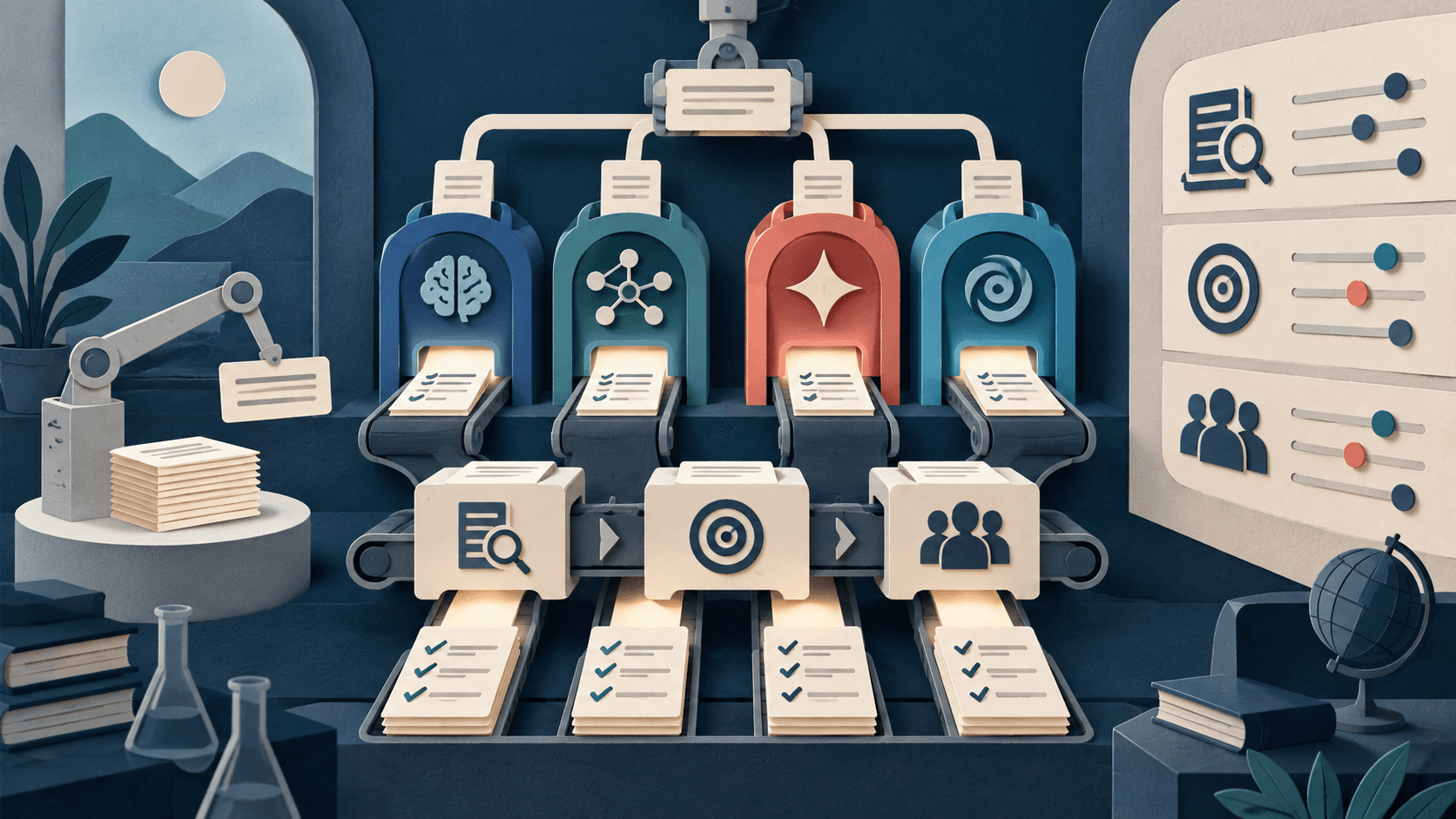
DiscoverAI Answer-Engine Visibility Benchmark: Methodology
A transparent protocol for future results; no scores are published until collection and verification are complete.
This is the public protocol for DiscoverAI's recurring answer-engine visibility benchmark. It defines the prompt set, controls, scoring, verification, and release threshold before results exist. It does not claim a winning platform or current market score. Publishing the method first prevents metrics from being redesigned around an attractive result.
Read guide

Best AI Coding Agents for Existing Codebases in 2026
The best coding agent produces the highest accepted-diff rate inside your repository's real constraints.
Shortlist Cursor for an editor-centered workflow, Claude Code for terminal-first work, Codex for bounded local and cloud delegation, and GitHub Copilot when GitHub and established IDE rollout matter most. Test all candidates on the same bug, feature, test, documentation, and security tasks; compare accepted diffs, regressions, correction time, permissions, and total cost.
Read guide

Cursor vs. Claude Code: Editor Workflow or Terminal Agent?
Cursor centers the AI-native editor; Claude Code centers a terminal agent that can inspect, modify, and verify a repository.
Choose Cursor when developers want inline editing, navigation, and agents inside an AI-native editor. Choose Claude Code when a terminal-first workflow and explicit sandbox or permission boundaries fit better. Run both on identical tasks; model quality alone misses interface friction, context errors, unsafe actions, and review burden.
Read guide