Reviews, news and how-to guides
AI articles and reviews — page 25
Find a review, catch up on the news or learn how to complete a task. Browse by topic or filter the library below.
Not sure where to begin?
Answer three questions and get a focused tool shortlist for your budget and priority.
Use the AI Tool Finder →Choose a pathway
Explore by topic
Owners and lean teams
Work & Operations
Save time on research, meetings, planning, finance, administration, and repeatable operations.
Marketing and fundraising teams
Marketing & Growth
Plan campaigns, improve social publishing, email, analytics, fundraising, and measurable growth.
Writers and publishers
Content & Search
Research, write, optimize, refresh, and distribute useful content with responsible AI workflows.
Creators and communications teams
Video, Audio & Creative
Create, edit, repurpose, and distribute video, voice, podcasts, images, and presentations.
Service and community leaders
Customers & Community
Improve customer support, donor stewardship, volunteer coordination, outreach, and client communication.
Builders and decision makers
Build, Design & Govern
Choose and deploy AI safely across websites, apps, design systems, privacy, security, and governance.
Editor recommended
Start with these essential guides
Selected by the editors to help you get started.

How Small Business Owners Can Save 10+ Hours a Week With AI Automation in 2026
A practical, no-hype guide to automating the repetitive tasks that consume small business owners' most limited resource: time.
A practical, no-hype guide to automating the repetitive tasks that consume small business owners' most limited resource: time. Written for small business owners working 50+ hours a week on operations, marketing, and admin, with a decision framework, step-by-step workflow, measurable outcomes, and clear limitations.
Read guide
How Understaffed Nonprofits Can Build Capacity With AI Tools in 2026
A strategic framework for using AI to multiply a small team's output without burning out the people you have.
A strategic framework for using AI to multiply a small team's output without burning out the people you have. Written for nonprofit executive directors leading teams of fewer than five people, with a decision framework, step-by-step workflow, measurable outcomes, and clear limitations.
Read guide
How to Choose the Right AI Tool for Your Business
Stop chasing every new AI launch. A practical decision framework for evaluating AI tools based on your actual needs, budget, and risk tolerance.
A practical decision framework for evaluating AI tools: define the problem, score contenders, decide build vs. buy, and know when to cancel. No hype, just a repeatable process.
Read guide
Recently published
Latest articles
Vid2Notes Review: Turn Training Videos Into Usable Notes
Review Vid2Notes for illustrated training notes: free upload limits, annual billing, export options and a practical accuracy check before sharing.
Review Vid2Notes for illustrated training notes: free upload limits, annual billing, export options and a practical accuracy check before sharing.
Read guide
Voice AI for Canva Review: Narration Costs and Practical Limits
Review Voice AI for Canva: character allowances, in-app generation and a narration test for presentations, training videos and client campaigns.
Review Voice AI for Canva: character allowances, in-app generation and a narration test for presentations, training videos and client campaigns.
Read guide
LayerBack Review: Turn Diagram Images Into Editable Files
Review LayerBack for editable Visio, PowerPoint and draw.io diagrams, including download credits, privacy limits and a connector-checking trial.
Review LayerBack for editable Visio, PowerPoint and draw.io diagrams, including download credits, privacy limits and a connector-checking trial.
Read guide
The weekly briefing
Make better AI decisions each week.
Get tool recommendations, product and pricing news, and a practical task to try each week.
Browse reviews, news and guides

Shortwave Review 2026: AI Email Search, Writing & Pricing
A research-based review of Shortwave's capabilities, economics, data boundaries, and operational fit.
Shortwave is a Gmail-based email client with AI search, thread analysis, personalized drafting, inbox organization, filters, web browsing, attachment analysis, and MCP-connected actions.
Read guide

Build an AI Agent Permission Matrix Before You Connect Real Systems
An agent should not inherit every permission its installer has; define the smallest access needed for each task and consequence.
Create one row for every agent-to-system connection and columns for data scope, read, create, update, delete, send, trigger, retention, approval, logging, owner, credential, expiry, and emergency revocation. Default every cell to denied, grant the narrowest task-specific access, separate drafting from execution, and test each allowed and forbidden path before production.
Read guide

Measure AI Cost Per Accepted Output—not Cost Per Generation
A cheap generation is expensive when reviewers reject it, repair it, rerun it, or absorb the cost of a downstream mistake.
Cost per accepted output equals all workflow costs divided by outputs that pass a written acceptance standard. Include model input, output and cache charges; retrieval and tool calls; failed attempts; orchestration; human review and correction time; monitoring; and expected failure loss. Report it by task segment and severity so a good average cannot hide an expensive failure tail.
Read guide

Google Ads Adds AI Max Brief Controls and Unified Journey Reporting
Advertisers gain more ways to brief automation and inspect the path from search term to generated asset and landing page, but incrementality still needs a controlled test.
Google is expanding AI Brief to seven additional languages and previewing a unified AI Max report that connects search terms, served creative, and landing pages. The added visibility can make automation easier to audit, but advertisers still need experiments and business outcomes to establish value.
Read guide

Google Open-Sources Mantis, an AI Harness for Finding and Patching Vulnerabilities
The modular toolkit exposes Google's agentic review pattern for threat modeling, reproduction, severity calibration, and patch verification—but Google explicitly limits it to isolated, expert-supervised use.
Google has released Mantis as an open-source, stack-agnostic toolkit for agentic vulnerability discovery and patching. It gives security teams a reusable workflow, while its own documentation warns that models can hallucinate findings, produce incorrect patches, and execute unsafe generated code.
Read guide

Sudowrite Review 2026: Fiction, Credits, and Fit
Try Sudowrite for a bounded fiction-writing problem such as scene expansion or story planning. Its specialist workflow is worth buying only if your revised prose and continuity improve enough to justify the credits and extra subscription.
A fiction-focused AI writing workspace for story planning, scene drafting, rewriting, and revision.
Read guide
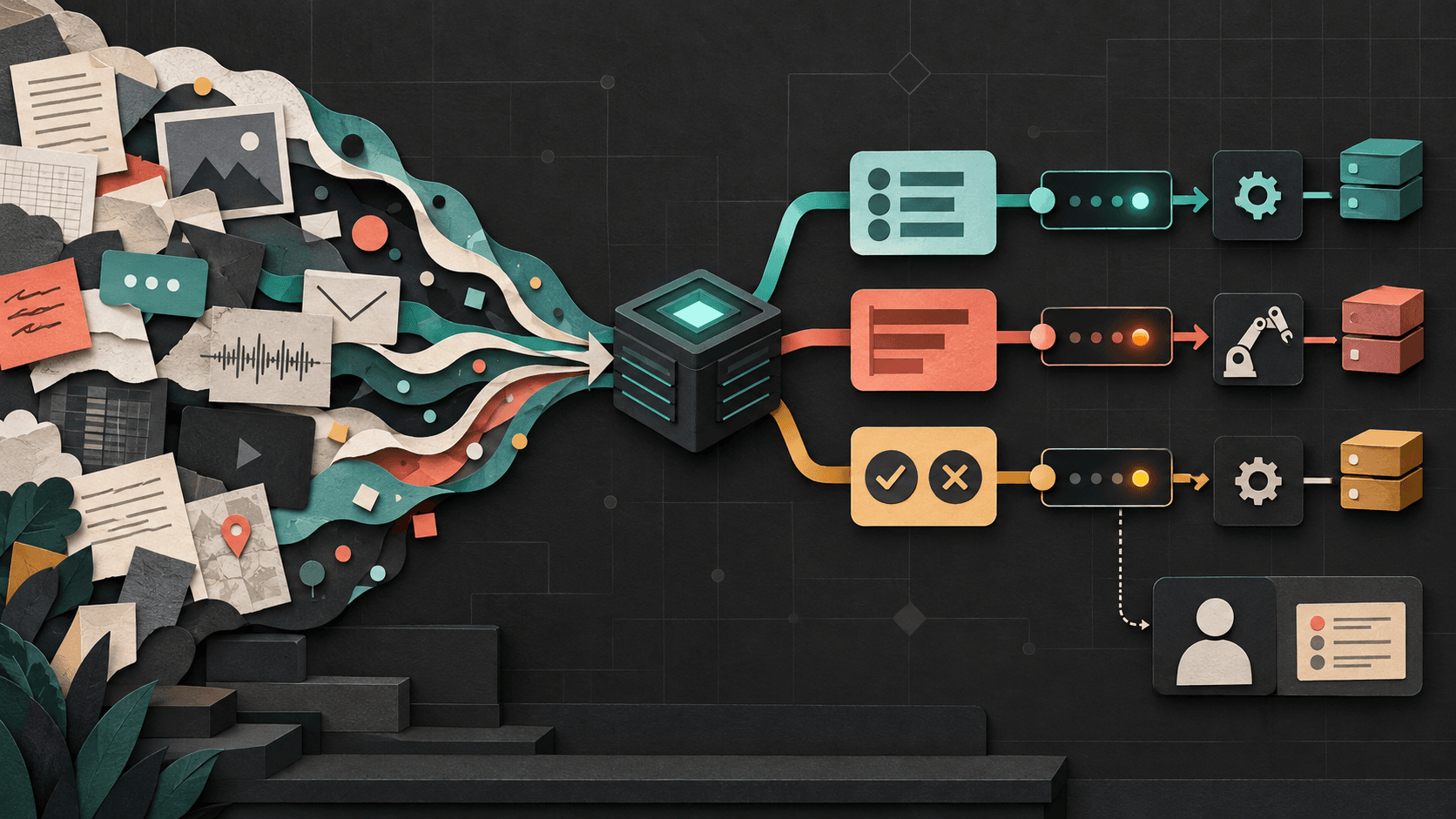
TypeSafe AI’s Jev Is Betting That AI Should Make Decisions, Not Write More Text
By trading open-ended generation for typed choices, scores, and probabilities, Jev could make narrow AI decisions cheap enough to embed throughout software.
TypeSafe AI is building Jev as a machine-native decision layer rather than another chatbot. Its opportunity is not better prose, but fast, inexpensive judgments that software can validate, route, and escalate.
Read guide

Gushwork Review 2026: Can Its AI SEO System Drive Leads?
Gushwork packages AI-assisted search, content, authority, website, and lead operations into a managed service—but buyers still need editorial control and clean attribution.
A research-based Gushwork review of its managed AI SEO system, pricing, content workflow, lead analytics, evidence limits, and buyer test.
Read guide

ChatGPT for Word Launches: Access, Cost, Privacy, and Admin Controls
The Word sidebar brings document-aware drafting into Microsoft 365, but default-on access and shared token allowances make administration and testing important.
OpenAI has released ChatGPT for Word across ChatGPT plans, with document-aware drafting, editing, summarization, and formatting in a Word sidebar. Organizations should review the October 1 default-on change, add-in approval, document access, shared token usage, and human-review requirements before broad rollout.
Read guide

Apple Launches Siri AI With Personal Context and App Actions
The rebuilt assistant can use personal and onscreen context and act across apps, while beta status, regional exclusions, daily limits, and consent settings remain material.
Apple has begun rolling out Siri AI in beta in English across its 2027 operating-system releases. The assistant adds personal context, onscreen awareness, broader knowledge, and more app actions, but availability depends on device, language, and region—and Apple has not established error-free execution on consequential tasks.
Read guide

Microsoft Says Global AI Use Reached 18.8%—With a Wider Gap
The updated estimate shows broad growth and a persistent access divide, but Microsoft telemetry is not a complete census of every AI product or person.
Microsoft's September 21 Global AI Diffusion Report estimates that 18.8% of the world's working-age population used a generative AI product in June 2026, up about one percentage point from the first quarter. It also reports a widening gap: 28.8% in the Global North versus 16.2% in the Global South. The figures are adjusted estimates derived from aggregated Microsoft telemetry—not a census of all AI use.
Read guide

xAI Grok 4.6 Arrives on Amazon Bedrock for Long-Running Agents
Bedrock gives enterprises another managed frontier-model option, but model benchmarks and a large context window do not establish workflow reliability.
AWS made xAI's Grok 4.6 available on Amazon Bedrock on September 21, 2026 for coding, knowledge work, and long-running agents. AWS lists a 500,000-token context window, four reasoning-effort levels, Converse API access, and cross-Region inference. Buyers still need task-level tests for quality, latency, policy fit, residency, and total cost.
Read guide

Guidde Review 2026: AI Video Documentation, Pricing, Pros & Cons
A research-based review of Guidde's capabilities, economics, data boundaries, and operational fit.
Guidde turns captured software workflows, presentations, PDFs, and uploads into step-based video documentation with AI voice, captions, editing, sharing, and analytics.
Read guide

Hedra Review 2026: AI Video, Characters, Pricing, Pros & Cons
A research-based review of Hedra's capabilities, economics, data boundaries, and operational fit.
Hedra combines character video, image, audio, editing, and brand-oriented content creation in one credit-metered workspace for creators and marketing teams.
Read guide

Saner.AI Review 2026: Notes, Tasks, Email, Pricing & Privacy
A research-based review of Saner.AI's capabilities, economics, data boundaries, and operational fit.
Saner.AI brings notes, tasks, search, reasoning, email, calendar, Slack, and Google Drive context into a personal AI workspace designed to reduce switching and planning friction.
Read guide
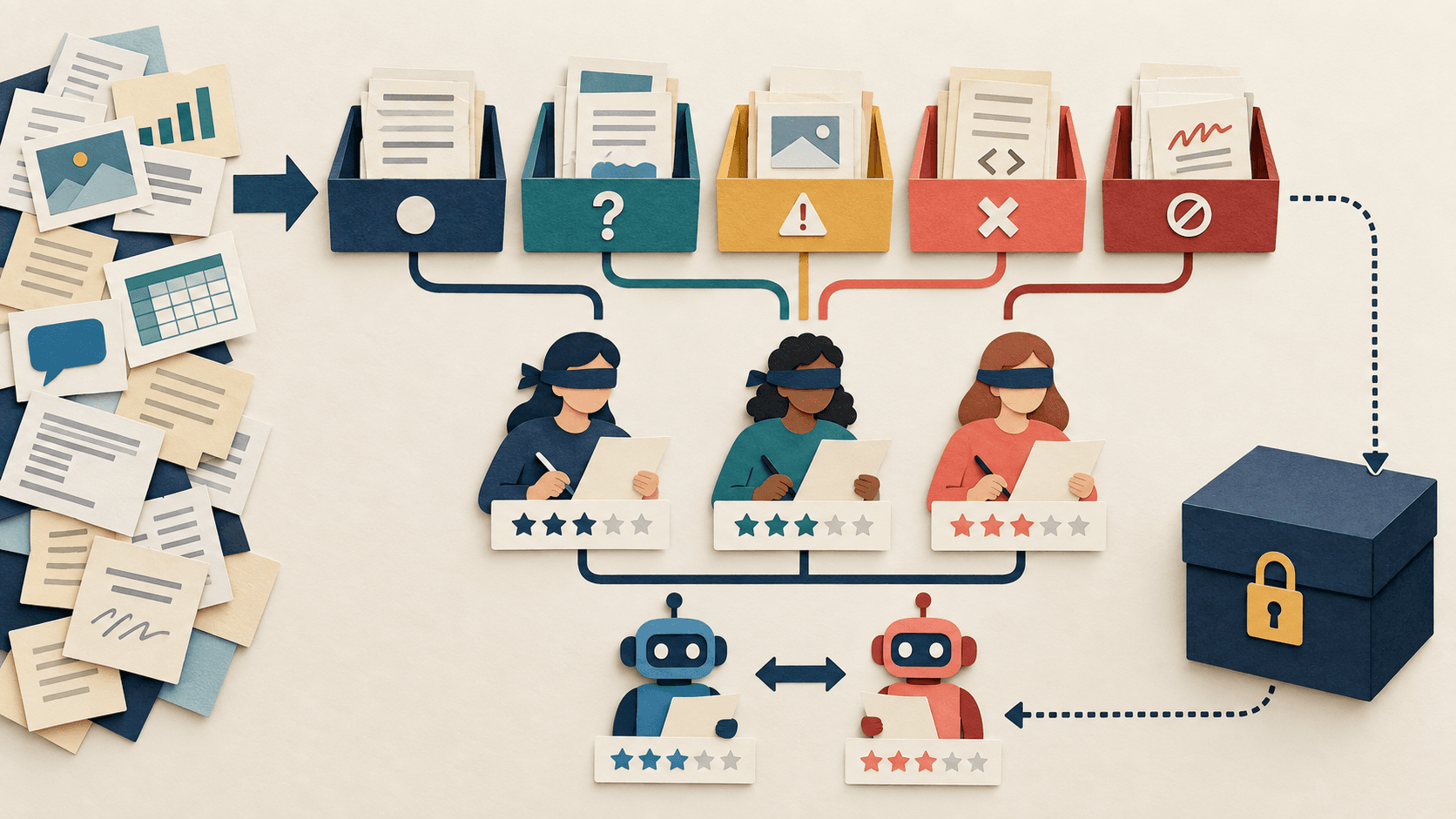
Build an AI Evaluation Set From Real Work
A useful test set reflects the work that actually arrives—including ambiguity and failure—not a handful of polished demo prompts.
Build an AI evaluation set by sampling real, permission-safe work across common cases, important segments, edge cases, known failures, and should-refuse requests. Remove unnecessary personal or confidential data, define expected qualities before running the model, double-label a subset, freeze a holdout, and version every test with the prompt, model, tools, and data configuration.
Read guide
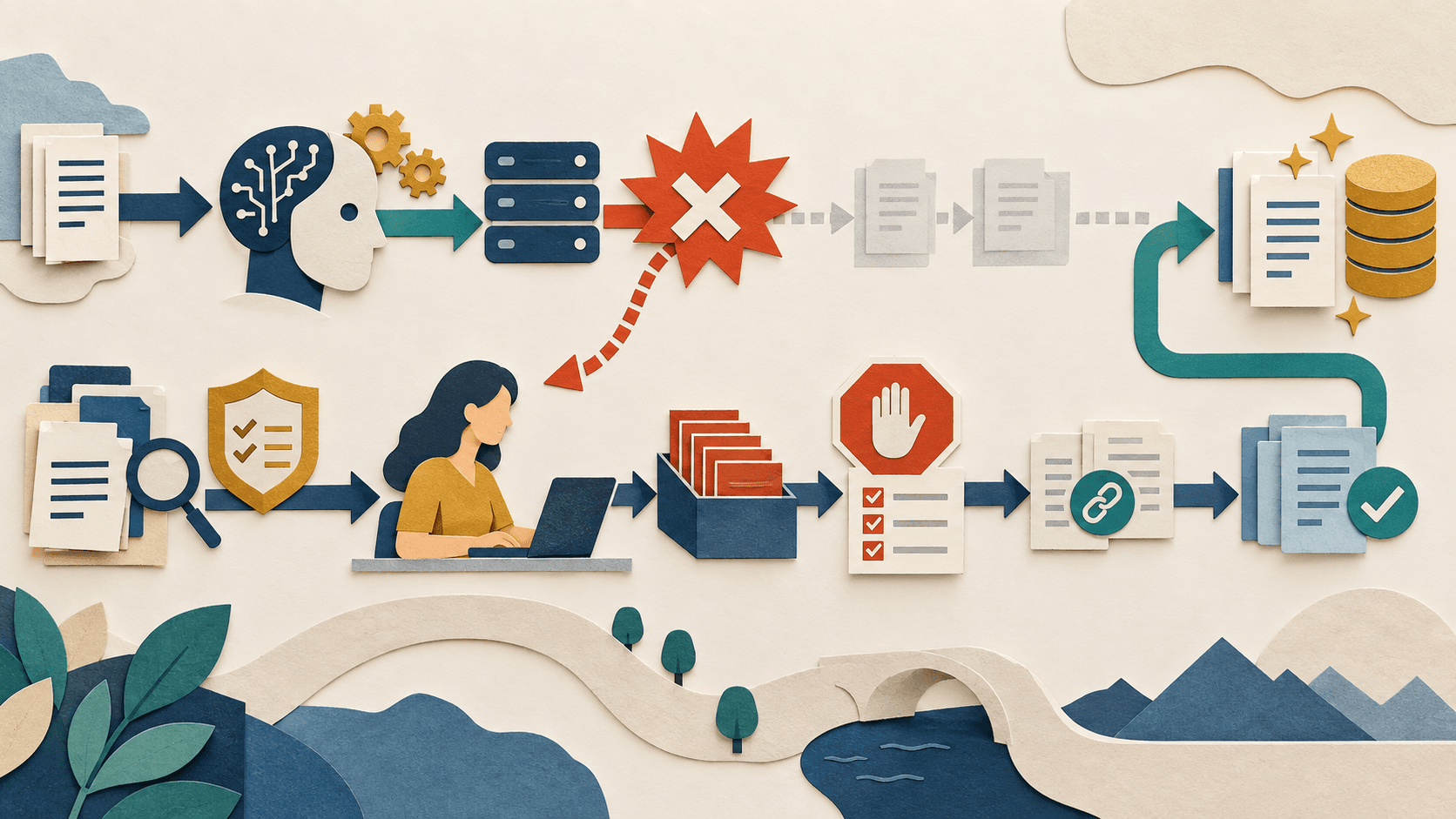
Design a Manual Fallback for Every AI Workflow
A workflow is not production-ready when its only recovery plan is waiting for the AI vendor to come back.
Every important AI workflow needs a documented degraded mode that can operate without the model or connector. Define what triggers fallback, which tasks stop, which revert to a person or deterministic system, where the required data and templates live, who declares recovery, and how delayed or partial work is reconciled without duplicate actions.
Read guide
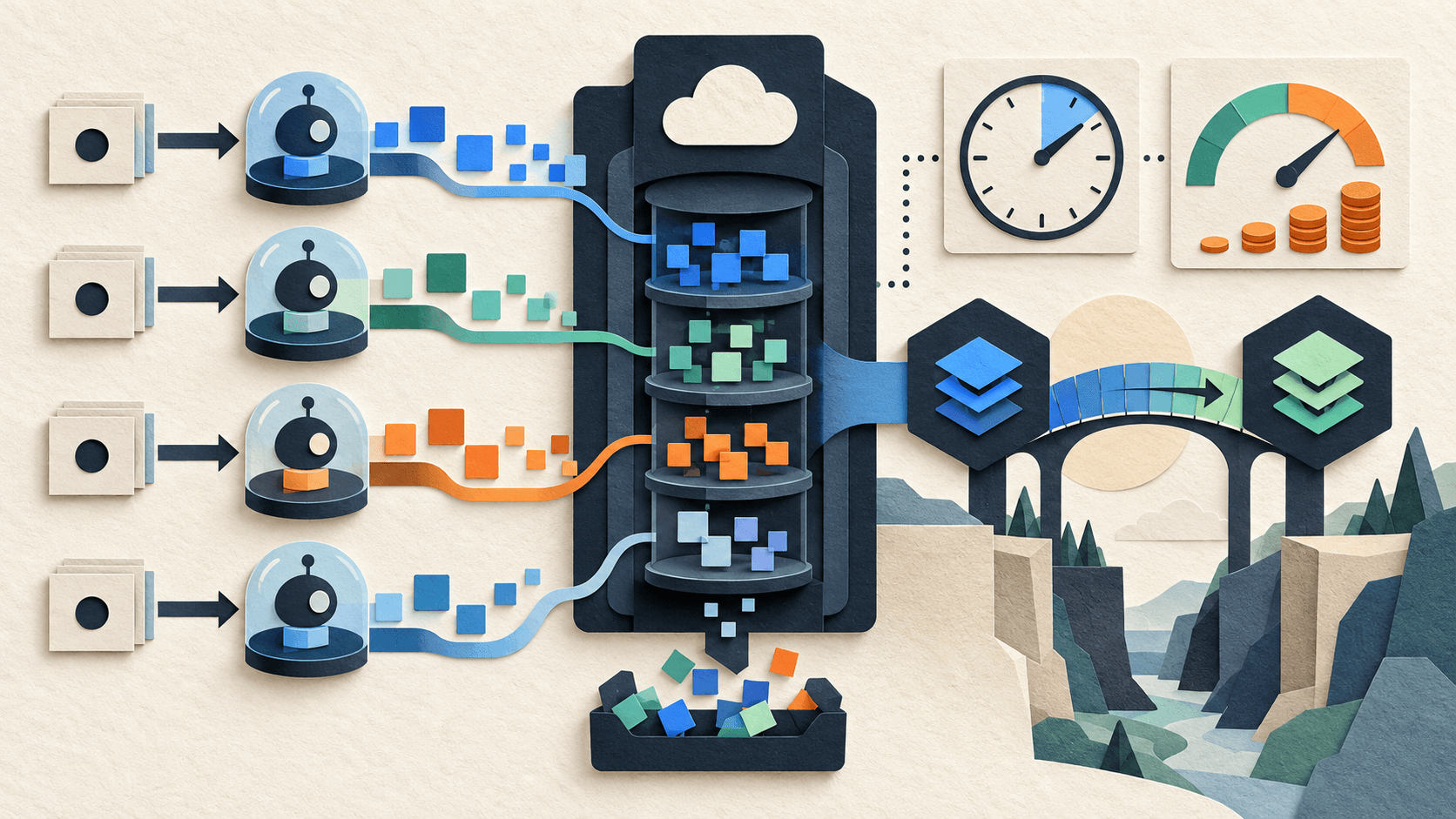
Amazon AgentCore V2 Targets Agent Memory and Cold Starts
The new runtime changes agent infrastructure economics, but AWS platform benchmarks do not predict application reliability or total workflow cost.
Amazon Bedrock AgentCore Runtime V2 reclaims idle memory and restores pre-initialized snapshots to make agent starts more consistent and usage billing more elastic.
Read guide