Google Open-Sources Mantis, an AI Harness for Finding and Patching Vulnerabilities
The modular toolkit exposes Google's agentic review pattern for threat modeling, reproduction, severity calibration, and patch verification—but Google explicitly limits it to isolated, expert-supervised use.
Bottom line
Google has released Mantis as an open-source, stack-agnostic toolkit for agentic vulnerability discovery and patching. It gives security teams a reusable workflow, while its own documentation warns that models can hallucinate findings, produce incorrect patches, and execute unsafe generated code.
Editorial accountability
Who checked this guide
- Evaluation type
- Research-based verification
- Last materially checked
- Evidence
- 4 listed sources
Hands-on testing is identified explicitly. Research-based coverage uses cited product documentation and other named sources; it does not imply every paid plan was used. Read the full methodology.
Editorial basis
What this guidance is based on
- Editorial basis
- Source-led analysis
- Primary references
- 4
- Products covered
- 1
- Last checked
- 2026-09-23
Important limits
- • DiscoverAI has not executed or audited Mantis and has not independently validated Google's internal results.
- • The open-source project is explicitly unsupported, non-production, and capable of executing unsafe generated code.
In this guide
Short answer
Google has open-sourced Mantis, a modular toolkit and Agent Development Kit reference harness for using AI coding agents to find, reproduce, calibrate, chain, and patch software vulnerabilities. Google says related internal agentic methods scan code across its infrastructure and prevent hundreds of vulnerabilities per month from reaching its codebase or production.
The opportunity is not a push-button replacement for application security. Mantis gives engineering and security teams a concrete orchestration pattern they can adapt to their own stacks, threat models, coding standards, and build systems. Its repository also says the project is a demonstration, is not an officially supported Google product, and must not be run against production systems, sensitive data, or internal networks.
Free workflow pilot checklist
Test the workflow before you buy the tool.
Get the buyer checklist, including task, owner, approval, fallback, and time-saved fields—plus one useful briefing a week.
What makes Mantis different
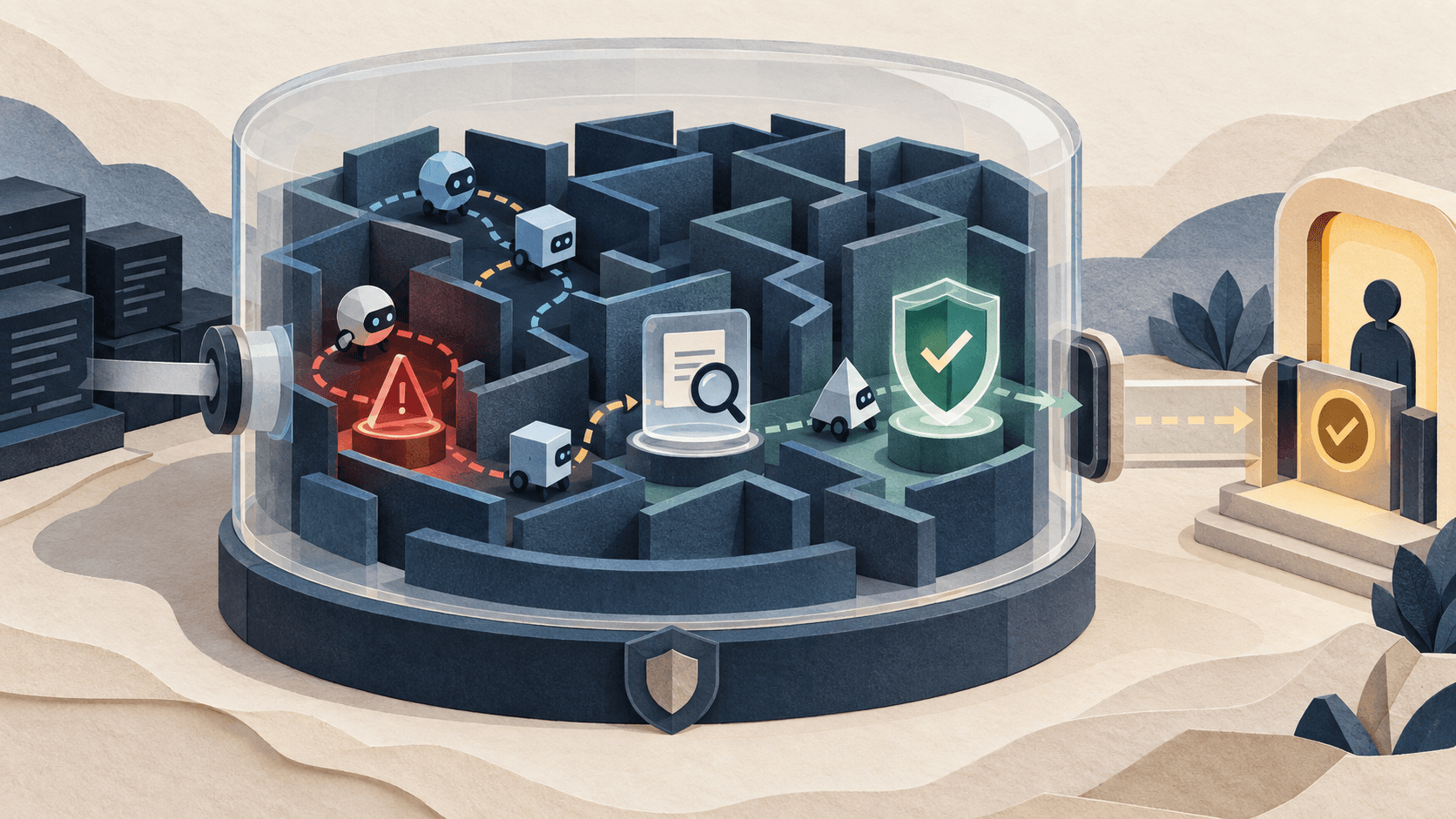
Mantis is organized as portable agent skills rather than one fixed scanner. Its workflow can build a threat model, inspect code, try to reproduce suspected vulnerabilities, calibrate severity against a rubric, search for multi-step exploit chains, propose a patch, and use an adversarial loop to check whether the patch actually closes the issue.
The reference harness makes critical steps programmatic. Google's documentation argues that deterministic orchestration can require critic stages, enforce sandboxing, and keep an agent from bypassing controls it might otherwise forget. The design can supplement established static tools rather than pretending probabilistic reasoning should replace them.
The opportunity for security teams
Traditional scanners are strongest where a known pattern, dependency, secret, or configuration rule can be expressed deterministically. An agent can add value by following data and control flow, reasoning about application-specific authorization, combining individually modest weaknesses, and adapting a review to internal architecture and historical incidents.
For smaller security teams, the open toolkit can serve as a reference implementation for repeatable deep reviews. Larger organizations can use the skills as a starting point for domain-specific variants covering infrastructure as code, firmware, hardware descriptions, or machine-learning pipelines. Findings can also feed secure-development guidance so later code does not repeat a known failure pattern.
What Google's results do not prove
Google's reported internal prevention rate is not an independent benchmark and does not predict results in another codebase. The public toolkit, model, sandbox, documentation, build system, and reviewer expertise may differ materially from Google's internal environment. A reproduced crash does not necessarily establish exploitability, and failure to reproduce does not prove a finding is false.
Mantis can also create risk. It executes generated code, investigates exploit paths, and can propose incorrect fixes. The repository warns that models are non-deterministic, may hallucinate findings, and must not be used to mass-file unverified reports. Human security review remains mandatory.
A safe evaluation protocol
Start with a disposable, network-isolated copy of a deliberately vulnerable training application—never a production checkout or a machine holding credentials. Remove secrets, disable outbound network access, restrict filesystem and process permissions, cap time and spend, and log every tool call and generated artifact.
Create a labeled evaluation set with known vulnerabilities, safe files, authorization flaws, dependency issues, and multi-step cases. Measure recall, false-positive rate, reproducibility, severity calibration, unsafe commands, patch correctness, regression-test results, reviewer time, and cost per accepted finding. Require two-person approval before reporting a vulnerability or merging a patch.
What teams should do now
Security leaders can study Mantis as an architecture, then decide which stages belong beside their existing SAST, dependency, secret, and infrastructure scanners. The best near-term use is a supervised second layer for prioritizing and investigating findings—not autonomous production remediation. If the harness cannot be strongly isolated and observed, it should not be run.
This is a research-based news analysis of Google's engineering post and public repository. DiscoverAI has not executed Mantis, audited its code, or validated Google's internal results. The toolkit is evolving and its documentation, models, and safety boundaries can change.
Sources and verification
Product details and claims were checked against the following primary sources.
Frequently asked questions
What is Google Mantis?
Mantis is an open-source set of agent skills plus an ADK reference harness for finding, reproducing, rating, chaining, and patching software vulnerabilities.
Is Mantis an officially supported Google product?
No. Its repository describes it as a demonstration and starting point, not an officially supported product or a production-ready service.
Can Mantis safely run against production code?
Google warns users not to run it on machines with production access, sensitive data, or internal-network access. Evaluation should occur in a strongly isolated, monitored environment.
Does Mantis replace security engineers and conventional scanners?
No. Its probabilistic findings and patches require expert verification, while deterministic scanners remain valuable for known rules, dependencies, secrets, and configurations.
Recommended tool
Use Google Gemini if this workflow fits your team
It has one of the clearest workflow fits in its category and is easier to recommend than tools that only look impressive in demos.
Tools mentioned in this article
Google Gemini
Google's deeply integrated AI assistant with unmatched access to Google's ecosystem
Gemini combines powerful AI with Google's vast data ecosystem — Search, Gmail, Docs, YouTube, and more — for a uniquely integrated experience.
Read next
Recommended for you

TypeSafe AI Review 2026: Is Jev Ready for Production?
Jev offers a genuinely different API for fast typed decisions, but early-access maturity and vendor-run evaluations make workload-specific validation essential.
A research-based TypeSafe AI review of Jev's typed decisions, confidence, pricing, evaluations, privacy, limitations, alternatives, and production-readiness test.
Read guide
AI Implementation for Small Business: Launch Your First Workflow in 30 Days
TypingMind Review 2026: Multi-Model Chat, Pricing, and Privacy
Dia Browser Review 2026: Is the AI Browser Worth Switching To?