ChatGPT for Word Launches: Access, Cost, Privacy, and Admin Controls
The Word sidebar brings document-aware drafting into Microsoft 365, but default-on access and shared token allowances make administration and testing important.
Bottom line
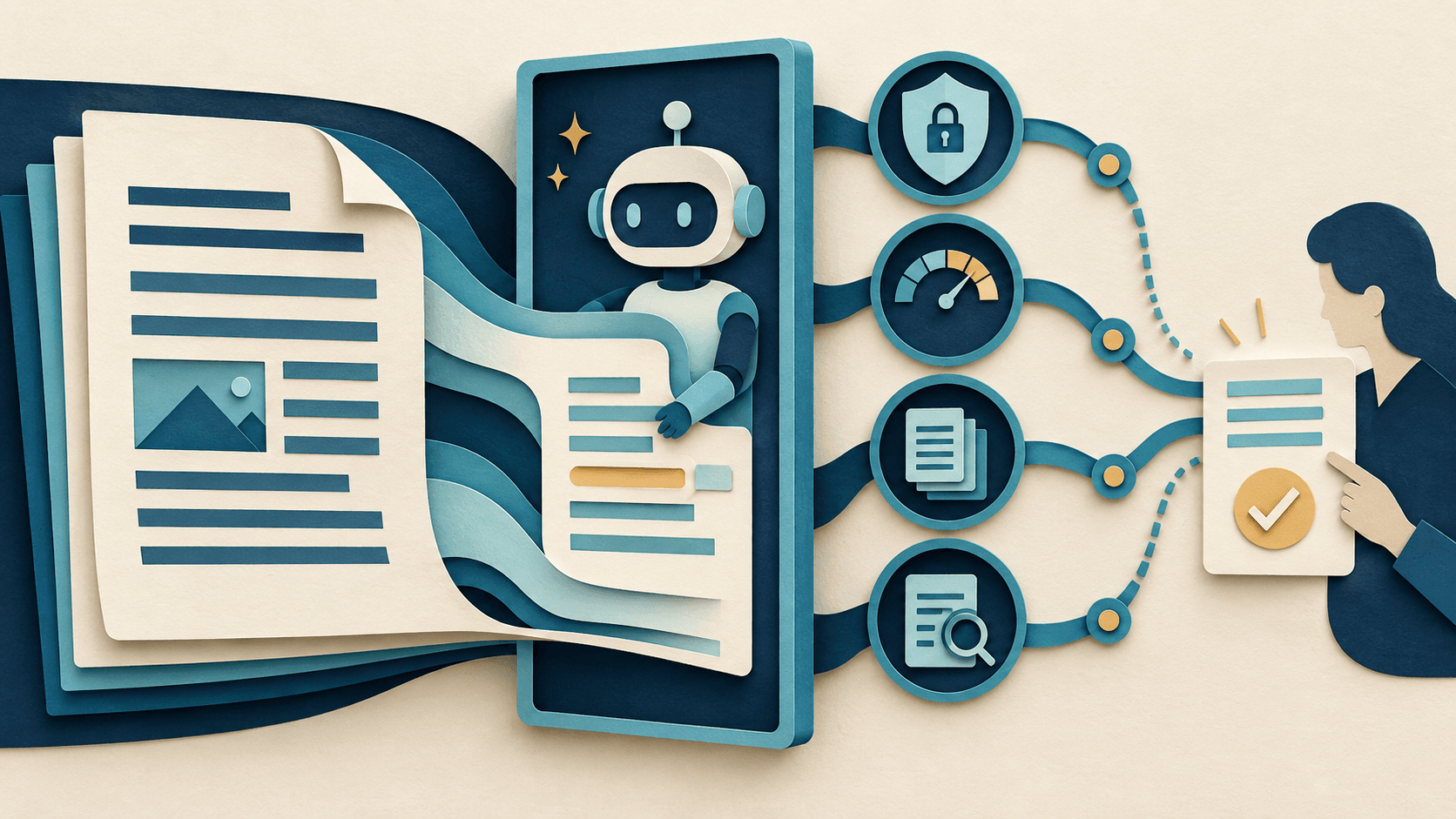
OpenAI has released ChatGPT for Word across ChatGPT plans, with document-aware drafting, editing, summarization, and formatting in a Word sidebar. Organizations should review the October 1 default-on change, add-in approval, document access, shared token usage, and human-review requirements before broad rollout.
Editorial accountability
Who checked this guide
- Evaluation type
- Research-based verification
- Last materially checked
- Evidence
- 4 listed sources
Hands-on testing is identified explicitly. Research-based coverage uses cited product documentation and other named sources; it does not imply every paid plan was used. Read the full methodology.
Editorial basis
What this guidance is based on
- Editorial basis
- Source-led analysis
- Primary references
- 4
- Products covered
- 2
- Last checked
- 2026-09-22
Important limits
- • DiscoverAI has not independently audited the Word add-in or completed a long-term enterprise deployment.
- • OpenAI's availability, pricing, defaults, product behavior, and data controls can change.
In this guide
Short answer
ChatGPT for Word is now available as a sidebar inside Microsoft Word. It can work with the open document and selected text to draft, summarize, reorganize, revise, and adjust basic formatting. OpenAI says the add-in is available across ChatGPT plans, while workspace and Microsoft 365 administrators control organizational access. Starting October 1, 2026, OpenAI plans to enable Word access by default, so administrators should review settings before that date.
Free AI governance buyer checklist
Know what the tool can read, write, retain, and trigger.
Get a checklist for access, evidence, security, ownership, and rollback—plus one decision-ready briefing a week.
What launched
The same ChatGPT Microsoft add-in used for Excel and PowerPoint now supports Word. A user signs in with a ChatGPT account, selects the appropriate workspace, and can ask the sidebar to work on the open document. OpenAI's documentation says the add-in cannot reference arbitrary local files; relevant material from another file must be pasted or supplied through a supported connected app.
The product is not the same as Microsoft 365 Copilot. It uses the user's ChatGPT account and OpenAI workspace controls, even though Microsoft 365 administrators must also permit the add-in.
How pricing and usage work
OpenAI says Word uses token-based pricing tied to the selected model. Document length, requested work, cached input, and generated output affect usage. On plans with shared premium allowances, Word can consume the same pool used by Codex and other eligible features. A long-document rollout therefore needs usage monitoring and spend limits, not only a seat count.
Published availability does not establish a predictable cost per memo or contract. Teams should measure tokens, retries, review time, and accepted output on their own document mix.
Privacy and permission boundaries
The add-in can process the open document, which may contain confidential, personal, privileged, or regulated information. OpenAI states that Business, Enterprise, and Edu inputs and outputs are not used to train its models by default. That statement does not replace an organization's classification rules, retention review, connected-app permissions, contractual requirements, or Microsoft 365 add-in governance.
Conversations in the add-in are separate from ordinary ChatGPT history, and OpenAI says memory and skills do not carry over. Supported apps can add context from services such as Outlook or SharePoint when the plan, workspace, and source permissions allow it; plugins are not currently supported in Word.
What the announcement does not prove
The launch does not prove that edits preserve every fact, citation, defined term, table, chart, style, or legal meaning. OpenAI explicitly warns that complex formatting can need manual adjustment and that ChatGPT can change content users intended to keep. It also does not establish net productivity once correction, approval, usage, and governance costs are included.
A safe rollout test
Use 30 permission-safe documents spanning short memos, long reports, tables, citations, defined terms, sensitive classifications, and complex formatting. Compare the original and revised files. Record factual changes, omitted qualifications, broken references, formatting damage, token use, reviewer time, and final acceptance. Keep version history, require approval before external sharing, and test disabling access through both OpenAI and Microsoft 365 administration.
What readers should do
Workspace and Microsoft 365 administrators should inventory eligible users, review default-on behavior before October 1, define prohibited document classes, set spend controls, confirm connected-app permissions, and publish a review checklist. Individual users should save a copy before substantial edits and verify facts, numbers, citations, defined terms, and formatting before sharing.
This is a research-based news analysis using OpenAI's current product, release, privacy, and administrative documentation. DiscoverAI has not audited the add-in or measured it across a long-term enterprise deployment. Features, defaults, limits, pricing, and policies can change.
Sources and verification
Product details and claims were checked against the following primary sources.
Frequently asked questions
Is ChatGPT for Word available now?
Yes. OpenAI says ChatGPT for Word is available across ChatGPT plans through its Microsoft add-in, subject to plan, workspace, and Microsoft 365 administrator controls.
Can ChatGPT for Word read every file on my computer?
No. OpenAI says it can work with the open document but cannot reference arbitrary other local files. Supported connected apps may provide additional context when permissions allow.
How much does ChatGPT for Word cost?
Usage is token-based for the selected model and follows plan-specific allowances or rates. Long documents and larger outputs can use more tokens, and some plans share usage with Codex and other premium features.
Does ChatGPT for Word train on business documents?
OpenAI says Business, Enterprise, and Edu inputs and outputs are not used for model training by default. Organizations still need to review retention, permissions, contracts, connected apps, and document-classification policy.
Recommended tool
Use ChatGPT if this workflow fits your team
It has one of the clearest workflow fits in its category and is easier to recommend than tools that only look impressive in demos.
Tools mentioned in this article
ChatGPT
The general-purpose AI assistant that started it all
OpenAI's flagship conversational AI model, powering everything from casual chat to complex reasoning, coding, and creative work.
Read next