Gauntlet Loop vs Claudex Loop: Which Workflow Fits?
Choose Gauntlet for reference-driven artifact refinement; choose Claudex for bounded software planning, cross-provider review, implementation, and inspection.
Bottom line
A practical comparison of Gauntlet Loop and Claudex Loop across goals, evaluators, workflow structure, setup, cost, stopping rules, and safety controls.
Editorial accountability
Who checked this guide
- Evaluation type
- Research-based verification
- Last materially checked
- Evidence
- 4 listed sources
Hands-on testing is identified explicitly. Research-based coverage uses cited product documentation and other named sources; it does not imply every paid plan was used. Read the full methodology.
Editorial basis
What this guidance is based on
- Editorial basis
- Source-led analysis
- Primary references
- 4
- Products covered
- 2
- Last checked
- 2026-09-17
Important limits
- • Features, availability, and pricing can change after publication; confirm consequential details with the provider.
In this guide
*This research-based comparison uses the methods' public documentation as of September 17, 2026. They are evolving workflows, not standardized benchmarks. DiscoverAI did not run a controlled head-to-head study, so the verdict is based on documented design and task fit rather than measured win rates.*
The short answer
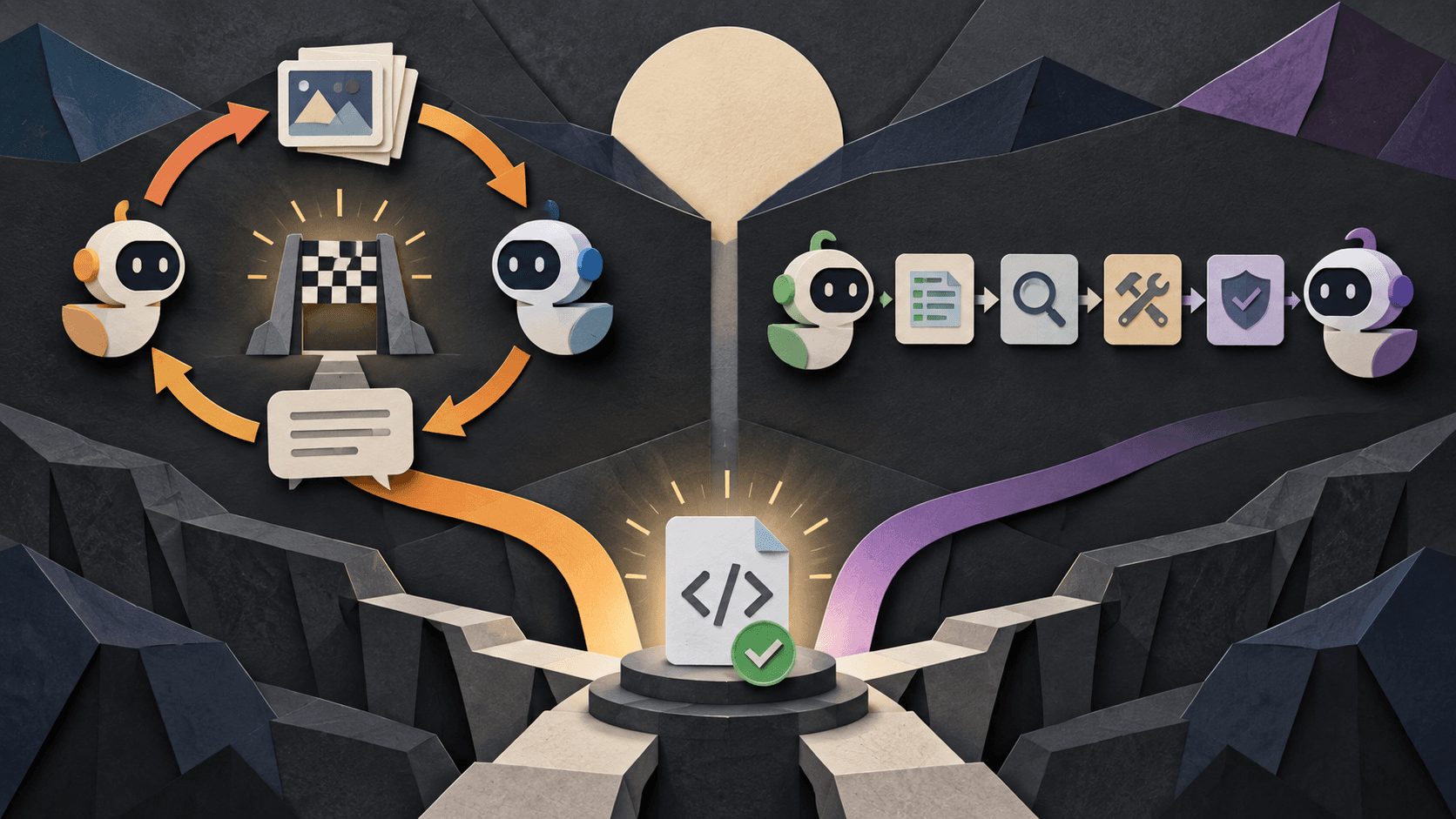
Choose Gauntlet Loop when the hard problem is pushing an inspectable artifact toward a concrete quality reference. Choose Claudex Loop when the hard problem is reducing software-plan and implementation risk through a bounded Claude Code–Codex review lifecycle.
Gauntlet Loop is reference-first and potentially open-ended: builders and fresh critics refine judgeable pieces until the output beats the bar or a human stops. Claudex Loop is process-first and bounded: recon, requirements, cross-provider plan review, authorized build, proof checks, and independent inspection run within configured caps.
Gauntlet Loop vs Claudex Loop at a glance
| Decision | Gauntlet Loop | Claudex Loop |
|---|---|---|
| Primary goal | Raise artifact quality against a real reference | Reduce plan and code risk through cross-model review |
| Best fit | UI, games, writing, creative artifacts, measurable engineering goals | Consequential software features, migrations, architecture, risky changes |
| Evaluator | Fresh critic comparing output with a named bar | Opposite provider reviewing evidence, plan, and final code |
| Model requirement | Provider-agnostic pattern; needs capable agent tooling | Full workflow requires Claude Code and Codex |
| Stopping style | The bar is won or a human stops | Explicit verdicts and configurable round caps |
| Main strength | Relentless reference-grounded refinement | Structured intent, decision log, bounded independent inspection |
| Main risk | Runaway cost or optimizing toward the wrong reference | Review overhead, context duplication, or false confidence from agreement |
Which produces better work?
Neither wins universally because they optimize different failure points. Gauntlet Loop attacks premature satisfaction: the artifact keeps losing against a visible standard until a meaningful gap closes. Claudex Loop attacks unchallenged assumptions: another provider pressures the plan before code is written and inspects the implementation afterward.
For a landing page with a named visual reference, Gauntlet's side-by-side critic is the more direct instrument. For a billing migration with rollback, authorization, and data-integrity risks, Claudex's requirements ledger, plan review, proof commands, and inspection are better aligned. A beautiful comparison cannot validate a migration; a five-round plan debate cannot substitute for judging the rendered page.
How do cost and setup differ?
Gauntlet Loop can be expressed as a prompt or reusable skill in several agent hosts, but large runs may spawn many builders and critics for an indeterminate duration. The practical cost depends on decomposition, model choice, artifact size, critic frequency, and when the human stops.
Claudex Loop has more defined infrastructure: both authenticated CLIs, its skill/runtime, Python, shared artifacts, and multiple provider calls. Bounded round defaults make the maximum path easier to reason about, but sending plans and repository context between tools can still be expensive.
Pilot either method on one representative task. Record elapsed time, model usage, accepted defects found, regressions introduced, human review time, and whether the result materially beat a normal build-plus-review workflow.
Which is safer?
Safety depends more on permissions and proof than on the loop name. Gauntlet's broad, long-running autonomy can expand tool and network exposure. Claudex's cross-provider handoffs increase the number of processes and contexts touching repository information. Both can execute flawed instructions or review the wrong evidence.
Use least privilege, a clean branch, secret scanning, explicit allowed and prohibited actions, deterministic tests, checkpointed logs, and fixed spend and time ceilings. Require human approval for destructive changes, external messages, purchases, credentials, commits, pushes, and deployment. Model agreement is not authorization.
Can you combine them?
Yes, but only where the added layers solve distinct risks. Use Claudex Loop to settle requirements and pressure-test a consequential plan, then apply a small Gauntlet Loop to one inspectable output such as a UI flow or benchmark. Return to Claudex-style independent inspection for the integrated diff.
Do not nest both across every task. That multiplies context, cost, and reviewer noise. Assign one evaluator to each risk: reference comparison for artifact quality; tests and adversarial plan/code review for correctness and safety.
The verdict
Gauntlet Loop is the better default for ambitious, taste-sensitive artifacts with a strong external bar. Claudex Loop is the better default for high-consequence software work that benefits from explicit requirements, a rival model's plan challenge, and an auditable final inspection. For ordinary changes, a single capable agent plus deterministic checks and human review may beat both on total value.
Sources and verification
Product details and claims were checked against the following primary sources.
Frequently asked questions
What is the main difference between Gauntlet Loop and Claudex Loop?
Gauntlet Loop repeatedly compares an artifact with a concrete external quality bar. Claudex Loop runs a bounded cross-provider software lifecycle spanning requirements, plan review, implementation, proof, and inspection.
Which loop is better for user-interface work?
Gauntlet Loop usually fits better when you have a named, inspectable visual reference and can compare real rendered output. Pair it with accessibility, responsiveness, and performance checks.
Which loop is better for risky backend changes?
Claudex Loop is generally better aligned because it emphasizes assumptions, acceptance checks, adversarial plan review, deterministic proof, and independent final code inspection.
Can Gauntlet Loop and Claudex Loop be combined?
Yes. Use Claudex for requirements and plan risk, a bounded Gauntlet for one inspectable artifact, and independent inspection for the integrated result. Avoid nesting both everywhere because cost and review noise compound.
Found this useful?
Get the next one in your inbox.
One five-minute briefing a week: a meaningful change, a practical workflow, and a clearer tool decision—already filtered for lean teams.
Free · one email a week · unsubscribe any time
Tools mentioned in this article
Claude
Anthropic's thoughtful, safety-focused AI with exceptional long-form reasoning
Claude excels at deep analysis, long-form writing, and nuanced reasoning. Built by Anthropic with a focus on safety and helpfulness.
ChatGPT
The general-purpose AI assistant that started it all
OpenAI's flagship conversational AI model, powering everything from casual chat to complex reasoning, coding, and creative work.
Read next
Recommended for you
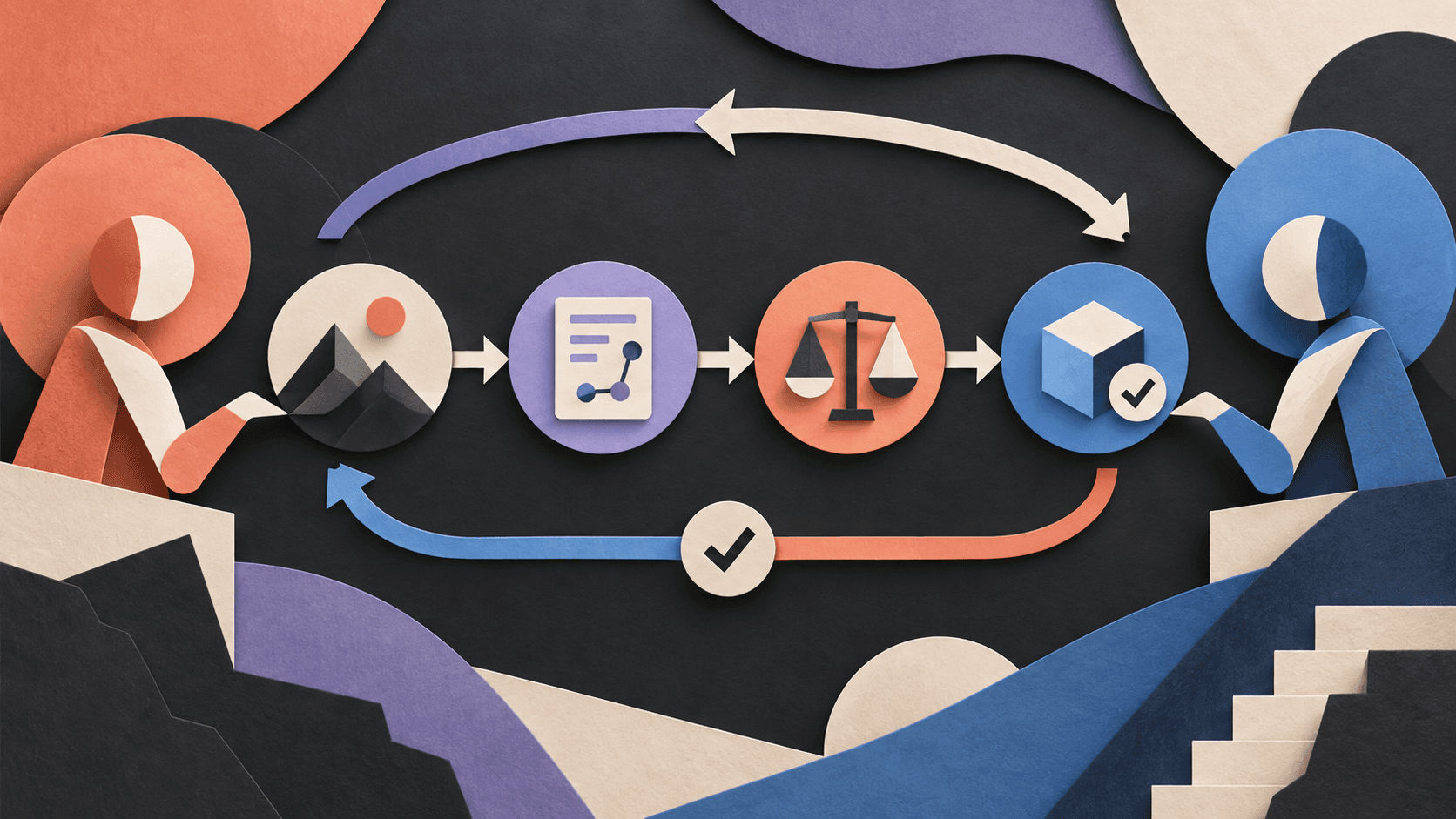
Claudex Loop Guide: Claude Code and Codex Cross-Review
A bounded cross-provider workflow can expose plan and implementation gaps, but two models agreeing is evidence of review—not proof that the code is correct.
How Claudex Loop uses reconnaissance, requirements, adversarial plan review, authorized building, proof checks, and independent inspection across Claude Code and Codex.
Read guide
AI Adoption for Small Business: A Readiness Guide for 2026
AI Implementation for Small Business: Launch Your First Workflow in 30 Days
AI Social Media Tools in 2026: Best Stack for Content, Scheduling, and Analytics