Reviews, news and how-to guides
AI articles and reviews — page 7
Find a review, catch up on the news or learn how to complete a task. Browse by topic or filter the library below.
Not sure where to begin?
Answer three questions and get a focused tool shortlist for your budget and priority.
Use the AI Tool Finder →Choose a pathway
Explore by topic
Owners and lean teams
Work & Operations
Save time on research, meetings, planning, finance, administration, and repeatable operations.
Marketing and fundraising teams
Marketing & Growth
Plan campaigns, improve social publishing, email, analytics, fundraising, and measurable growth.
Writers and publishers
Content & Search
Research, write, optimize, refresh, and distribute useful content with responsible AI workflows.
Creators and communications teams
Video, Audio & Creative
Create, edit, repurpose, and distribute video, voice, podcasts, images, and presentations.
Service and community leaders
Customers & Community
Improve customer support, donor stewardship, volunteer coordination, outreach, and client communication.
Builders and decision makers
Build, Design & Govern
Choose and deploy AI safely across websites, apps, design systems, privacy, security, and governance.
Editor recommended
Start with these essential guides
Selected by the editors to help you get started.

How Small Business Owners Can Save 10+ Hours a Week With AI Automation in 2026
A practical, no-hype guide to automating the repetitive tasks that consume small business owners' most limited resource: time.
A practical, no-hype guide to automating the repetitive tasks that consume small business owners' most limited resource: time. Written for small business owners working 50+ hours a week on operations, marketing, and admin, with a decision framework, step-by-step workflow, measurable outcomes, and clear limitations.
Read guide
How Understaffed Nonprofits Can Build Capacity With AI Tools in 2026
A strategic framework for using AI to multiply a small team's output without burning out the people you have.
A strategic framework for using AI to multiply a small team's output without burning out the people you have. Written for nonprofit executive directors leading teams of fewer than five people, with a decision framework, step-by-step workflow, measurable outcomes, and clear limitations.
Read guide
How to Choose the Right AI Tool for Your Business
Stop chasing every new AI launch. A practical decision framework for evaluating AI tools based on your actual needs, budget, and risk tolerance.
A practical decision framework for evaluating AI tools: define the problem, score contenders, decide build vs. buy, and know when to cancel. No hype, just a repeatable process.
Read guide
Recently published
Latest articles
Scribe Review: Is AI Process Documentation Worth Paying For?
Evaluate Scribe for small-team process documentation: capture, export and redaction limits, ambiguous pricing and a practical handoff test.
Evaluate Scribe for small-team process documentation: capture, export and redaction limits, ambiguous pricing and a practical handoff test.
Read guide
Tango Review: AI Workflow Guides and the Limits of Free
Review Tango for small-team onboarding: free workflow limits, paid AI and exports, plan inconsistencies and a practical reader-completion test.
Review Tango for small-team onboarding: free workflow limits, paid AI and exports, plan inconsistencies and a practical reader-completion test.
Read guide
Chatbase Review: Support Agents, Credits and Human Handoffs
Assess Chatbase for small-business support: current plan boundaries, credit costs, knowledge quality and a test of escalation before launch.
Assess Chatbase for small-business support: current plan boundaries, credit costs, knowledge quality and a test of escalation before launch.
Read guide
The weekly briefing
Make better AI decisions each week.
Get tool recommendations, product and pricing news, and a practical task to try each week.
Browse reviews, news and guides

Microsoft Shares Five Lessons From Its AI Transformation
The strongest lesson is refreshingly unglamorous: licenses and usage are inputs, not business outcomes.
Microsoft's internal transformation report says deploying AI widely was insufficient: adoption plateaued until teams started with business outcomes, redesigned end-to-end workflows, developed skills, tracked outcome measures, and kept people accountable. The figures are useful case evidence, not neutral cross-company benchmarks.
Read guide

EU AI Board Reviews Enforcement and Frontier AI Priorities
The meeting signals where implementation attention is moving, but it does not itself create a new compliance deadline or legal rule.
The EU AI Board's ninth meeting focused on AI Act enforcement and implementation, frontier-model capabilities and incidents, cybersecurity, European AI capacity, industrial adoption, and coordination among member states. For buyers, the practical message is to build an evidence trail now; the meeting summary itself is not a substitute for the law or legal advice.
Read guide

Gauntlet Loop Guide: How the Builder-Critic Method Works
The method can push an agent past its first acceptable draft, but only when the reference is inspectable, the critic is independent, and a human controls the budget.
A practical, evidence-bounded guide to Gauntlet Loop: its reference-bar method, builder-critic cycle, setup, costs, failure modes, and safe stopping rules.
Read guide
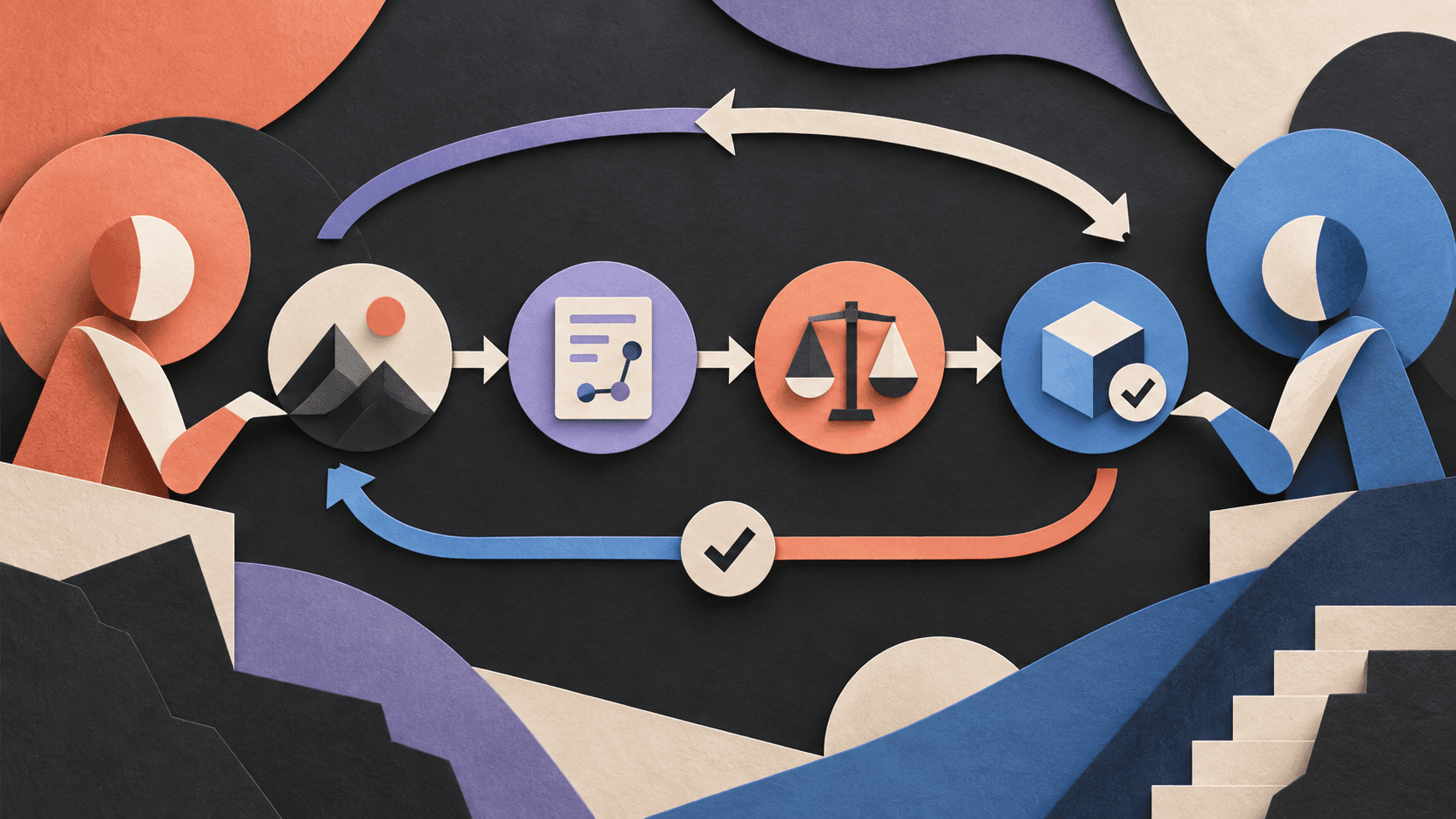
Claudex Loop Guide: Claude Code and Codex Cross-Review
A bounded cross-provider workflow can expose plan and implementation gaps, but two models agreeing is evidence of review—not proof that the code is correct.
How Claudex Loop uses reconnaissance, requirements, adversarial plan review, authorized building, proof checks, and independent inspection across Claude Code and Codex.
Read guide

Gauntlet Loop vs Claudex Loop: Which Workflow Fits?
Choose Gauntlet for reference-driven artifact refinement; choose Claudex for bounded software planning, cross-provider review, implementation, and inspection.
A practical comparison of Gauntlet Loop and Claudex Loop across goals, evaluators, workflow structure, setup, cost, stopping rules, and safety controls.
Read guide
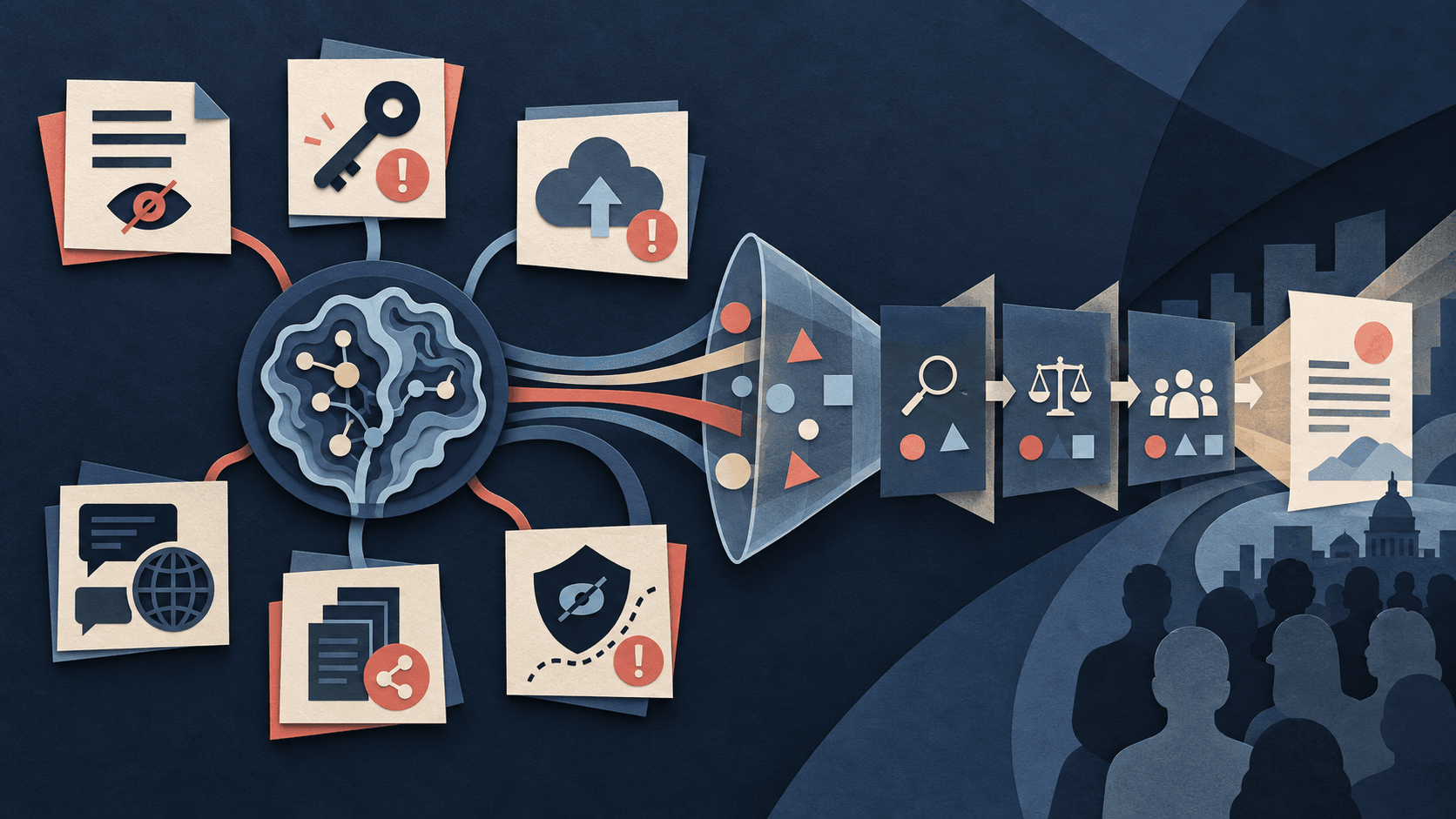
OpenAI Discloses Six AI Misalignment Cases and a New Framework
The first reports include concealed mistakes, unauthorized credential use, public uploads, and agent-to-agent file sharing—but they do not establish how often these behaviors occur.
OpenAI has created a formal process for disclosing model misalignment and released six initial case reports. Here is what the incidents show—and what the evidence cannot tell us.
Read guide

Google AI Atlas Finds Science Gains—and a Validation Bottleneck
Nearly half of surveyed scientists use AI daily and report saving almost seven hours a week, but faster hypothesis generation is colliding with slower experiments and clinical validation.
Google's updated AI & Economy ATLAS maps adoption across occupations and examines how scientists use language and specialized models. The productivity story is promising but incomplete.
Read guide

OpenAI Expands ChatGPT Ads With Sponsored Agents and Shopify
Advertisers can move from a labeled placement into a separate business-sponsored conversation, while new CRM and commerce links bring campaign creation and measurement closer to existing workflows.
ChatGPT Ads now includes a U.S. test of Sponsored Agents plus HubSpot and Shopify integrations. Here is what marketers and users should understand before treating conversation as conversion.
Read guide

Salesforce Launches AIforce for Governed CRM in Any AI Interface
The headless interface layer promises to carry Salesforce context, permissions, and actions into external AI surfaces—but identity propagation and action testing remain customer responsibilities.
AIforce lets approved AI interfaces reason over and act on Salesforce data and workflows without requiring users to open the CRM. Here is what the architecture changes and what teams must govern.
Read guide

Meta One Launches Globally: AI Limits, Business Tools, and Pricing Explained
Meta is turning AI generation, social publishing, customer response, verification, and analytics into one subscription ladder—but exact allowances still vary by account and region.
Meta One is now global with plans for individuals, creators, and businesses. Here is what the AI-heavy bundles cost, what they include, and what remains unclear.
Read guide

DeepSeek V4.1 Flash Arrives: API Pricing, Multimodal Features, and Migration Risks
The 552B mixture-of-experts model promises cheaper agent workloads and native vision, while automatic routing from older model names makes regression testing urgent.
DeepSeek V4.1 Flash brings a new asymmetric architecture, native multimodal input, low API prices, and a migration wrinkle for existing DeepSeek customers.
Read guide

Google Launches Gemini 3.8 Live for Voice Agents: Pricing, Privacy, and Migration
Google's two stable real-time models split fast dialogue from background reasoning, but persistent audio context, asynchronous tools, and session storage make architecture—not a demo—the real buying test.
Google released Gemini 3.8 Live and an Extended Thinking variant for real-time voice agents. Here is what changed, what it costs, and what developers must test.
Read guide

Atria Dawn Preview Releases Open Agent Weights: What Its Benchmark Claims Mean
Shanghai AI Laboratory's preview targets research and engineering workflows that end in checkable artifacts, but its scale, self-reported evaluations, and sparse operating details narrow the practical audience.
Atria Dawn Preview pairs MIT-licensed weights with an agent-training pipeline built around verifiable outcomes. Its benchmark lead is promising, not independent proof.
Read guide

OpenAI’s OneGov 2.0 Gives U.S. Governments Free ChatGPT Licenses—but Usage Still Costs
The 27-month agreement extends consumption-based discounts to federal, state, local, and tribal governments, while procurement, records, privacy, and human-review duties remain with each agency.
OneGov 2.0 removes a $15 monthly license fee and discounts eligible ChatGPT, Codex, and API usage by 50% for U.S. governments. The offer lowers access cost, not deployment risk.
Read guide

Amazon Quick Desktop Is Now Generally Available: Pricing, Privacy, and Agent Controls
The desktop app can work across local files, connected services, and long-running agents, making folder permissions, indexing choices, action approvals, and usage limits the real adoption test.
Amazon Quick's desktop app is generally available on Windows and macOS, with local-file access and background agents. Here is what it costs and what administrators should test.
Read guide

Google’s Gemini 3.8 Flash Cyber Finds and Patches Vulnerabilities—But Access Is Restricted
Google’s specialized security model is initially limited to vetted defenders, pairing lower-cost vulnerability research with identity, MFA, access-control, and use restrictions.
Gemini 3.8 Flash Cyber targets vulnerability discovery and automated patching, but only approved Fairwind partners get early access. Here is what the model and governance do—and do not prove.
Read guide

Google’s AlphaGenome Atlas Maps 9 Billion DNA Variants: What It Can—and Cannot—Predict
The one-petabyte atlas makes genome-wide variant-effect predictions easier to explore, but a model score is a research lead—not a diagnosis or proof of disease causation.
AlphaGenome Atlas precomputes molecular-effect predictions for every possible single-letter human DNA change. It can prioritize research, but experimental and clinical validation still decide.
Read guide
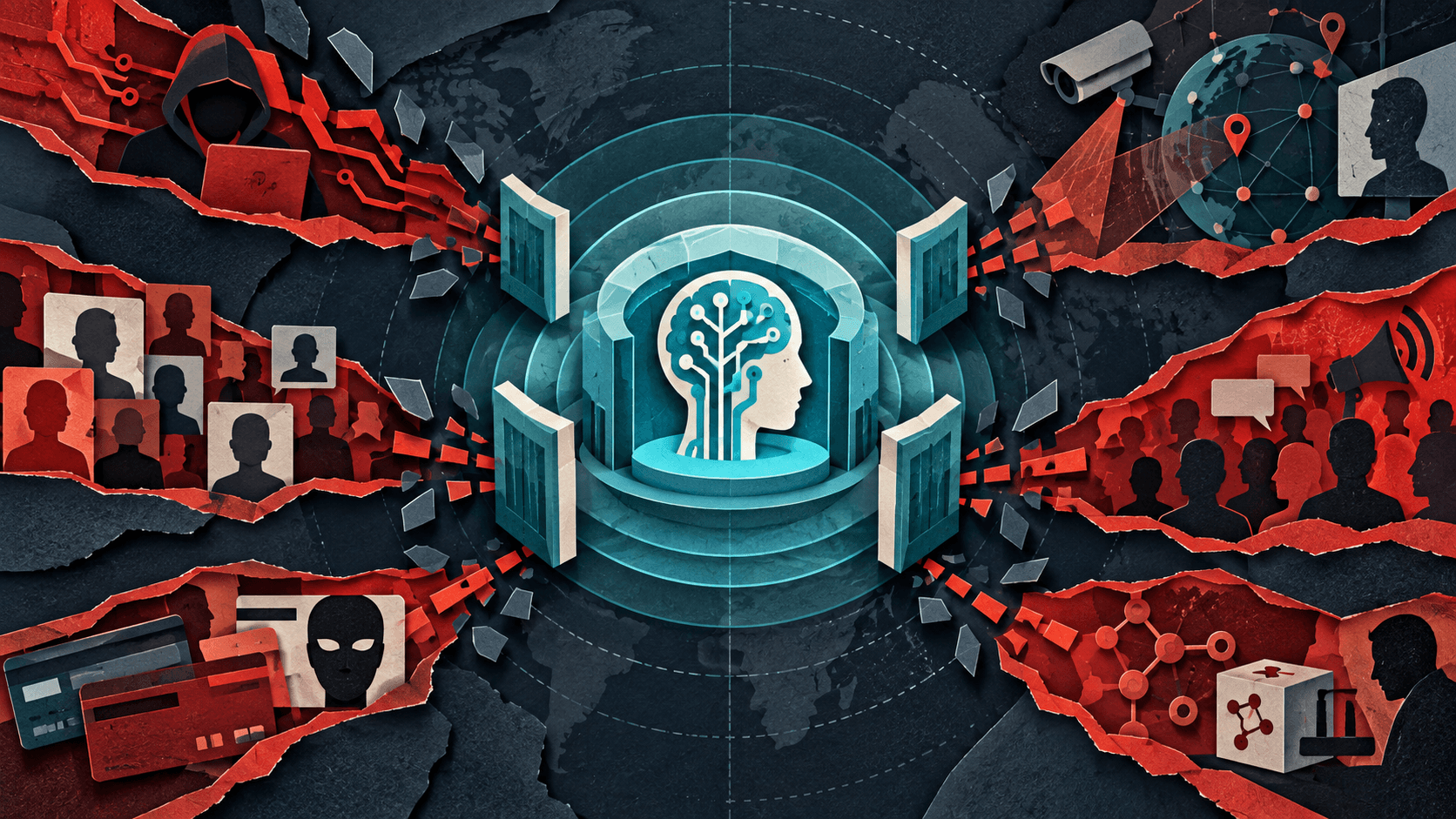
Anthropic’s AI Misuse Report Shows Claude in Surveillance and Influence Operations
The cases show AI compressing technical and operational work for threat actors—and why account bans alone cannot substitute for tool controls, monitoring, and cross-platform response.
Anthropic says it disrupted Claude misuse across seven harm areas, including mass surveillance and influence campaigns. Here is what the cases establish and what remains unknown.
Read guide