OpenAI’s OneGov 2.0 Gives U.S. Governments Free ChatGPT Licenses—but Usage Still Costs
The 27-month agreement extends consumption-based discounts to federal, state, local, and tribal governments, while procurement, records, privacy, and human-review duties remain with each agency.
Bottom line
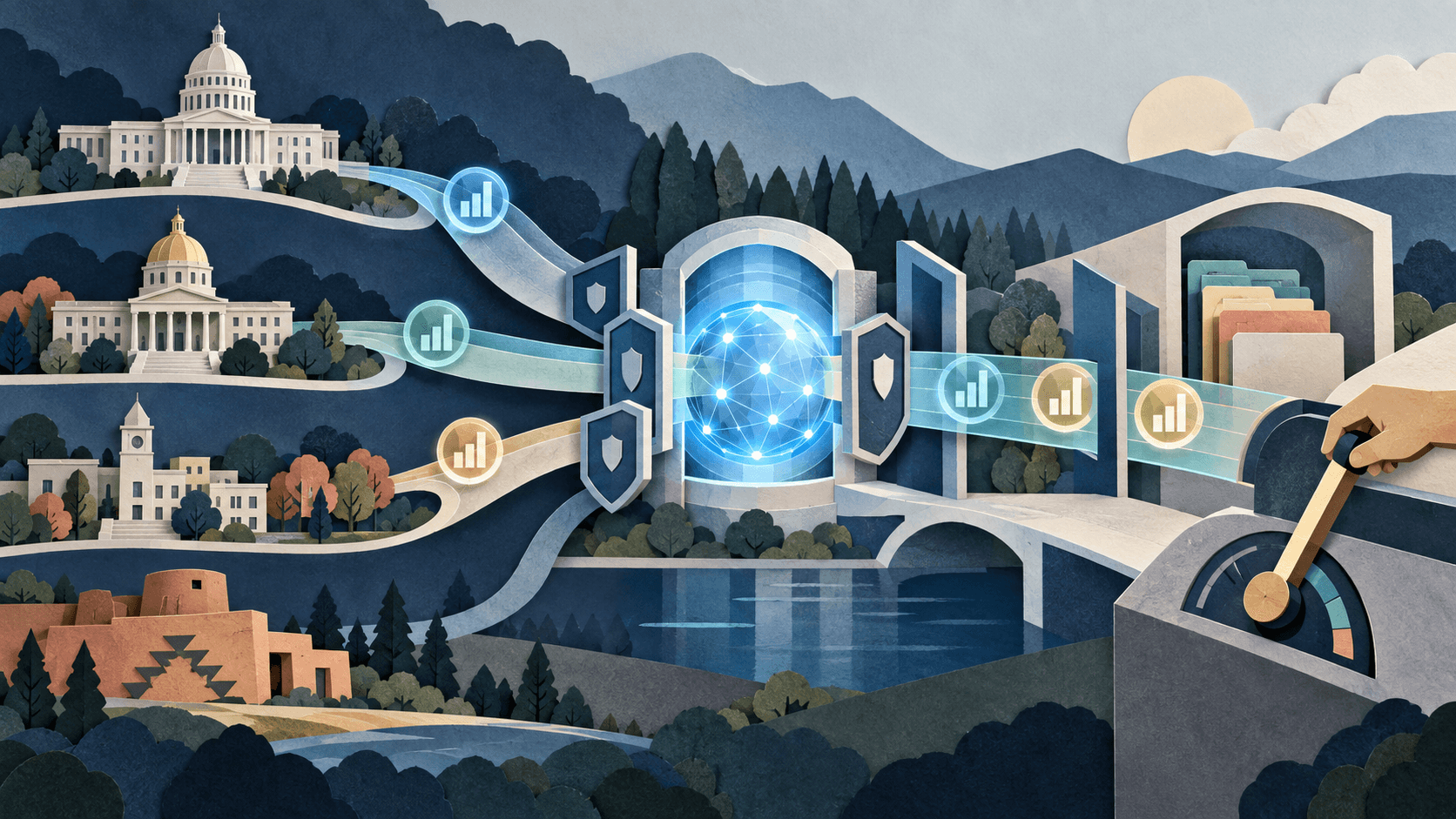
OneGov 2.0 removes a $15 monthly license fee and discounts eligible ChatGPT, Codex, and API usage by 50% for U.S. governments. The offer lowers access cost, not deployment risk.
Editorial accountability
Who checked this guide
- Evaluation type
- Research-based verification
- Last materially checked
- Evidence
- 4 listed sources
Hands-on testing is identified explicitly. Research-based coverage uses cited product documentation and other named sources; it does not imply every paid plan was used. Read the full methodology.
Editorial basis
What this guidance is based on
- Editorial basis
- Source-led analysis
- Primary references
- 4
- Products covered
- 1
- Last checked
- 2026-09-15
Important limits
- • Features, availability, and pricing can change after publication; confirm consequential details with the provider.
In this guide
*This research-based analysis covers OpenAI and the U.S. General Services Administration's September 10 announcement and OpenAI's September 14 briefing. Offer terms, eligible services, verification, and procurement routes can change; agencies should confirm their own agreement before budgeting.*
The short answer
OpenAI and the U.S. General Services Administration announced OneGov 2.0, a 27-month offer expected to run from October 1, 2026 through December 31, 2028. Eligible federal, state, local, and tribal governments can pay $0 for a license normally priced at $15 per user per month, make no minimum commitment, and receive 50% off eligible consumption charges.
The offer includes access paths for ChatGPT, Codex, and the API, according to OpenAI's Academy briefing. It also approves verified government entities for Daybreak Blue cyber-defense access at half the standard commercial price; Daybreak Red remains request-based and is offered at standard commercial pricing. “Free ChatGPT” is therefore an incomplete description: the seat fee is waived, but metered use, implementation, security work, records management, and oversight still cost money.
Who qualifies for OneGov 2.0?
OpenAI says the expanded offer covers verified U.S. federal, state, local, and tribal government organizations. That is broader than the prior federal-only arrangement and potentially reaches a public-sector workforce OpenAI estimates at roughly 23 million people.
Eligibility is not the same as automatic enrollment. An organization must register interest and complete verification and its applicable acquisition process. The GSA announcement directly describes the federal agreement, while OpenAI says it is extending equivalent terms to state, local, and tribal governments. Those buyers should obtain written confirmation of the purchasing channel, covered products, discountable usage, support, and effective dates rather than infer contract terms from a press release.
What does the government discount actually include?
The headline benefit has two layers: a waived $15-per-user monthly license fee and a 50% discount on eligible usage. OpenAI also promises onboarding, usage estimates, spend controls, FinOps guidance, webinars, and an expanded Government Academy.
The difference between a license and consumption matters at scale. A thousand seats can have no recurring seat charge while agents, API calls, long contexts, file processing, and advanced models still create a substantial bill. Before rollout, an agency should model representative tasks, define per-team budgets, set alerts and ceilings, and report accepted outcomes per dollar—not simply activated accounts or tokens consumed.
OpenAI says ChatGPT Enterprise does not use business inputs or outputs to train or improve its models. That commitment is useful, but it does not determine whether a particular workflow satisfies public-records, retention, discovery, data-classification, accessibility, procurement, or sector-specific requirements.
What is included for government cyber defenders?
Every verified government entity is eligible for Daybreak Blue at 50% off standard commercial pricing, according to OpenAI. The service is positioned for defensive work such as vulnerability research, malware analysis, and security-tool development. Organizations can request Daybreak Red for advanced vulnerability research, exploit validation, and red teaming at standard commercial pricing.
Discounted access should not be confused with blanket authority. Cyber teams still need explicit authorization, isolated credentials, scoped targets, audit logs, controlled network access, reproducible findings, safe patch testing, and human approval before changes reach production. Capability can reduce investigation time and also accelerate a mistaken or over-broad action.
What should agencies verify before deployment?
Start with one bounded, reversible workflow: public-document summarization, draft correspondence, internal knowledge retrieval, or code assistance on a non-sensitive repository. Use a representative evaluation set containing ambiguous instructions, stale sources, protected information, accessibility requirements, and questions the system should refuse or escalate.
Measure factual accuracy, citation quality, sensitive-data handling, records capture, accessibility, correction time, staff time saved, and total consumption cost. Keep consequential decisions—benefits, enforcement, employment, health, eligibility, and public safety—under accountable human control. Publish clear use rules and a correction channel so affected people are not left arguing with an unreviewable output.
The verdict
OneGov 2.0 materially lowers the entry price for U.S. public agencies and makes consumption-based AI easier to procure across more levels of government. Its most consequential feature may be breadth: smaller state, local, and tribal organizations can evaluate the same class of tools as large federal agencies without a seat-fee commitment.
The discount does not make every use economical, lawful, accurate, or appropriate. Agencies should treat waived licenses as permission to run disciplined pilots—not as evidence that organization-wide deployment has already passed its cost, privacy, records, accessibility, and public-accountability tests.
Sources and verification
Product details and claims were checked against the following primary sources.
Frequently asked questions
What is OpenAI OneGov 2.0?
OneGov 2.0 is a 27-month OpenAI and GSA agreement offering eligible U.S. federal, state, local, and tribal governments a waived ChatGPT license fee and 50% off eligible consumption-based usage.
Is ChatGPT free for government employees under OneGov 2.0?
The normal $15-per-user monthly license fee is reduced to $0, with no minimum commitment, but eligible consumption remains metered at a 50% discount. Implementation, governance, and other costs also remain.
When does OneGov 2.0 begin?
The offer is expected to run from October 1, 2026 through December 31, 2028. Organizations should verify enrollment, covered services, and effective terms before relying on the discount.
Does OneGov 2.0 include cybersecurity models?
OpenAI says every verified government entity can receive Daybreak Blue access at 50% off standard commercial pricing. Daybreak Red access can be requested at standard commercial pricing.
Found this useful?
Get the next one in your inbox.
One five-minute briefing a week: a meaningful change, a practical workflow, and a clearer tool decision—already filtered for lean teams.
Free · one email a week · unsubscribe any time
Tools mentioned in this article
ChatGPT
The general-purpose AI assistant that started it all
OpenAI's flagship conversational AI model, powering everything from casual chat to complex reasoning, coding, and creative work.
Read next
Recommended for you
AI Implementation for Small Business: Launch Your First Workflow in 30 Days
A delivery-focused companion to AI readiness: take one approved use case from baseline to a monitored production decision.
A four-week implementation playbook for turning a qualified small-business AI use case into a controlled, measured workflow.
Read guide
How to Automate Business Tasks With Zapier and AI in 2026
Best AI for Business Writing in 2026: Emails, Proposals, Reports, and Policies
Claude vs. ChatGPT for Small Business in 2026: Which Should You Pay For?