In this guide
What happened
Microsoft published findings from commissioned IDC research on November 12, 2026, highlighting a gap between adopting AI and measuring its value. The study offers questions for a small organization's next pilot. Its headline returns are not a forecast of what your team will earn.
This November 15 analysis uses Microsoft's account of the research. We did not examine respondent-level data or independently reproduce the findings.
Free workflow pilot checklist
Test the workflow before you buy the tool.
Use our buyer checklist to plan a task, assign a reviewer and track time saved. You’ll also receive the weekly AI briefing.
What the reported figures say
In its summary, Microsoft describes responses from more than 5,200 senior IT and business leaders across 28 industries. The top tenth on IDC's AI maturity scale reported an average fourfold return, compared with 2.7 times for the bottom 30%. Microsoft also reports that 61% of organizations were highly confident in measuring AI business value, versus 93% of the top group.
The research was commissioned by Microsoft, which sells AI products and services. These are reported findings from a sponsored study, not DiscoverAI benchmarks. A comparison between maturity groups does not by itself establish that buying a particular product causes the difference.
Why the numbers need context
Before putting a return figure in a business case, ask what went into the calculation. Did it include implementation work, staff training, review time and failed projects? Is the benefit cash saved, extra capacity or additional revenue? Over what period was it measured?
Those distinctions matter in a five-person business. Recovering an hour does not automatically reduce payroll, and a faster draft may still need a senior person's approval. A useful estimate should identify where saved capacity will go rather than silently assigning it a cash value.
The correct comparison is also your existing process, not a hypothetical team that does everything manually. If you already use templates or automation, test the additional benefit of AI against that baseline.
A smaller measurement plan
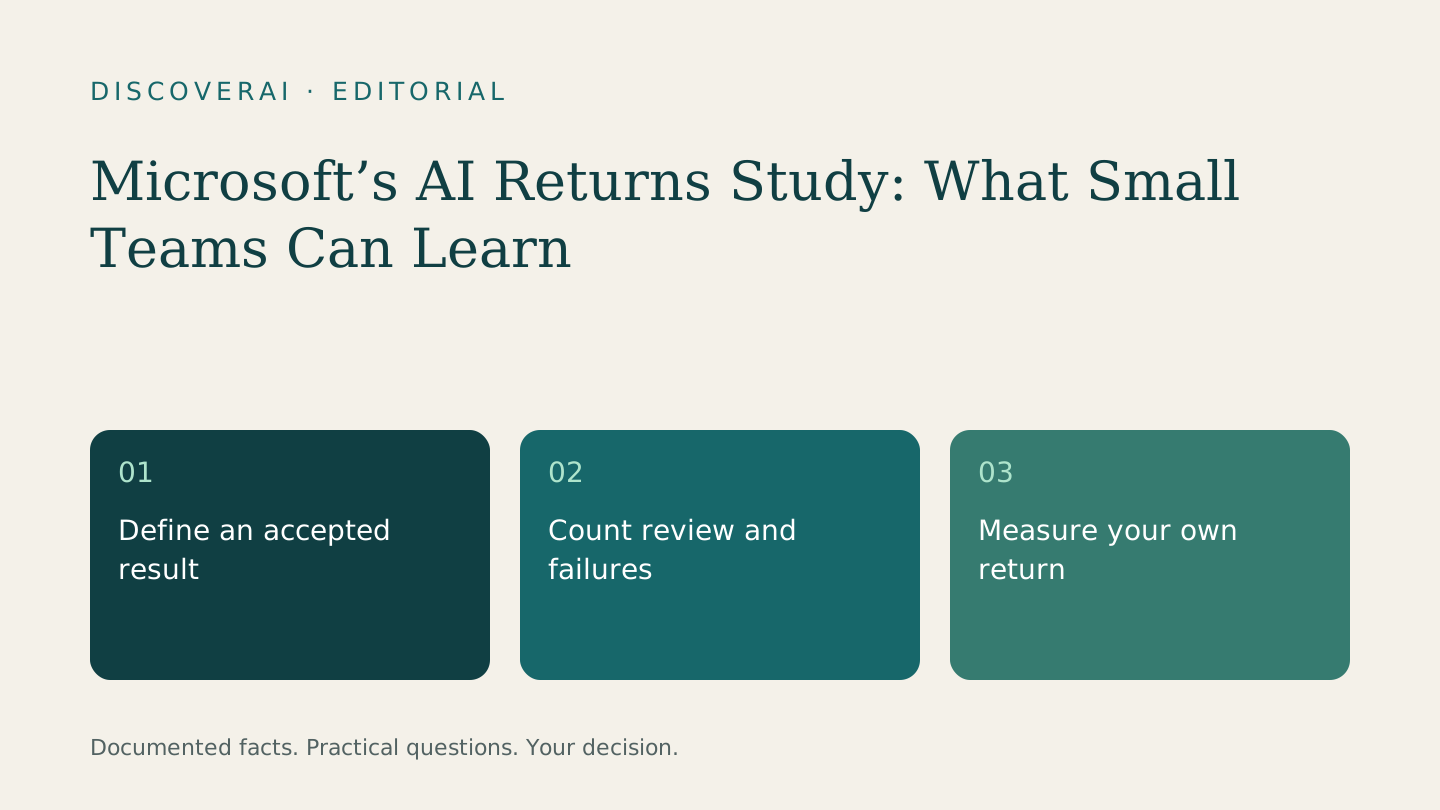
Our recommendation is to choose one recurring task and define an accepted result before the pilot. For a proposal, that might mean accurate scope, approved pricing and no unsupported promises. Measure several ordinary examples of the existing process, including review and correction.
Then repeat comparable work with the proposed tool. Record setup time separately from recurring effort, but include both in the purchase decision. Keep failed attempts in the record. Ask the reviewer whether quality changed, not just whether the first draft arrived sooner.
Use a short written decision at the end: continue, revise the workflow or stop. Set the next review date and name the person responsible for checking whether the expected benefit appears in normal work. This is an editorial measurement method, not a procedure validated by the IDC study.
What to do next
Use the AI opportunity assessment to choose a task and the trial scorecard to capture actual observations. Keep estimates editable and distinguish time released from money saved.
The news is a useful reminder that measurement remains unfinished even among AI adopters. The response for a small team is a clearer pilot, not a larger spending target based on someone else's average return.
Transparency
How this guide was checked
About this article
How this article was prepared
- Evaluation type
- Source-based research
- Last reviewed
- Evidence
- 1 listed sources
We label hands-on testing separately. Research-based articles draw on product documentation and other cited sources, rather than direct use of every plan. Read the full methodology.
Editorial basis
Sources and testing
- Editorial basis
- Source-based research
- Primary references
- 1
- Products covered
- 0
- Last checked
- 2026-11-15
Important limits
- • Features, availability and prices can change. Check the provider’s current terms before buying.
Sources and references
References cited by this article. Check the original source for scope, dates and current terms.
Frequently asked questions
Is the fourfold return a guarantee?
No. It is a reported average for one maturity group in sponsored research.
Did DiscoverAI verify the underlying survey data?
No. This analysis uses the published Microsoft summary and identifies that limitation.
Read next