In this guide
What happened
Google announced Gemini 4 Hydrogen on November 12, 2026, positioning it for everyday coding and agent execution. The practical buying question is whether it completes your repeatable work with less total effort, rather than whether a launch benchmark is higher.
This is a November 13 analysis of the official announcement and model card. We have not benchmarked the model or verified access in individual accounts.
Free AI tool buyer checklist
Make the next AI subscription earn its place.
Get the weekly top 5 AI tools, one practical workflow and one way to reduce AI spending. Includes a free buyer checklist.
Pricing and access are separate decisions
Google lists API prices of $1.50 per million input tokens and $7.50 per million output tokens across a one-million-token context window. It describes four thinking settings, with high as the default. Availability spans developer, business and consumer surfaces, but the announcement distinguishes free Gemini app access through automatic selection from paid-product entitlements.
Google also introduces Antigravity Orchestrator for switching models within a session. Its reported quota and speed gains are vendor evaluation results, not savings every team should budget for. Model access, an application subscription and the bill for an integrated workflow are different purchases.
What the model card can tell you
The model card reports coding, computer-use, multimodal and professional-work evaluations. Results vary by task and benchmark. It also states that model cards can be updated as evaluation or model details change. Preserve the version and date used in a procurement decision so a later comparison does not quietly mix releases.
A published score can help choose what to test. It cannot establish whether your unusual spreadsheet, repository convention or permission boundary is handled correctly. Our interpretation is that an execution-focused model should be evaluated on bounded tasks with independently checkable outcomes.
A migration test for a small team
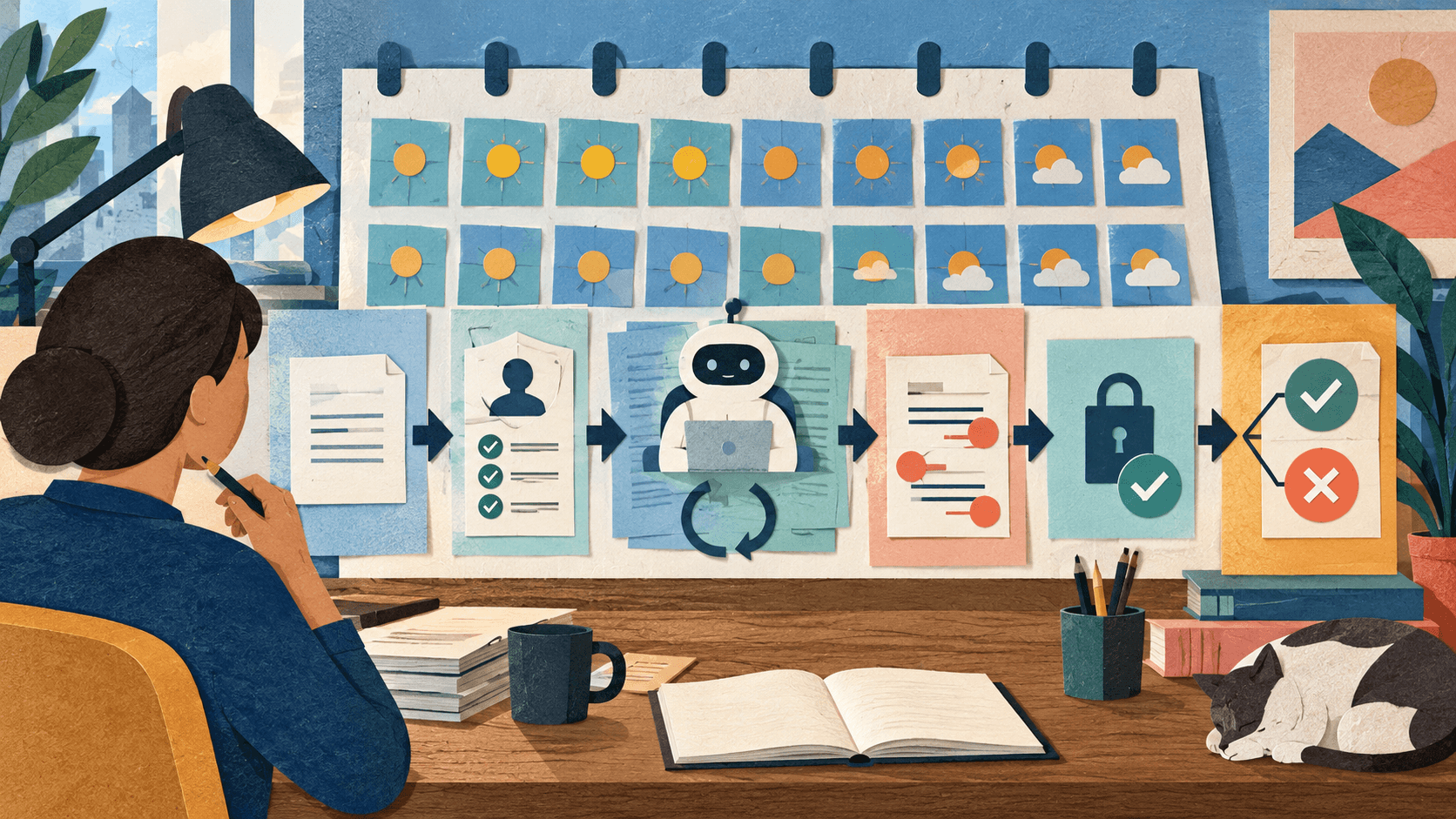
Choose ten representative tasks from work you already understand. Include an ordinary success case, missing information, an unavailable tool, a malformed input and a request that should stop for approval. Remove confidential data unless the account and processing terms are already appropriate.
Run the existing workflow and the candidate with equivalent instructions, tools and limits. Record completion time, billed usage, retries and reviewer minutes. An output counts as successful only after the normal owner accepts it. A short answer that skips a required check should fail, even when it arrives quickly.
For a coding example, use an isolated copy of a small project and require the same checks from both models. For document work, supply a short source packet with known answers and deliberately missing facts. Inspect whether the output distinguishes evidence from guesses.
Budget for the completed task
A hypothetical API call with 100,000 input tokens and 10,000 output tokens would cost $0.225 at the announced base rates, before other applicable charges. This arithmetic excludes additional calls, tool costs and repeated attempts. It is not a measured workload price.
For a workflow, divide total run and review costs by accepted tasks. Keep failures in the numerator. If you compare thinking settings, change only that variable and rerun the same cases. Lower latency is useful only when quality remains adequate.
What to do now
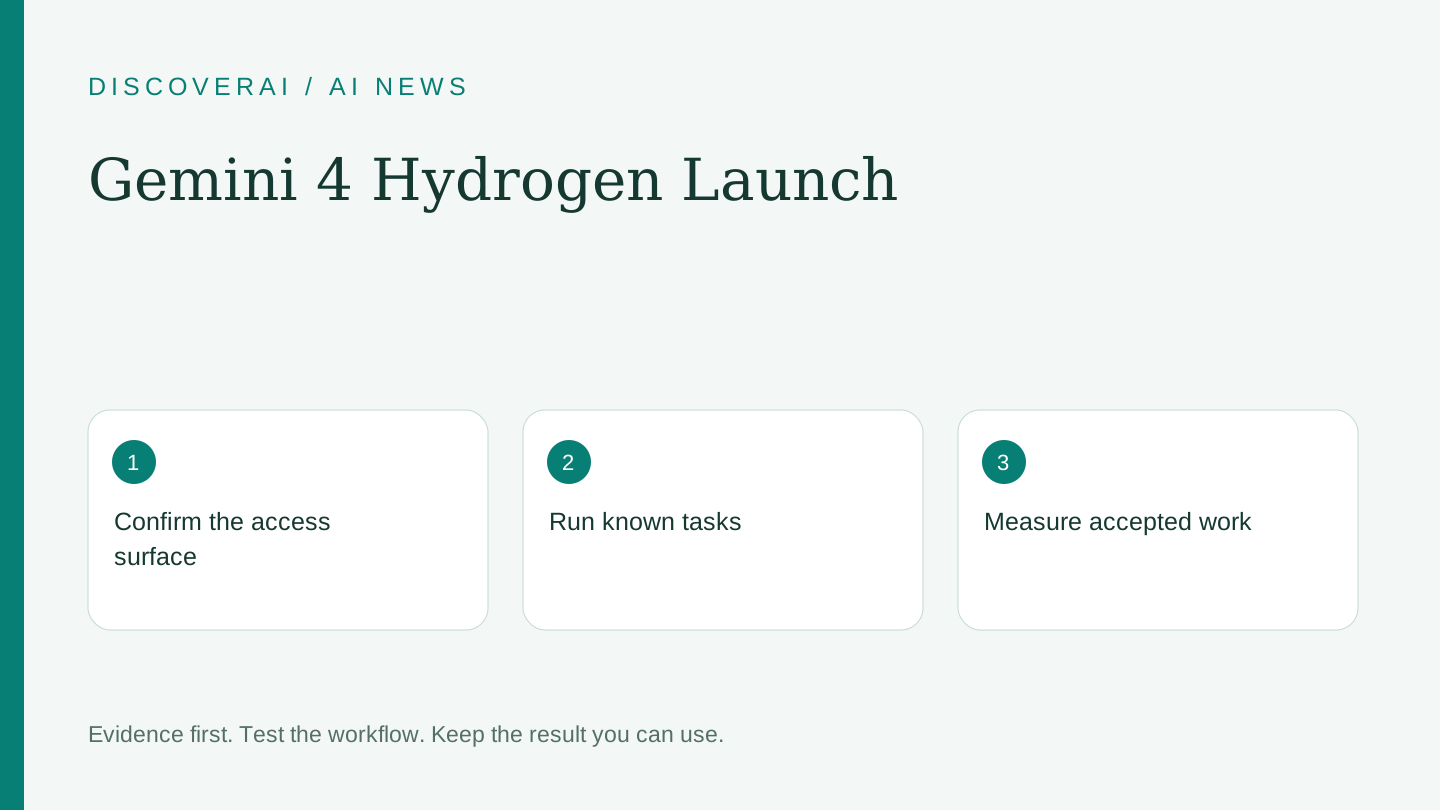
Treat the launch as a reason to run a controlled comparison, not an instruction to replace every model. Check the exact account surface and current billable settings. Use our router evaluation guide and model cost calculator to structure the trial. Record unresolved cases before expanding the rollout.
The announcement is a provider statement, and this article adds editorial evaluation advice. It does not establish independent performance, guaranteed availability or universal savings.
Transparency
How this guide was checked
Editorial accountability
Who checked this guide
- Evaluation type
- Research-based verification
- Last materially checked
- Evidence
- 2 listed sources
Hands-on testing is identified explicitly. Research-based coverage uses cited product documentation and other named sources; it does not imply every paid plan was used. Read the full methodology.
Editorial basis
What this guidance is based on
- Editorial basis
- Source-led analysis
- Primary references
- 2
- Products covered
- 1
- Last checked
- 2026-11-13
Important limits
- • Features, availability, and pricing can change after publication; confirm consequential details with the provider.
Sources and references
References cited by this article. Check the original source for scope, dates and current terms.
Frequently asked questions
When was Hydrogen announced?
Google’s announcement is dated November 12, 2026; this analysis is dated November 13.
Does free app access mean free API usage?
No. Consumer access and API billing are separate.
Were the launch claims tested by DiscoverAI?
No. We report provider statements and propose a controlled migration test.
Tools mentioned in this article
Google Gemini
Google's deeply integrated AI assistant with unmatched access to Google's ecosystem
Gemini combines powerful AI with Google's vast data ecosystem — Search, Gmail, Docs, YouTube, and more — for a uniquely integrated experience.
Read next