ChatGPT for Academic Researchers: Eligibility, Access, and Research Limits
OpenAI plans to give 100,000 researchers free access to frontier models and research tools through 2027. Access is valuable; verification and disclosure remain the researcher's job.
Bottom line
OpenAI's academic program offers selected researchers free frontier-model access, collaboration, privacy protections, and training. Here is what is included and how to apply responsibly.
Editorial accountability
Who checked this guide
- Evaluation type
- Research-based verification
- Last materially checked
- Evidence
- 4 listed sources
Hands-on testing is identified explicitly. Research-based coverage uses cited product documentation and other named sources; it does not imply every paid plan was used. Read the full methodology.
Editorial basis
What this guidance is based on
- Editorial basis
- Source-led analysis
- Primary references
- 4
- Products covered
- 1
- Last checked
- 2026-08-19
Important limits
- • Features, availability, and pricing can change after publication; confirm consequential details with the provider.
In this guide
*This research-based guide covers OpenAI's July 29, 2026 program announcement. We have not evaluated applications, independently audited the privacy controls, or validated the research examples reported by OpenAI.*
The short answer
OpenAI says ChatGPT for Academic Researchers will provide free access to frontier models and tools for 100,000 scientists, mathematicians, and engineers at selected institutions through 2027. The program starts with 10,000 researchers and is part of a stated commitment of more than $250 million.
Participants are promised access across ChatGPT, ChatGPT Work, and Codex, including GPT-5.6-family models at launch, higher limits, larger context windows, expanded deep research, training, and collaboration with up to four institutional colleagues. OpenAI says the workspaces include business-grade protections and do not use data for model training by default.
Who is eligible
The announcement targets academic researchers in science, mathematics, and engineering at selected institutions. It does not promise automatic access to every student, independent researcher, or university. Applicants should use the current program page for institutional eligibility, geography, timing, and application requirements.
Access begins with a smaller cohort and expands over time, so an application is not the same as acceptance or immediate activation.
What researchers can use it for
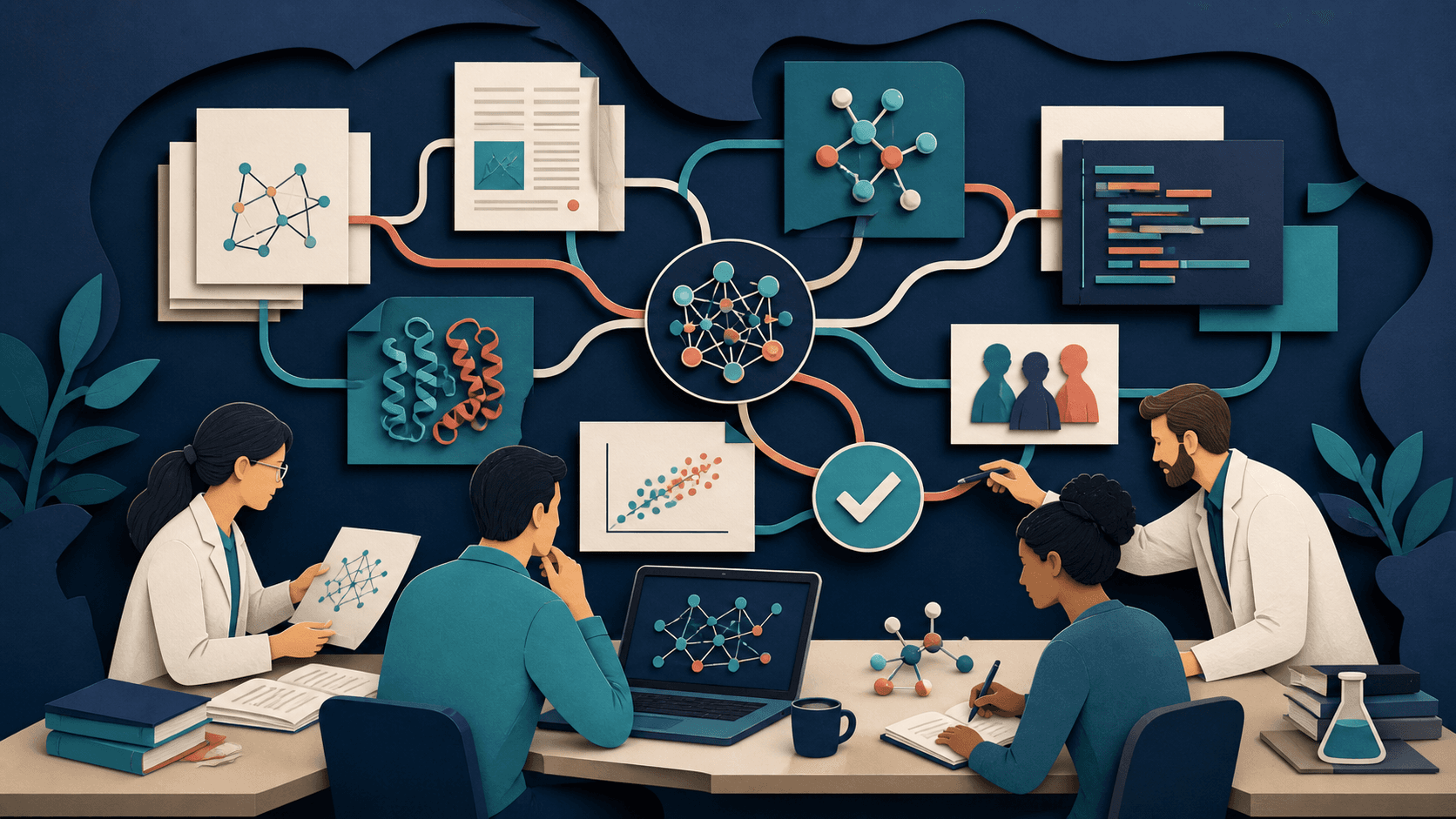
OpenAI lists literature reviews, hypothesis development, grant writing, genomic analysis, protein modeling, code, formal analysis, and publishing among possible workflows. These examples span ideation, execution, and communication; each has different verification and disclosure needs.
Literature work needs source checking. Code needs tests and reproducible environments. Statistical analysis needs assumptions and independent review. Drafted prose needs authorship and journal-policy checks. A single general AI policy is too blunt for all of them.
Reproducibility and disclosure
Researchers should retain prompts when material, source documents, model and product version, generated code, environment details, human corrections, failed attempts, and validation results. If an output materially shaped a method, result, or manuscript, follow the relevant institution, funder, conference, and journal disclosure rules.
Free access does not turn provider output into peer-reviewed evidence. Models can fabricate citations, introduce subtle code errors, and produce plausible but invalid reasoning. The researcher remains accountable for the claim.
Privacy questions to ask
Confirm which plan and workspace holds the project, who administers it, default retention, deletion and export behavior, connected-tool permissions, collaborator access, and whether sensitive or regulated data is allowed. "Not used to train by default" answers one question; it does not answer every confidentiality or compliance requirement.
The larger trend
Frontier AI access is becoming research infrastructure. Large sponsored-access programs can broaden capability beyond wealthy labs, while also shaping which tools, formats, and workflows become standard.
Researchers should welcome access and preserve independence: compare tools where practical, keep portable artifacts, disclose material assistance, and validate every consequential result outside the model's own narrative.
Sources and verification
Product details and claims were checked against the following primary sources.
Frequently asked questions
Is ChatGPT for Academic Researchers free?
OpenAI says selected participants will receive access at no cost as the program expands toward 100,000 researchers through 2027.
Who can apply for the program?
The announcement targets scientists, mathematicians, and engineers at selected academic institutions. Current eligibility and timing should be checked on the application page.
Will OpenAI train on academic research data?
OpenAI says program workspaces have business-grade protections and data is not used to train its models by default. Researchers should still review retention, access, and institutional data rules.
Can AI-generated research results be trusted without verification?
No. Citations, code, calculations, proofs, and conclusions require independent checking, reproducible records, and domain-expert review.
Tools mentioned in this article
ChatGPT
The general-purpose AI assistant that started it all
OpenAI's flagship conversational AI model, powering everything from casual chat to complex reasoning, coding, and creative work.
Read next
Recommended for you

Run an AI Accessibility Acceptance Test Before Launch
A feature is not accessible because it has an accessibility label; representative users must be able to complete the real task and recover when the AI is wrong.
Test AI accessibility as an end-to-end workflow. This checklist covers input, output, uncertainty, errors, privacy, human fallback, and safe stop behavior.
Read guide
ChatGPT Dots vs. Claude Dispatch: Cloud Agent or Desktop Delegate?
ChatGPT Dots vs. Grok Bot: One Agent or an AI Team?
ChatGPT Dots vs. OpenClaw: Managed Cloud or Self-Hosted Agent?