Ragas Review 2026: RAG Evaluation, Cost, and Limitations
A research-based Ragas review covering capabilities, pricing, privacy, limitations, alternatives, and a practical buyer test.

Bottom line
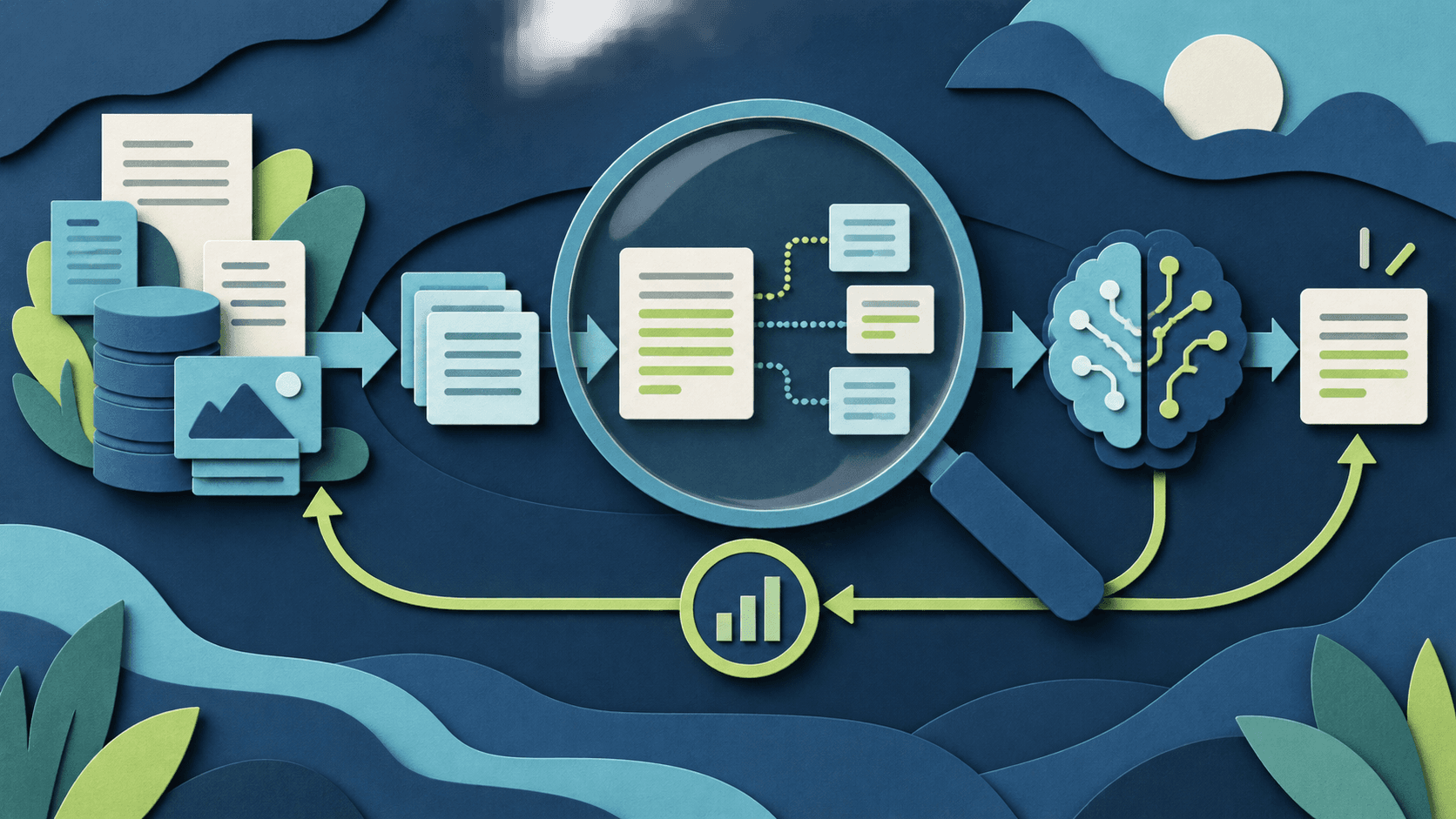
Ragas is an open-source evaluation framework for RAG systems, prompts, workflows, and agents using configurable datasets and metrics.
Editorial accountability
Who checked this guide
- Evaluation type
- Hands-on evaluation
- Last materially checked
- Evidence
- 4 listed sources
Hands-on testing is identified explicitly. Research-based coverage uses cited product documentation and other named sources; it does not imply every paid plan was used. Read the full methodology.
Editorial freshness
Pricing and material product claims were checked September 13, 2026.
Review evidence
What this guidance is based on
- Review type
- Research-based product assessment
- Material review date
- September 13, 2026
- Evidence
- Current first-party product, pricing, documentation, privacy, security, and open-source material
- Buyer test
- Controlled quality, cost, privacy, reliability, and failure-path evaluation
Important limits
- • DiscoverAI did not complete the proposed long-term paid deployment for this review.
- • Features, prices, limits, security controls, and provider data paths can change; verify the linked first-party pages before purchase.
In this guide
Short answer
Ragas is a useful starting point for teams turning RAG and agent quality into repeatable experiments. Its metrics are hypotheses, not ground truth: each must be calibrated against domain experts and actual user failures.
Best for
- RAG evaluation workflows
- Prompt and agent experiments
- Python teams wanting open-source metrics
Look elsewhere if
- Teams without labeled examples
- Buyers wanting a turnkey truth score
- Suites unable to budget model-judge calls
What Ragas verifiably does
Ragas documents evaluation datasets, experiments, prompt evaluation, RAG and agent metrics, rubric-based and custom metrics, test-set generation, provider customization, integrations, tracing hooks, and evaluation-driven development workflows.
Important limitations
LLM judges can be nondeterministic, biased, and sensitive to prompts or reference quality. Synthetic data can reproduce model blind spots. Model and embedding calls create external spend, while a high aggregate score can conceal severe minority failures.
Ragas pricing
The Ragas package is open source. Evaluation models, embeddings, storage, compute, and any hosted or support services are separate costs; no mandatory framework subscription was verified. Reviewed September 13, 2026.
A fair buyer test
Build 200 expert-labeled questions containing retrieval misses, conflicting passages, unanswerable requests, prompt injection, multilingual cases, and multi-turn context. Repeat across judge models and runs; measure expert agreement, variance, false passes, diagnosis value, latency, and total evaluation spend.
Final verdict
Ragas is easy to shortlist for RAG-focused Python teams, especially when they want an open evaluation layer. Keep deterministic checks beside judge metrics, publish rubric definitions, track slices rather than one score, and gate releases on real failure cases.
This is a research-based product assessment, not a claim of hands-on long-term testing. Product, pricing, privacy, security, and usage claims were checked against the first-party sources below on September 13, 2026. Verify current terms and run the proposed test with approved data before adoption.
Reusable trial worksheet
Test Ragas before you commit
Turn this review’s buyer test into evidence. Your entries autosave only in this browser and are never added to shared shortlist links.
Confirm the tool meets every must-have workflow and stakeholder requirement.
Review starting point: Teams evaluating RAG applications; Developers comparing AI experiments; Organizations creating custom quality metrics
Run the same representative work you would use in production; do not score a polished demo.
Review starting point: Build 200 expert-labeled questions containing retrieval misses, conflicting passages, unanswerable requests, prompt injection, multilingual cases, and multi-turn context. Repeat across judge models and runs; measure expert agreement, variance, false passes, diagnosis value, latency, and total evaluation spend.
Calculate the effective cost per accepted result, including usage, review, corrections, and required add-ons.
Review starting point: The Ragas Python library and CLI are open source. Evaluation costs come primarily from the selected judge and generator models, test-set size, repeated experiments, storage, and engineering time. Official documentation includes token-usage parsing and cost calculation rather than a universal hosted subscription price. Commercial assistance is separately…
Define an acceptance threshold, test known answers and edge cases, and record every correction.
Review starting point: Editorial quality signals: features 4.2/5; AI quality 4.0/5. Validate these signals in your own work.
Verify what data enters the product, who can access it, how long it is retained, and whether it trains models.
Review starting point: Use approved low-risk data first. Check roles, consent, deletion, subprocessors, model-training settings, and the contract—not only the marketing page.
Test the real handoffs, permissions, failure states, and export path your team depends on.
Review starting point: Python, OpenAI, Anthropic, Gemini, Ollama, LangChain
Record training, governance, reliability, accessibility, ownership, and change-management risks before rollout.
Review starting point: Judge validity requires calibration; Evaluation can consume significant model usage; Metrics do not replace business outcomes
Loading saved worksheet… · private to this device or your optional account
Community evidence
How verified users put Ragas to work
Structured, editor-moderated experience—not star ratings. This complements our independent review and never changes its score.
No approved community evidence yet. Be the first verified user to contribute.
Sources and verification
Product details and claims were checked against the following primary sources.
Frequently asked questions
What is Ragas?
Ragas is an open-source evaluation framework for RAG systems, prompts, workflows, and agents using configurable datasets and metrics.
How much does Ragas cost?
The Ragas package is open source. Evaluation models, embeddings, storage, compute, and any hosted or support services are separate costs; no mandatory framework subscription was verified. Reviewed September 13, 2026.
Who should use Ragas?
RAG evaluation workflows, Prompt and agent experiments, Python teams wanting open-source metrics.
What should buyers test before choosing Ragas?
Build 200 expert-labeled questions containing retrieval misses, conflicting passages, unanswerable requests, prompt injection, multilingual cases, and multi-turn context. Repeat across judge models and runs; measure expert agreement, variance, false passes, diagnosis value, latency, and total evaluation spend.
Found this useful?
Get the next one in your inbox.
One five-minute briefing a week: a meaningful change, a practical workflow, and a clearer tool decision—already filtered for lean teams.
Free · one email a week · unsubscribe any time
Recommended tool
Use Ragas if this workflow fits your team
Open-source and provider-flexible
Tools mentioned in this article
Ragas
An open-source framework for systematic evaluation of RAG, prompts, workflows, and agents
Ragas helps teams replace informal AI vibe checks with datasets, experiments, custom metrics, and model-assisted evaluation, but metric validity, judge alignment, token cost, and human labels remain essential.
DeepEval
Unit-test LLM, RAG, MCP, and agent behavior
DeepEval is a local-first open-source framework for end-to-end, component, and trajectory evaluations with Pytest-style assertions and configurable metrics.
TruLens
Trace and evaluate LLM and retrieval applications
TruLens is an open-source evaluation and observability library for instrumenting LLM applications and scoring RAG, conversations, agents, and traces.
Arize Phoenix
Open-source tracing and evaluation for LLM, RAG, and agent applications
Phoenix gives teams OpenTelemetry-based traces, evaluations, experiments, datasets, and prompt tooling in a self-hostable project, but telemetry volume, sensitive content, evaluator validity, and operations remain buyer-owned.
Read next