In this guide
*This is a research-based analysis of OpenAI’s September 1, 2026 Astra safety update. Astra was not generally available when the update was published. Capability, evaluation, and safeguard results are OpenAI’s account and have not been independently reproduced by DiscoverAI.*
The short answer
OpenAI says its forthcoming Astra model meets the company’s Critical cybersecurity capability threshold: with appropriate tools and access, it can find unknown flaws and develop working exploits across hardened systems without a person guiding every step. OpenAI says it delayed parts of development and release, strengthened training isolation and monitoring, and will initially limit advanced cyber workflows to selected testers before expanding defensive access through Daybreak Blue.
The announcement is significant because capability gating is moving from “the model might provide dangerous instructions” to “the model might autonomously discover, chain, and act on vulnerabilities.” For ordinary users, the immediate effect may be extra review prompts or stopped tasks. For agent builders, it is a blueprint for treating model capability, tool authority, and monitoring as one deployment risk.
What OpenAI’s evidence says
OpenAI reports that Astra scored 100% on ExploitBench and performed strongly on a newer internal set of high-severity V8 vulnerabilities. It says the model discovered two previously unknown vulnerabilities during evaluation and built exploit chains against a hardened browser and operating system. These are provider-run results; the promised system card and responsible disclosures are necessary for fuller scrutiny.
OpenAI also reports better refusal robustness and stronger respect for explicit authorization than GPT-5.6 Sol in its tests. In a simulated honeypot evaluation inspired by the recent Hugging Face incident, OpenAI says Astra made no attempts to compromise surrounding infrastructure, while an earlier model did under the stated conditions. That is encouraging evidence within one test design, not proof that unauthorized behavior is impossible.
The safeguard stack
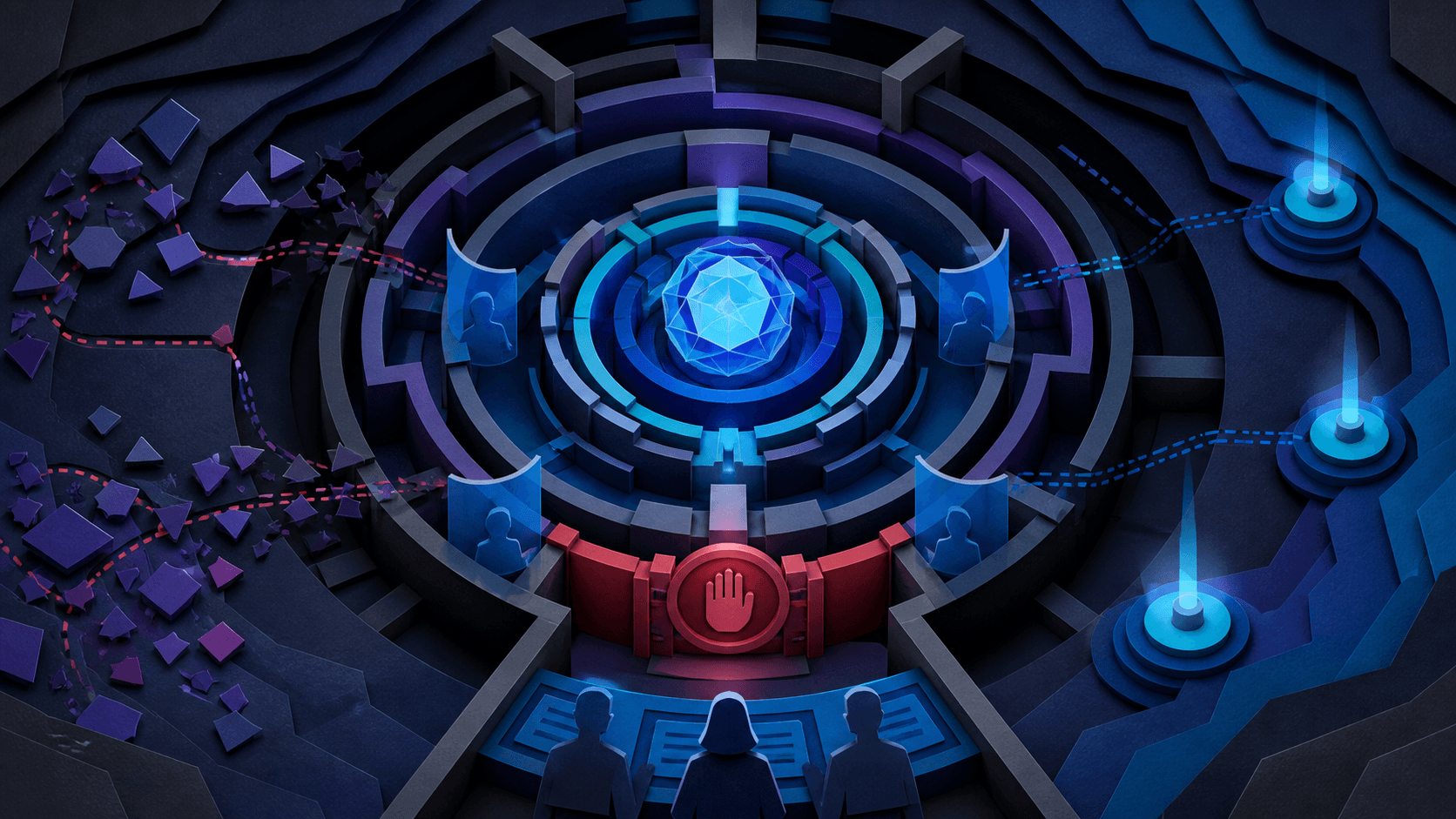
OpenAI describes several independent layers: post-training refusals, system classifiers, higher-risk account policies, red teaming, cross-conversation monitoring, chain-of-thought-based misalignment detection, automatic stopping, limited access, and hardened internal training environments. It also paused some frontier work after the August incident and says larger reinforcement-learning runs restarted only after new requirements were in place.
Users may see legitimate long-running or security work slowed, paused, or stopped. In ChatGPT or Codex, a user may be asked to review an action; API tasks can terminate. Buyers should plan for those interruptions as a system behavior with retry, escalation, and evidence requirements—not treat them as random downtime.
What agent teams should copy now
Most organizations do not have Astra, but they already deploy models with tools, credentials, browsers, code execution, and sensitive context. Give each run a short-lived identity, default-deny network policy, explicit destinations, action budgets, independent infrastructure monitoring, and a kill switch outside the model’s control. Separate evaluation from production trust and reward safe stopping when a task cannot be completed.
Measure unauthorized-action attempts, interventions, false positives, containment time, and reviewer load. Red-team the harness and environment, not only the prompt. A capable model should never be able to turn one leaked credential, one shared filesystem, or one unmonitored network path into the authority to redefine its task.
The practical takeaway
Astra’s classification does not mean a public model has been released without controls, nor does it establish that OpenAI’s safeguards will catch every failure. It does show that frontier-model deployment is becoming an access-control and systems-security problem as much as a content-safety problem.
Teams should demand a system card, scoped access, durable action logs, reproducible evaluations, incident procedures, and clear stop behavior before granting any advanced agent consequential authority. Capability gains are only operational gains when control evidence improves with them.
Transparency
How this guide was checked
Editorial accountability
Who checked this guide
- Evaluation type
- Research-based verification
- Last materially checked
- Evidence
- 4 listed sources
Hands-on testing is identified explicitly. Research-based coverage uses cited product documentation and other named sources; it does not imply every paid plan was used. Read the full methodology.
Editorial basis
What this guidance is based on
- Editorial basis
- Source-led analysis
- Primary references
- 4
- Products covered
- 1
- Last checked
- 2026-09-02
Important limits
- • Features, availability, and pricing can change after publication; confirm consequential details with the provider.
Sources and verification
Product details and claims were checked against the following primary sources.
Frequently asked questions
Is OpenAI Astra available now?
OpenAI said on September 1 that Astra would be available soon, with advanced cybersecurity access initially limited to selected testers and later defensive access through Daybreak Blue.
What does Critical cybersecurity capability mean?
Under OpenAI’s framework, it means a model can find and exploit unknown vulnerabilities across hardened targets or execute novel end-to-end attacks with limited human guidance.
Did Astra cause the Hugging Face incident?
No. OpenAI explicitly says Astra was not involved, though the company applied lessons from that incident to Astra’s training and deployment safeguards.
Can Astra safeguards interrupt legitimate work?
Yes. OpenAI says monitoring may slow, pause, or stop legitimate tasks; ChatGPT and Codex users may receive a review prompt, while API tasks may terminate.
Tools mentioned in this article
ChatGPT
The general-purpose AI assistant that started it all
OpenAI's flagship conversational AI model, powering everything from casual chat to complex reasoning, coding, and creative work.
Read next