Open Secure AI Alliance: What Nvidia's Open-Model Security Push Means
Nvidia and more than 100 inaugural partners want to build shared defensive tools for AI software and agents. Membership is broad; deliverables will determine whether the alliance matters.
Bottom line
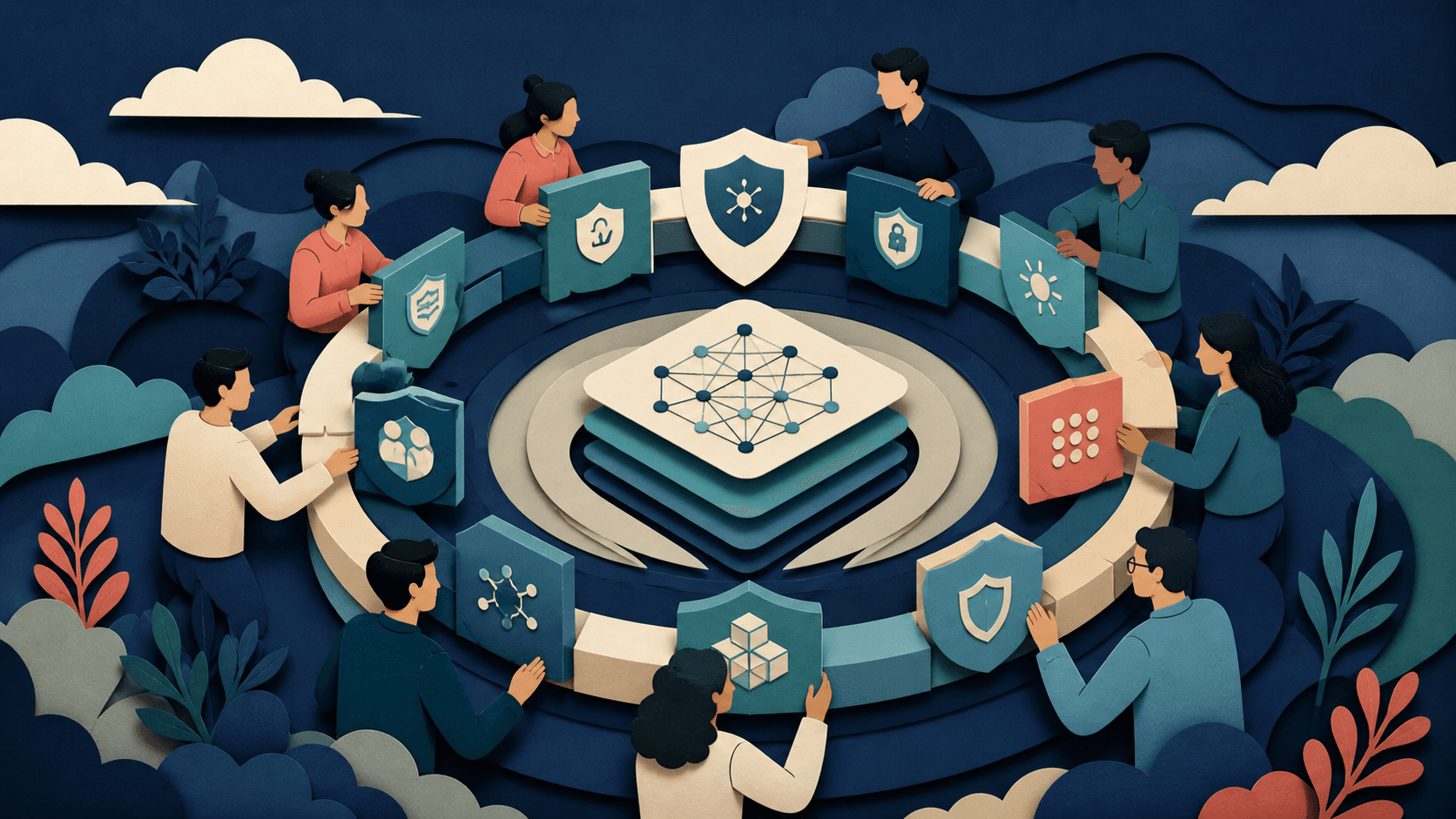
The Open Secure AI Alliance brings Nvidia, Linux Foundation projects, cloud firms, security vendors, and model builders around shared AI defenses. Here is what to watch.
Editorial accountability
Who checked this guide
- Evaluation type
- Research-based verification
- Last materially checked
- Evidence
- 4 listed sources
Hands-on testing is identified explicitly. Research-based coverage uses cited product documentation and other named sources; it does not imply every paid plan was used. Read the full methodology.
Editorial basis
What this guidance is based on
- Editorial basis
- Source-led analysis
- Primary references
- 4
- Products covered
- 0
- Last checked
- 2026-08-19
Important limits
- • Features, availability, and pricing can change after publication; confirm consequential details with the provider.
In this guide
*This research-based analysis covers Nvidia's July 27, 2026 alliance announcement. We have not independently evaluated alliance governance, member participation, or the effectiveness of tools that may result.*
The short answer
Nvidia announced the Open Secure AI Alliance with more than 100 inaugural partners across cloud infrastructure, cybersecurity, enterprise software, open source, and AI research. The stated goal is to develop and share open technologies, techniques, and tools that protect AI software and agents.
The alliance builds on Linux Foundation and OpenSSF work and frames open defenses as infrastructure that many organizations can inspect and improve. The announcement is important as a coalition signal, but a member list is not a security outcome. Public specifications, maintained code, vulnerability processes, adoption, and measured results will determine its value.
What problem the alliance addresses
AI systems add new attack surfaces: model supply chains, prompts and context, tool permissions, agent actions, generated code, connectors, data pipelines, and third-party models. Individual vendors can secure their own products, but shared formats and open tooling can reduce duplicated work and help smaller defenders.
Open tools can be inspected, tested, adapted, and deployed across environments. They can also fragment if projects lack ownership, compatible standards, documentation, or long-term maintenance.
What to watch next
Look for concrete repositories, technical specifications, reference implementations, threat models, test suites, disclosure policies, and release schedules. Governance should explain who decides priorities, how conflicts are handled, and whether non-members can contribute.
Useful measurement might include vulnerabilities found and remediated, time to patch, coverage across model and agent stacks, independent testing, production adoption, and compatibility with existing security controls. Counting members or downloads is not enough.
What it means for AI buyers
Do not treat alliance membership as a certification. Ask each vendor which controls are implemented in the product you buy, which versions are covered, how incidents are disclosed, and how model, plugin, connector, and agent permissions are governed.
Procurement teams can favor products that support portable logs, standard identity controls, signed artifacts, software bills of materials, reproducible evaluations, and documented vulnerability response. Open components should make scrutiny easier, not replace it.
Open versus closed is the wrong single question
Open systems can enable independent inspection and broad defensive innovation. Closed systems can centralize updates and limit some capability exposure. Either can be operated well or poorly.
The practical questions are whether the system is observable, least-privileged, tested against realistic threats, updateable, recoverable, and accountable. Licensing alone does not answer them.
The larger trend
AI security is becoming an ecosystem problem. Agents cross model providers, clouds, browsers, identity systems, data stores, and business applications. No single lab controls the whole path.
Shared defensive infrastructure is therefore plausible and necessary. The alliance will earn trust by shipping artifacts that outsiders can test—and by reporting where those defenses fail.
Sources and verification
Product details and claims were checked against the following primary sources.
Frequently asked questions
What is the Open Secure AI Alliance?
It is an Nvidia-announced coalition of cloud, security, enterprise, open-source, and AI organizations that says it will build and share defensive technologies for AI software and agents.
Is alliance membership an AI security certification?
No. Buyers still need product-specific evidence about implemented controls, versions, testing, incident response, and permissions.
Does open-source AI automatically improve security?
No. Openness can improve inspection and collaboration, but security also depends on maintenance, deployment, access control, testing, monitoring, and response.
How can we judge whether the alliance succeeds?
Watch for maintained public tools and standards, independent testing, production adoption, disclosed vulnerabilities, patch speed, and measurable coverage—not member count alone.
Read next
Recommended for you

Condens Review 2026: AI Research Repository, Pricing, and Fit
Condens can turn studies into reusable organizational evidence, provided someone owns taxonomy, access, retention, and finding quality.
Condens joins structured qualitative analysis with a searchable research repository and plan-dependent AI and governance controls.
Read guide
Recall Review 2026: Pricing, AI Knowledge Base, and Fit
Run an AI Accessibility Acceptance Test Before Launch
ChatGPT Dots vs. Claude Dispatch: Cloud Agent or Desktop Delegate?