Meta Is Bringing Muse to AI Glasses—What Changes When an Agent Can See
A hands-free agent that can act on what a wearer sees turns cameras, memory, connectors, payments, and bystander consent into one decision.
Bottom line
Meta says Muse is coming to AI glasses with visual context, background work, connectors, and payments. Separate the demo from the authority you grant.
Editorial accountability
Who checked this guide
- Evaluation type
- Research-based verification
- Last materially checked
- Evidence
- 4 listed sources
Hands-on testing is identified explicitly. Research-based coverage uses cited product documentation and other named sources; it does not imply every paid plan was used. Read the full methodology.
Editorial basis
What this guidance is based on
- Editorial basis
- Source-led analysis
- Primary references
- 4
- Products covered
- 3
- Last checked
- 2026-09-27
Important limits
- • DiscoverAI did not receive early hardware.
- • Hardware, connectors, payments, regions, and safeguards may change.
What changed
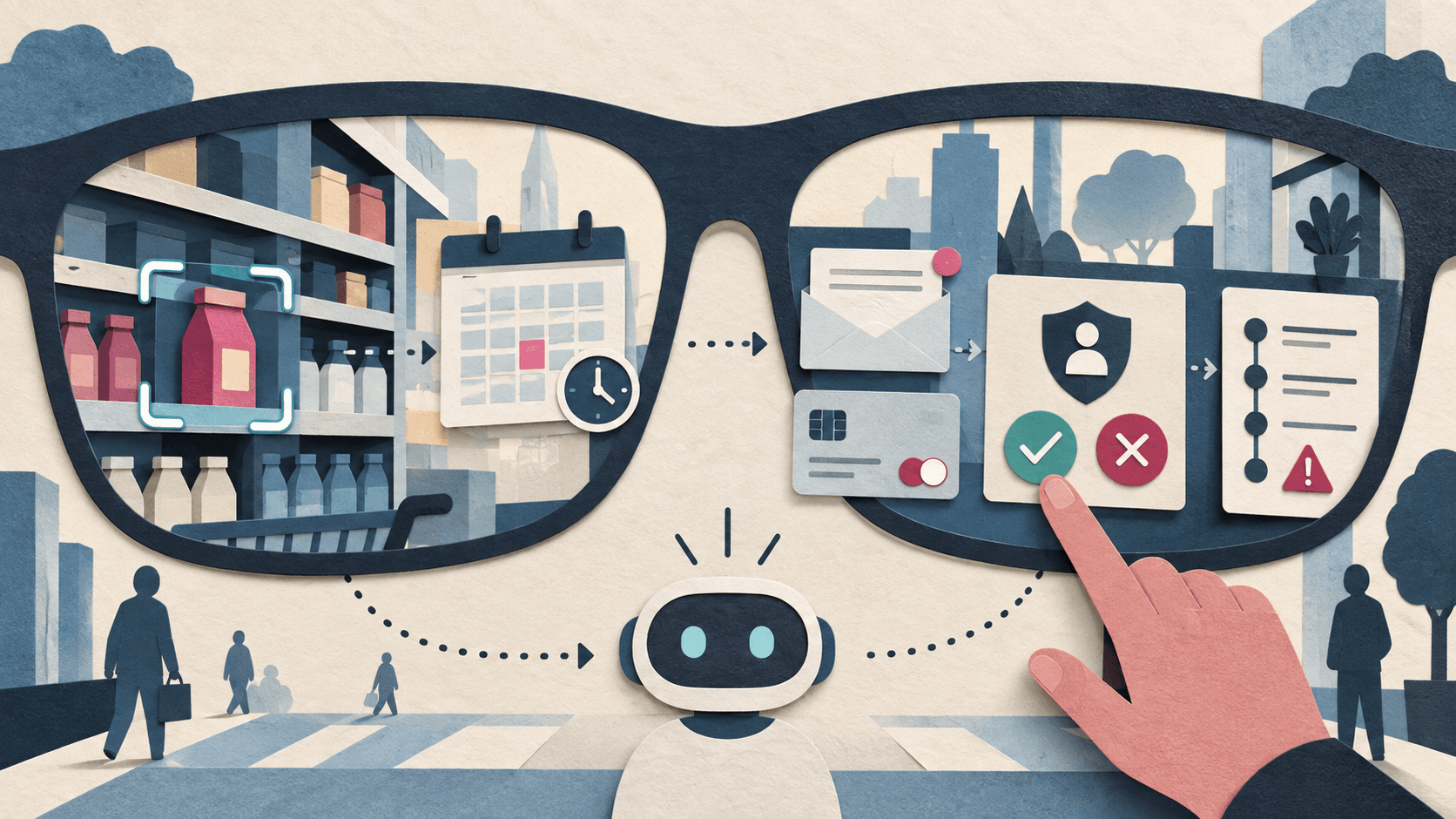
At Connect 2026, Meta said its Muse personal agent will come to AI glasses in the coming months. The company demonstrated an agent that can respond to what a wearer is looking at, continue voice conversation while it works, use connectors, and eventually transact through services such as Shop Pay and PayPal.
The practical change is authority. Glasses can make the transition from observing an object, sign, shelf, screen, or person to proposing an action feel nearly frictionless.
Availability boundary
“Coming in the next few months” is not general availability. Meta lists work connectors including Notion, Granola, GitHub, and Box, plus shopping, payment, and future travel services. Buyers should record the exact device, account, region, connector, permission, and rollout they can access.
Why small teams should care
Hands-free context could help field teams retrieve procedures, create follow-ups, inspect stock, translate signs, or document maintenance. It could also expose customer faces, private screens, health information, payment details, or confidential conversations before a bystander understands that AI is involved.
An agent's own email address adds another identity to govern: who owns it, what it may send, how recipients identify agent mail, which credentials it can use, and how access ends during offboarding.
A cautious test
- Begin read-only with public or synthetic data.
- Test clear visual and spoken disclosure.
- Disable purchases, outbound email, and sensitive connectors until logs and approvals work.
- Include bystanders, accessibility needs, weak connectivity, mistaken objects, environmental prompt injection, and offboarding.
- Compare with a phone and non-camera voice option.
Measure completion, wrong-object selection, unauthorized disclosure, approval comprehension, objections, corrections, failures, and time saved.
Bottom line
Muse on glasses could make an agent useful where physical work happens. It also compresses seeing, remembering, deciding, and acting into one wearable surface. Start read-only, make capture unmistakable, and grant one connector and one action at a time.
Sources and verification
Product details and claims were checked against the following primary sources.
Frequently asked questions
Is Muse available on Meta AI glasses now?
Meta said it would come to AI glasses in the coming months. Availability varies by device, account, connector, region, and rollout.
What can Muse do on glasses?
Meta describes visual context, voice conversation, background work, connectors, and approval for sensitive actions.
Can Muse make purchases?
Meta describes payment integrations, but verify availability, confirmation, protections, returns, and recovery before enabling transactions.
What should a team test first?
Start read-only and test disclosure, visual mistakes, bystander consent, logs, permissions, offboarding, and confirmation.
Tools mentioned in this article
Notion AI
Workspace AI for search, meeting notes, research, and governed agents
Notion AI is a strong shortlist for teams whose maintained documents, projects, and knowledge already live in Notion. Business-plan cost, allowances, credits, permissions, and source quality determine its value.
Granola
Granola is a bot-free AI notepad that captures device audio, combines a transcript with a user's notes, and produces searchable meeting summaries
Granola is a bot-free AI notepad that captures device audio, combines a transcript with a user's notes, and produces searchable meeting summaries.
Read next