In this guide
*This research-based analysis covers Google’s September 9, 2026 announcement. Investment, employment, GDP, energy, and community figures are company-reported forecasts unless otherwise stated; DiscoverAI has not independently audited them.*
Free AI tool buyer checklist
Make the next AI subscription earn its place.
Get the weekly top 5 AI tools, one practical workflow and one way to reduce AI spending. Includes a free buyer checklist.
The short answer
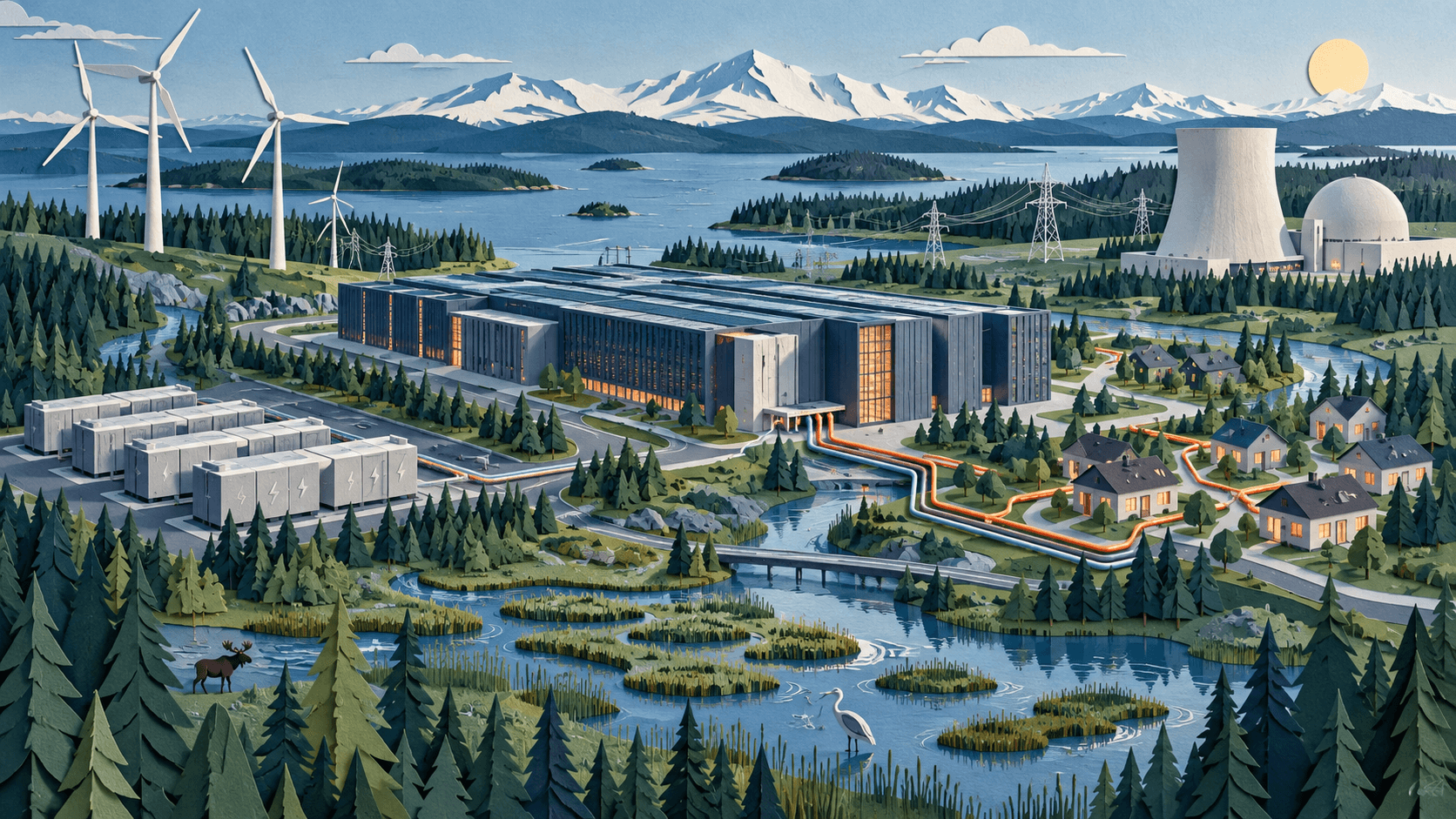
Google says it will invest €13 billion in Finland over the next two years to expand digital infrastructure supporting products including Gemini, Search, and Maps. The package is broader than new server halls: it includes clean-energy contracts, a 94-megawatt battery, continued heat recovery, nature projects, €31 million for local communities, and training tied to data-center careers.
Google calls it the company’s largest single investment in Europe. It forecasts that initial construction in 2027 and 2028 will support more than 37,000 jobs nationwide and contribute €3.6 billion per year to Finland’s GDP, followed by thousands of permanent roles once the facilities are operating. Those are projected economic effects, not jobs already created.
The announcement matters because AI infrastructure is becoming an energy, grid, workforce, and regional-development decision—not merely a cloud-capacity purchase.
What does the €13 billion cover?
Google describes investment in digital infrastructure, clean energy, and economic partnerships. It is expanding from a long-standing base in Hamina, where a former paper mill became a data center and seawater cooling and offsite heat recovery already form part of operations.
The new program includes a 22-year agreement supporting the life extension of Finland’s Loviisa nuclear power plant, additional onshore wind, and a contracted 94-megawatt battery intended to help stabilize the grid during cold, low-wind periods. Google also says it will fund forest and wetland regeneration and local recreational infrastructure.
Community spending will target Hamina, Kajaani, Muhos, and Vaala. Google says training partnerships will provide AI upskilling to more than 4,400 workers and create opportunities for 100 Finnish students preparing for data-center careers.
Why Finland fits the AI infrastructure race
AI data centers need dependable electricity, cooling, network capacity, land, skilled operations, and predictable institutions. Finland combines a cool climate, a relatively low-carbon power system, engineering talent, and existing Google infrastructure. Hamina also offers a decade-plus operating base rather than a greenfield experiment.
But a favorable location does not eliminate tradeoffs. Large facilities can compete for grid connections, construction labor, equipment, and local attention. They also create continuous power demand even when renewable output changes. The nuclear, wind, storage, and demand-management elements are therefore central to the project’s credibility, not decorative sustainability copy.
The energy story needs measurable accounting
Power contracts do not automatically show that every incremental AI workload is carbon-free at every hour or that new demand never affects consumer prices. A useful assessment needs hourly and regional data: facility consumption, contracted generation, additionality, grid congestion, battery charging and discharge, backup power, water use, heat delivered, and avoided emissions.
Heat recovery is promising where there is a nearby network and steady demand. Its value should be reported as energy actually delivered, not theoretical capacity. Nature projects should likewise disclose location, baseline, permanence, and independent verification.
The 22-year nuclear agreement is notable because it reflects a broader shift in AI infrastructure toward firm low-carbon power alongside variable renewables. The 94-megawatt battery addresses flexibility, but its energy duration and operating rules determine how much grid support it can provide.
What the jobs numbers mean
“Jobs supported” is an economic-impact measure that can include direct, indirect, and induced activity. It should not be read as 37,000 permanent Google positions. Google separates construction-period support from the thousands of permanent jobs it expects once facilities are fully operational.
Readers should watch for detailed methodology, geographic distribution, job duration, local hiring share, wage quality, supplier spend, and how training connects to actual openings. The most durable benefit will depend on whether infrastructure investment develops transferable electrical, mechanical, networking, energy, and operations skills.
What AI buyers should learn from the announcement
Cloud and model procurement now carries infrastructure consequences. Enterprise buyers should ask providers where workloads run, what grid regions serve them, how carbon and water are measured, whether clean-energy claims are annual or hourly, and what capacity constraints could affect price or availability.
Teams do not need to choose a model solely by data-center geography. They should include energy transparency, regional resilience, data residency, latency, and provider concentration alongside quality and cost. A large investment can improve capacity while deepening dependence on one platform.
The verdict
Google’s Finland commitment is significant because it bundles compute expansion with the physical systems that AI growth now demands: firm power, renewables, storage, cooling, heat reuse, skills, and local consent.
The headline €13 billion and projected jobs establish scale, not success. The next evidence should be granular: megawatts and megawatt-hours, additional energy, delivered heat, water, construction progress, training outcomes, local supplier value, and operational jobs. That reporting will show whether Finland becomes a durable model for lower-impact AI infrastructure or simply a very large capacity expansion with an attractive wrapper.
Transparency
How this guide was checked
Editorial accountability
Who checked this guide
- Evaluation type
- Research-based verification
- Last materially checked
- Evidence
- 4 listed sources
Hands-on testing is identified explicitly. Research-based coverage uses cited product documentation and other named sources; it does not imply every paid plan was used. Read the full methodology.
Editorial basis
What this guidance is based on
- Editorial basis
- Source-led analysis
- Primary references
- 4
- Products covered
- 1
- Last checked
- 2026-09-09
Important limits
- • Features, availability, and pricing can change after publication; confirm consequential details with the provider.
Sources and references
References cited by this article. Check the original source for scope, dates and current terms.
Frequently asked questions
How much is Google investing in Finland?
Google announced a €13 billion investment over two years in digital infrastructure, clean energy projects, and economic partnerships.
Is the investment only for AI data centers?
No. Google describes data-center expansion plus nuclear, wind and battery agreements, community funding, workforce training, heat recovery, and nature projects.
Will Google create 37,000 permanent jobs?
No. Google says more than 37,000 jobs will be supported during initial construction in 2027 and 2028; it separately forecasts thousands of permanent jobs after full operation.
Why is Finland attractive for AI infrastructure?
Finland offers existing Google facilities, a cool climate, engineering talent, network connectivity, and access to low-carbon and firm power, though grid and community impacts still require scrutiny.
Tools mentioned in this article
Google Gemini
Google's deeply integrated AI assistant with unmatched access to Google's ecosystem
Gemini combines powerful AI with Google's vast data ecosystem — Search, Gmail, Docs, YouTube, and more — for a uniquely integrated experience.
Read next