
The decision
Should you choose Msty?
Msty earns a shortlist for buyers who want a flexible private-AI workbench and are comfortable owning model and data-path decisions. It is a weaker fit for teams seeking a simple all-inclusive subscription or completed enterprise certifications today.
Best for
Technical users comparing local and hosted models; Private knowledge and retrieval experiments.
Choose something else if
Commercial use without license verification; Teams requiring completed SOC 2 or ISO 27001 now
Evidence
Editorial research pending · 8.0/10
Pricing checked
See current vendor pricing · 2026-08-30
Free access is available, with limits.
A free personal-use path has been documented, but commercial work requires a paid license; verify the current product and license terms.
In this guide
Short answer
Msty is worth evaluating for technical individuals and teams that want local and cloud models, knowledge retrieval, web research, and multi-model work in one private-oriented workspace. Its flexibility is the appeal and the risk: every enabled model, search provider, connector, and shared service changes the data path and operating burden.
Best for
- Technical users comparing local and hosted models
- Private knowledge and retrieval experiments
- Teams wanting model and storage controls
Look elsewhere if
- Commercial use without license verification
- Teams requiring completed SOC 2 or ISO 27001 now
- Users wanting one fully managed model bill
What Msty verifiably does
Msty presents four connected products: Studio for AI workspaces, Go for agents, Nexus for centralized model access, and Stack for knowledge. Published desktop material documents local and online models, split chats, knowledge stacks using retrieval, web search, attachments, concurrent conversations, workspaces, and context controls. Current team material lists SSO, access and model controls, audit logs, customer-controlled storage, zero product telemetry, and an available DPA.
Important limitations
The product family and pricing are evolving, so old desktop license pages should not be treated as a current quote. Local data does not mean every feature is local: connected model and web-search providers receive selected requests under their own terms. Msty states formal SOC 2 and ISO 27001 certification are not yet complete. Teams must also validate knowledge permissions, deletion, export, model governance, and the cost of the underlying APIs or local hardware.
Pricing snapshot
Msty has repositioned its desktop product within a broader Studio, Go, Nexus, and Stack platform. Its published license material historically listed free personal/nonprofit use and paid commercial licenses, while the current site emphasizes product-specific and team packaging. Confirm the current checkout, commercial-use rights, device limits, model/API charges, and which products are included. Reviewed August 30, 2026.
A fair buyer test
Create one non-sensitive knowledge stack and run 30 repeat questions across a local model and two cloud models. Compare grounded-answer accuracy, citations, latency, token cost, accidental context exposure, search-query leakage, export and deletion, admin visibility, and total setup time. Verify commercial licensing before using real company work.
Final verdict
Msty earns a shortlist for buyers who want a flexible private-AI workbench and are comfortable owning model and data-path decisions. It is a weaker fit for teams seeking a simple all-inclusive subscription or completed enterprise certifications today.
This is a research-based assessment, not a claim of hands-on product testing. Product, pricing, privacy, security, and usage claims were checked against the first-party sources below on August 30, 2026. Verify current terms and run the proposed test with approved data before adoption.
Transparency
How this guide was checked
Editorial accountability
Who checked this guide
- Evaluation type
- Hands-on evaluation
- Last materially checked
- Evidence
- 4 listed sources
Hands-on testing is identified explicitly. Research-based coverage uses cited product documentation and other named sources; it does not imply every paid plan was used. Read the full methodology.
Editorial freshness
Pricing and material product claims were checked August 30, 2026.
Review evidence
What this guidance is based on
- Editorial basis
- Current first-party product, pricing, help, security, privacy, and terms documentation
- Review type
- Research-based product assessment
- Material review date
- August 30, 2026
- Buyer test
- Controlled workflow test with output, correction, cost, permission, and ownership checks
Important limits
- • DiscoverAI did not complete the proposed long-term paid deployment for this research-based review.
- • Features, prices, limits, security controls, privacy terms, and usage rights can change; verify the linked first-party pages before purchase.
Standardized benchmark coverage
How this review maps to the research benchmark
Citation accuracy
Not applicableThe reviewed workflow does not produce source-grounded research answers, so a citation score would be misleading.
Read protocol v2026.10-v1 →Thematic analysis
Not applicableThe reviewed workflow is not qualitative evidence analysis, so a thematic-analysis score would be misleading.
Read protocol v2026.10-v1 →Eligibility is not a product score. DiscoverAI publishes results only after output collection, blinded adjudication, reproducibility checks, and severe-error review.
Open the optional evaluation worksheet
Reusable trial worksheet
Test Msty before you commit
Turn this review’s buyer test into evidence. Your entries autosave only in this browser and are never added to shared shortlist links.
Confirm the tool meets every must-have workflow and stakeholder requirement.
Review starting point: Technical users comparing local and hosted models; Private knowledge and retrieval experiments; Teams wanting model and storage controls
Run the same representative work you would use in production; do not score a polished demo.
Review starting point: Create one non-sensitive knowledge stack and run 30 repeat questions across a local model and two cloud models. Compare grounded-answer accuracy, citations, latency, token cost, accidental context exposure, search-query leakage, export and deletion, admin visibility, and total setup time. Verify commercial licensing before using real company work.
Calculate the effective cost per accepted result, including usage, review, corrections, and required add-ons.
Review starting point: Msty has repositioned its desktop product within a broader Studio, Go, Nexus, and Stack platform. Its published license material historically listed free personal/nonprofit use and paid commercial licenses, while the current site emphasizes product-specific and team packaging. Confirm the current checkout, commercial-use rights, device limits, model/API…
Define an acceptance threshold, test known answers and edge cases, and record every correction.
Review starting point: Editorial quality signals: features 4.2/5; AI quality 4.0/5. Validate these signals in your own work.
Verify what data enters the product, who can access it, how long it is retained, and whether it trains models.
Review starting point: Use approved low-risk data first. Check roles, consent, deletion, subprocessors, model-training settings, and the contract—not only the marketing page.
Test the real handoffs, permissions, failure states, and export path your team depends on.
Review starting point: Local models, OpenAI, Anthropic, Azure OpenAI, Web search, Customer storage
Record training, governance, reliability, accessibility, ownership, and change-management risks before rollout.
Review starting point: Current packaging is evolving; Third-party models change privacy boundaries; Formal certifications are incomplete
Loading saved worksheet… · private to this device or your optional account
Community evidence
How verified users put Msty to work
Structured, editor-moderated experience—not star ratings. This complements our independent review and never changes its score.
No approved community evidence yet. Be the first verified user to contribute.
Community choice
Recommend Msty
Loading weekly votes…
One vote per verified account per tool, counted for seven days. Return after your vote expires to support again. Community votes influence homepage trends, never editorial ratings. Voting does not subscribe you to emails.
Sources and verification
Product details and claims were checked against the following primary sources.
Frequently asked questions
Is Msty free?
Msty has documented free personal and nonprofit use, while revenue-generating work requires a commercial license. Confirm the current product terms before adoption.
Can Msty run local AI models?
Yes. Local models are a core part of its private-AI positioning, alongside optional cloud providers.
Does Msty send data to cloud providers?
It can. Requests sent to connected cloud models or real-time search services follow those providers' data paths and terms.
Is Msty SOC 2 certified?
The current security page says formal SOC 2 and ISO 27001 certification are not yet complete.
Recommended tool
Use Msty if this workflow fits your team
Local and cloud model flexibility
Tools mentioned in this article
Msty
A private multi-model workspace for local models, cloud models, knowledge, agents, and teams
Msty brings local and online models, knowledge stacks, research, and agent workflows into one system, but licensing, provider data paths, product packaging, and immature certifications require careful review.
TypingMind
A bring-your-own-key AI workspace for chatting with multiple model providers
TypingMind unifies multiple AI APIs in a local-first interface, but API spend, browser storage, optional cloud services, and provider policies determine its real value and privacy.
Alter
A Mac-native assistant that combines local models, cloud models, voice, memory, and app context
Alter offers a useful local-first AI layer across Mac applications, but cloud routing, fair-use limits, permissions, local backups, and model quality need a deliberate test.
Dust
Dust is worth testing for teams that want employees to build and operate shared AI agents over company knowledge and tools while retaining model choice and administrative controls
Dust is worth testing for teams that want employees to build and operate shared AI agents over company knowledge and tools while retaining model choice and administrative controls. Its flexibility also creates the buying risk: every connector, agent instruction, tool permission, model, and credit-consuming action needs an owner. The relevant metric is accepted work per credit after review—not agents deployed.
Read next
Recommended for you
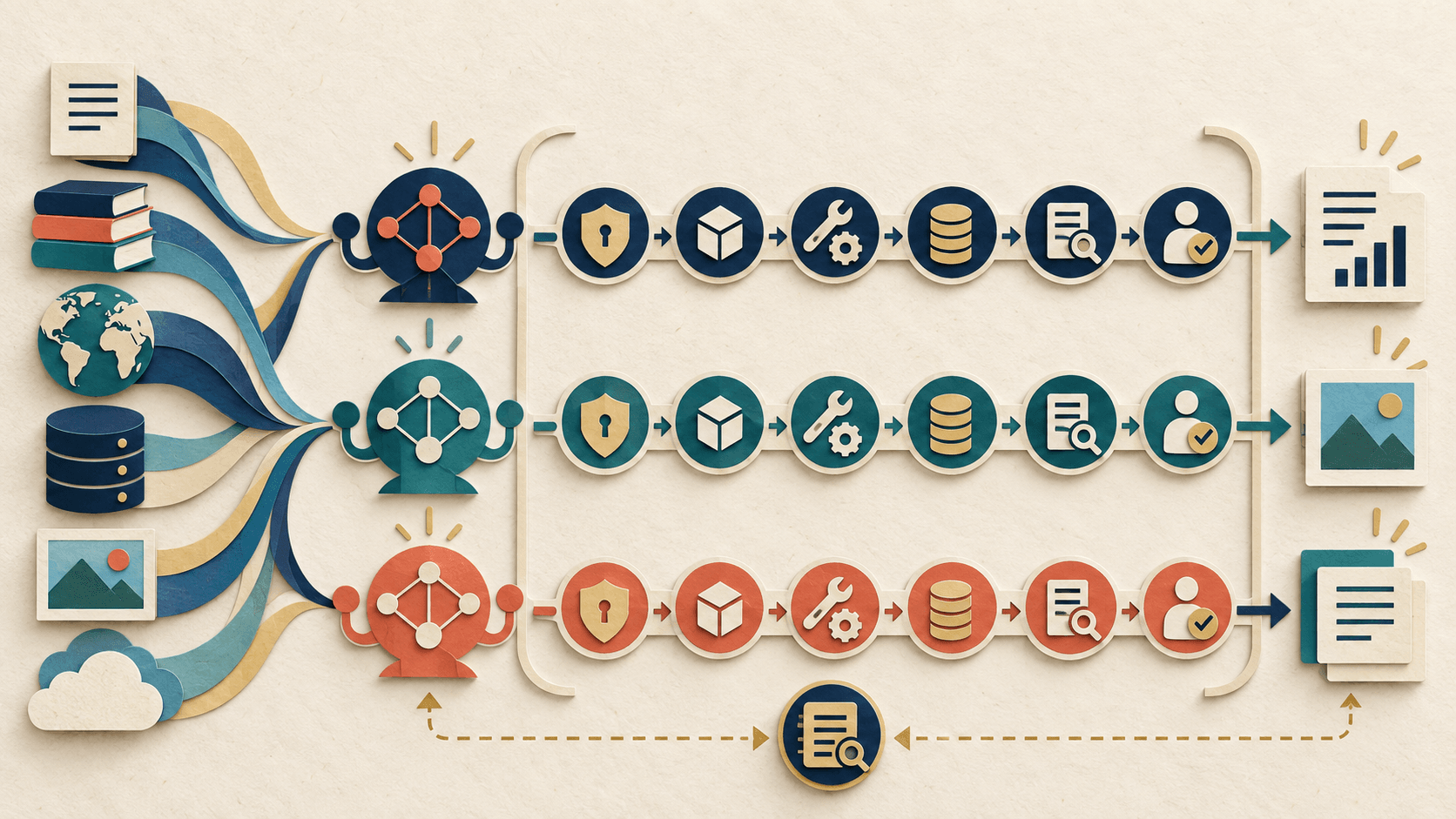
Dust Review 2026: AI Agents, Credits, Security & Fit
A research-based assessment of Dust's workflow, economics, controls, and operational fit.
Dust is worth testing for teams that want employees to build and operate shared AI agents over company knowledge and tools while retaining model choice and administrative controls. Its flexibility also creates the buying risk: every connector, agent instruction, tool permission, model, and credit-consuming action needs an owner. The relevant metric is accepted work per credit after review—not agents deployed.
Read guide
Onyx AI Review 2026: Enterprise Search, Security, Pricing, and Fit
Retell AI Review 2026: Voice Agent Pricing, Compliance, and Fit
Vapi AI Review 2026: Voice Agent Pricing, Privacy, and Fit