Dust Review 2026: AI Agents, Credits, Security & Fit
A research-based assessment of Dust's workflow, economics, controls, and operational fit.
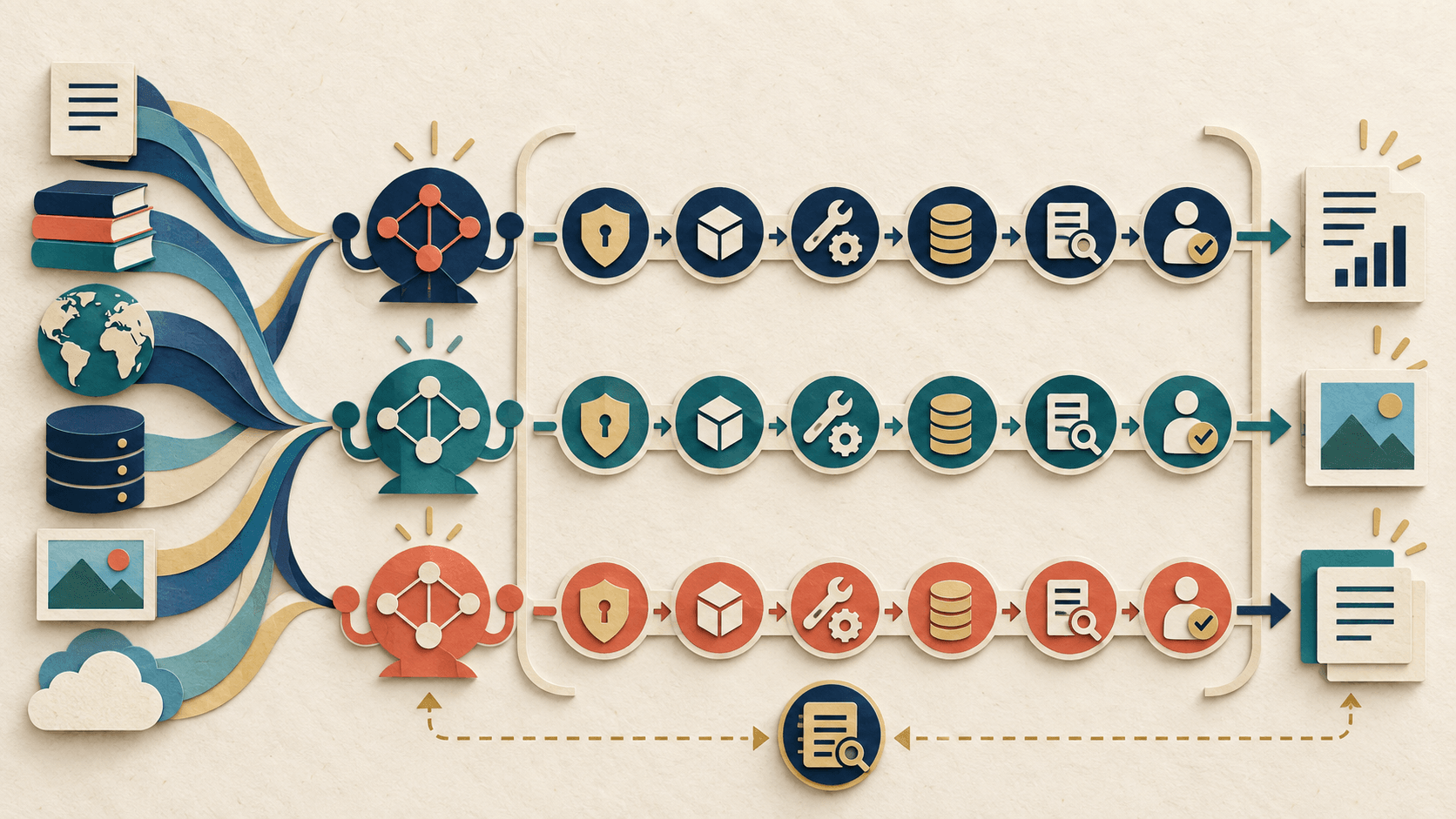
Bottom line
Dust is worth testing for teams that want employees to build and operate shared AI agents over company knowledge and tools while retaining model choice and administrative controls. Its flexibility also creates the buying risk: every connector, agent instruction, tool permission, model, and credit-consuming action needs an owner. The relevant metric is accepted work per credit after review—not agents deployed.
The decision
Should you choose Dust?
Dust is worth testing for teams that want employees to build and operate shared AI agents over company knowledge and tools while retaining model choice and administrative controls. Its flexibility also creates the buying risk: every connector, agent instruction, tool permission, model, and credit-consuming action needs an owner. The relevant metric is accepted work per credit after review—not agents deployed.
Best for
Teams building shared agents over internal knowledge and tools; Organizations that value model choice and US or EU residency.
Choose something else if
Teams seeking a fixed-price unlimited assistant; High-consequence write actions without approval and rollback
Evidence
Verified research · rating withheld
Pricing checked
From $24 · 2026-09-29
Free access is available, with limits.
Yes. The free business tier includes 500 lifetime credits and is best treated as a bounded evaluation allowance.
Editorial accountability
Who checked this guide
- Evaluation type
- Hands-on evaluation
- Last materially checked
- Evidence
- 4 listed sources
Hands-on testing is identified explicitly. Research-based coverage uses cited product documentation and other named sources; it does not imply every paid plan was used. Read the full methodology.
Editorial freshness
Pricing and material product claims were checked September 29, 2026.
Review evidence
What this guidance is based on
- Evaluation type
- Research-based product assessment
- Material review date
- September 29, 2026
- Evidence
- Current first-party sources
Important limits
- • No long-term paid deployment or controlled cross-product benchmark.
- • Pricing, availability, features, policies, and product behavior can change.
In this guide
Short answer
Dust is worth testing for teams that want employees to build and operate shared AI agents over company knowledge and tools while retaining model choice and administrative controls. Its flexibility also creates the buying risk: every connector, agent instruction, tool permission, model, and credit-consuming action needs an owner. The relevant metric is accepted work per credit after review—not agents deployed.
Best for
- Teams building shared agents over internal knowledge and tools
- Organizations that value model choice and US or EU residency
- AI operators prepared to own permissions, evaluations, and credit budgets
Look elsewhere if
- Teams seeking a fixed-price unlimited assistant
- High-consequence write actions without approval and rollback
- Organizations without owners for connected knowledge and agent behavior
What Dust does
Dust combines Custom agents, Multiple frontier models, Knowledge connectors, Scheduled and event-driven workflows, MCP servers, Usage analytics. Its workflow touches Slack, Notion, Google Drive, GitHub, Microsoft 365, MCP.
Pricing and free access
Dust lists a free tier with 500 lifetime credits, Pro at €24 per seat per month billed yearly with 8,000 monthly credits, and Max at €120 with 40,000 credits. Credits reset rather than roll over. Model choice, research, retrieval, code, tool use, and multi-step orchestration consume different amounts; programmatic use is listed at $0.01 per credit. Enterprise pricing is custom.
Yes. The free business tier includes 500 lifetime credits and is best treated as a bounded evaluation allowance.
The evidence boundary
Product pages, documentation, policies, and vendor examples establish capabilities and commercial boundaries; they do not independently prove output quality, savings, safety, or return in another organization. This review therefore withholds a numerical rating and editorial award.
Privacy and governance
Map data sources, permissions, model providers, recipients, retention, write actions, approvals, audit logs, exports, and deletion. Start with representative but non-sensitive data and keep consequential work under qualified human control.
A fair buyer test
Build three agents for retrieval, drafting, and a reversible tool action. Replay at least 100 representative tasks with stale documents, conflicting permissions, prompt injection, missing context, outages, and ambiguous requests. Measure accepted-task rate, serious failures, source accuracy, permission leakage, reviewer time, credits, latency, and total cost per accepted task.
Alternatives
Compare the same work against lindy, gumloop, relevance-ai and the current process. Score accepted outcomes, serious failures, correction time, governance fit, and full cost.
Final verdict
Dust is worth testing for teams that want employees to build and operate shared AI agents over company knowledge and tools while retaining model choice and administrative controls. Its flexibility also creates the buying risk: every connector, agent instruction, tool permission, model, and credit-consuming action needs an owner. The relevant metric is accepted work per credit after review—not agents deployed.
This is a research-based assessment, not a claim of long-term paid deployment.
Open the optional evaluation worksheet
Reusable trial worksheet
Test Dust before you commit
Turn this review’s buyer test into evidence. Your entries autosave only in this browser and are never added to shared shortlist links.
Confirm the tool meets every must-have workflow and stakeholder requirement.
Review starting point: Teams building shared agents over internal knowledge and tools; Organizations that value model choice and US or EU residency; AI operators prepared to own permissions, evaluations, and credit budgets
Run the same representative work you would use in production; do not score a polished demo.
Review starting point: Build three agents for retrieval, drafting, and a reversible tool action. Replay at least 100 representative tasks with stale documents, conflicting permissions, prompt injection, missing context, outages, and ambiguous requests. Measure accepted-task rate, serious failures, source accuracy, permission leakage, reviewer time, credits, latency, and total cost per accepted task.
Calculate the effective cost per accepted result, including usage, review, corrections, and required add-ons.
Review starting point: Dust lists a free tier with 500 lifetime credits, Pro at €24 per seat per month billed yearly with 8,000 monthly credits, and Max at €120 with 40,000 credits. Credits reset rather than roll over. Model choice, research, retrieval, code, tool use, and multi-step orchestration consume different amounts; programmatic use is listed at $0.01 per credit.…
Define an acceptance threshold, test known answers and edge cases, and record every correction.
Review starting point: Editorial quality signals: features 0.0/5. Validate these signals in your own work.
Verify what data enters the product, who can access it, how long it is retained, and whether it trains models.
Review starting point: Use approved low-risk data first. Check roles, consent, deletion, subprocessors, model-training settings, and the contract—not only the marketing page.
Test the real handoffs, permissions, failure states, and export path your team depends on.
Review starting point: Slack, Notion, Google Drive, GitHub, Microsoft 365, MCP
Record training, governance, reliability, accessibility, ownership, and change-management risks before rollout.
Review starting point: Teams seeking a fixed-price unlimited assistant; High-consequence write actions without approval and rollback; Organizations without owners for connected knowledge and agent behavior
Loading saved worksheet… · private to this device or your optional account
Community evidence
How verified users put Dust to work
Structured, editor-moderated experience—not star ratings. This complements our independent review and never changes its score.
No approved community evidence yet. Be the first verified user to contribute.
Sources and verification
Product details and claims were checked against the following primary sources.
Frequently asked questions
How much does Dust cost?
Dust lists Free, Pro at €24 per seat monthly billed yearly, and Max at €120, with Enterprise sold separately. The plans include different monthly credit allowances.
What is a Dust credit?
A credit is Dust's usage unit. Consumption varies by model, task complexity, retrieval, search, code, and tool actions, so a message count alone does not predict cost.
Do unused Dust credits roll over?
No. Dust says each seat's credit allocation resets at the beginning of the billing period.
Which AI models does Dust support?
Dust advertises more than 20 models from providers including OpenAI, Anthropic, Google, Mistral, and DeepSeek, with model choice available across plans.
Recommended tool
Use Dust if this workflow fits your team
Dust is worth testing for teams that want employees to build and operate shared AI agents over company knowledge and tools while retaining model choice and administrative controls. Its flexibility also creates the buying risk: every connector, agent instruction, tool permission, model, and credit-consuming action needs an owner. The relevant metric is accepted work per credit after review—not agents deployed.
Tools mentioned in this article
Dust
Dust is worth testing for teams that want employees to build and operate shared AI agents over company knowledge and tools while retaining model choice and administrative controls
Dust is worth testing for teams that want employees to build and operate shared AI agents over company knowledge and tools while retaining model choice and administrative controls. Its flexibility also creates the buying risk: every connector, agent instruction, tool permission, model, and credit-consuming action needs an owner. The relevant metric is accepted work per credit after review—not agents deployed.
Lindy
An AI assistant for inbox, calendar, meetings, follow-up, and delegated computer tasks
Lindy can consolidate communication-heavy administrative work, but its broad permissions and $49.99 starting price require a controlled, measurable trial.
Gumloop
A visual platform for AI workflows, agents, triggers, scraping, and connected business automation
Gumloop builds visual AI workflows and agents for defined business processes; compare it on accepted outcomes, failure recovery, reviewer time, and total credits.
Relevance AI
A no-code platform for building AI agents, tools, and coordinated workforces
Relevance AI can make agent orchestration accessible, but action limits, model credits, permissions, evaluation, retention, and human escalation determine production readiness.
Read next