In this guide
What changed
Google Research's November 20, 2026 update says Duplex calling capabilities are now integrated into Tasks in the Gemini app. This November 21 article examines the implications for local businesses; it is not a test of the calling feature.
The official explanation describes a Gemini-based system that can handle requests such as contacting businesses and adapting to proposed appointment alternatives. Google says calls identify the automated caller and businesses can opt out through Business Profile settings or during a call. The article does not establish universal access across every account, language or region.
Free AI tool buyer checklist
Check before you buy your next AI tool.
Get the weekly top 5 AI tools, one practical workflow and one way to reduce AI spending. Includes a free buyer checklist.
Why a small business should pay attention
Our interpretation is straightforward: some inquiries may increasingly reach staff through an intermediary that needs explicit facts. The underlying service question is still familiar. What is available, what does it cost, and what has actually been confirmed?
There is no evidence in this announcement that accepting these calls improves search ranking or guarantees more customers. Treat the development as a service-readiness issue. Clear answers are useful to human callers as well as automated ones.
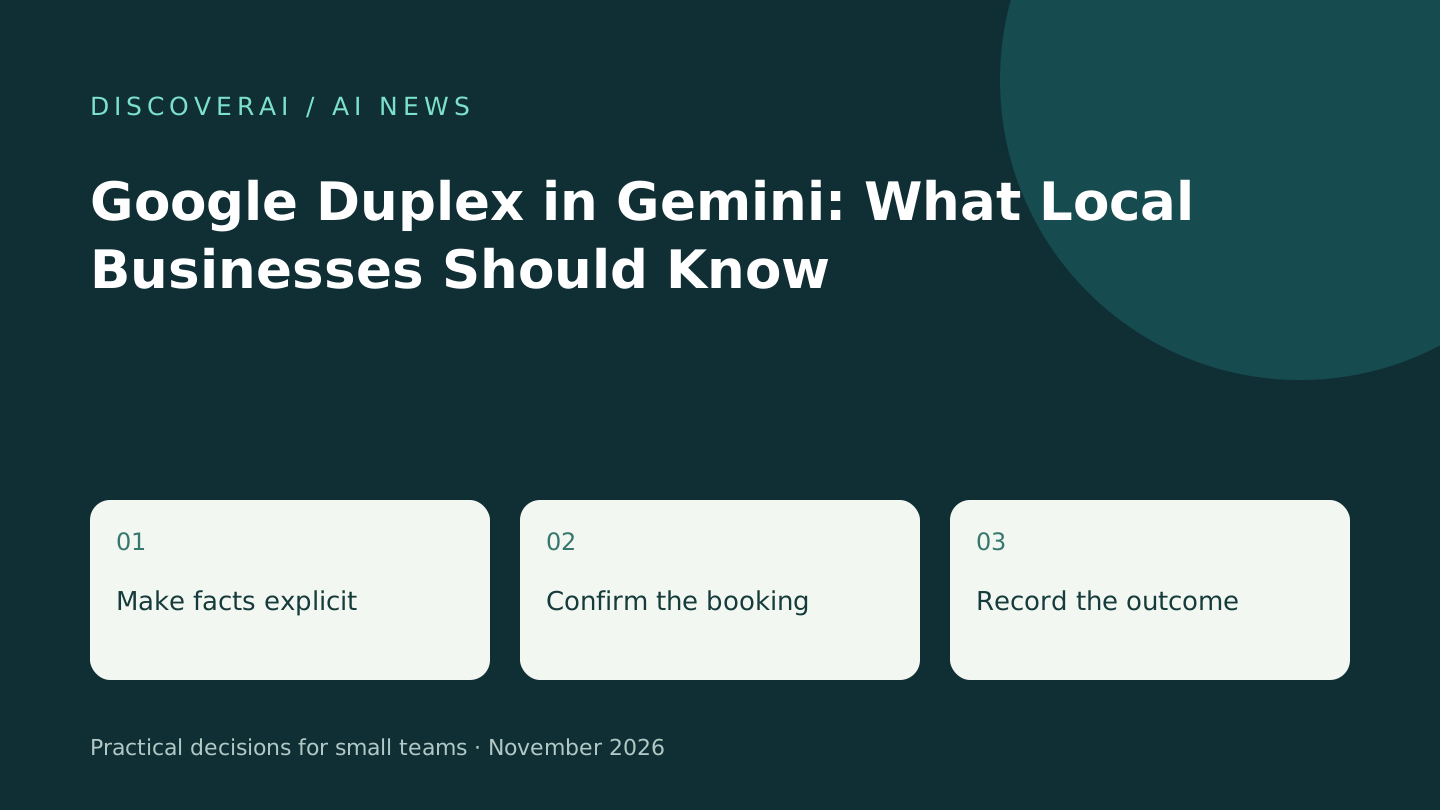
Prepare the facts your team can stand behind
Create a short internal reference for opening hours, appointment duration, booking requirements and who can authorize exceptions. Give it an owner. Mark temporary changes with an end date so that yesterday's special arrangement does not become tomorrow's standard answer.
For a fictional repair shop, separate inspection availability from a promise to complete a repair. A staff member can confirm a time for assessment without promising parts availability or a final price. This example is editorial guidance, not a claim about how Duplex handled a call.
Review the public website and booking information for contradictions. When the online form and telephone answer disagree, fix the source of the discrepancy rather than expecting any AI assistant to guess which is current.
Keep inquiry and booking separate
A proposed time is not yet a reservation. Decide what your existing process requires to create a booking and how the customer receives confirmation. Staff should repeat the service, date, time and any important condition before treating the arrangement as final.
If a caller asks for an exception, route it to someone authorized to make that decision. Do not invent a new workflow solely for automated calls. Start with the same factual boundaries you use for ordinary customer conversations.
For teams considering their own automated support, the Chatbase review addresses a different side of the interaction: answering customer questions from business-controlled material.
Measure operational impact without guessing traffic gains
Keep a simple record of inquiry type, confirmed outcome and any correction required, using your existing privacy practices. Compare the work needed to handle the request with the value of a completed booking. Do not count an unanswered call or a suggested appointment as a sale.
Review recurring misunderstandings with the team. If callers repeatedly ask the same unresolved question, improve the public information. That change helps customers even when the calling feature is unavailable to them.
Practical takeaway
Read the announcement as a sign to make business information and booking confirmation clearer. Check the actual controls available to your business, train staff on existing approval boundaries and avoid promises about rankings or revenue that the source does not support.
Transparency
How this guide was checked
About this article
How this article was prepared
- Evaluation type
- Source-based research
- Last reviewed
- Evidence
- 1 listed sources
We label hands-on testing separately. Research-based articles draw on product documentation and other cited sources, rather than direct use of every plan. Read the full methodology.
Editorial basis
Sources and testing
- Editorial basis
- Source-based research
- Primary references
- 1
- Products covered
- 1
- Last checked
- 2026-11-21
Important limits
- • Features, availability and prices can change. Check the provider’s current terms before buying.
Sources and references
References cited by this article. Check the original source for scope, dates and current terms.
Tools mentioned in this article
Google Gemini
Google's deeply integrated AI assistant with unmatched access to Google's ecosystem
Gemini combines powerful AI with Google's vast data ecosystem — Search, Gmail, Docs, YouTube, and more — for a uniquely integrated experience.
Read next