In this guide
What changed
Anthropic announced Claude Ship on November 23, 2026, combining its generally available Code Review with two beta agents: PR Steward and Claude Approvals. This analysis was written on November 28 and is based on the official announcement, not a hands-on trial.
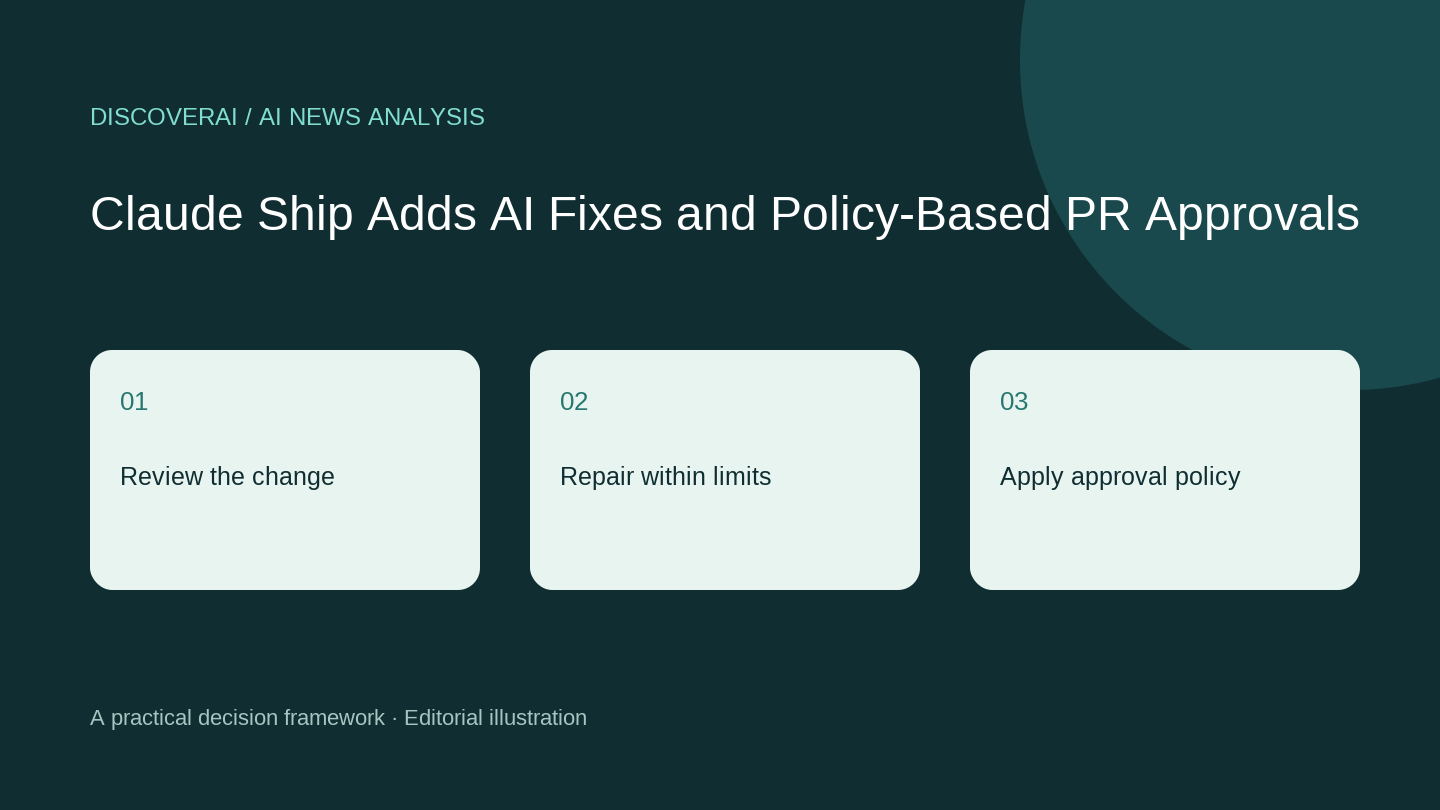
PR Steward addresses failing checks, conflicts and review feedback but is designed not to approve or merge pull requests. Claude Approvals applies a repository policy to approval decisions. Anthropic recommends starting approvals in observe-only mode.
Free AI governance buyer checklist
Know what you’re giving an AI tool access to.
Check data access, security, ownership and how to undo changes. Includes our buyer checklist and the weekly AI briefing.
Availability and cost
The announcement lists Claude Team and Enterprise access for GitHub repositories. Usage is token-billed; organizations can set spend limits. Observe mode can still incur charges for policy classifiers and triggered reviews. Organizations using Zero Data Retention, the HIPAA configuration or customer-managed encryption keys are excluded at launch. Verify current eligibility before planning a pilot.
These distinctions matter more than a broad claim that AI can now ship software. Review, repair, approval and merging involve different permissions, and the component names should not be treated as interchangeable.
Our analysis: approval is an operating decision
For a small software team, the potential benefit is less time coordinating repeated review-and-fix cycles. The unanswered question is whether that translates into dependable changes in its own codebase. A product launch cannot establish that result for an unfamiliar application.
Start by writing down what must always reach a person. Candidate categories include changes to payment calculations, account permissions and destructive data operations. These are suggested policy boundaries, not requirements announced by Anthropic. The owner of the application should decide them based on its actual failure costs.
A documentation correction can be a useful pilot, but even that category needs care. Changing an API example can affect what customers deploy. Categorize changes by consequence as well as by filename, and keep an independent way to spot a policy that approves too broadly.
A practical observation pilot
Choose one repository with maintained automated checks and a clear rollback process. Record the normal time from opening a pull request to a human decision. During a limited observation period, compare the AI recommendation with the responsible reviewer's judgment before granting additional authority.
Track missed issues, unnecessary edits, repeated repair loops, token spending and reviewer intervention. Do not make merge count the only success measure: shipping more changes can increase downstream repair work. Investigate disagreements before deciding which decisions can become automatic.
Use a small set of deliberately chosen example changes to check the boundaries of the proposed policy. Include one routine edit and one change that must require human review. This is an editorial evaluation plan; we have not run it against Claude Ship.
What to do next
If review coordination is a real bottleneck, the announcement merits a scoped evaluation. If the team lacks tests or a clear approver, fix those foundations before adding automatic approval decisions.
The AI tool buyer checklist and trial scorecard can help record eligibility, total cost and acceptance criteria. Treat launch capabilities as a starting point for evaluation, with a human owner accountable for the result.
Transparency
How this guide was checked
About this article
How this article was prepared
- Evaluation type
- Source-based research
- Last reviewed
- Evidence
- 1 listed sources
We label hands-on testing separately. Research-based articles draw on product documentation and other cited sources, rather than direct use of every plan. Read the full methodology.
Editorial basis
Sources and testing
- Editorial basis
- Source-based research
- Primary references
- 1
- Products covered
- 0
- Last checked
- 2026-11-28
Important limits
- • Features, availability and prices can change. Check the provider’s current terms before buying.
Sources and references
References cited by this article. Check the original source for scope, dates and current terms.
Read next