The decision
Should you choose Runloop?
Runloop earns a shortlist for teams productionizing coding agents or custom repository benchmarks. Basic supports a meaningful technical trial. Before Pro, prove network and credential controls with hostile inputs, measure snapshot growth and idle behavior, and reconcile usage telemetry with the invoice.
Best for
Teams building or evaluating coding agents; Persistent and reproducible repository environments.
Choose something else if
Simple stateless code snippets; Teams unable to validate sandbox and egress policy
Evidence
Editorial research pending · 8.2/10
Pricing checked
See current vendor pricing · Sep 12, 2026
Free access is available, with limits.
Yes. Basic has no subscription charge but metered compute and storage still apply after trial credits.
In this guide
Short answer
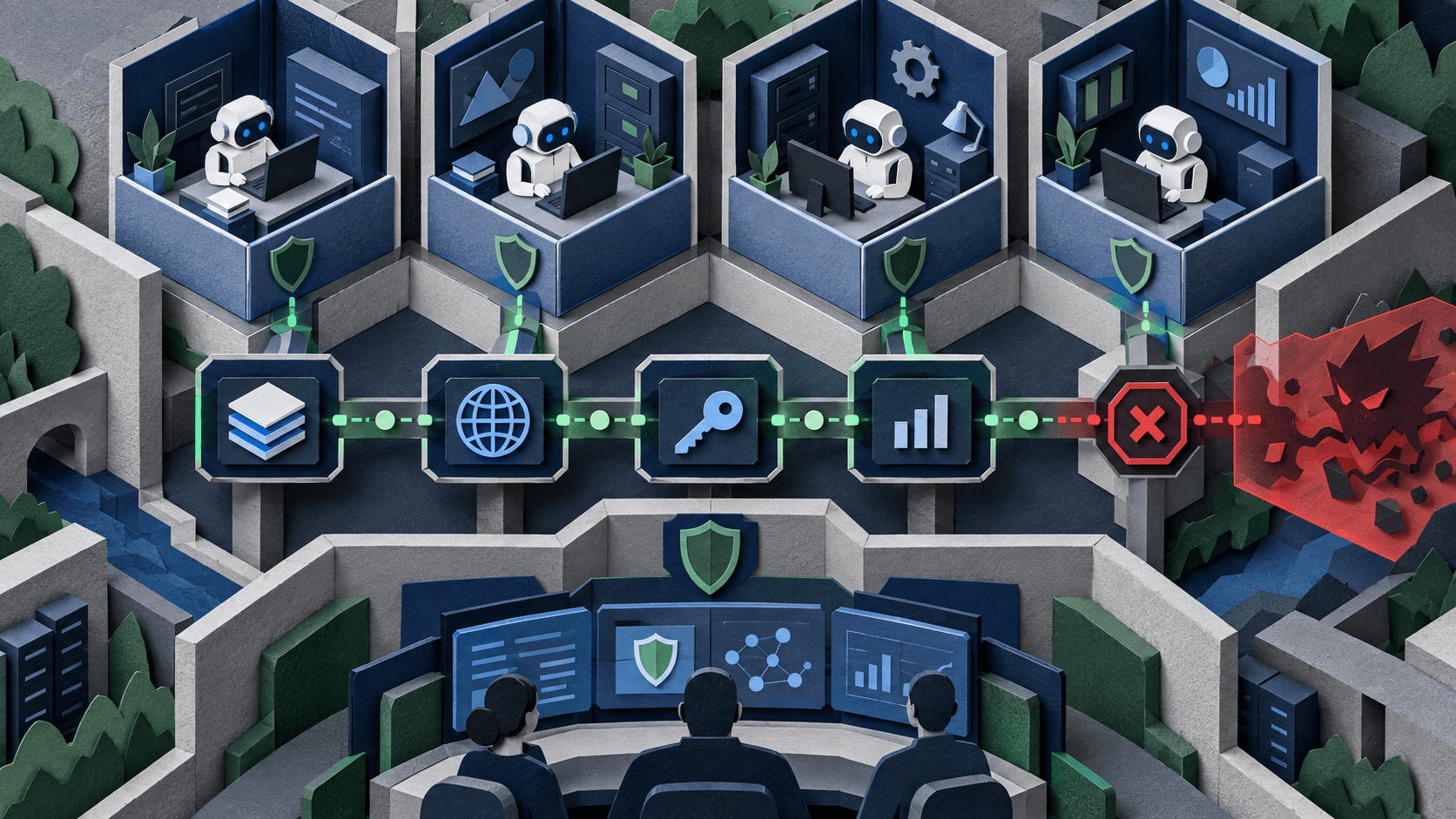
Runloop is worth evaluating when coding agents need persistent filesystems, reproducible snapshots, secure credentials, parallel environments, and repository-specific benchmarks. Its Devboxes are more specialized than a generic function runtime. The value depends on isolation, escape resistance, network control, secret handling, reproducibility, startup time, and accepted-task cost—not on how many agent sessions start successfully.
Free buyer comparison checklist
Compare this tool before committing.
Use the buyer checklist to compare two tools on the same tasks, including quality, review time and total cost. Get the weekly top 5 AI tools, one practical workflow and one way to reduce AI spending.
Best for
- Teams building or evaluating coding agents
- Persistent and reproducible repository environments
- Workloads needing credential and network controls
Look elsewhere if
- Simple stateless code snippets
- Teams unable to validate sandbox and egress policy
- Buyers budgeting only the subscription fee
What Runloop verifiably does
Runloop documents ephemeral or stateful microVM Devboxes, team blueprints, snapshots, suspend and resume, browsers, Python and TypeScript SDKs, CLI access, agent mounts, public and private benchmarks, and Axon coordination. Credential Gateway uses opaque tokens instead of placing upstream secrets in a Devbox; MCP Hub adds tool-level permissions and audit records. Enterprise adds VPC deployment and compliance support.
Important limitations
A sandbox reduces blast radius but does not make malicious code or agent decisions trustworthy. Egress, repository tokens, package installs, mounted files, tool permissions, snapshots, and logs still need controls. The $250 Pro fee excludes compute and storage, while benchmark concurrency can multiply usage quickly. Vendor security claims require buyer validation and contractual review.
Runloop pricing
Runloop lists Basic at $0 plus usage, Pro at $250 monthly plus usage, and Enterprise by quote. Current rates include $0.108 per CPU-hour, $0.0252 per GB-hour, $0.252 per blueprint-build hour, and separate storage or coordination charges. New accounts receive $50 in trial credits; suspended Devboxes stop CPU and memory billing but retain storage costs. Reviewed September 12, 2026.
A fair buyer test
Run 500 repository tasks across clean and deliberately hostile branches. Include dependency attacks, prompt injection in issues, network exfiltration attempts, fork bombs, leaked decoy secrets, retries, suspended sessions, and nondeterministic tests. Measure escape or policy failures, credential exposure, reproducibility, startup and resume latency, accepted patches, cleanup, storage growth, and total cost per merged result.
Final verdict
Runloop earns a shortlist for teams productionizing coding agents or custom repository benchmarks. Basic supports a meaningful technical trial. Before Pro, prove network and credential controls with hostile inputs, measure snapshot growth and idle behavior, and reconcile usage telemetry with the invoice.
This is a research-based product assessment, not a claim of hands-on long-term testing. Product, pricing, privacy, security, and usage claims were checked against the first-party sources below on September 12, 2026. Verify current terms and run the proposed test with approved data before adoption.
Transparency
How this guide was checked
Editorial accountability
Who checked this guide
- Evaluation type
- Hands-on evaluation
- Last materially checked
- Evidence
- 4 listed sources
Hands-on testing is identified explicitly. Research-based coverage uses cited product documentation and other named sources; it does not imply every paid plan was used. Read the full methodology.
Editorial freshness
Pricing and material product claims were checked September 12, 2026.
Review evidence
What this guidance is based on
- Review type
- Research-based product assessment
- Material review date
- September 12, 2026
- Evidence
- Current first-party product, pricing, documentation, privacy, and security material
- Buyer test
- Controlled quality, cost, permissions, privacy, reliability, and failure-path evaluation
Important limits
- • DiscoverAI did not complete the proposed long-term paid deployment for this review.
- • Features, prices, limits, security controls, and provider data paths can change; verify the linked first-party pages before purchase.
Standardized benchmark coverage
How this review maps to the research benchmark
Citation accuracy
Not applicableThe reviewed workflow does not produce source-grounded research answers, so a citation score would be misleading.
Read protocol v2026.10-v1 →Thematic analysis
Not applicableThe reviewed workflow is not qualitative evidence analysis, so a thematic-analysis score would be misleading.
Read protocol v2026.10-v1 →Eligibility is not a product score. DiscoverAI publishes results only after output collection, blinded adjudication, reproducibility checks, and severe-error review.
Open the optional evaluation worksheet
Reusable trial worksheet
Test Runloop before you commit
Turn this review’s buyer test into evidence. Your entries autosave only in this browser and are never added to shared shortlist links.
Confirm the tool meets every must-have workflow and stakeholder requirement.
Review starting point: Teams building or evaluating coding agents; Persistent and reproducible repository environments; Workloads needing credential and network controls
Run the same representative work you would use in production; do not score a polished demo.
Review starting point: Run 500 repository tasks across clean and deliberately hostile branches. Include dependency attacks, prompt injection in issues, network exfiltration attempts, fork bombs, leaked decoy secrets, retries, suspended sessions, and nondeterministic tests. Measure escape or policy failures, credential exposure, reproducibility, startup and resume latency, accepted patches, cleanup, storage growth, and total cost per merged result.
Calculate the effective cost per accepted result, including usage, review, corrections, and required add-ons.
Review starting point: Runloop lists Basic at $0 plus usage, Pro at $250 monthly plus usage, and Enterprise by quote. Current rates include $0.108 per CPU-hour, $0.0252 per GB-hour, $0.252 per blueprint-build hour, and separate storage or coordination charges. New accounts receive $50 in trial credits; suspended Devboxes stop CPU and memory billing but retain storage costs.…
Define an acceptance threshold, test known answers and edge cases, and record every correction.
Review starting point: Editorial quality signals: features 4.3/5; AI quality 4.0/5. Validate these signals in your own work.
Verify what data enters the product, who can access it, how long it is retained, and whether it trains models.
Review starting point: Use approved low-risk data first. Check roles, consent, deletion, subprocessors, model-training settings, and the contract—not only the marketing page.
Test the real handoffs, permissions, failure states, and export path your team depends on.
Review starting point: Claude Code, OpenAI Codex, Gemini CLI, Git, Python, TypeScript
Record training, governance, reliability, accessibility, ownership, and change-management risks before rollout.
Review starting point: Pro excludes metered usage; Sandboxing does not remove application risk; Benchmarks can multiply compute and storage
Loading saved worksheet… · private to this device or your optional account
Community evidence
How verified users put Runloop to work
Structured, editor-moderated experience—not star ratings. This complements our independent review and never changes its score.
No approved community evidence yet. Be the first verified user to contribute.
Community choice
Recommend Runloop
Loading weekly votes…
One vote per verified account per tool, counted for seven days. Return after your vote expires to support again. Community votes influence homepage trends, never editorial ratings. Voting does not subscribe you to emails.
Sources and references
References cited by this article. Check the original source for scope, dates and current terms.
Frequently asked questions
What is Runloop?
Runloop is infrastructure for running and evaluating AI coding agents inside isolated, persistent development environments called Devboxes.
How much does Runloop cost?
Basic is $0 plus usage, Pro is $250 monthly plus usage, and Enterprise is custom; compute, storage, and coordination are metered.
Do suspended Devboxes incur compute charges?
Runloop says CPU and memory billing stops while suspended, although storage charges continue.
Can agents see real API keys in Runloop?
Runloop's Credential Gateway is designed to give a Devbox an opaque scoped token while injecting the upstream credential outside it; buyers should test and audit the configuration.
Recommended tool
Use Runloop if this workflow fits your team
Purpose-built persistent Devboxes
Tools mentioned in this article
Runloop
Run coding agents in isolated, persistent development environments
Runloop provides microVM-isolated Devboxes, blueprints, snapshots, benchmarks, secure credential and MCP gateways, and agent coordination for AI software-engineering workloads.
Daytona
Create isolated programmable computers for coding agents, interpreters, and untrusted workloads
Daytona provides API-controlled container, VM, Windows, and GPU sandboxes with dedicated filesystems, networking, lifecycle controls, snapshots, previews, and protected secrets.
E2B
Ephemeral cloud sandboxes for agents that execute code and use virtual computers
E2B isolates agent-generated code in disposable cloud environments, but network egress, secrets, persistence, images, concurrency, and usage cost still require production controls.
Steel
Run browser agents with managed sessions, proxies, profiles, credentials, replays, and observability
Steel is an open-source browser API and managed cloud runtime for AI agents, offering sessions, browser tools, proxies, CAPTCHA handling, persistent identity, and credential injection.
Read next
Recommended for you

Daytona Review 2026: AI Code Sandboxes, Security, and Pricing
A research-based Daytona review covering features, pricing, privacy, limitations, alternatives, and a practical buyer test.
Daytona provides API-controlled container, VM, Windows, and GPU sandboxes with dedicated filesystems, networking, lifecycle controls, snapshots, previews, and protected secrets.
Read guide
Steel Review 2026: Browser Infrastructure for AI Agents and Pricing
Browserbase Review 2026: Browser Agents, Pricing, and Reliability
Browserbase Review 2026: Cloud Browsers for AI Agents