Microsoft’s New Speech Models Need an Accepted-Audio Test
Lower latency and broader voices matter only when transcripts, pronunciations, disclosures, and corrections survive real conditions.
Bottom line
Microsoft announced new transcription and multilingual voice models. Buyers should measure accepted transcripts and usable audio—not demo speed.
Editorial accountability
Who checked this guide
- Evaluation type
- Research-based verification
- Last materially checked
- Evidence
- 4 listed sources
Hands-on testing is identified explicitly. Research-based coverage uses cited product documentation and other named sources; it does not imply every paid plan was used. Read the full methodology.
Editorial basis
What this guidance is based on
- Editorial basis
- Source-led analysis
- Primary references
- 4
- Products covered
- 0
- Last checked
- 2026-10-04
Important limits
- • DiscoverAI did not run a controlled multilingual speech benchmark.
- • Performance and availability claims are primarily Microsoft-reported.
In this guide
Short answer
Microsoft announced new speech models aimed at faster transcription and more natural multilingual voice generation. The release expands options for meetings, support, localization, accessibility, and voice agents. It does not prove that the models understand your speakers, names, jargon, noise, consent rules, or latency needs.
What changes
A faster recognizer can shorten live captions and agent turns; multilingual generation can reduce repeated production work. Availability, versions, languages, quotas, regions, and product surfaces must be checked separately. A model announcement does not mean every Microsoft tenant receives identical access.
Accuracy is more than word error
Overall error can hide failures in names, medicines, account numbers, negation, amounts, dates, speakers, and code-switching. Generated voice adds pronunciation, pacing, identity rights, disclosure, and comprehension. The useful unit is approved output after review—not audio processed.
A matched production test
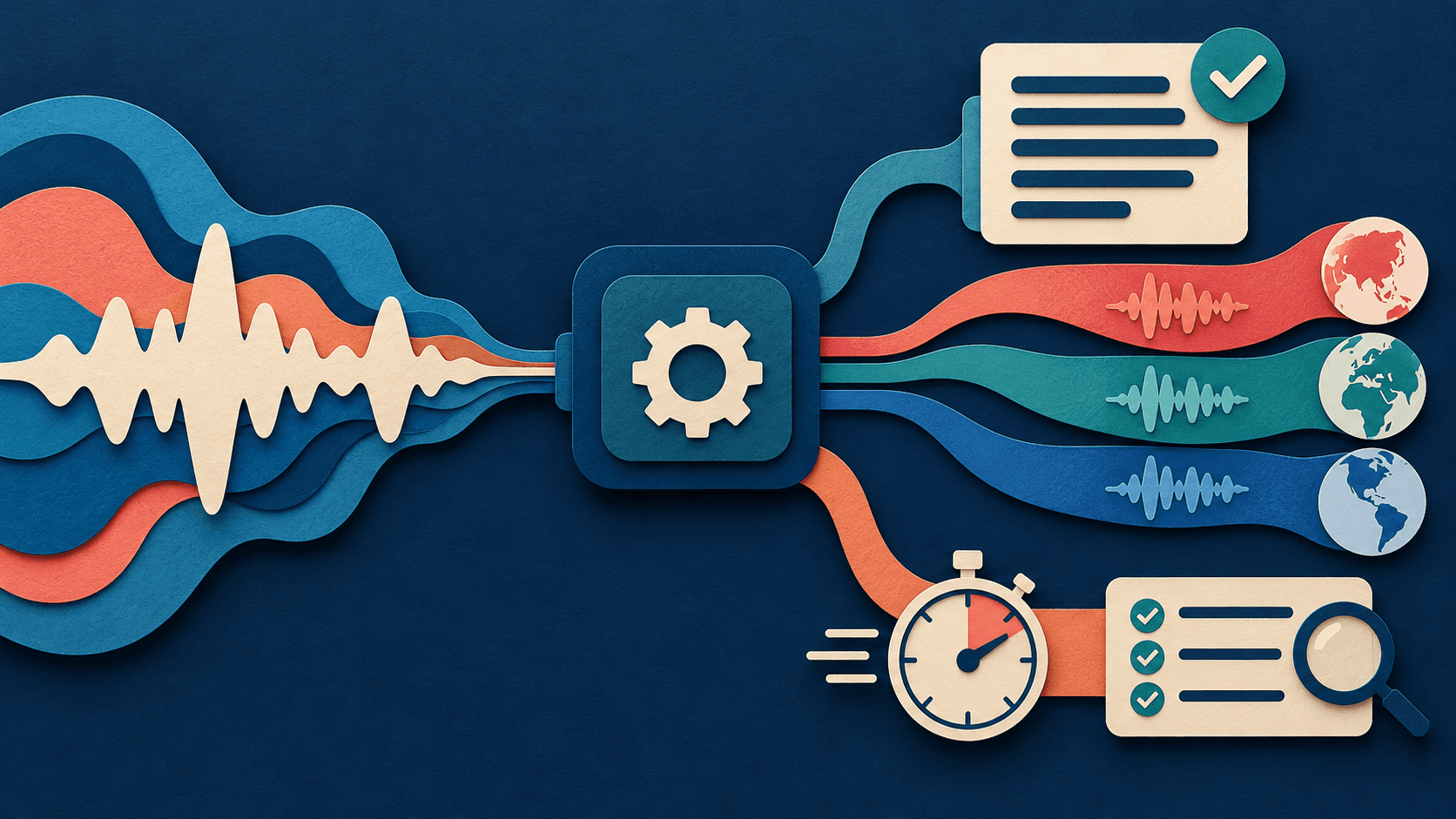
Use consented samples across accents, languages, noise, microphones, overlapping speakers, jargon, and weak connections. Freeze expected transcripts and pronunciation notes. Measure critical-token accuracy, attribution, latency, edits, reviewer time, intelligibility, disclosure, recovery, and full cost per accepted minute. For agents, test interruptions, tool delays, escalation, and confirmation before consequential actions.
Bottom line
Microsoft's release is a reason to test, not your result. The winning model produces the most approved work for your speakers, languages, risks, and budget.
Sources and verification
Product details and claims were checked against the following primary sources.
Frequently asked questions
What did Microsoft announce?
New speech-recognition and multilingual voice-generation models focused on quality, speed, and expressive audio.
Are the models available everywhere?
Do not assume so; check model, region, language, quota, preview, and contract details.
How should teams compare them?
Replay the same consented audio and score critical terms, speakers, latency, corrections, recovery, and cost per accepted minute.
Should synthetic voices be disclosed?
Follow law, platform rules, consent and identity rights, and disclose synthetic speech wherever it could mislead.
Read next