In this guide
The short answer
ElevenLabs is worth considering when you want to offer clear audio versions of high-value written content. The right decision depends on which content benefits from narration and what controls listeners need. It should earn a place in your workflow through a realistic test—not because it appears in every list of AI voice accessibility options.
Free workflow pilot checklist
Test the workflow before you buy the tool.
Get the buyer checklist, including task, owner, approval, fallback, and time-saved fields—plus one useful briefing a week.
Who this guide is for
This guide is designed for publishers, educators, nonprofits, and product teams. It focuses on a concrete job rather than an abstract feature checklist: offer clear audio versions of high-value written content. That distinction matters because two teams can look at the same platform and reach different, equally sensible conclusions.
Where ElevenLabs fits
ElevenLabs should be evaluated as one part of a complete workflow. Start with the work you already do, the bottleneck that consumes time, and the quality bar the finished result must meet. Then compare the platform with 3 relevant alternatives using the same source material and success criteria.
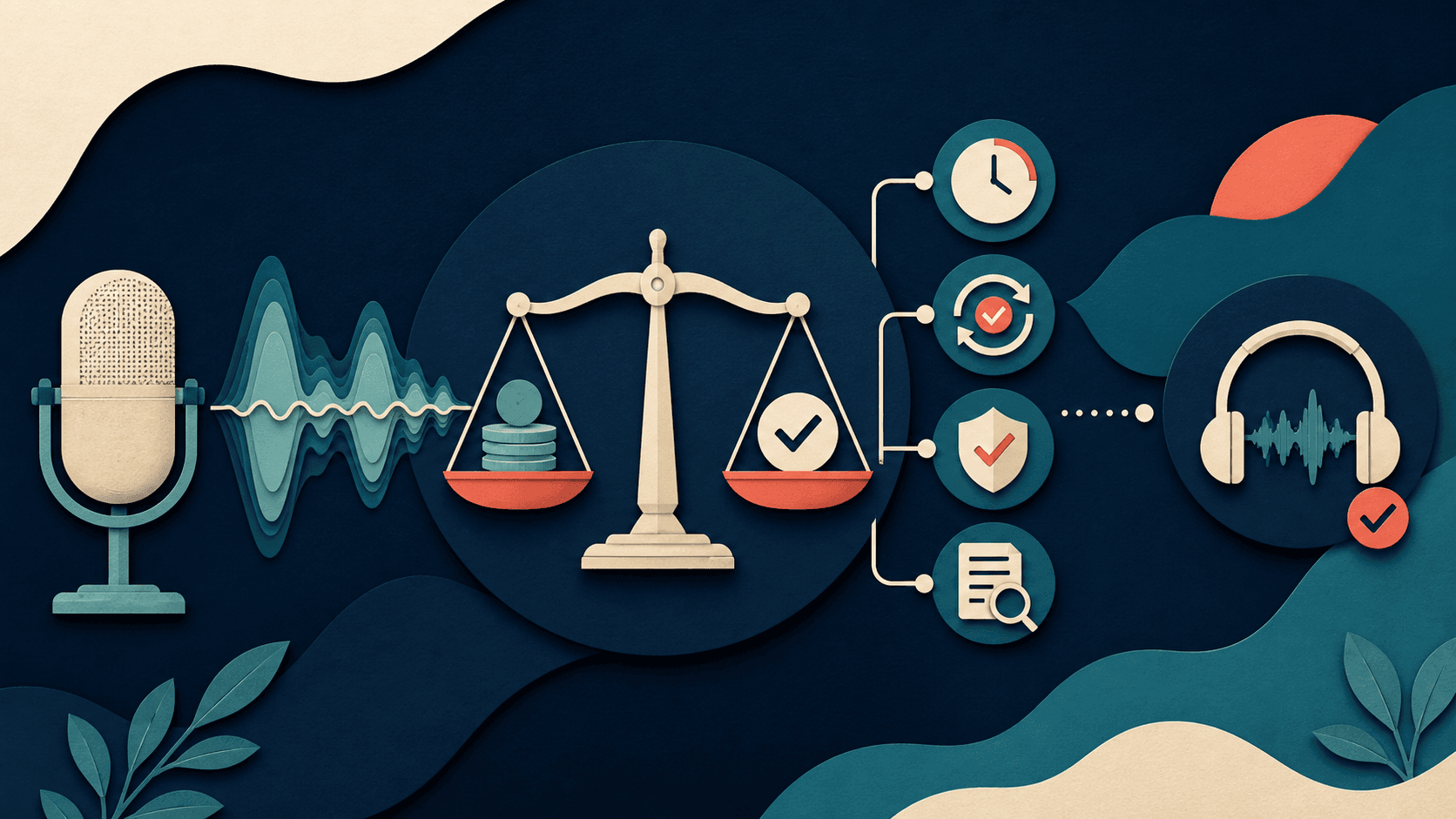
ElevenLabs focuses on synthetic speech, voice design, cloning, dubbing, and developer voice infrastructure. Natural delivery is its central appeal, while consent, rights, pronunciation review, and generation costs remain part of the production decision.
The strongest buying question is not “Which tool has the longest feature list?” It is “Which tool produces an approved result with the least avoidable effort?” Track setup time, correction time, collaboration friction, and the percentage of output you can actually use.
A practical workflow
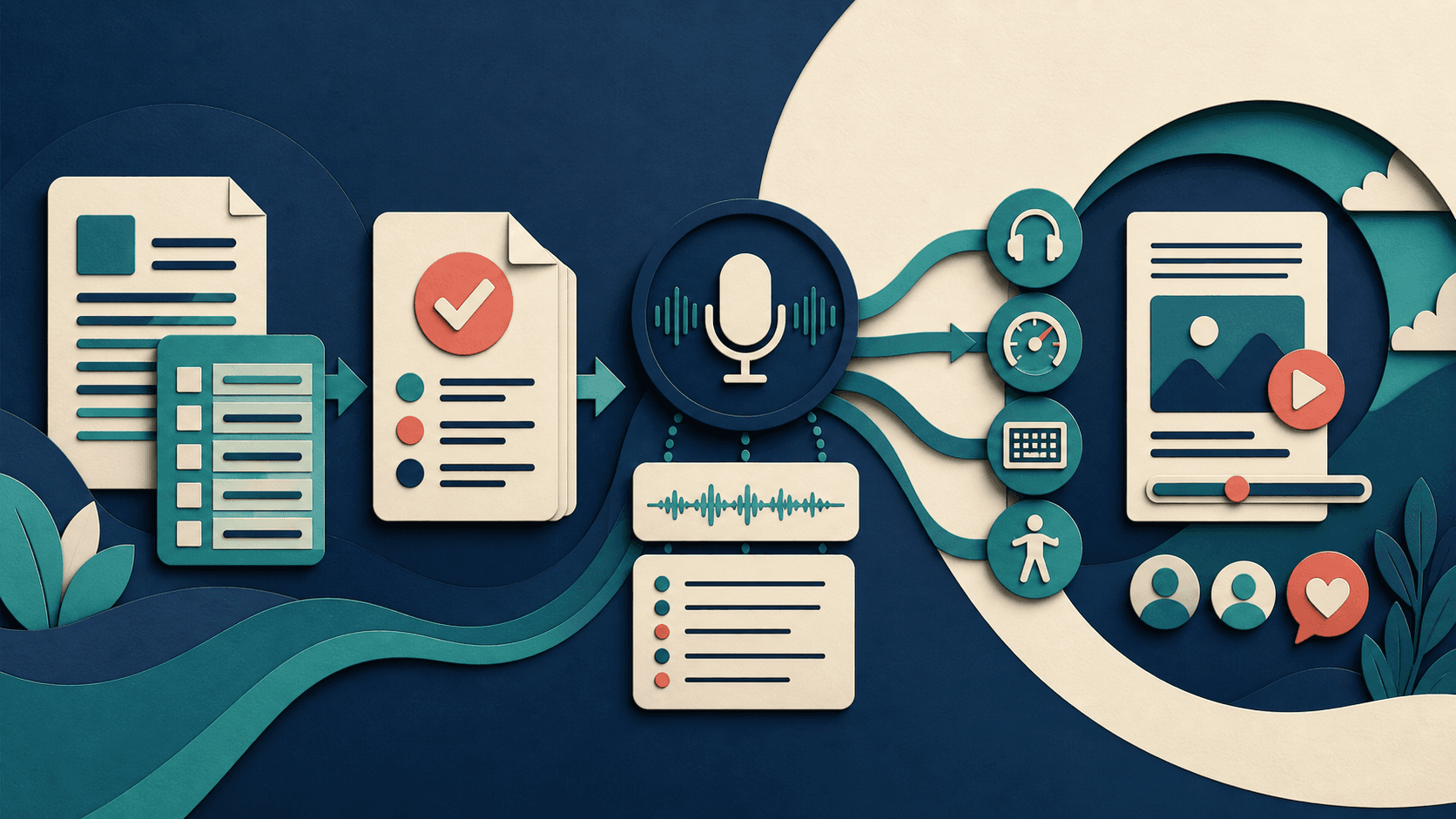
Prioritize core resources, rewrite visual references for audio, generate with appropriate pacing, add a visible player with speed controls and transcript access, and test with real users.
A representative test
Use a script containing names, numbers, emotion, and pauses; score intelligibility and correction time, then verify the current commercial-use and voice-consent terms.
Run the process on representative work rather than a polished sample. Keep the inputs and scoring consistent across tools. A short pilot normally reveals more than hours of browsing marketing pages because it exposes the hidden work: revisions, exports, approvals, fact-checking, and handoffs.
How to judge the result
Use four measures:
- Usable quality: Does the result meet the standard required for publication or delivery?
- Time recovered: Include review and correction time, not only the initial generation step.
- Workflow fit: Can the right people approve, export, and reuse the work without awkward detours?
- Risk and trust: Are claims, permissions, customer data, and disclosures handled responsibly?
Limits and responsible use
Synthetic narration does not replace semantic HTML, captions, transcripts, keyboard access, or accessibility testing.
AI-assisted output always needs an accountable owner. Review factual claims, names, links, permissions, accessibility, and brand fit before anything reaches a customer or public channel. If the workflow handles confidential or regulated information, confirm the vendor's current security and data terms with the responsible person in your organization.
Final recommendation
Shortlist ElevenLabs if your priority is to offer clear audio versions of high-value written content. Compare it with the linked alternatives, run one complete pilot, and calculate value from approved results rather than generated volume. That produces a more durable decision than choosing from screenshots, feature counts, or a temporary promotion.
Transparency
How this guide was checked
Editorial accountability
Who checked this guide
- Evaluation type
- Research-based verification
- Last materially checked
- Evidence
- 2 listed sources
Hands-on testing is identified explicitly. Research-based coverage uses cited product documentation and other named sources; it does not imply every paid plan was used. Read the full methodology.
Editorial basis
What this guidance is based on
- Editorial basis
- Source-led analysis
- Primary references
- 2
- Products covered
- 4
- Last checked
- 2026-07-20
Important limits
- • Features, availability, and pricing can change after publication; confirm consequential details with the provider.
Sources and references
References cited by this article. Check the original source for scope, dates and current terms.
Frequently asked questions
Who is ElevenLabs best for in this workflow?
ElevenLabs is most relevant for publishers, educators, nonprofits, and product teams who want to offer clear audio versions of high-value written content. Teams with occasional needs or a very different quality bar should compare the alternatives before committing.
How should I test ElevenLabs before paying?
Use one representative project from start to finish. Measure setup, generation, correction, approval, and export time, then score the finished result against the same criteria you use for current work.
What alternatives should I compare with ElevenLabs?
The best comparison set for this use case includes the tools linked in this guide. Test the same inputs in each; differences in cleanup effort and workflow fit are usually more revealing than feature lists.
Does DiscoverAI earn a commission from ElevenLabs?
This article may link to ElevenLabs through a tracked affiliate URL, which can earn DiscoverAI a commission at no additional cost to you. Affiliate relationships do not change our ratings, cautions, or recommendation criteria.
Recommended tool
Use ElevenLabs if this workflow fits your team
It stands out when you need the voice layer to feel premium, multilingual, and extensible rather than merely functional.
If you subscribe through this link, we may earn a commission. Recommendations stay editorial and only appear where ElevenLabs is a genuine fit.
Tools mentioned in this article
ElevenLabs
A leading AI voice platform for text to speech, voice cloning, speech to text, dubbing, and conversational agents
ElevenLabs combines premium text to speech, voice cloning, multilingual audio generation, speech to text, developer APIs, and voice agents in one AI audio platform.
Speechify
A practical AI tool for audio workflows
Speechify helps professionals improve audio workflows with AI-assisted drafting, automation, analysis, or production features.
Descript
A text-based audio and video editor with transcription, captions, cleanup, screen recording, and AI voice tools
Descript can accelerate speech-led editing, but transcript accuracy, media allowances, voice consent, output polish, and final review determine whether it replaces part of an editing stack.
Murf
A practical AI tool for audio workflows
Murf helps professionals improve audio workflows with AI-assisted drafting, automation, analysis, or production features.
Read next