In this guide
*This is a research-based analysis of CrowdStrike’s September 1, 2026 announcement. The Cyber Superintelligence Lab is newly announced; DiscoverAI has not evaluated unpublished models, products, or research output. Mission, staffing, and capability descriptions are CrowdStrike’s claims.*
The short answer
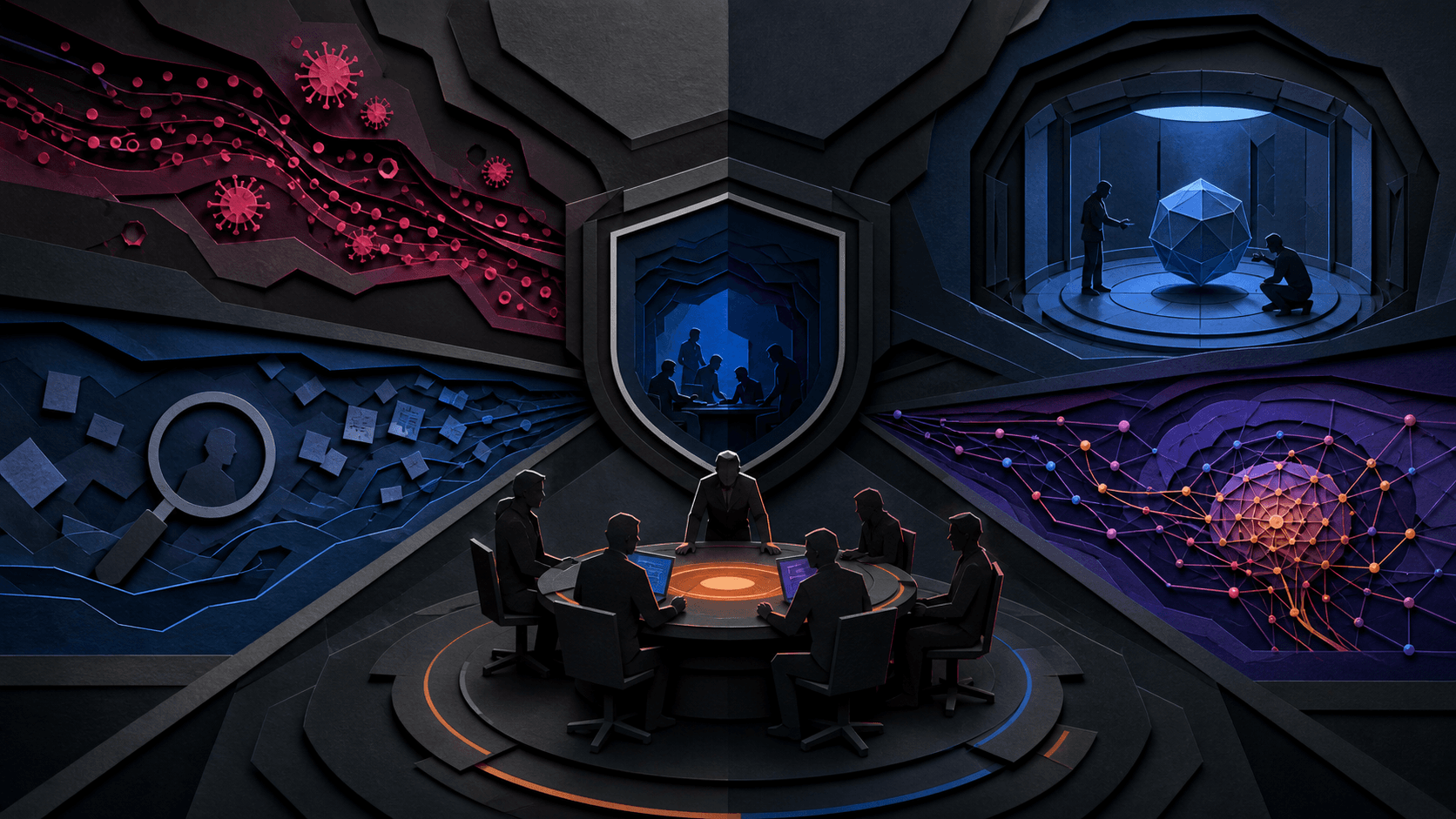
CrowdStrike announced a Cyber Superintelligence Lab intended to combine its AI researchers, offensive operators, incident responders, threat intelligence, and Falcon platform environments around frontier AI for cyberdefense and AI safety. Dr. Bartley Richardson, CrowdStrike’s chief AI and autonomous systems officer, leads the initiative.
The strategic idea is credible: defenders need models trained and evaluated against realistic adversary behavior, high-fidelity environments, and operational response constraints. The announcement does not yet establish model performance, product availability, independent safety evidence, or customer outcomes. A lab is an investment signal; its publications, evaluations, deployments, and incident record will determine whether it becomes a useful source of defensive advantage.
Why a cyber-specific frontier lab matters
General models can summarize alerts and generate scripts, but production cyberdefense depends on identity, endpoint, cloud, network, malware, vulnerability, and threat-actor context. It also demands strict authorization because the same capabilities that find or validate a weakness can enable abuse.
CrowdStrike says its lab can draw on the data, adversary intelligence, and controlled environments behind Falcon. That could support research into autonomous investigation, detection engineering, attack-path analysis, incident containment, model manipulation, and safe defensive agents. Buyers should distinguish research access from customer-data use and ask which datasets enter training, evaluation, retrieval, or telemetry.
What remains unanswered
The launch announcement does not provide a model card, benchmark suite, release timeline, pricing, or detailed governance framework. It also uses ambitious “superintelligence” language before publishing results that outsiders can inspect. That does not invalidate the project, but it raises the evidence bar.
Useful proof would include reproducible defensive evaluations, false-positive and false-negative rates, time-to-containment improvements, analyst intervention rates, permission-violation tests, robustness against prompt injection and poisoned telemetry, and independent review. Research should separate lab demonstrations from deployment behavior and document where human approval remains mandatory.
What security buyers should ask
Ask whether an AI feature recommends, drafts, or executes actions; which identities and scopes it receives; where prompts, telemetry, and outputs are retained; whether customer data trains shared models; and how an organization can inspect, disable, or roll back an autonomous action. Require evidence for tenant isolation, regional processing, audit logs, model updates, incident notification, and third-party testing.
Test the system in a controlled environment with known attacks, noisy benign activity, deceptive artifacts, incomplete telemetry, compromised credentials, and malicious instructions embedded in tickets or logs. Measure containment quality and analyst workload—not only how quickly the model produces a confident narrative.
The practical takeaway
The lab reflects a broader shift from AI as a security copilot toward AI as a participant in investigation and response. That can compress attacker dwell time, but it also makes the model, harness, permissions, and data supply chain part of the attack surface.
CrowdStrike’s operational data and incident-response experience could give the initiative unusually relevant inputs. Buyers should wait for inspectable evidence before translating that potential into trust. The winning defensive AI system will not be the one with the grandest label; it will be the one that proves it can act quickly, stay authorized, explain its evidence, and fail safely under adversarial pressure.
Transparency
How this guide was checked
Editorial accountability
Who checked this guide
- Evaluation type
- Research-based verification
- Last materially checked
- Evidence
- 4 listed sources
Hands-on testing is identified explicitly. Research-based coverage uses cited product documentation and other named sources; it does not imply every paid plan was used. Read the full methodology.
Editorial basis
What this guidance is based on
- Editorial basis
- Source-led analysis
- Primary references
- 4
- Products covered
- 0
- Last checked
- 2026-09-02
Important limits
- • Features, availability, and pricing can change after publication; confirm consequential details with the provider.
Sources and verification
Product details and claims were checked against the following primary sources.
Frequently asked questions
What is CrowdStrike’s Cyber Superintelligence Lab?
It is a newly announced research organization combining CrowdStrike AI researchers, offensive operators, incident responders, threat intelligence, and controlled environments for cyberdefense and AI safety.
Is the lab a new CrowdStrike product?
The announcement describes a research initiative, not a separately priced customer product. Specific outputs, timelines, and packaging were not detailed.
Who leads the Cyber Superintelligence Lab?
CrowdStrike says Dr. Bartley Richardson, its chief AI and autonomous systems officer, leads the lab.
How should buyers evaluate autonomous cyber defense?
Test authorization, containment quality, false positives, analyst workload, auditability, poisoned inputs, rollback, data use, and safe failure in a controlled environment.
Read next