Best AI for Business Writing in 2026: Emails, Proposals, Reports, and Policies
Claude is our first choice for substantial documents, while ChatGPT is the stronger all-purpose assistant and Grammarly is the easiest editing layer.

Bottom line
Choose the best business-writing AI by deliverable, collaboration needs, privacy, and the amount of human editing it actually removes.
Editorial accountability
Who checked this guide
- Evaluation type
- Research-based verification
- Last materially checked
- Evidence
- 4 listed sources
Hands-on testing is identified explicitly. Research-based coverage uses cited product documentation and other named sources; it does not imply every paid plan was used. Read the full methodology.
Editorial basis
What this guidance is based on
- Editorial basis
- Source-led analysis
- Primary references
- 4
- Products covered
- 6
- Last checked
- 2026-09-15
Important limits
- • Features, availability, and pricing can change after publication; confirm consequential details with the provider.
In this guide
*This is a research-based guide, not a claim that every named product was tested in every business environment. Prices, limits, discounts, and features were checked against the linked first-party pages on September 15, 2026 and can change.*
The short answer
Claude is the best starting point for proposals, reports, policies, and other long documents because it handles structure and revision well. ChatGPT is better when writing sits beside research, analysis, images, or broader business tasks. Grammarly is the lowest-friction choice for improving writing inside tools a team already uses; Jasper and Copy.ai make more sense when governed brand voice and repeatable marketing production justify a specialist platform.
| Business writing job | First tool to test | Why | Main check |
|---|---|---|---|
| Proposals and reports | Claude | Long-document structure and revision | Claims and source fidelity |
| Mixed daily writing | ChatGPT | Broad assistant and file workflow | Workspace privacy and consistency |
| Editing existing drafts | Grammarly | In-context revision support | Over-editing and voice drift |
| Campaign production | Jasper or Copy.ai | Brand and workflow controls | Cost versus approved output |
Match the tool to the document
Do not buy a generic ‘writing’ promise. Collect five real deliverables: a customer email, proposal section, internal policy, analytical report, and marketing page. A tool that is excellent at short variations may be poor at preserving definitions across a policy; a fluent long-form draft may still invent evidence. Score completeness, factual changes, tone, revision time, and whether formatting survives export.
What business-grade writing requires
Business writing needs more than smooth prose. Look for workspace administration, retention controls, clear training terms, reusable context, permission-aware connectors, citation or source handling, collaboration, export, and a way to keep approved language separate from unverified drafts. OpenAI says Business workspace data is not used for training by default; each vendor and plan must still be checked against the information your team handles.
A safe writing workflow
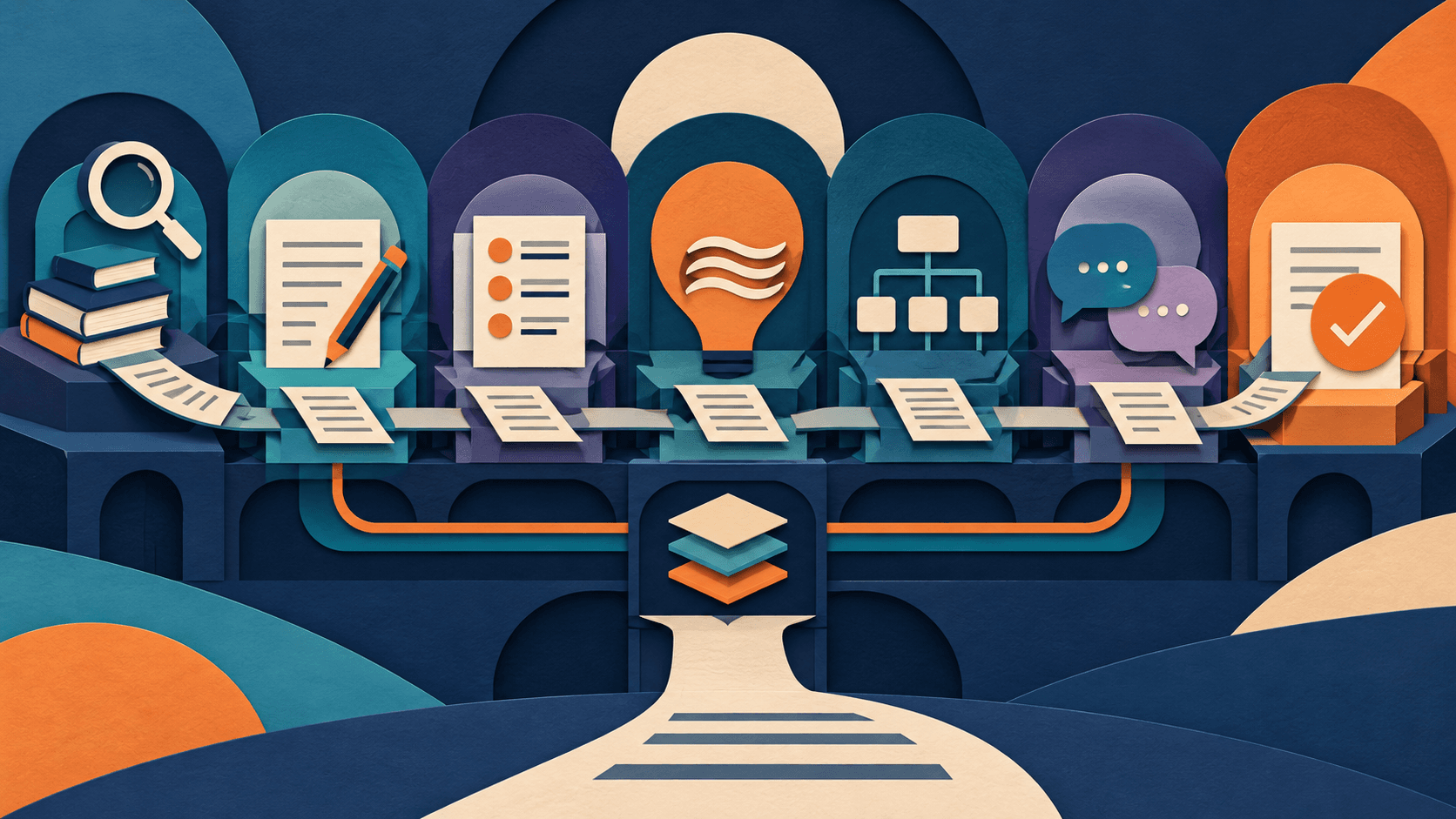
Give the model a brief containing audience, purpose, required facts, prohibited claims, tone examples, and source material. Ask for an outline before prose, draft section by section, then run separate accuracy, omission, tone, and compliance passes. A named person should approve every external document. Preserve the sources and final human changes for consequential proposals, policies, financial communications, or regulated claims.
A practical buyer test
Run the same five documents through two finalists for seven working days. Record minutes from brief to approved output, unsupported claims, missed requirements, edits per 1,000 words, and reviewer confidence. The winner is the tool with the lowest approved-output cost, not the prettiest first paragraph.
Risks and boundaries
Never upload client secrets, employee records, health information, donor data, contracts, or unreleased financials until the selected plan and company policy authorize that use. AI cannot certify legal compliance, originality, accuracy, or brand fit. Treat generated citations and quotations as untrusted until opened and verified.
The verdict
The right AI purchase is the smallest dependable system that improves a measured business outcome. Start with one owner, one workflow, representative inputs, a review gate, and a stop condition. Expand only after the pilot reduces total work—including checking and correction—without creating unacceptable privacy, accuracy, security, or customer-trust risk.
Continue with the [small-business AI readiness guide](/articles/ai-adoption-readiness-small-business-guide-2026), the [30-day implementation workflow](/articles/ai-implementation-small-business-first-workflow-2026), or the [AI tools under $50 budget guide](/articles/best-ai-tools-under-50-month-small-business-2026).
Sources and verification
Product details and claims were checked against the following primary sources.
Frequently asked questions
What is the best AI for business writing?
Claude is our first tool to test for substantial documents; ChatGPT is the best broad assistant; Grammarly is the easiest editing layer. The best choice depends on the deliverable and your privacy requirements.
Can AI write a business proposal?
It can outline, draft, tailor, and edit a proposal, but a person must own requirements, evidence, pricing, legal commitments, and final approval.
Is a specialist AI writing platform worth it?
Usually only when shared brand controls, templates, approvals, or high-volume production save more than the platform costs. A general assistant is the better first pilot for most small teams.
Should confidential business documents go into a free AI tool?
Not by default. Use only an approved plan whose data terms, retention, access controls, and contract fit the document classification.
Found this useful?
Get the next one in your inbox.
One five-minute briefing a week: a meaningful change, a practical workflow, and a clearer tool decision—already filtered for lean teams.
Free · one email a week · unsubscribe any time
Recommended tool
Use Claude if this workflow fits your team
It has one of the clearest workflow fits in its category and is easier to recommend than tools that only look impressive in demos.
Tools mentioned in this article
Claude
Anthropic's thoughtful, safety-focused AI with exceptional long-form reasoning
Claude excels at deep analysis, long-form writing, and nuanced reasoning. Built by Anthropic with a focus on safety and helpfulness.
ChatGPT
The general-purpose AI assistant that started it all
OpenAI's flagship conversational AI model, powering everything from casual chat to complex reasoning, coding, and creative work.
Grammarly
A practical AI tool for writing workflows
Grammarly helps professionals improve writing workflows with AI-assisted drafting, automation, analysis, or production features.
Jasper
Enterprise-grade AI content platform for marketing teams
Jasper is purpose-built for marketing content: blog posts, ad copy, email campaigns, and social media — all on-brand with style guides and company knowledge.
Copy.ai
A practical AI tool for writing workflows
Copy.ai helps professionals improve writing workflows with AI-assisted drafting, automation, analysis, or production features.
Google Gemini
Google's deeply integrated AI assistant with unmatched access to Google's ecosystem
Gemini combines powerful AI with Google's vast data ecosystem — Search, Gmail, Docs, YouTube, and more — for a uniquely integrated experience.
Read next