In this guide
What the research reports
In an October 16 research post, Anthropic describes having Claude assess a conversation after responding. On Fable 5, it reports flagging 78% of conversations identified by a stronger prompted classifier and 94% of its high-priority subset, at a 1% false-positive rate. These are vendor-reported results against a reference classifier, not independently established detection of all real-world harm.
Anthropic describes the system as an offline monitoring layer and estimates less than 2% additional inference compute across its production API traffic distribution. That estimate is not a customer price quote or a benchmark for another model.
The distinction buyers should preserve
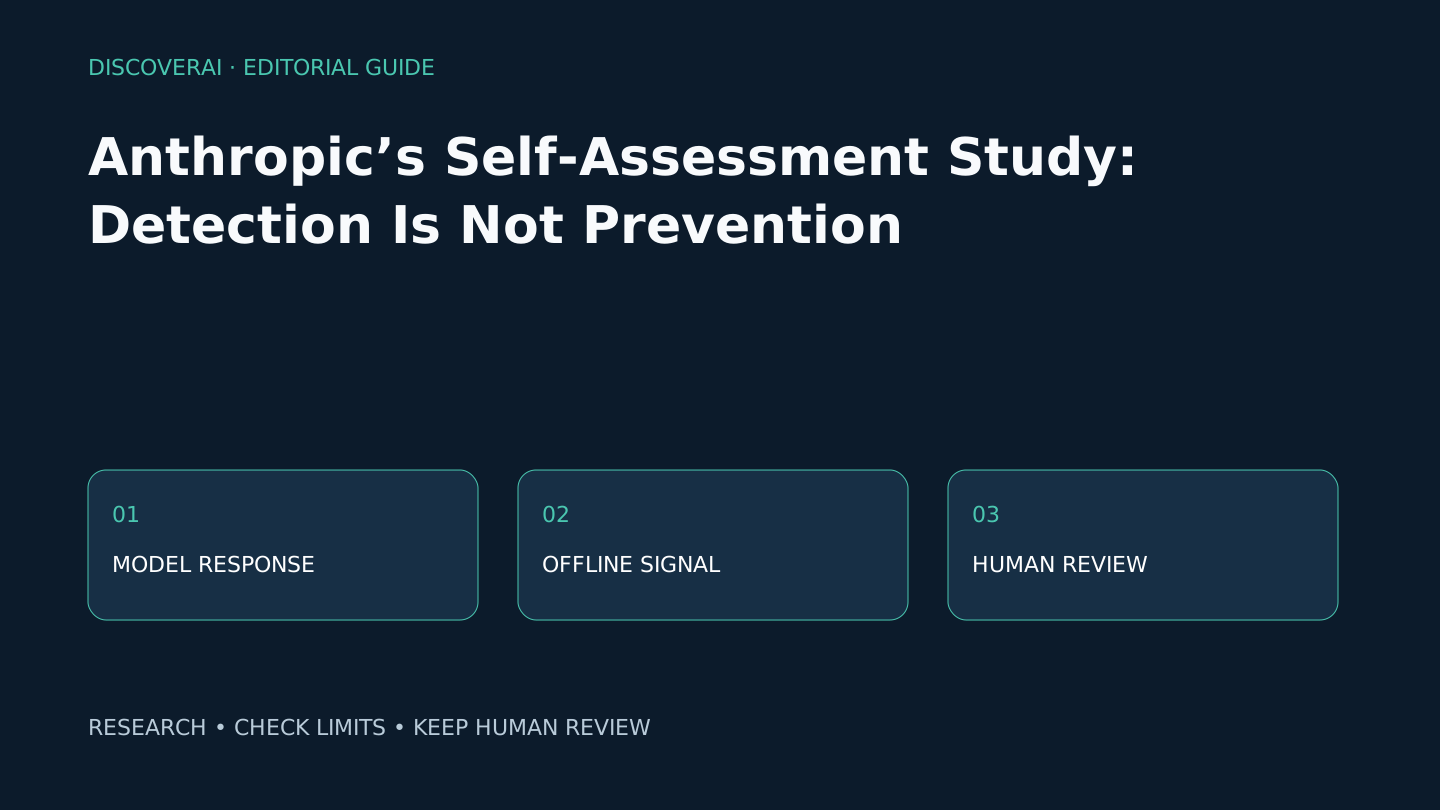
A monitor can help prioritize investigation after an answer exists. That differs from preventing the answer or blocking a tool action before it occurs. Teams choosing safeguards need to ask when a control acts and what authority it has. An alert arriving after an email was sent cannot unsend the email.
Our interpretation is that layered systems should assign different jobs to prevention, detection and response. A pre-action permission check can limit which records an agent may edit. A monitor can find suspicious behavior. A response process can suspend access and investigate. Each requires its own acceptance test.
How to evaluate a similar proposal
Build a labeled evaluation set from permitted, synthetic examples. Include ordinary activity that resembles misuse, genuinely problematic requests and uncertain cases. Have reviewers label examples before looking at the monitor’s answer. Report false alarms alongside missed cases; a single accuracy number can conceal either problem.
Estimate the review queue at your expected volume. As an illustrative calculation, a 1% false-positive rate across 10,000 benign conversations implies about 100 false alarms. This is arithmetic for planning, not a forecast of Anthropic’s production alerts.
Questions that remain
The post does not independently establish performance for your users, languages or tool workflows. Ask how monitoring behaves after model updates, which data is retained and who reviews escalations. Keep high-impact writes behind explicit controls even when a monitor looks promising.
For an operational starting point, use the third-party skill review checklist to separate instructions, executable dependencies and access permissions.
Transparency
How this guide was checked
Editorial accountability
Who checked this guide
- Evaluation type
- Research-based verification
- Last materially checked
- Evidence
- 1 listed sources
Hands-on testing is identified explicitly. Research-based coverage uses cited product documentation and other named sources; it does not imply every paid plan was used. Read the full methodology.
Editorial basis
What this guidance is based on
- Editorial basis
- Source-led analysis
- Primary references
- 1
- Products covered
- 0
- Last checked
- 2026-10-23
Important limits
- • Features, availability, and pricing can change after publication; confirm consequential details with the provider.
Sources and verification
Product details and claims were checked against the following primary sources.
Frequently asked questions
Does 94% mean all harmful conversations were caught?
No. It describes the high-priority subset flagged by a stronger reference classifier in the vendor’s reported evaluation.
Does offline monitoring block an action?
Not by itself. Prevention before an action requires a separate control at the point of execution.