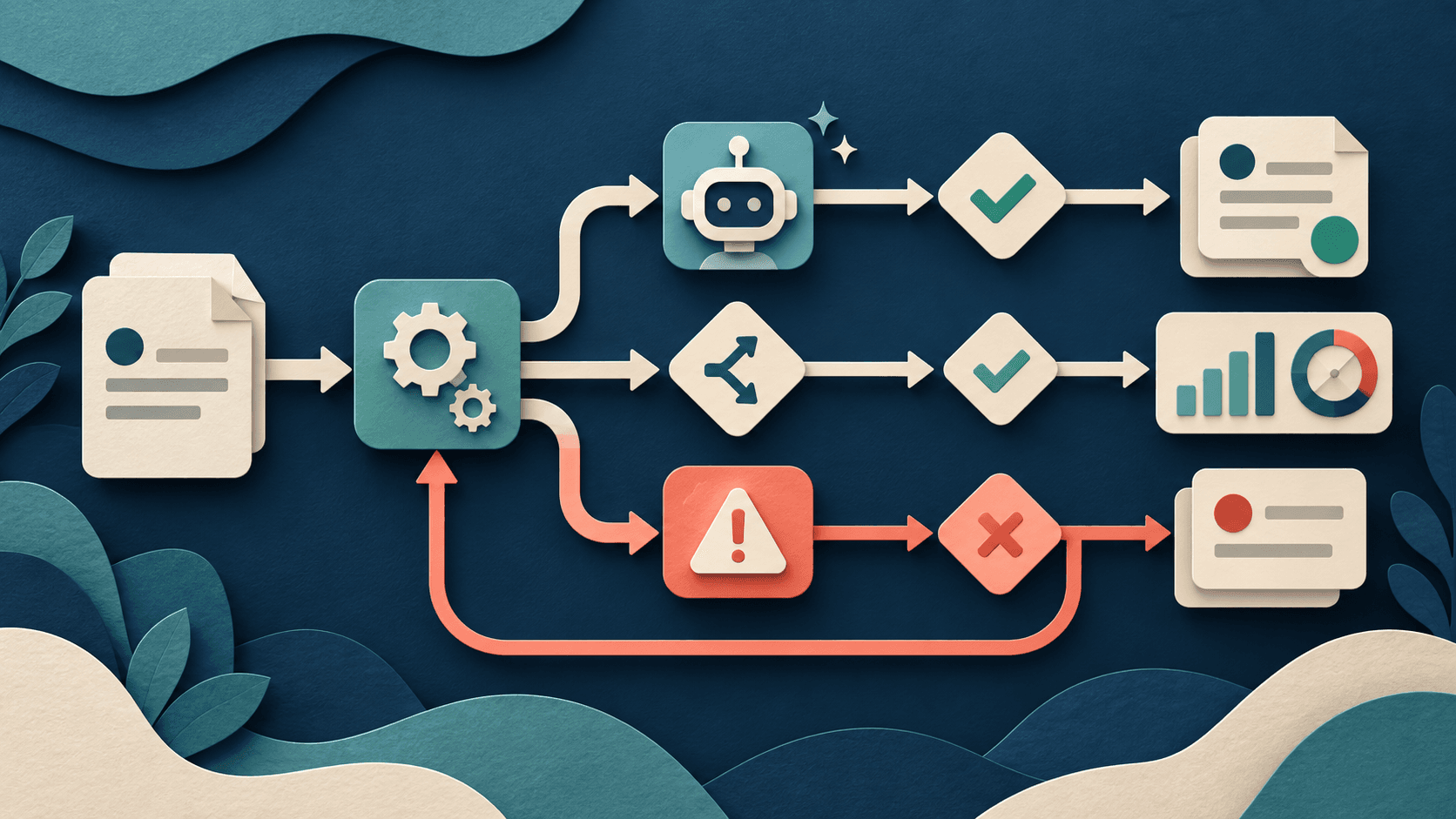
Run an AI Agent Rollback Drill Before the Agent Runs You
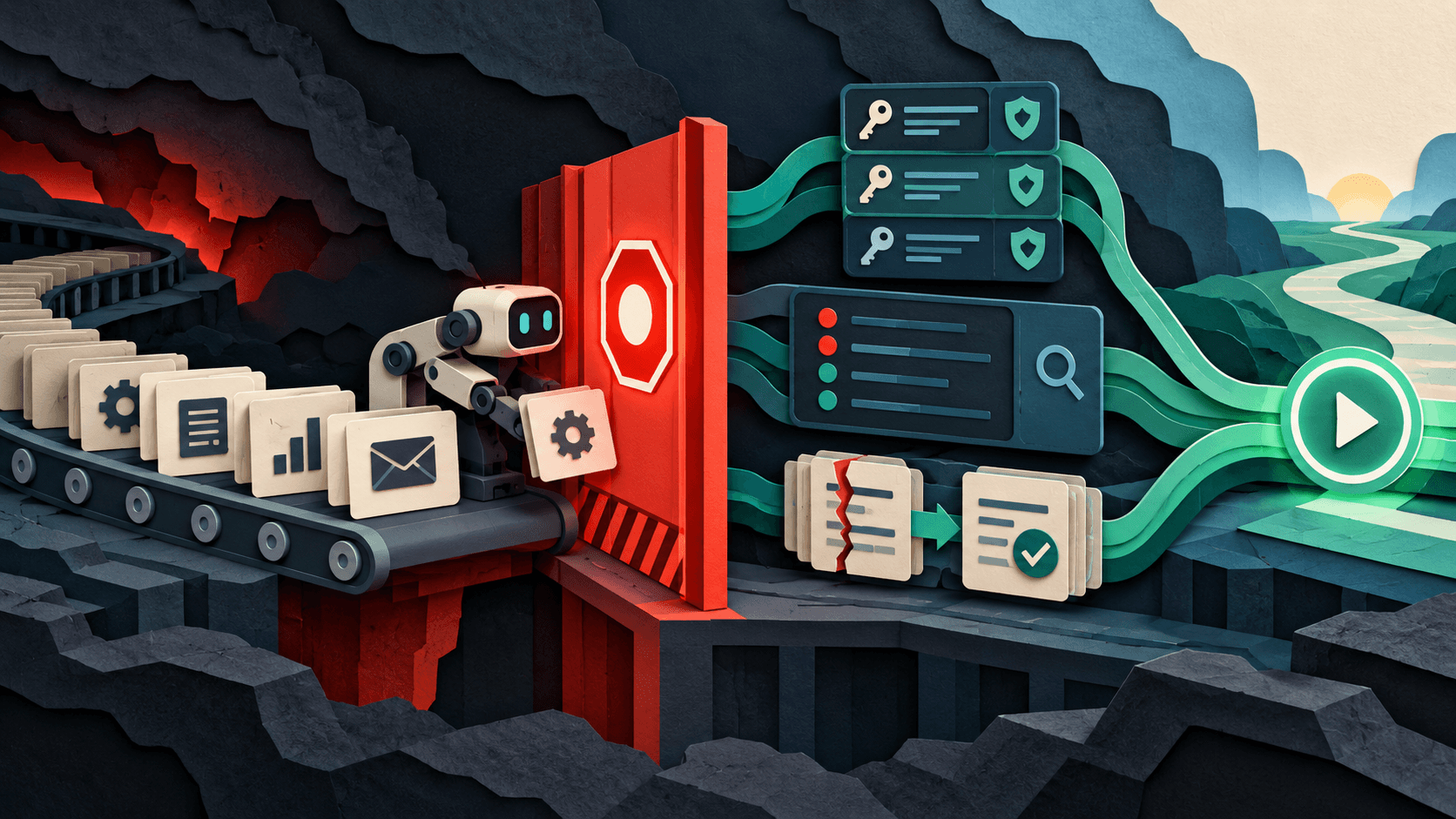
A kill switch is only real when the team can stop new actions, contain queued work, repair side effects, and restore service under pressure.
Bottom line
Practice stopping and recovering an AI agent before production trouble. This drill covers authority, queues, credentials, evidence, repair, and restart gates.
Editorial accountability
Who checked this guide
- Evaluation type
- Research-based verification
- Last materially checked
- Evidence
- 4 listed sources
Hands-on testing is identified explicitly. Research-based coverage uses cited product documentation and other named sources; it does not imply every paid plan was used. Read the full methodology.
Editorial basis
What this guidance is based on
- Editorial basis
- Source-led analysis
- Primary references
- 4
- Products covered
- 3
- Last checked
- 2026-09-30
Important limits
- • Controls must be adapted to each system, contract, jurisdiction, and risk level.
- • A tabletop or staging drill does not prove recovery from every production incident.
In this guide
The goal
An AI agent rollback drill proves that a team can contain an agent, understand what it changed, repair affected systems, and restart safely. Do it before granting write access to customer, financial, publishing, identity, or production systems.
1. Map authority and side effects
List every credential, tool, data source, queue, scheduled task, webhook, model, and downstream system. Mark read, draft, approve, write, send, delete, and purchase permissions. Identify actions that cannot be cleanly reversed.
2. Define the incident
Use a safe staging scenario: the agent receives misleading input and begins creating duplicate records or preparing incorrect outbound messages. Inject one failed tool and one delayed queue so the drill tests partial completion.
3. Stop new work
Trigger the documented kill path. Disable schedules and webhooks, block new runs, pause workers, revoke or rotate scoped credentials, and quarantine pending actions. Do not delete evidence needed to understand the incident.
4. Establish the blast radius
From immutable logs, identify prompts, model and version, retrieved context, tool calls, human approvals, records changed, messages sent, queued jobs, and retries. Reconcile the agent log with each destination system.
5. Repair and communicate
Reverse reversible writes with idempotent scripts or reviewed procedures. Flag uncertain records instead of guessing. Notify system owners and affected people according to the incident plan. Preserve a decision log.
6. Restart behind a smaller boundary
Fix the cause, add a regression case, reduce permissions or scope, and replay in shadow mode. Require explicit approval before restoring write access. Set a monitoring window and named owner.
Pass criteria
The team can stop new actions within its target time, account for every side effect, revoke authority, preserve evidence, repair safely, and restart only after an independent reviewer signs off.
Sources and verification
Product details and claims were checked against the following primary sources.
Frequently asked questions
What is an AI agent rollback drill?
It is a controlled exercise that tests stopping an agent, containing pending work, reconstructing actions, repairing side effects, and restarting safely.
Is revoking the API key enough?
No. Queues, cached credentials, scheduled runs, downstream automations, already-sent messages, and completed writes may remain.
How often should teams run the drill?
Run it before launch and after meaningful changes to models, tools, permissions, orchestration, or critical downstream systems.
What is the most important pass condition?
The team must account for every consequential side effect and prevent new actions before restoring authority.
Tools mentioned in this article
Make
Visual workflow automation with app integrations, data tools, and AI agents
Make gives small teams unusually visible automation logic, but operation counts, error recovery, agent autonomy, and maintenance determine whether a scenario remains economical.
n8n
A flexible workflow-automation platform for AI agents, APIs, data, code, and human approvals
n8n offers unusually deep automation and deployment control, but workflow ownership, execution economics, credentials, failures, and self-hosting operations determine its real value.
Read next