The decision
Should you choose Orq.ai?
Orq.ai earns a shortlist for teams that want a governed EU-oriented gateway spanning both models and MCP tools. Begin with BYOK traffic, disable unnecessary payload retention, test compatibility under failures, and model spans, data, seats, agent runs, and knowledge bases before adopting the broader platform.
Best for
Governed multi-model routing; MCP tool access with shared policies.
Choose something else if
Buyers comparing only token markup; Workloads unable to tolerate a gateway dependency
Evidence
Editorial research pending · 8.0/10
Pricing checked
See current vendor pricing · 2026-09-05
Free access is available, with limits.
Yes. Accounts can start without billing at limited daily traffic and use published monthly allowances after configuring pay-as-you-go; upstream model usage and some platform features still cost separately.
In this guide
Short answer
Orq.ai deserves consideration when a team wants model calls and MCP tool use governed through the same gateway, especially where EU hosting, PII controls, budgets, and auditability matter. Its pricing is more inspectable than many enterprise platforms, but total cost crosses multiple meters and the integrated studio, runtime, memory, and governance surface can increase coupling.
Best for
- Governed multi-model routing
- MCP tool access with shared policies
- EU-hosted AI operations
Look elsewhere if
- Buyers comparing only token markup
- Workloads unable to tolerate a gateway dependency
- Teams retaining full sensitive payloads by default
What Orq.ai verifiably does
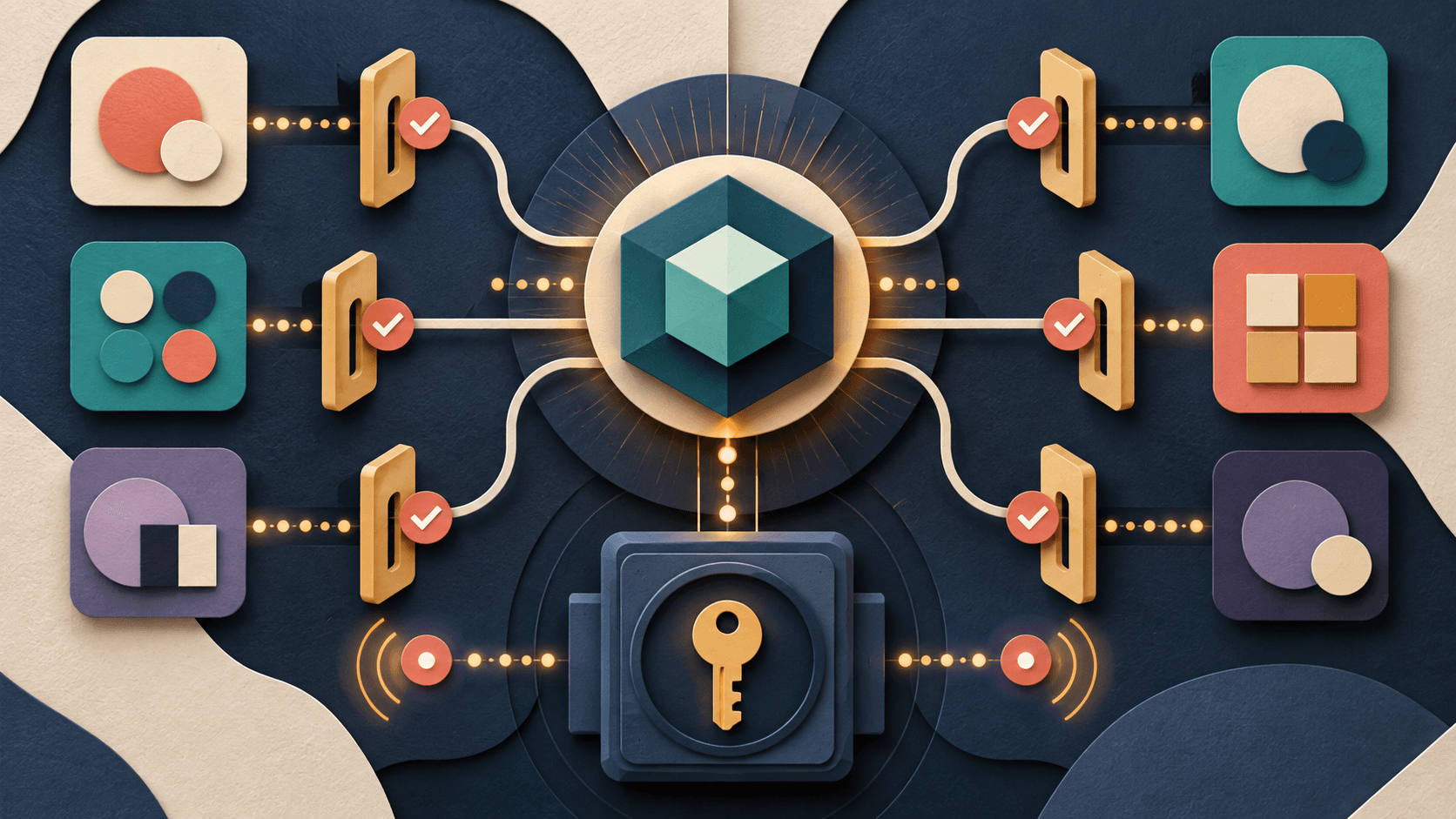
The current platform lists an OpenAI- and Anthropic-compatible gateway across hundreds of models, an MCP gateway, routing, retries, fallbacks, caching, budgets, identity controls, PII redaction, input/output masking, OpenTelemetry traces, evaluations, model governance, audit logs, a visual AI Studio, single- and multi-agent runtime, tools, skills, knowledge bases, memory, Responses API and A2A exposure, EU data residency, and enterprise VPC or on-premise deployment.
Important limitations
The free headline does not include upstream model cost. Requests, provider credits, spans, processed data, studio seats, agent runs, document ingestion, memory, and retention can all contribute to the bill. Gateway adoption places a critical dependency on routing compatibility and availability. Storing payloads for observability conflicts with minimization unless masking and retention are deliberately configured.
Orq.ai pricing
Pay-as-you-go currently includes 1 million monthly BYOK requests, 100,000 spans, 1 GB processed data, 30-day retention, unlimited gateway seats, and 500 agent runs. Above those allowances, the page lists 4% on BYOK requests, 4.5% on Orq-managed model credits, €7 per additional 100,000 spans, €3 per GB, €35 per AI Studio seat monthly, and €0.01 per extra agent run. Knowledge bases and memory list a €500 monthly charge plus document processing. Enterprise is custom. Reviewed September 5, 2026.
A fair buyer test
Replay 10,000 representative calls and 500 tool-heavy agent runs through direct providers and Orq.ai. Compare output fidelity, streaming, structured output, tool calling, p50 and p95 latency, failover correctness, cache safety, redaction recall, trace completeness, spend-limit enforcement, regional routing, and an invoice projection across every meter—not only model tokens.
Final verdict
Orq.ai earns a shortlist for teams that want a governed EU-oriented gateway spanning both models and MCP tools. Begin with BYOK traffic, disable unnecessary payload retention, test compatibility under failures, and model spans, data, seats, agent runs, and knowledge bases before adopting the broader platform.
This is a research-based product assessment, not a claim of hands-on long-term testing. Features, pricing, privacy, security, platform, and usage claims were checked against the first-party sources below on September 5, 2026. Verify current terms and run the proposed test with approved data before adoption.
Transparency
How this guide was checked
Editorial accountability
Who checked this guide
- Evaluation type
- Hands-on evaluation
- Last materially checked
- Evidence
- 4 listed sources
Hands-on testing is identified explicitly. Research-based coverage uses cited product documentation and other named sources; it does not imply every paid plan was used. Read the full methodology.
Editorial freshness
Pricing and material product claims were checked September 5, 2026.
Review evidence
What this guidance is based on
- Editorial basis
- Current first-party product, pricing, documentation, privacy, and security material
- Review type
- Research-based product assessment
- Material review date
- September 5, 2026
- Buyer test
- Controlled workflow test covering quality, cost, privacy, permissions, reliability, and adoption risk
Important limits
- • DiscoverAI did not complete the proposed long-term paid deployment for this research-based review.
- • Features, prices, limits, security controls, privacy terms, and provider data paths can change; verify the linked first-party pages before purchase.
Standardized benchmark coverage
How this review maps to the research benchmark
Citation accuracy
Not applicableThe reviewed workflow does not produce source-grounded research answers, so a citation score would be misleading.
Read protocol v2026.10-v1 →Thematic analysis
Not applicableThe reviewed workflow is not qualitative evidence analysis, so a thematic-analysis score would be misleading.
Read protocol v2026.10-v1 →Eligibility is not a product score. DiscoverAI publishes results only after output collection, blinded adjudication, reproducibility checks, and severe-error review.
Open the optional evaluation worksheet
Reusable trial worksheet
Test Orq.ai before you commit
Turn this review’s buyer test into evidence. Your entries autosave only in this browser and are never added to shared shortlist links.
Confirm the tool meets every must-have workflow and stakeholder requirement.
Review starting point: Governed multi-model routing; MCP tool access with shared policies; EU-hosted AI operations
Run the same representative work you would use in production; do not score a polished demo.
Review starting point: Replay 10,000 representative calls and 500 tool-heavy agent runs through direct providers and Orq.ai. Compare output fidelity, streaming, structured output, tool calling, p50 and p95 latency, failover correctness, cache safety, redaction recall, trace completeness, spend-limit enforcement, regional routing, and an invoice projection across every meter—not only model tokens.
Calculate the effective cost per accepted result, including usage, review, corrections, and required add-ons.
Review starting point: Pay-as-you-go currently includes 1 million monthly BYOK requests, 100,000 spans, 1 GB processed data, 30-day retention, unlimited gateway seats, and 500 agent runs. Above those allowances, the page lists 4% on BYOK requests, 4.5% on Orq-managed model credits, €7 per additional 100,000 spans, €3 per GB, €35 per AI Studio seat monthly, and €0.01 per extra…
Define an acceptance threshold, test known answers and edge cases, and record every correction.
Review starting point: Editorial quality signals: features 4.2/5; AI quality 4.0/5. Validate these signals in your own work.
Verify what data enters the product, who can access it, how long it is retained, and whether it trains models.
Review starting point: Use approved low-risk data first. Check roles, consent, deletion, subprocessors, model-training settings, and the contract—not only the marketing page.
Test the real handoffs, permissions, failure states, and export path your team depends on.
Review starting point: OpenAI API, Anthropic API, MCP, OpenTelemetry, Python, Node.js
Record training, governance, reliability, accessibility, ownership, and change-management risks before rollout.
Review starting point: Several usage meters complicate forecasting; Knowledge-base pricing can dominate small workloads; Broad integrated stack increases platform coupling
Loading saved worksheet… · private to this device or your optional account
Community evidence
How verified users put Orq.ai to work
Structured, editor-moderated experience—not star ratings. This complements our independent review and never changes its score.
No approved community evidence yet. Be the first verified user to contribute.
Community choice
Recommend Orq.ai
Loading weekly votes…
One vote per verified account per tool, counted for seven days. Return after your vote expires to support again. Community votes influence homepage trends, never editorial ratings. Voting does not subscribe you to emails.
Sources and verification
Product details and claims were checked against the following primary sources.
Frequently asked questions
Does Orq.ai have a free tier?
Yes. The pay-as-you-go page lists included requests, spans, processed data, and agent runs, though model-provider usage and overages are separate.
How does Orq.ai charge for BYOK traffic?
The current page lists 1 million BYOK requests monthly free, then a 4% fee, alongside separate observability and data meters.
Does Orq.ai support MCP?
Yes. Its MCP Gateway routes remote tool servers through policies and observability alongside model traffic.
Can Orq.ai run in a VPC or on premises?
The Enterprise tier lists AWS or Azure VPC and on-premise deployment, including an air-gapped option, under custom terms.
Recommended tool
Use Orq.ai if this workflow fits your team
Explicit multi-meter pricing
Tools mentioned in this article
Orq.ai
Route models and MCP tools through one observable, policy-controlled gateway
Orq.ai combines model and MCP routing, observability, budgets, redaction, governance, and managed agents, with unusually explicit usage pricing but several independent meters to model.
Helicone
An open-source AI gateway with request monitoring, cost tracking, caching, fallbacks, prompts, and evaluations
Helicone combines multi-provider routing and observability behind a familiar API, but proxy trust, logged payloads, retention, usage-based costs, and gateway dependency need careful architecture review.
Composio
Connect agents to authenticated tools and triggers
Composio provides agent-ready toolkits, OAuth and credential management, triggers, sessions, custom tools, MCP access, and managed execution.
Read next