In this guide
The short answer
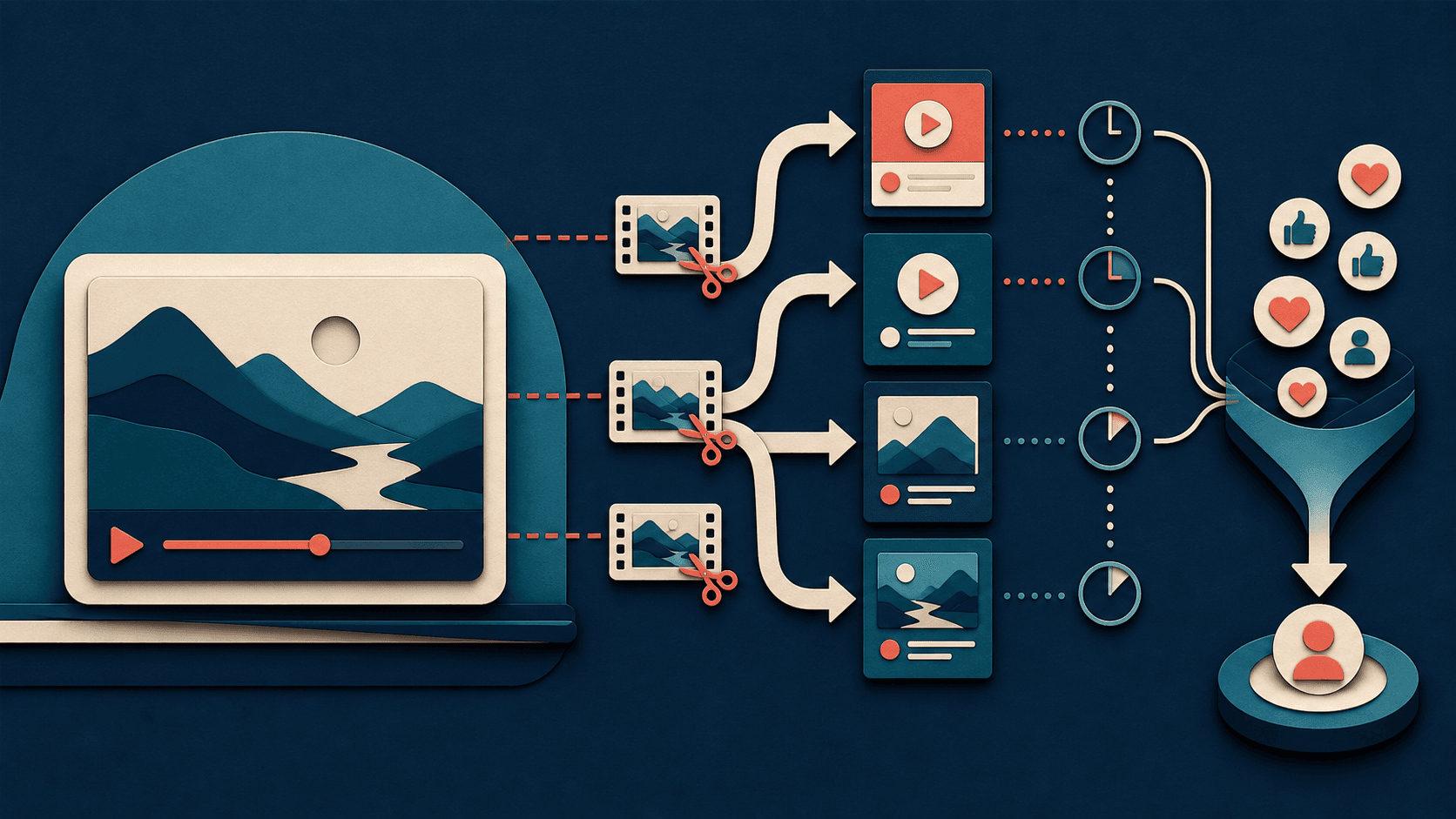
Start with an original long-form asset, identify self-contained audience problems, and build each clip around one complete idea. A good clip makes sense without the original and earns attention without distorting it.
Free content AI buyer checklist
Choose tools that improve accepted work—not output volume.
Get a checklist for accuracy, edit time, sourcing, brand fit, and cost per accepted asset—plus one briefing a week.
What this guide helps you decide
This guide is for podcasters, educators, and B2B creators who need to turn one substantial asset into useful short content. The key is to start with the decision and evidence—not a product feature list. Search and AI assistants can surface options, but the accountable person still needs a representative test and a clear standard for success.
The decision framework
Repurpose insight, not footage: every derivative needs its own hook, context, payoff, caption, and channel fit.
Write the baseline before changing the workflow. Capture the current time, cost, quality, risk, and owner. Then use the same inputs and acceptance criteria during the pilot. This makes the conclusion explainable to a colleague and reduces the chance that a polished demonstration is mistaken for durable value.
Step-by-step workflow
- Mark audience questions in the source. Complete this stage before moving on, and preserve the evidence needed to review the decision later.
- Select moments with a complete payoff. Complete this stage before moving on, and preserve the evidence needed to review the decision later.
- Rewrite the opening for context. Complete this stage before moving on, and preserve the evidence needed to review the decision later.
- Edit captions and visual framing. Complete this stage before moving on, and preserve the evidence needed to review the decision later.
- Publish, measure, and feed learning back. Complete this stage before moving on, and preserve the evidence needed to review the decision later.
What to measure
- usable clip yield: define the calculation, source, owner, and review cadence before the pilot begins.
- average watch time: define the calculation, source, owner, and review cadence before the pilot begins.
- qualified comments: define the calculation, source, owner, and review cadence before the pilot begins.
- clicks to the source: define the calculation, source, owner, and review cadence before the pilot begins.
Use a fixed review window and record exceptions. Averages can hide the exact failures that matter most, so pair the scorecard with examples of rejected output, extra corrections, delays, and edge cases.
Tool selection
The tools linked on this page are a starting shortlist, not an automatic ranking for every reader. Use the same representative input in each viable option. Compare the complete path from setup to approved result, including review, export, collaboration, and the effort required when something goes wrong.
Risks and limitations
Removing context can turn a correct statement into a misleading one; review every cut against the full conversation.
Review current vendor pricing, terms, data handling, and feature availability directly before purchase or deployment. High-consequence medical, legal, employment, safety, and financial uses require appropriately qualified human oversight.
Bottom line
The best approach to long form to short form content is the one that produces repeatable evidence for the real decision. Begin narrowly, document the baseline, test complete work, and expand only after the result meets quality, cost, and risk requirements.
Transparency
How this guide was checked
Editorial accountability
Who checked this guide
- Evaluation type
- Research-based verification
- Last materially checked
- Evidence
- 2 listed sources
Hands-on testing is identified explicitly. Research-based coverage uses cited product documentation and other named sources; it does not imply every paid plan was used. Read the full methodology.
Editorial basis
What this guidance is based on
- Editorial basis
- Source-led analysis
- Primary references
- 2
- Products covered
- 2
- Last checked
- 2026-07-21
Important limits
- • Features, availability, and pricing can change after publication; confirm consequential details with the provider.
Sources and references
References cited by this article. Check the original source for scope, dates and current terms.
Frequently asked questions
What is the fastest way to approach long form to short form content?
Start with one representative task and a written baseline. Use the workflow and metrics in this guide, then compare complete approved results rather than feature lists or isolated generated output.
Which metrics matter most for long form to short form content?
The core measures are usable clip yield, average watch time, qualified comments, clicks to the source. Define each measure and its data source before the test so the result cannot be reinterpreted after the fact.
How long should an AI tool pilot run?
For recurring work, 30 days is usually enough to expose setup, correction, collaboration, and utilization patterns. High-risk or infrequent workflows need a longer test and more edge cases.
What should I verify before relying on an AI recommendation?
Verify the underlying primary sources, current vendor terms, important claims, and the result against your own acceptance criteria. Removing context can turn a correct statement into a misleading one; review every cut against the full conversation.
Recommended tool
Use Minvo if this workflow fits your team
It gives creators and marketing teams a focused repurposing layer instead of asking a general editor to do a job it was not built around.
If you subscribe through this link, we may earn a commission. Recommendations stay editorial and only appear where Minvo is a genuine fit.
Tools mentioned in this article
Minvo
Turn podcasts, webinars, sermons, and long videos into short-form social clips faster
Minvo is an AI video repurposing platform for creators, podcasters, coaches, churches, entrepreneurs, and marketing teams that want to turn long-form video into short-form clips for TikTok, Instagram Reels, YouTube Shorts, LinkedIn, and X.
Vadoo AI
Create, edit, caption, resize, and repurpose videos for YouTube, Shorts, Reels, LinkedIn, Facebook, and X from one AI workflow
Vadoo AI is an all-in-one AI video creation and editing platform for creators, marketers, businesses, agencies, educators, coaches, and podcasters that want to turn ideas and long-form content into engaging social-ready videos faster.
Read next