In this guide
Short answer
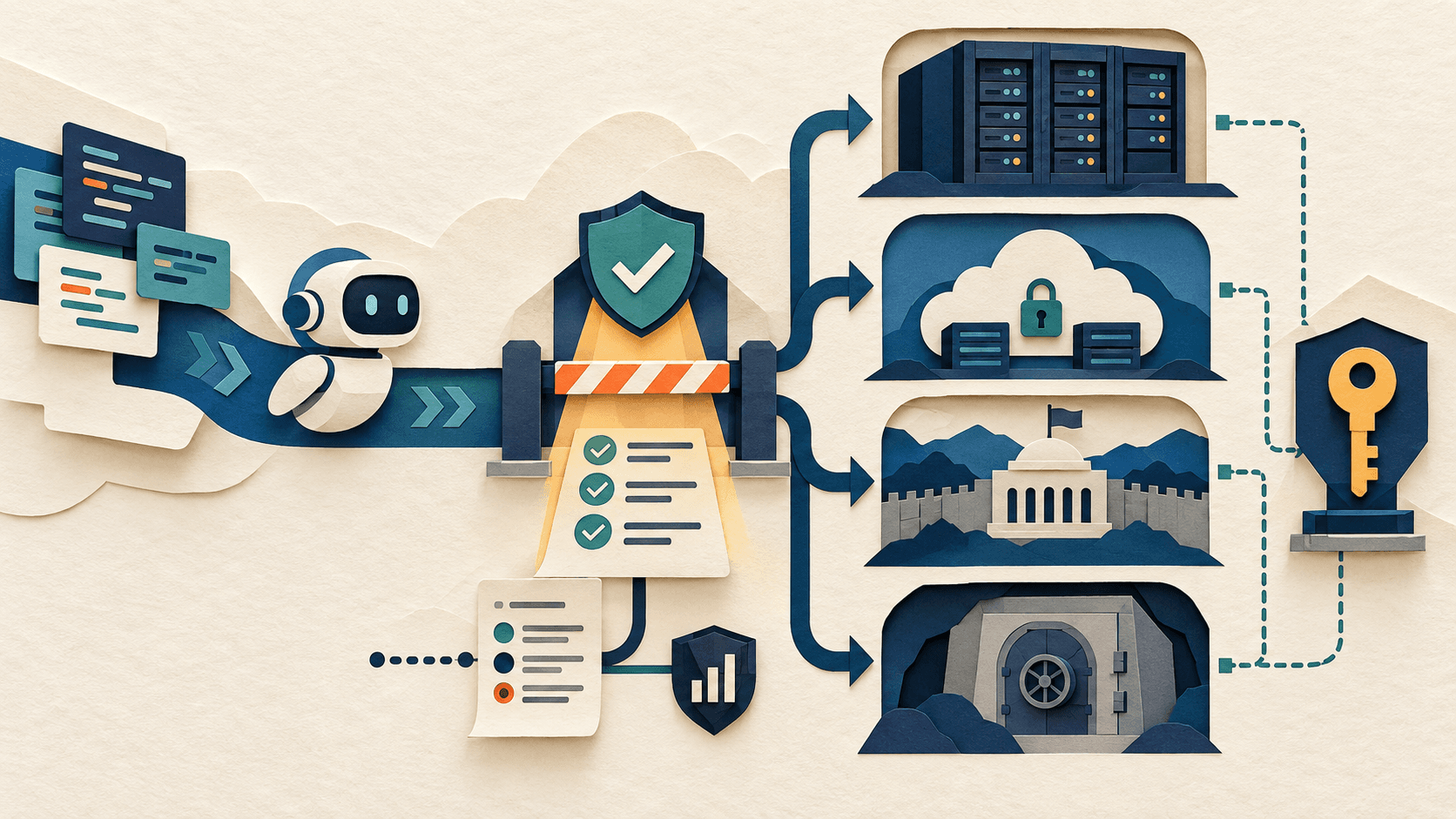
IBM announced self-hosted deployment for IBM Bob on October 1, 2026. The company says enterprises can run its agentic software-development platform in on-premises, private-cloud, sovereign-cloud, and air-gapped environments. That expands the procurement conversation for regulated and mission-critical codebases. It does not, by itself, prove that every model call, update, log, support path, or dependency remains inside the stated boundary.
Free AI tool buyer checklist
Check before you buy your next AI tool.
Get the weekly top 5 AI tools, one practical workflow and one way to reduce AI spending. Includes a free buyer checklist.
What self-hosting changes
Source code, repository context, build artifacts, credentials, and modernization knowledge can be highly sensitive. A customer-controlled deployment can reduce exposure to a public SaaS path and support regional, contractual, or disconnected-environment requirements. IBM positions Bob beyond code completion, with agentic modes, shell and file operations, code review, MCP, and specialized modernization workflows.
Self-hosted is an architecture, not a checkbox
Buyers need a complete data-flow diagram. Ask which inference models run locally, which can call external services, how updates and licenses are delivered, whether telemetry leaves the environment, where prompts and logs persist, how keys are managed, and what support personnel can access. An air-gapped label is credible only if the install, activation, update, monitoring, and troubleshooting paths work without hidden egress.
Agent authority remains the larger risk
Local deployment does not make generated code correct or agent actions safe. Bob can read and change files, run commands, and participate in modernization. Teams still need least privilege, protected branches, isolated execution, dependency controls, secret scanning, test gates, human approval, immutable logs, rollback, and reconciliation with the actual repository and build systems.
Cost and availability boundaries
IBM's public individual plans currently begin at $20 per month and use Bobcoins; self-hosted Enterprise terms are sales-led. Hardware, inference capacity, high availability, operations, support, upgrades, security review, and specialized modernization packages can outweigh the visible seat price. Request a workload-shaped total-cost model.
Bottom line
Self-hosting makes IBM Bob more relevant to organizations that could not place code in a public AI service. Treat today's announcement as a deployment option to validate—not evidence that sovereignty, isolation, quality, or return has already been achieved.
Transparency
How this guide was checked
About this article
How this article was prepared
- Evaluation type
- Source-based research
- Last reviewed
- Evidence
- 4 listed sources
We label hands-on testing separately. Research-based articles draw on product documentation and other cited sources, rather than direct use of every plan. Read the full methodology.
Editorial basis
Sources and testing
- Editorial basis
- Source-based research
- Primary references
- 4
- Products covered
- 1
- Last checked
- 2026-10-01
Important limits
- • DiscoverAI has not deployed the self-hosted edition or independently tested its network isolation.
- • Architecture, supported environments, model paths, commercial terms, and rollout details may vary by contract and release.
Sources and references
References cited by this article. Check the original source for scope, dates and current terms.
Frequently asked questions
What did IBM announce for Bob?
IBM announced self-hosted Bob deployments for on-premises, private-cloud, sovereign-cloud, and air-gapped enterprise environments.
Does self-hosted mean no data leaves the environment?
Not automatically. Buyers must verify model endpoints, telemetry, licensing, updates, support, logs, subprocessors, and every network egress path in their exact configuration.
How much does self-hosted IBM Bob cost?
IBM has not published a simple self-hosted Enterprise price. Request costs for seats, Bobcoins, infrastructure, operations, support, upgrades, and modernization packages.
Is self-hosted AI coding automatically safer?
It can narrow the data boundary, but code quality, vulnerable dependencies, excessive agent permissions, command execution, and unsafe changes still require technical controls and review.