In this guide
Short answer
Google announced new Gemini Notebook study features on September 15, 2026: real-time voice conversations grounded in notebook sources, mobile audio capture, interactive learning overviews, more quiz formats, performance follow-ups, and roughly 60-second Short Video Overviews in more than 80 languages. Rollout timing, age, language, account, and subscription limits differ by feature.
Free creative AI buyer checklist
Measure approved assets, rights, and revision time.
Get a checklist for quality, credits, consent, licensing, and cost per approved asset—plus weekly creative-AI changes.
What students can do
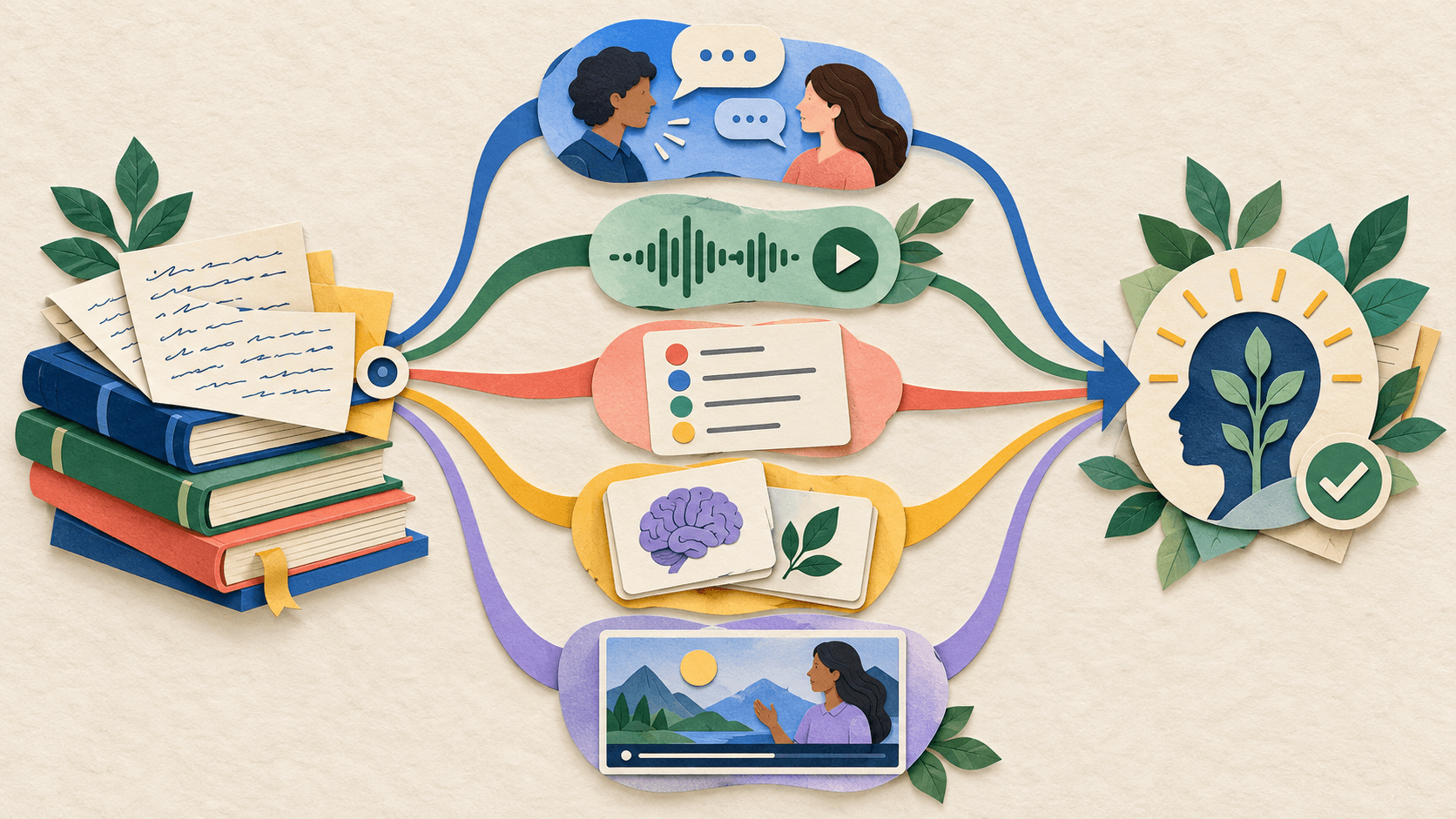
Learners can soon interrupt and question a spoken notebook conversation, record lectures or personal notes into the source set, combine summaries with quizzes and flashcards, edit generated questions, and ask the notebook where performance suggests more study. Short videos add another review format for formulas, diagrams, and concepts.
Who gets access and when
Google says live conversations are beginning with adult Google AI Ultra subscribers before expanding, interactive learning overviews and quiz formats are rolling out over the following weeks, and audio-note support initially has an English output-language condition. Student promotions, higher limits, eligible markets, payment requirements, and post-offer pricing also vary.
What source grounding cannot guarantee
A response can cite uploaded material and still misunderstand it, reproduce an error in the source, oversimplify a concept, or generate a weak question. More study formats can improve engagement without improving recall or transfer. Students and educators should verify important explanations and measure learning outside the same generated notebook.
What readers should do
Test one unit with a pre-test, a fixed source pack, a delayed post-test, and transfer questions written outside Gemini Notebook. Record citation accuracy, explanation errors, weak questions, accessibility, time on task, unsupported claims, and what students retain one week later. Keep original course materials and instructor guidance authoritative.
Claims were checked against the linked sources on September 23, 2026. Company announcements, demonstrations, and benchmark results are attributed evidence, not independent guarantees.
Transparency
How this guide was checked
Editorial accountability
Who checked this guide
- Evaluation type
- Research-based verification
- Last materially checked
- Evidence
- 4 listed sources
Hands-on testing is identified explicitly. Research-based coverage uses cited product documentation and other named sources; it does not imply every paid plan was used. Read the full methodology.
Editorial basis
What this guidance is based on
- Editorial basis
- Source-led analysis
- Primary references
- 4
- Products covered
- 2
- Last checked
- 2026-09-23
Important limits
- • Vendor tests and launch claims may not generalize to other users or workloads.
- • Availability, policy, pricing, and product behavior can change.
Sources and references
References cited by this article. Check the original source for scope, dates and current terms.
Frequently asked questions
What new study tools are coming to Gemini Notebook?
Google announced live voice conversations, mobile audio capture, interactive learning overviews, expanded quiz formats, performance follow-ups, and short video overviews.
Are Gemini Notebook answers grounded in uploaded sources?
Google says notebook conversations are grounded in the user's sources, but readers should still verify interpretations and source quality.
Does everyone get the new features immediately?
No. Rollout timing varies by feature, subscription, age, language, account type, and market.
Do generated quizzes prove that a student learned the material?
No. Use delayed recall and transfer questions outside the generated environment to test durable understanding.
Recommended tool
Use NotebookLM if this workflow fits your team
Its clearest advantage is keeping the research conversation visibly anchored to material the user selected.
Tools mentioned in this article
NotebookLM
A source-grounded Google research workspace for asking questions and generating overviews from a controlled source set
NotebookLM is a strong research companion when you already have a defined source library, but citations, source completeness, privacy, and plan limits still require human review.
Google Gemini
Google's deeply integrated AI assistant with unmatched access to Google's ecosystem
Gemini combines powerful AI with Google's vast data ecosystem — Search, Gmail, Docs, YouTube, and more — for a uniquely integrated experience.
Read next
Recommended for you
Google Launches Gemini 3.5 Transcribe for Real-Time Voice Apps
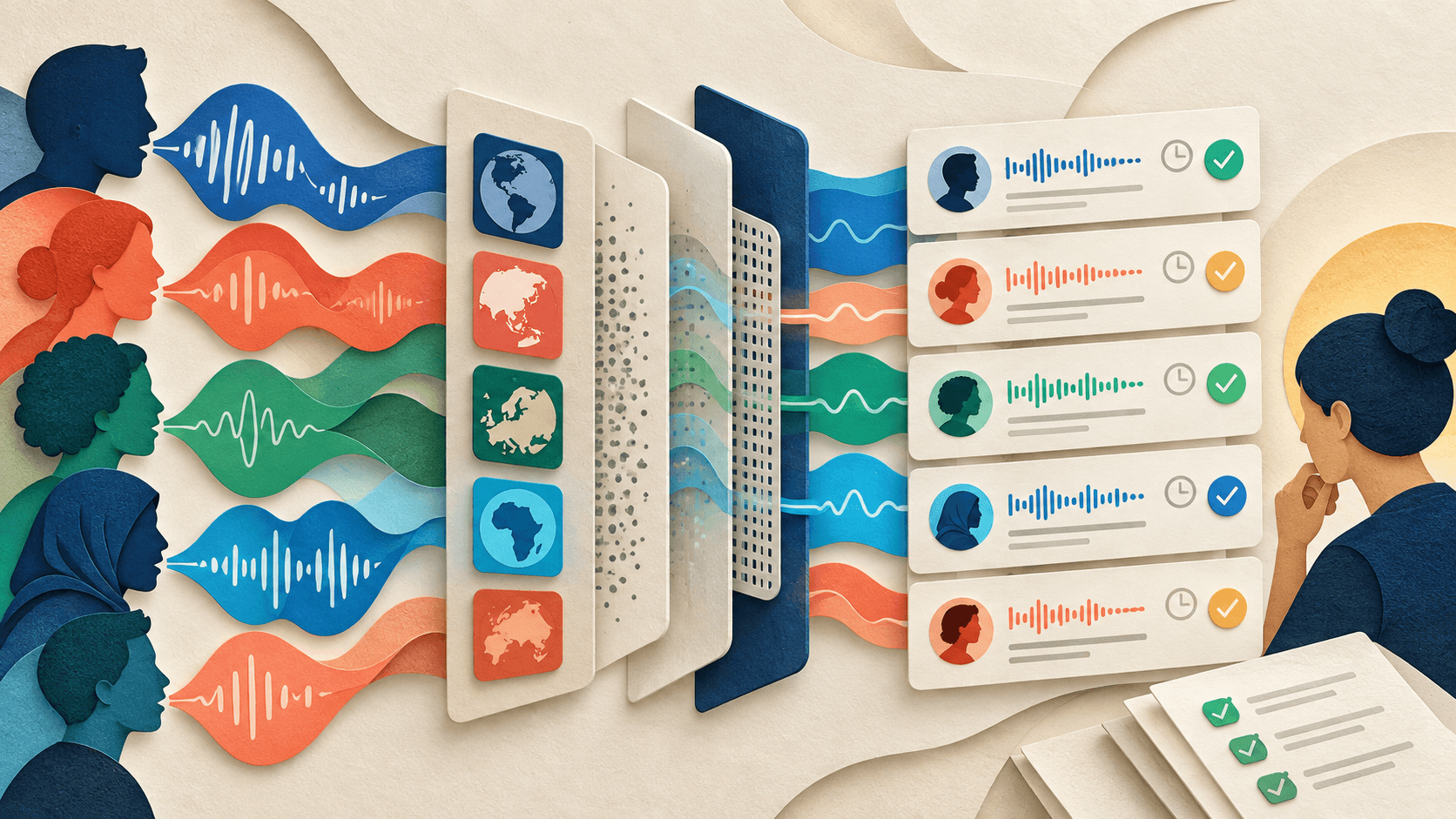
Google's dedicated speech-to-text model targets voice agents, captions, and call analytics, but language count and vendor accuracy claims are not substitutes for testing real audio.
Gemini 3.5 Transcribe is a dedicated real-time speech-to-text model for more than 85 languages. It gives developers a new path for voice agents and live captions, while production adoption still depends on domain accuracy, latency, privacy, and cost per accepted transcript.
Read guide
Gemini Adds Connected Apps—Convenience Now Depends on Permission Design
Google Beam Expands 3D Video Meetings to Six Countries
Gamma AI Review 2026: Fast Presentations, but Is It Worth Paying For?