In this guide
What was announced
On October 28, Anthropic introduced a gallery of legal artifacts: interactive tools that teams can adapt with their data and connectors. Examples include citation checking, jurisdiction comparisons, matter tracking, contract deviations, regulatory monitoring and tabular contract review. The announcement describes source-linked outputs and a workflow in which Claude makes a first pass and a lawyer reviews it.
Anthropic also describes partner-built artifacts, collaboration settings and an expanded legal-connector catalogue. These are vendor descriptions, not independently verified legal research results. This news analysis is dated October 28; we have not tested the gallery or established account-specific entitlement.
Free AI tool buyer checklist
Make the next AI subscription earn its place.
Get the weekly top 5 AI tools, one practical workflow and one way to reduce AI spending. Includes a free buyer checklist.
The opportunity is a clearer handover
Our assessment is that a structured review surface can make open questions easier to assign and revisit. A table with a source, an owner and an unresolved issue can be more actionable than a long conversational answer. That benefit depends on the links being correct and the reviewer seeing the relevant qualifications.
A source link is a route to evidence. It is not evidence that the output interpreted the source correctly. A clause may contain an exception elsewhere in the agreement, and two similar-looking documents may have different effective versions. A good pilot should make those distinctions visible rather than reward a clean dashboard alone.
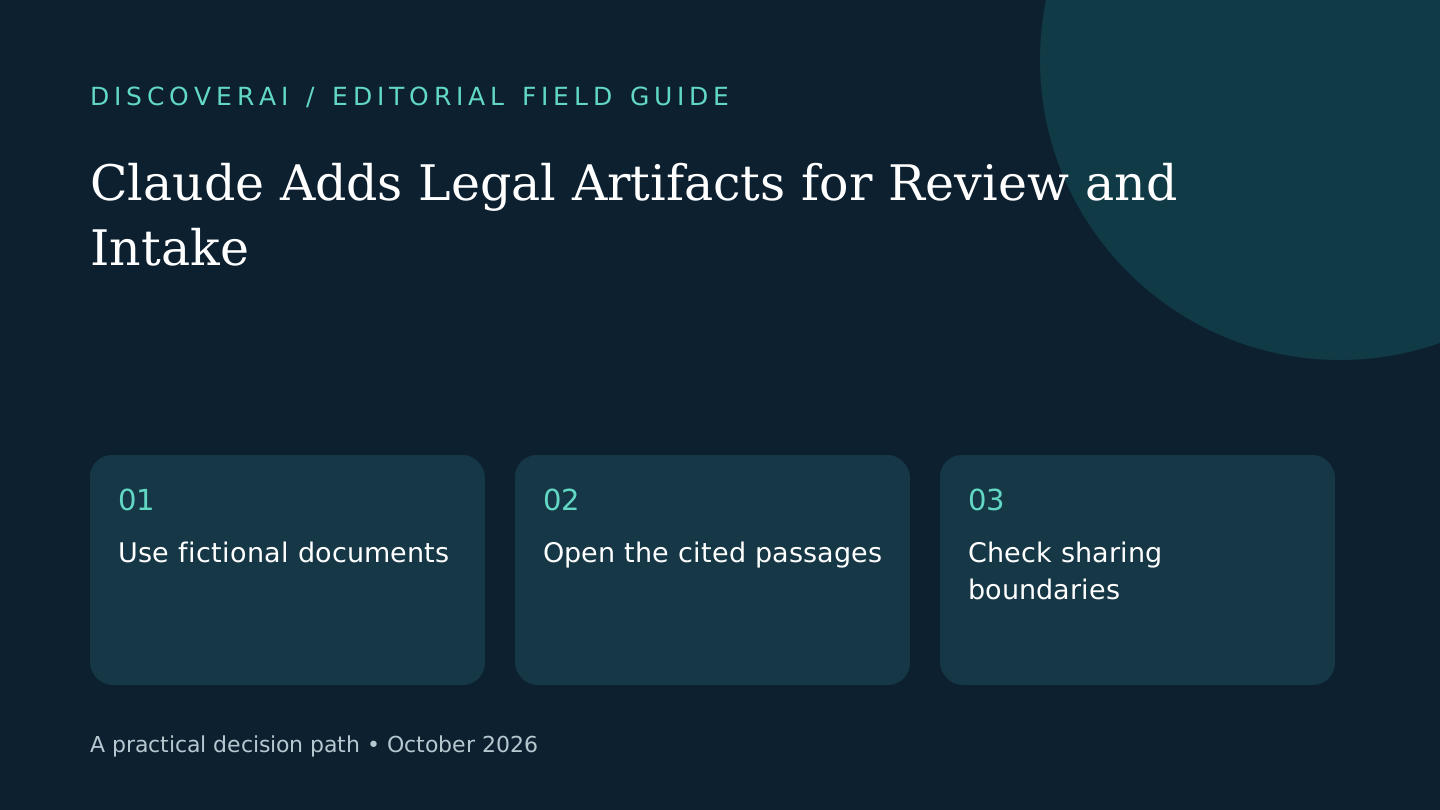
Start with a fictional document set
For an initial product evaluation, prepare a small fictional set of agreements and an answer key. Include one inconsistent date, one missing field and an exception that changes the apparent reading of a clause. Avoid real client material until the team has approved the data and access arrangements.
Ask the artifact to locate specified information and preserve unresolved items. Have a qualified reviewer open the cited passages and compare them with the output. Record missing sources and confident unsupported statements separately from formatting problems. This is a proposed product test, not legal advice or a completed benchmark.
Test permissions as part of the workflow
Create a limited pilot group and decide what each role should be able to see before inviting participants. Check both the source material and the derived artifact with the intended accounts. A shareable summary can still disclose information from a restricted source.
If connectors are involved, map what they can retrieve and how access changes when a teammate leaves. Test the ordinary handover: can a colleague understand the artifact without the original conversation, and can the owner withdraw access when the pilot ends? Record what remains uncertain rather than assuming a setting name guarantees the desired behavior.
Define the reviewer's responsibility
Choose one bounded output, such as a list of clauses that need attention. Define which judgments stay with the qualified reviewer and what must be checked before an item moves forward. Keep the original material accessible alongside the draft analysis.
Measure review and correction time as well as generation time. If a table takes seconds to generate but makes it difficult to inspect an exception, it may not improve the complete task. A useful evaluation includes the effort required to reject or repair a misleading result.
What remains to verify
The announcement does not establish accuracy, suitability or entitlement for an individual team. Confirm current access, configuration and connector terms directly before planning a rollout. This article covers a product announcement and a proposed evaluation method, not a legal conclusion or security certification.
Use the buyer checklist to record acceptance criteria and browse the article library for related research workflows.
Transparency
How this guide was checked
Editorial accountability
Who checked this guide
- Evaluation type
- Research-based verification
- Last materially checked
- Evidence
- 1 listed sources
Hands-on testing is identified explicitly. Research-based coverage uses cited product documentation and other named sources; it does not imply every paid plan was used. Read the full methodology.
Editorial basis
What this guidance is based on
- Editorial basis
- Source-led analysis
- Primary references
- 1
- Products covered
- 0
- Last checked
- 2026-10-28
Important limits
- • Features, availability, and pricing can change after publication; confirm consequential details with the provider.
Sources and references
References cited by this article. Check the original source for scope, dates and current terms.
Frequently asked questions
Do source links remove the need for review?
No. A reviewer must check that the source supports the interpretation and preserves exceptions.
Has DiscoverAI tested the legal gallery?
No. This is announcement analysis with a proposed evaluation method.
Should a pilot start with client records?
Start with fictional documents while data access and sharing requirements are being assessed.