In this guide
Treat the map as an index
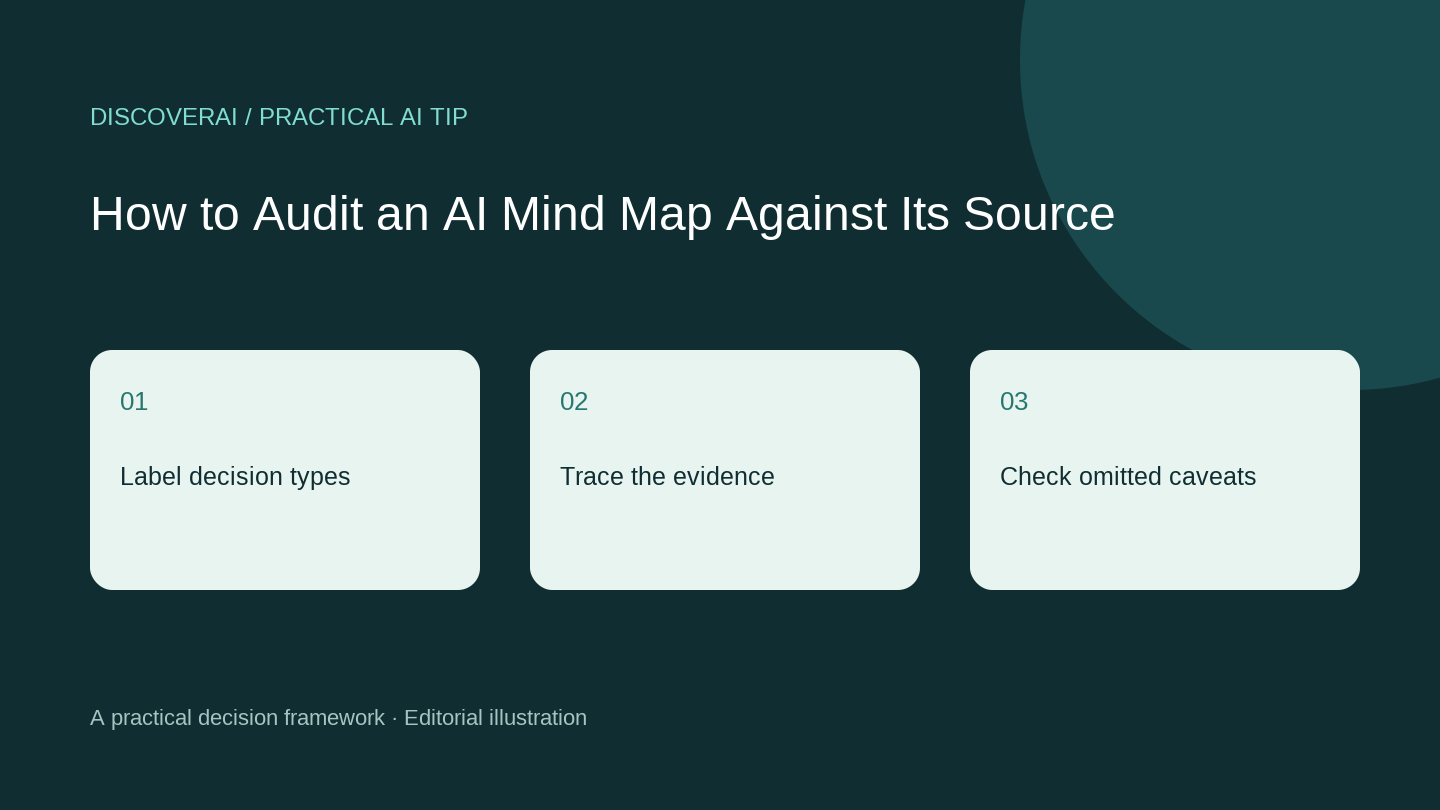
An AI mind map is most useful when it helps you return to evidence quickly. Before using one to brief a colleague, trace its important branches to the original and inspect what was left out. The structure should preserve the difference between a decision, a proposal and an unanswered question.
Mapify describes converting documents and recordings into mind maps. The following exercise is an original editorial workflow that can be used with any summarization tool. It is not a report of completed testing.
Free AI tool buyer checklist
Check before you buy your next AI tool.
Get the weekly top 5 AI tools, one practical workflow and one way to reduce AI spending. Includes a free buyer checklist.
1. Create a compact answer key
Use this fictional project brief: a team proposes launching a workshop on March 12; the approved date is March 19; invitations require the coordinator's approval; internal rehearsals do not require that approval; the venue is undecided.
Before generating a map, list those five facts with their source locations. The exact number of branches is unimportant. What matters is whether a reader can distinguish the proposed date from the approved date and recover the exception without guessing.
For real material, note the version and date of the source. If you combine multiple documents, label them separately. An old plan and a revised plan should not silently become one confident account.
2. Ask for evidence beside each branch
Use this instruction:
Build a mind-map outline from this source. Label decisions, proposals, exceptions and unknowns separately. For each substantive node, include its source section or timestamp. Do not invent missing references. Keep contradictions visible rather than resolving them by assumption.
This prompt requests useful behavior; it does not guarantee compliance. Check the locations yourself. A plausible-looking timestamp or page reference is only helpful if it leads to the supporting passage.
3. Audit connections, not just summaries
Take the branch labeled invitations and verify that approval is represented as a prerequisite. Then inspect rehearsals: did the map incorrectly copy the approval requirement onto them? Check whether the venue appears as an open question rather than a booked location.
Mark each node supported, incomplete or unsupported. Separately mark an incorrect relationship between otherwise accurate nodes. A summary can quote two true facts while connecting them in a way the source never establishes.
4. Read backwards to catch omissions
Review the original for words such as unless, pending, except and proposed. Search for deadlines and ownership statements. Work from those passages back to the map rather than only checking what the map chose to include.
This second pass catches an important blind spot: a map cannot prompt you to verify a condition it omitted entirely. Add essential caveats even if they make the graphic less symmetrical. Keep minor background detail out when it does not help the intended task.
5. Test a handoff and keep the source
Ask a colleague to identify the launch date, invitation approver and unresolved decision using the map. Then give them the original and ask whether their answers change. Record confusion before polishing the design.
Save the source, corrected map and review date together. If the source changes, repeat the audit for affected branches. Consult the Mapify review for export and credit considerations, and use the trial scorecard to measure time to a correct handoff.
Transparency
How this guide was checked
About this article
How this article was prepared
- Evaluation type
- Source-based research
- Last reviewed
- Evidence
- 1 listed sources
We label hands-on testing separately. Research-based articles draw on product documentation and other cited sources, rather than direct use of every plan. Read the full methodology.
Editorial basis
Sources and testing
- Editorial basis
- Source-based research
- Primary references
- 1
- Products covered
- 1
- Last checked
- 2026-11-28
Important limits
- • Features, availability and prices can change. Check the provider’s current terms before buying.
Sources and references
References cited by this article. Check the original source for scope, dates and current terms.
Tools mentioned in this article
Mapify
Evaluate Mapify for document and video summaries: source fidelity, export formats, free credits and conflicting unlimited-plan language to check.
Evaluate Mapify for document and video summaries: source fidelity, export formats, free credits and conflicting unlimited-plan language to check.