In this guide
The Short Answer
For most small businesses in the United States in mid-2026, AI regulation is more bark than bite — but that's changing. Here's what actually applies to you:
What's required now:
- No federal US AI law exists yet. The regulatory landscape is a patchwork of state laws, industry-specific regulations, and agency guidance.
- If you use AI for employment decisions (hiring, promotion, termination): the EEOC has made clear that existing anti-discrimination laws apply. AI hiring tools that produce discriminatory outcomes are illegal regardless of whether the discrimination was intentional.
- If you operate in the EU or serve EU customers: the EU AI Act classifies certain AI uses as prohibited or high-risk, with compliance requirements that apply to businesses of all sizes.
- If you're in a regulated industry (healthcare, financial services, legal): existing industry regulations apply to AI use, even if they don't mention AI specifically.
What's coming soon:
- More US state AI laws. Several states have active AI legislation; California, New York, and Colorado are likely to pass additional AI laws in the next 1-2 years.
- Federal US AI legislation is widely expected but timing is uncertain. A comprehensive federal AI law would likely preempt some state laws and create uniform requirements.
- AI disclosure requirements — telling people when they're interacting with AI rather than a human — are becoming standard. Several states already require it for specific contexts; broader requirements are likely.
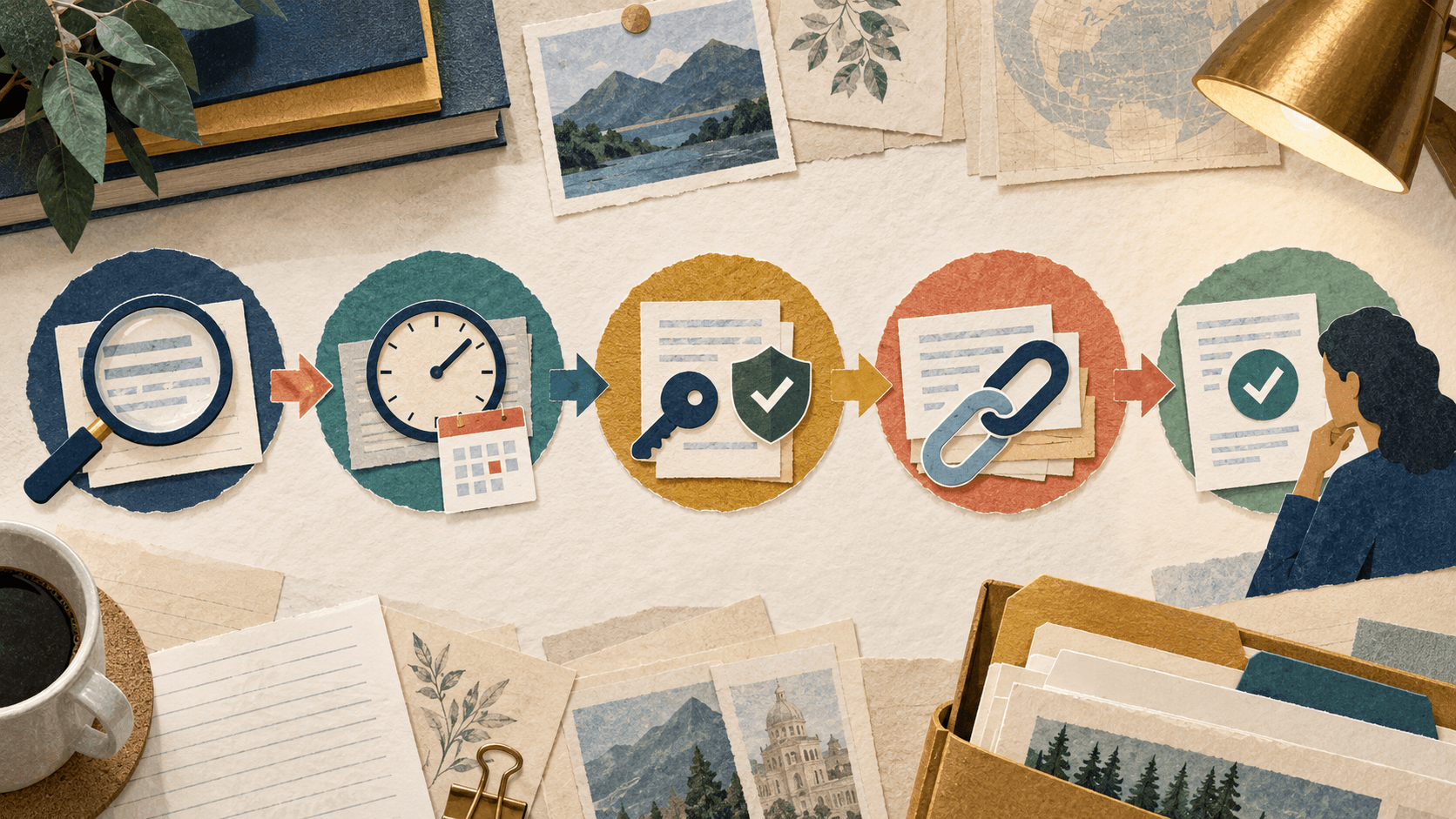
What you should do now (minimum compliance baseline):
1. Document where and how your business uses AI — every tool, every workflow, every decision affected.
2. If AI touches employment decisions, ensure you're not introducing bias and can demonstrate that.
3. If you serve customers in the EU, review EU AI Act requirements for your AI use cases.
4. Disclose AI use to customers where it affects their experience (AI chatbot, AI-generated content, AI-assisted decisions).
5. Review your AI tools' terms of service for data handling practices that could affect your compliance obligations.
The Regulatory Patchwork: What's Actually Law (July 2026)
European Union: EU AI Act — In Force
The EU AI Act is the world's most comprehensive AI regulation. Key provisions relevant to small businesses:
- Prohibited AI practices (banned entirely): Social scoring systems, real-time biometric surveillance in public spaces (with limited law enforcement exceptions), AI systems that manipulate human behavior to cause harm, and AI systems that exploit vulnerabilities of specific groups.
- High-risk AI systems (strictest requirements): AI used in employment, education, essential services, law enforcement, migration, and democratic processes. Requirements include: risk assessments, data governance, technical documentation, record-keeping, transparency, human oversight, and accuracy/robustness.
- Limited-risk AI systems (transparency requirements): AI systems that interact with humans (chatbots) must disclose that the user is interacting with AI. AI-generated content must be labeled.
- Minimal-risk AI systems (no additional requirements): Most AI applications — spam filters, AI-enabled video games, inventory management — are unregulated.
For US businesses serving EU customers: If your AI systems affect people in the EU, the AI Act may apply regardless of where your business is located. Consult an attorney if you have meaningful EU customer exposure.
United States: No Comprehensive Federal AI Law — Yet
The US approach is currently:
- EEOC guidance on AI and employment discrimination: The Equal Employment Opportunity Commission has issued clear guidance: using AI in hiring, promotion, or other employment decisions doesn't exempt employers from anti-discrimination laws. If your AI hiring tool screens out protected groups at disproportionate rates, you're liable — even if you didn't intend discrimination. Practical requirement: if you use AI for hiring, you need to be able to demonstrate that your process doesn't produce discriminatory outcomes.
- State AI laws (fragmented): New York City requires bias audits for AI hiring tools. Colorado's comprehensive AI law requires risk assessments for high-risk AI systems. California has multiple AI laws covering data privacy (CPRA), bot disclosure, and deepfake regulation. Other states have pending legislation. The practical challenge: businesses operating across multiple states may face different, sometimes conflicting requirements.
- FTC authority: The Federal Trade Commission has signaled it will use its existing consumer protection authority to regulate deceptive or unfair AI practices, even without specific AI legislation.
- Industry-specific regulation: Healthcare (HIPAA), financial services (various), and other regulated industries have existing rules that apply to AI use, enforced by their respective regulators.
China: Active AI Regulation
- In July 2026, China banned customizable AI boyfriend/girlfriend applications, citing concerns about declining marriage and birth rates — a striking example of AI regulation being driven by social policy goals rather than just safety concerns.
- China's AI regulations emphasize content control, algorithmic transparency, and alignment with state interests.
- For US businesses: Chinese AI regulations primarily affect companies operating in China, not US businesses using Chinese AI tools.
What Small Businesses Need to Do: A Practical Compliance Checklist
Level 1 — Universal baseline (every business using AI should do this):
- AI inventory: Document every AI tool your business uses, what data it processes, and what decisions it influences. You can't manage AI compliance if you don't know where AI is in your business.
- Transparency: If customers interact with an AI chatbot, disclose it. If content is AI-generated (or AI-assisted), consider disclosure. Being upfront about AI use builds trust and preempts regulatory requirements.
- Data handling: Review AI tools' data policies. Know where your data goes and whether it's used to train the AI. Don't put data into AI tools that your privacy policy or customer agreements say you won't share with third parties.
- Employment decisions: If AI is involved in hiring, promotion, performance evaluation, or termination decisions, this is the highest-risk area. Ensure human review of AI recommendations. Document your process. Consider a bias audit if you're using AI hiring tools.
Level 2 — Enhanced compliance (if you handle sensitive data, make high-stakes decisions with AI, or operate in regulated industries):
- Formal AI policy: Documented rules for how AI may and may not be used in your organization. Include data handling, disclosure requirements, human oversight requirements, and prohibited uses.
- Risk assessment: For each AI use case, evaluate: what could go wrong? Who could be harmed? How likely and severe is the potential harm? What controls are in place?
- Human-in-the-loop: For consequential decisions (hiring, lending, benefits eligibility, disciplinary actions), ensure meaningful human review — not just rubber-stamping AI recommendations.
- Documentation: Keep records of AI system choices, testing, and decisions. If you're ever challenged — by a regulator, a rejected applicant, or a plaintiff's attorney — documentation is your defense.
Level 3 — Full compliance program (if AI is core to your business, you operate in the EU, or your industry is heavily regulated):
- Legal review of AI use cases by an attorney familiar with AI regulation.
- Formal AI governance structure with designated responsibility.
- Regular third-party audits of high-risk AI systems.
- Incident response plan for AI failures or harmful outputs.
- This level is likely overkill for most small businesses in 2026, but plan for it as your AI usage grows.
What's NOT Regulated (Despite What You May Have Heard)
Separating actual legal requirements from best practices and from fearmongering is important:
Not required (as of July 2026, for most US businesses):
- You don't need to label every piece of AI-assisted content. EU rules require it; most US jurisdictions don't — yet. It's a good practice, not a legal requirement for most.
- You don't need an AI ethics board or formal AI governance structure (unless you're in certain regulated industries).
- You don't need to get consent before using AI to draft internal documents or analyze your own business data.
- You don't need to disclose AI use in internal operations (AI helping with scheduling, data analysis, internal communications).
Actually required:
- Don't use AI in ways that discriminate against protected classes.
- Don't make false claims about your AI's capabilities.
- Don't use customer data with AI in ways that violate your privacy policy or applicable data protection laws.
- In certain jurisdictions and contexts: disclose AI interaction, label AI-generated content, conduct bias audits for employment AI tools.
When in doubt: If your AI use could significantly affect someone — their job application, their loan application, their benefits, their legal situation — err on the side of disclosure, human review, and documentation. The compliance cost of being careful is almost always less than the legal cost of being careless.
Transparency
How this guide was checked
Editorial accountability
Who checked this guide
- Evaluation type
- Research-based verification
- Last materially checked
- Evidence
- 5 listed sources
Hands-on testing is identified explicitly. Research-based coverage uses cited product documentation and other named sources; it does not imply every paid plan was used. Read the full methodology.
Editorial basis
What this guidance is based on
- Editorial basis
- Source-led analysis
- Primary references
- 5
- Products covered
- 2
- Last checked
- 2026-07-26
Important limits
- • Features, availability, and pricing can change after publication; confirm consequential details with the provider.
Sources and references
References cited by this article. Check the original source for scope, dates and current terms.
Frequently asked questions
Do I need to tell my customers when they're talking to an AI chatbot instead of a human?
If you have customers in the EU: yes, the EU AI Act requires disclosure. If you operate in California: yes, California's bot disclosure law requires that bots used for commercial transactions or influencing votes disclose that they are bots. If you're in other US states: there's no current universal federal requirement, but (1) disclosure is becoming standard and some states require it in specific contexts, (2) the FTC could consider undisclosed AI interaction as a deceptive practice, and (3) customer trust is better served by transparency. The practical approach: disclose AI chatbot usage clearly and early in the interaction. 'I'm an AI assistant — I can help with common questions, and a human team member will step in if needed' builds trust rather than undermining it.
Can I use AI to screen job applicants, or is that illegal?
Using AI to screen job applicants is legal — but it's regulated. The key requirements: (1) The AI process must not produce discriminatory outcomes (disparate impact on protected groups). If your AI screening tool disproportionately filters out women, older workers, or specific racial groups, you're potentially liable under EEOC-enforced anti-discrimination laws — even if you didn't intend discrimination. (2) Some jurisdictions (New York City) require bias audits for AI hiring tools. (3) You should be able to explain how your AI screening works and demonstrate that it's job-relevant. What's specifically prohibited: using AI that considers protected characteristics (race, gender, age, disability status, religion) as screening factors, AI that systematically disadvantages protected groups without business justification, and AI screening with no human review or recourse process. The safe approach: use AI to help organize, summarize, and flag applications for human review — not to make final screening decisions without human oversight.
If AI generates content for my business, do I need to label it as AI-generated?
In the EU: the AI Act requires labeling of AI-generated content in many contexts. In the US: there's no universal federal requirement to label AI-generated content as of July 2026, but certain states and contexts require it. Deepfakes and synthetic media have specific regulations in several states. The FTC could act against undisclosed AI content if it's deceptive — for example, if you claim content is human-written when it's actually AI-generated. For most business content (marketing materials, blog posts, internal documents), there's currently no legal requirement to label. However, many platforms (social media, publishing platforms) have their own AI disclosure policies. And from a trust perspective: transparent disclosure usually builds more credibility than it costs. 'Written with AI assistance and human review' is honest and unremarkable in 2026.
What's the penalty for violating AI regulations — could my small business get fined?
Under the EU AI Act: fines can reach up to €35 million or 7% of global annual turnover for the most serious violations. For small businesses, the EU has indicated proportionality in enforcement, but the legal exposure is real if you serve EU customers. Under US EEOC enforcement for discriminatory AI hiring: remedies include back pay, reinstatement, compensatory and punitive damages, and attorney's fees. Class actions by rejected applicants are a growing area of AI-related litigation. Under FTC authority for deceptive AI practices: fines, consent decrees, and mandated changes to business practices. Under various state laws: fines vary by state and violation type, typically in the thousands to tens of thousands per violation. For most small businesses, the bigger risk than government fines is private litigation — a rejected applicant suing over AI hiring bias, a customer suing over an AI-generated error that caused harm, or a class action over undisclosed AI data processing. The cost of basic compliance (documenting AI use, ensuring human review for consequential decisions, being transparent about AI interaction) is vastly less than the cost of defending even one lawsuit.
Tools mentioned in this article
ChatGPT
The general-purpose AI assistant that started it all
OpenAI's flagship conversational AI model, powering everything from casual chat to complex reasoning, coding, and creative work.
Claude
Anthropic's thoughtful, safety-focused AI with exceptional long-form reasoning
Claude excels at deep analysis, long-form writing, and nuanced reasoning. Built by Anthropic with a focus on safety and helpfulness.
Read next